



Black Gilt Floor Lamp
A black gilt floor lamp brings vertical presence and rich contrast into a room, combining dark surfaces with bright metallic highlights.
Black Gilt Floor Lamp
A black gilt floor lamp combines dark painted or lacquered surfaces with bright metallic detailing to create a striking vertical presence in a room. These pieces function as both a source of illumination and a decorative anchor, standing tall beside seating areas or within corners.
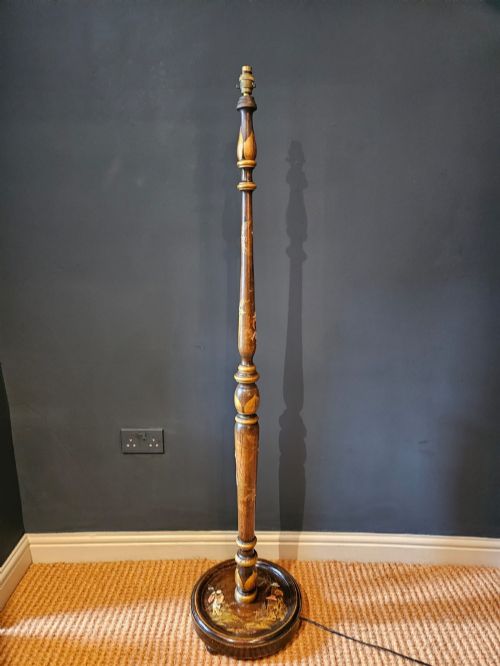
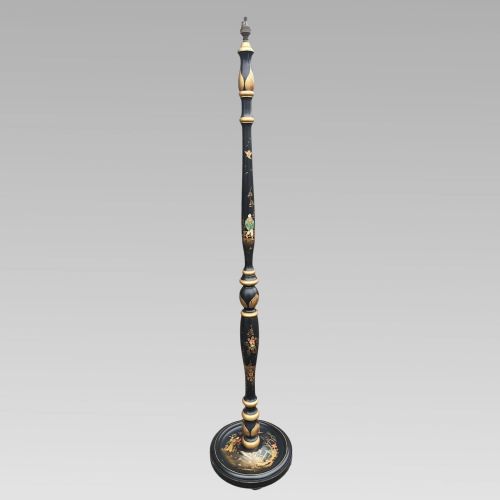
The versions you encounter on this page span from the mid-nineteenth century through to the early decades of the twentieth century. They encompass several distinct stylistic traditions, including Chinoiserie, Edwardian design, and neoclassical revivalism, alongside Hollywood Regency and Victorian interpretations.
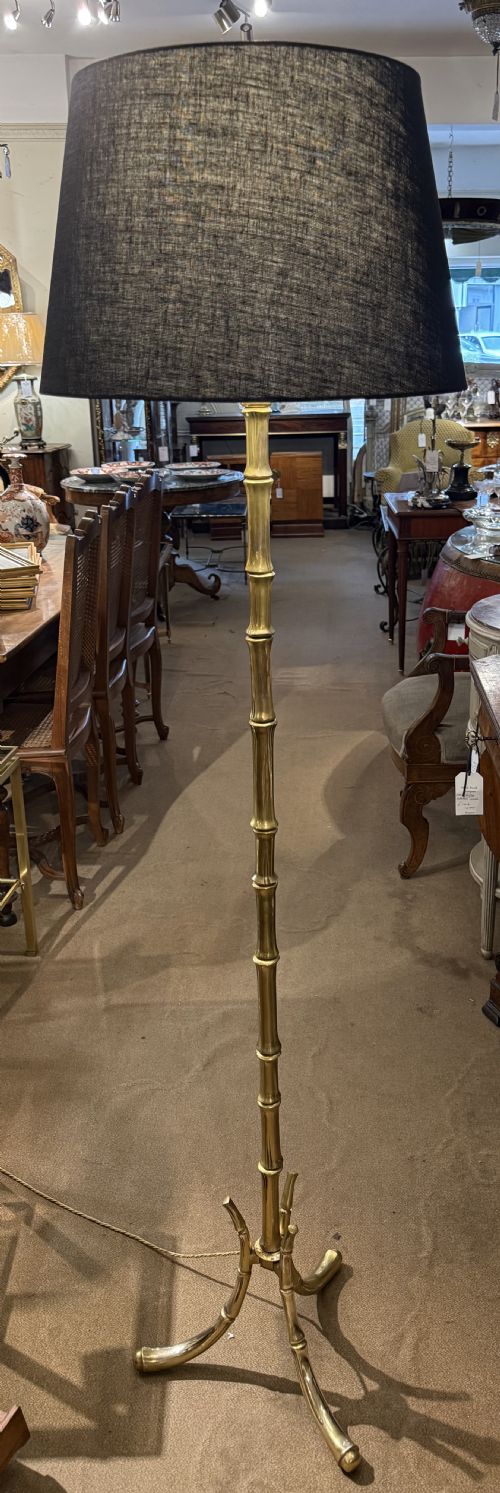
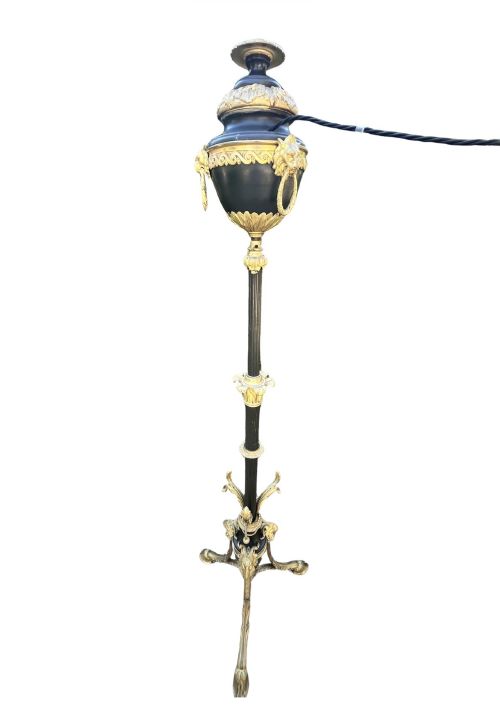
Forms alternate between standard lamps with simple upright shafts and more elaborate creations featuring twin arms or heavily decorated bodies. Lacquered wood and ebonised timber provide the dark foundation, while gilt bronze and parcel gilt applications supply the luminous contrast.
Materials and construction
Makers built these standards using robust timbers such as wood and ebonised wood, alongside cast metals like brass, gilt bronze, and patinated bronze. Lacquered wood finishes required meticulous layers of varnish and polishing to achieve a deep, reflective black surface.
Gilding techniques applied thin layers of gold leaf or metallic paint to carved details, mouldings, and raised Chinoiserie motifs. Fabric elements often completed the construction, providing shades that diffused the light cast from the standard lamp.
Some Edwardian lamp standards wear their hand-painted oriental pagodas with absolute seriousness, as if standing guard over an imaginary tea house.
Distinctions in quality
Quality rests upon the depth and execution of the surface finish, whether through hand-applied lacquer or finely tooled bronze work. Superior examples display crisp detail in parcel gilt highlights and hand-painted Chinoiserie decoration rather than mechanical reproduction.
The underlying structural integrity determines the lasting stability of a tall standard lamp. Heavier metal castings and dense, well-seasoned timbers prevent the wobble often found in lighter or more hastily assembled pieces.
Maison Bagues
The Black Gilt Floor Lamp Glossary
- Chinoiserie
- European interpretation of Chinese and East Asian artistic traditions, frequently expressed through hand-painted motifs on lacquered furniture and lamps. This style gained immense popularity during the Edwardian period and the early twentieth century.
- Ebonised wood
- Timber treated with a dark stain or finish to imitate expensive ebony. It provides a dense, matt or semi-gloss black foundation for gilt highlights.
- Parcel gilt
- A decorative technique where only specific portions of an object are gilded, leaving the underlying black lacquer or wood exposed elsewhere. This creates a strong visual contrast between the dark body and the bright metallic accents.
- Gilt bronze
- Bronze that has been coated with a thin layer of gold, providing a durable and luminous metallic finish. It appears frequently on neoclassical and nineteenth-century standard lamps.
- Standard lamp
- A traditional British term for a tall floor-standing lamp designed to hold a light bulb and shade at eye level. They provide ambient room lighting rather than task illumination.
Black Gilt Floor Lamp: Frequently Asked Questions
What is a black gilt floor lamp?
A tall lighting fixture featuring a dark lacquered or painted wooden body accented with gold leaf or metallic highlights. These pieces serve as both functional illumination and decorative focal points within traditional and eclectic interiors.
They emerged across various periods, including the Victorian era and the Edwardian period, often incorporating Chinoiserie or neoclassical design motifs.
How were Chinoiserie standard lamps decorated?
Makers applied layers of black lacquer to timber bases before painting intricate oriental motifs, landscapes, or floral patterns by hand. Parcel gilt details were then added to raised elements to catch the light.
This labor-intensive surface decoration defines the distinctive appearance of early twentieth-century examples.
Where should I place a standard lamp?
These tall fixtures suit corners, beside reading armchairs, or framing large pieces of furniture where vertical height is needed. Their dark finishes allow them to anchor a room scheme while providing soft ambient light.
Ensure the placement allows easy access to the switch and keeps the tall shaft stable.
How do I distinguish Edwardian from Victorian lamps?
Victorian examples tend to display heavier proportions and more sombre neoclassical or revivalist detailing in brass or wood. Edwardian pieces often lean towards lighter Chinoiserie aesthetics with brighter lacquered surfaces.
Examining the materials, turning styles, and painted motifs helps clarify the period of manufacture.