

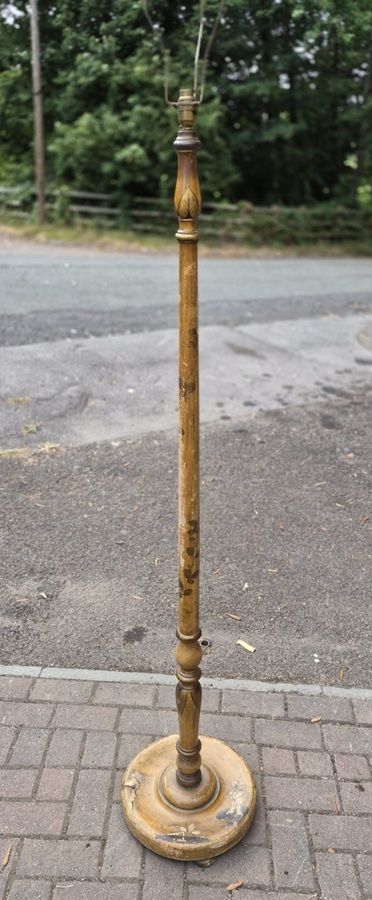
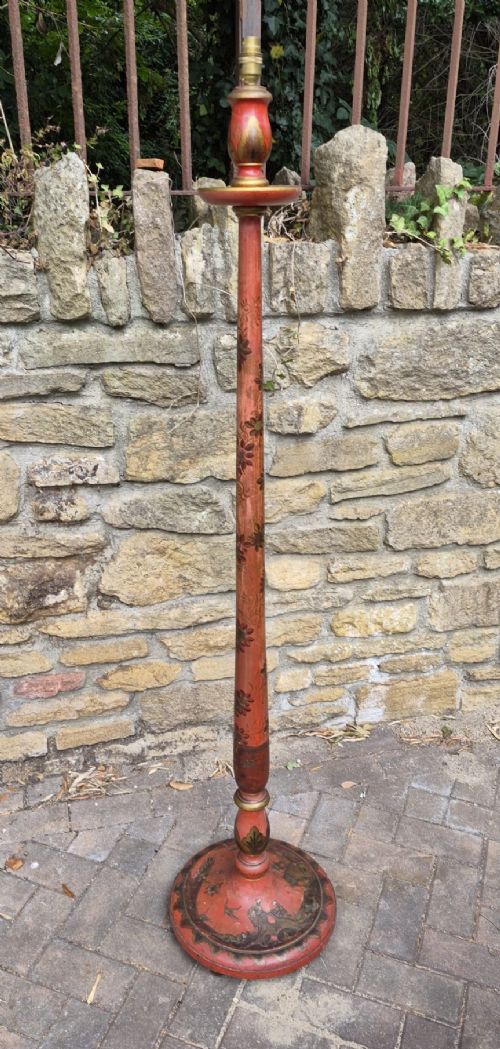
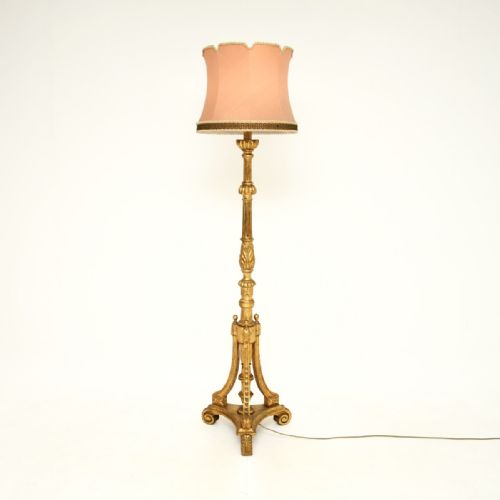
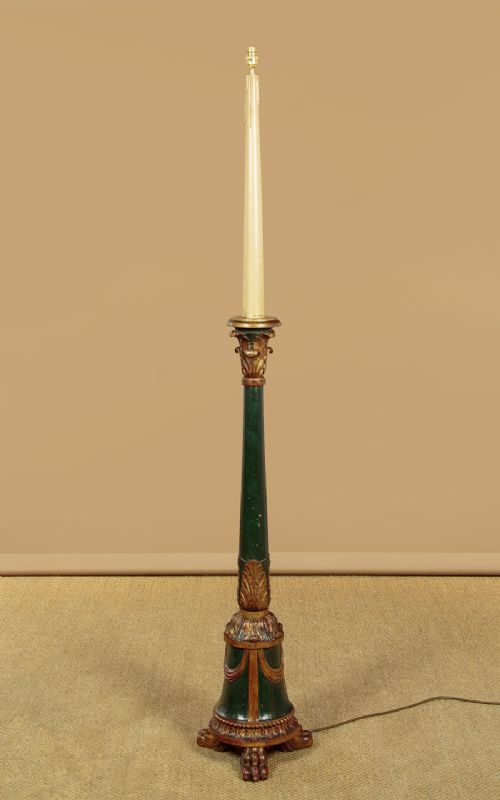


Painted Wood Standard Lamp
These painted wood standard lamps bring vertical colour and decorative presence to a room, offering tall illumination shaped by decades of revivalist taste.
Painted Wood Standard Lamp
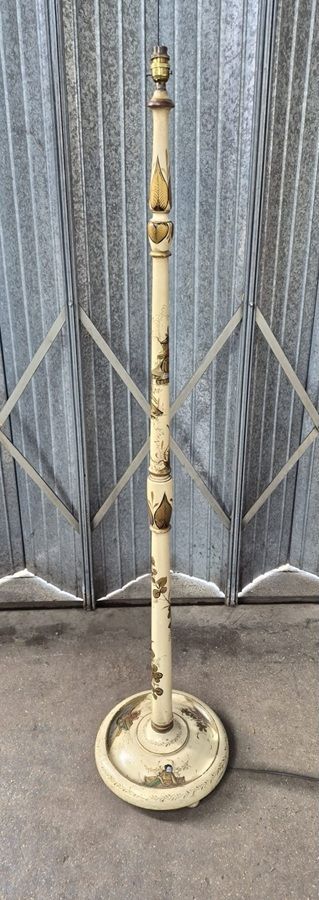
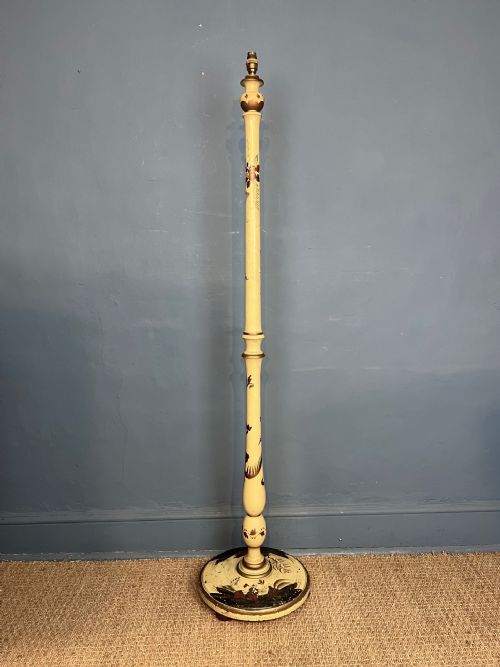
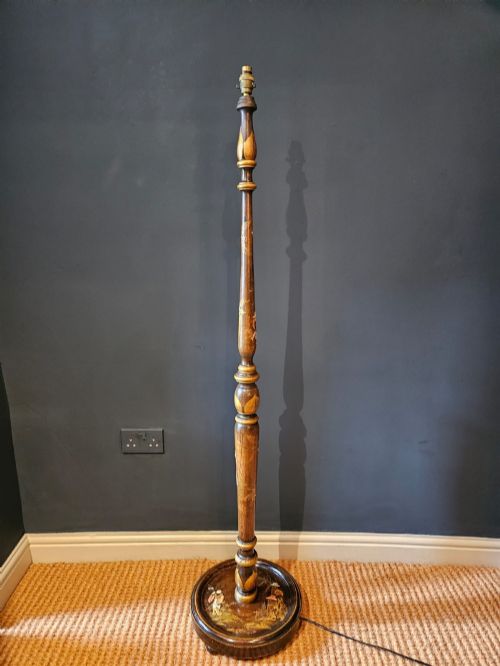
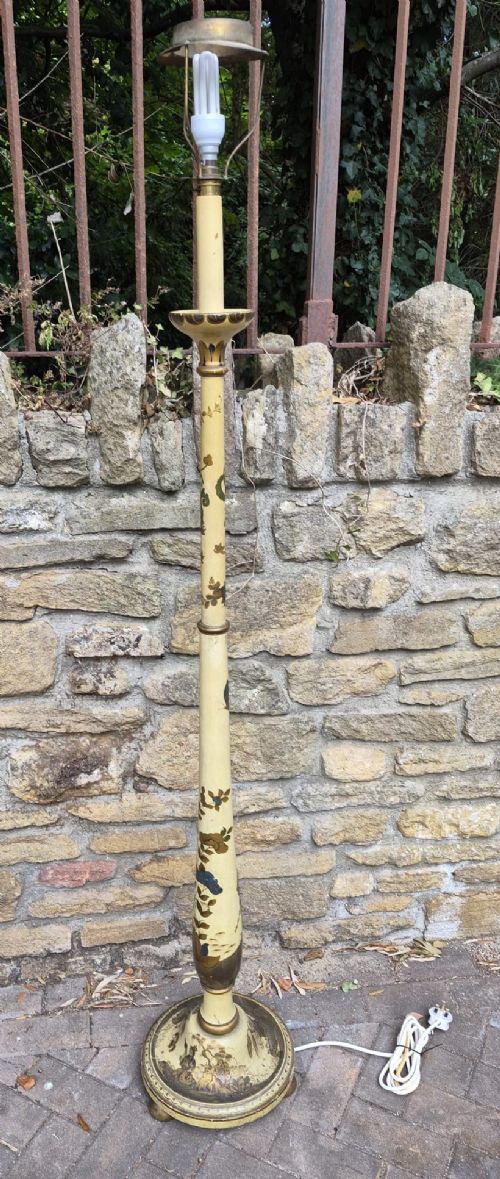
A painted wood standard lamp provides tall floor lighting through vertical timber shafts decorated with paint, lacquer, or gilt highlights. These pieces emerge across the Victorian and Edwardian eras, extending into the nineteen-thirties with diverse decorative schemes.
Buyers seeking a painted wood standard lamp most frequently encounter Edwardian examples alongside pieces from the eighteen-eighties and nineteen-twenties. Forms range from simple turned shafts to figural carved wood and gesso creations.
The aesthetic leans heavily toward revival styles, with Chinoiserie decoration appearing across multiple decades alongside Italian Venetian influences and Neoclassical Revival motifs. These lamps serve as statement floor pieces designed to anchor large reception rooms.
Construction and materials
Maker construction relies on carved wood and turned timber foundations, frequently enhanced with gesso layers to build up intricate relief details before painting. Brass components often appear in the structural hardware and fittings.
Surface decoration employs paint, lacquer, and gilt finishes, producing the distinct red, green, crimson, and marbleised colourways recorded across the pieces. Artisans applied Chinoiserie motifs by hand to achieve the characteristic orientalist scenes seen on Victorian and Edwardian bodies.
Painted Wood Standard Lamp Retail Price Guide 2026
Typical asking prices for painted wood standard lamp among the pieces listed under this phrase on Sellingantiques today, from the lower quarter to the upper quarter. They describe what is for sale here now, not the wider market.
Materials recorded across the archive include brass, carved wood, gesso, lacquer, and marbleised paint finishes.
Assessing quality
Quality separates through the depth and complexity of the surface ornamentation, where hand-painted Chinoiserie details and layered gesso relief demand greater artisan skill than plain painted finishes. The crispness of the wood carving underneath dictates the baseline standard of the piece.
The integrity of the timber form and the preservation of the original gilt and lacquer surfaces distinguish finer examples from later repainted items. Cohesive proportion between the tall standard shaft and the decorative base determines visual balance.
The Painted Wood Standard Lamp Glossary
- Standard Lamp
- A tall floor-standing lamp designed to illuminate a room from a standing position. These tall upright fixtures support light fittings at high levels.
- Chinoiserie
- European artistic interpretation of Chinese and East Asian decorative motifs. This style dominates the surface painting of many Edwardian and Victorian examples.
- Gesso
- A plaster-like mixture applied to wood surfaces to create a smooth base for carving or painting. It allows intricate relief work on standard lamp shafts.
- Gilt
- A thin layer of gold leaf or gold paint applied to wooden surfaces. It adds reflective highlights to painted wood and carved details.
Painted Wood Standard Lamp: Frequently Asked Questions
How do I date a painted standard lamp?
Dating relies on examining the decorative style, such as Edwardian Chinoiserie or Victorian gilding techniques, alongside the construction methods of the turned wood.
Changes in proportion and the specific pigments used in the paint layers help place a piece within periods like the eighteen-eighties or nineteen-thirties.
Where did these tall floor lamps originate?
Many pieces reflect British revivalist tastes of the late nineteenth and early twentieth centuries, while others draw directly from Italian Venetian and Florentine workshops.
Makers frequently borrowed motifs from Asian export art to create the popular Chinoiserie floor lamps found in period homes.
Can I use modern bulbs in these lamps?
Most standard lamps have been adapted over time with modern electrical wiring and standard bulb holders to meet contemporary safety requirements.
It remains wise to have the internal wiring checked by a qualified electrician before daily use in a modern interior.
What is the difference between floor lamps and standard lamps?
In British antique terminology, standard lamps traditionally refer to heavy timber or metal upright floor fixtures designed to hold a shade and bulb at eye level.
Both terms describe the same tall vertical lighting format recorded across Victorian, Edwardian, and later twentieth-century listings.