

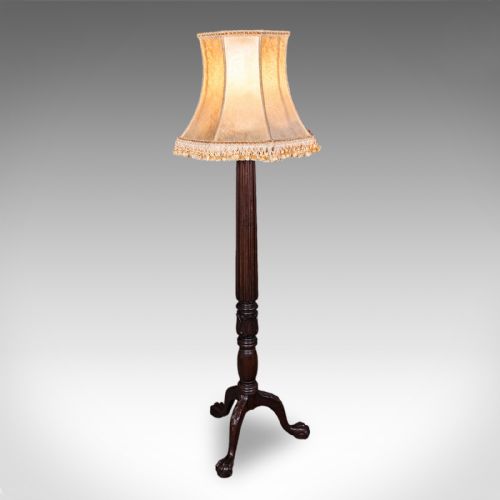
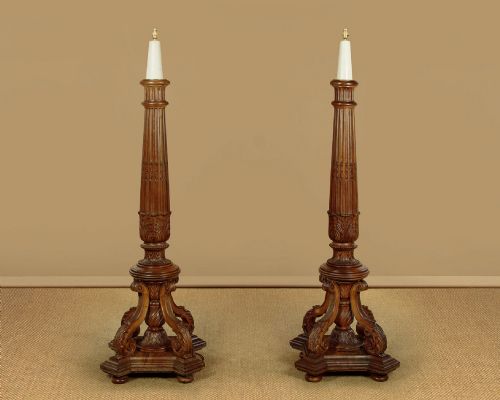
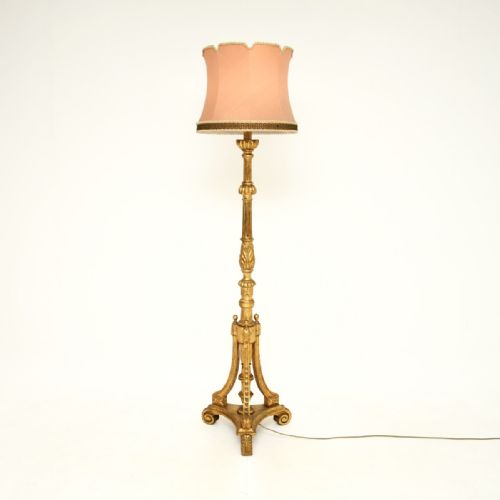


Carved Column Floor Lamp
A carved column floor lamp brings vertical presence and warm illumination to a room, drawing the eye with rich timber and gilded detail.
Carved Column Floor Lamp
When you search for a carved column floor lamp, you encounter substantial vertical lighting fixtures designed to anchor a room. These pieces function both as practical illumination and as sculptural furniture, often taking the form of tall pedestals or standard lamps adapted for interior lighting. The selection spans numerous decades and design vocabularies, ranging from early revival pieces to substantial architectural supports.
You are most likely to meet examples produced across the nineteenth and early twentieth centuries, drawing on historical aesthetics such as Gothic Revival, William IV Revival, and Chippendale Revival. Makers of these periods favoured dense hardwoods and gilded surfaces to create commanding proportions. Alongside standard British interpretations, the options occasionally encompass Scandinavian and continental European influences.
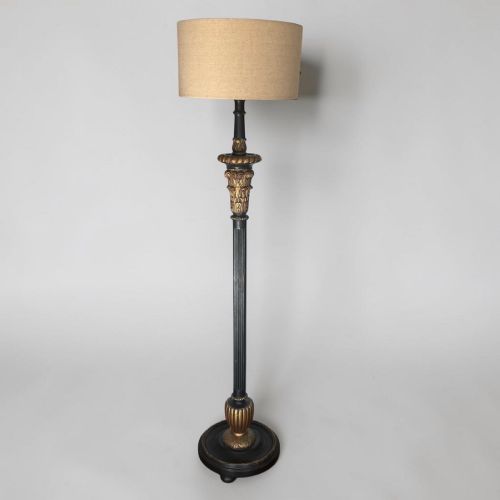
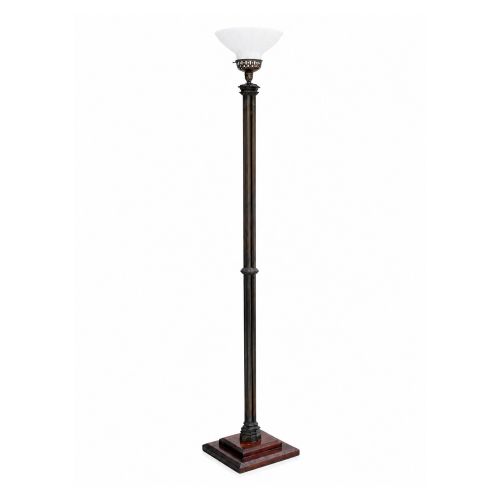
Forms vary from slender fluted columns to robust torchiere configurations and figural compositions. Some items originate as architectural elements or pedestals later converted into floor lamps. Fabric shades frequently complete the structure, diffusing the light cast from the upper fitting.
How they were made
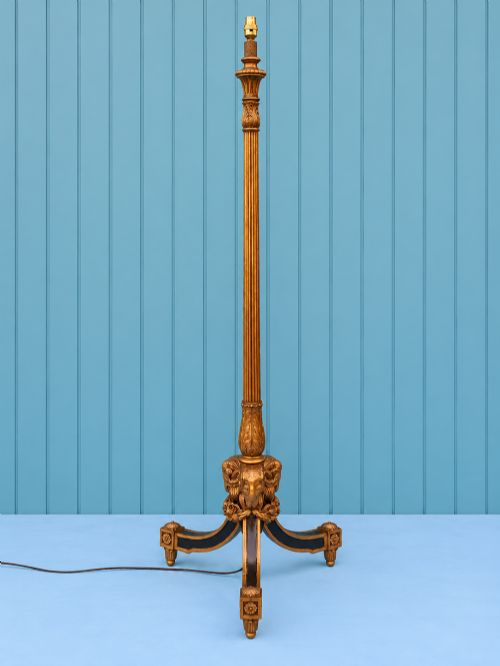
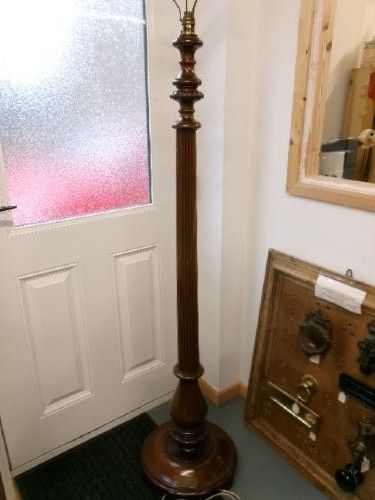
Makers constructed these tall standards primarily using dense timbers including mahogany, walnut, and oak, often shaping the shafts through detailed hand-carving. Artisans employed turning lathes alongside chisels to achieve fluted, spiral, or faceted column profiles. Joinery methods ensured the tall vertical shafts remained stable despite their height.
Surface ornamentation involved applying layers of gold leaf or giltwood over carved wooden bases, creating reflective finishes that caught candle or electric light. Brass and other metals frequently appeared in structural collars, weighted internal rods, or electrical fittings. Fabric components were subsequently added to complete the shade assemblies.
Carved Column Floor Lamp Retail Price Guide 2026
Typical asking prices for carved column floor lamp among the pieces listed under this phrase on Sellingantiques today, from the lower quarter to the upper quarter. They describe what is for sale here now, not the wider market.
Listings feature woods such as mahogany, walnut, and oak, alongside gilded and brass finishes spanning the Victorian era through the early twentieth century.
What varies in quality
The standard of carving defines the distinction between ordinary production and superior craftsmanship, visible in the crispness of acanthus leaves, fluting, and turned details. Timber selection also dictates grade, with finely figured mahogany and dense walnut commanding greater presence than plain or secondary woods. Gilt surfaces show variation in application, ranging from thick gold leaf to simpler painted metallic finishes.
Proportion and stability remain vital to the overall execution, as taller shafts require substantial weighted bases to prevent tipping. The integrity of the original wood structure, free from excessive adaptation or replacement components, governs the integrity of each piece. Conversion quality from earlier pedestals or torchiere standards to wired lamps further separates basic alterations from thoughtful integration.
The Carved Column Floor Lamp Glossary
- Standard Lamp
- A tall floor-standing lighting fixture designed to illuminate a room from standing height. These pieces typically feature a heavy base, a vertical column shaft, and an upper lamp holder supporting a fabric shade.
- Torchiere
- A tall ornamental stand or floor lamp, originally designed to carry a torch and later adapted for candles or electricity. In these listings, they often take the form of carved wooden columns.
- Giltwood
- Wood that has been decorated with thin leaves of gold or metal powder applied to its surface. This technique provides a bright, reflective finish popular in revivalist interior design.
- Fluting
- Shallow, parallel concave grooves carved vertically into the shaft of a column or pilaster. This classical decorative detail adds visual length and texture to the timber.
- Revival
- A style of architecture, furniture, or decorative art that consciously imitates the forms of an earlier historical period. Examples include Gothic, Georgian, and Neoclassical revivals.
Carved Column Floor Lamp: Frequently Asked Questions
What is a carved column floor lamp?
A carved column floor lamp is a tall vertical lighting fixture featuring a decorative wooden shaft, often shaped with fluting, spirals, or classical motifs. These pieces combine the function of interior illumination with the visual weight of architectural furniture.
Originating across various nineteenth and twentieth-century revival periods, they serve to anchor living spaces and corners with traditional craftsmanship and substantial presence.
How were these lamps used historically?
Historically, standard lamps provided ambient illumination in large reception rooms and parlours where ceiling fixtures were insufficient. They stood beside reading chairs, writing desks, or in dark corners to cast warm light downward.
Some examples began life as decorative pedestals or torchieres before being adapted to house electrical wiring and lamp holders.
How do I tell different periods apart?
Differentiating periods relies on observing the specific revival style and decorative vocabulary applied to the timber column. Victorian and William IV pieces often display heavy proportions and rich mahogany or walnut, while Edwardian and later twentieth-century examples lean toward lighter Neoclassical or simplified revival lines.
Examining the turning techniques, base construction, and surface gilding further clarifies the era of manufacture.
How do I live with a floor lamp?
Living with a carved floor lamp involves placing it where its height and decorative column can be appreciated without obstructing room traffic. Pairing the standard with an appropriate fabric shade helps balance the visual weight of the timber base.
Ensuring the electrical components meet modern safety standards allows you to integrate these antique fixtures safely into contemporary interiors.