
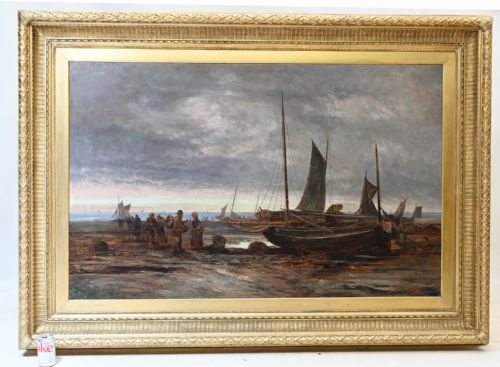


Victorian Fishing Oil Painting
A Victorian fishing oil painting captures maritime labour and coastal leisure with the rich pigment and observation typical of the nineteenth century.
Victorian Fishing Oil Painting
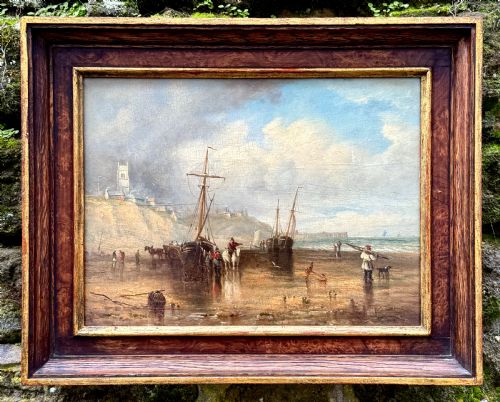
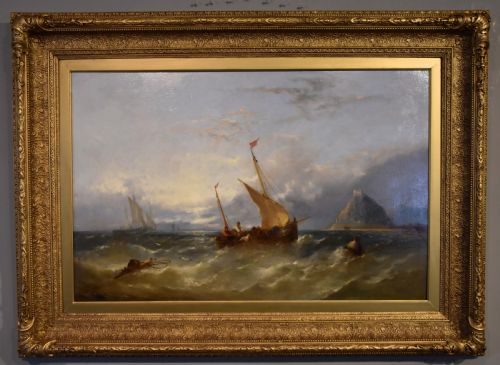
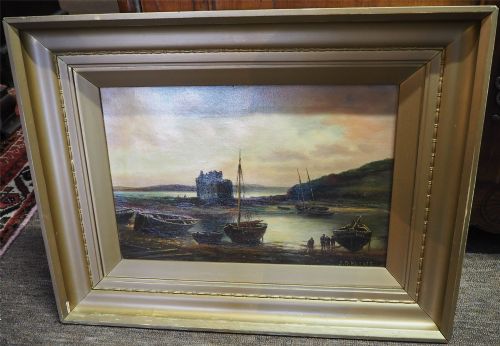
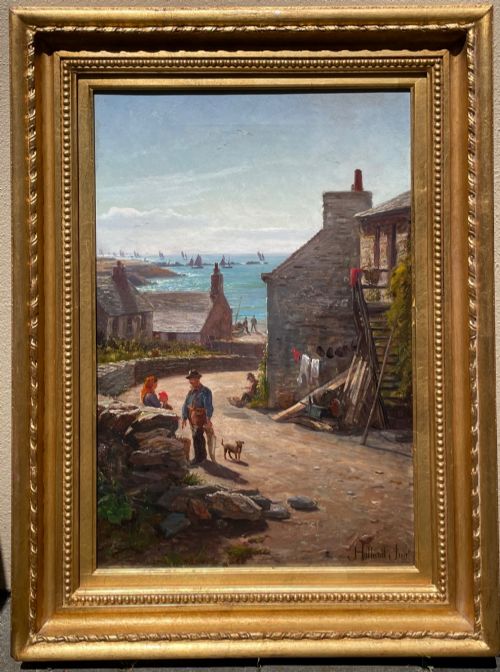
A victorian fishing oil painting brings together coastal views, marine scenes, and river landscapes populated by fishermen, angling figures, and working boats. These works document nineteenth-century maritime life, estuary scenes, and freshwater catches across British and European waterways.
Buyers encounter seascapes featuring fishing vessels off Cornwall, Scotland, and the Isle of Man alongside intimate genre scenes of anglers and fish markets. Canvases range from modest panel studies to large framed works set in giltwood frames.
The selection spans mid to late nineteenth-century productions, including contributions from named British and Dutch artists as well as unsigned regional school works.
How They Were Made
Painters applied oil paint to stretched canvas, prepared card, wood panels, and board supports. Grounds were laid down to receive brushwork that built up surface texture and depth.
Framing utilised carved and moulded gilt wood or giltwood to house the finished pictures. Signed pieces often carry contemporaneous inscriptions or signatures directly on the paint surface or panel.
Listings feature works spanning the nineteenth century, utilising oil on canvas, wood panel, card, and board with original giltwood frames.
What Varies in Quality
The strength of a composition rests on the handling of light, atmospheric weather effects, and the naturalistic depiction of water and figures. Finer examples display confident brushwork in rendering sea spray, rigging, and coastal architecture.
The integration of original giltwood framing and the presence of clear artist attribution or legible signatures elevate the standing of individual pictures.
Thomas Creswick·William Henry Williamson·John Holland·Gustave De Bréanski·James Kyd·T.S. Wallis·George Gregory·Frank Hyde·George Henry Knight·Sam Bough·Paul H Ellis·William Shayer·John Arthur Lomax·Horatio Henry Couldery·William Edward Webb·Hubert Thornley·James Russell·Benjamin Callow·Robert John Hammond·Pieter Cornelis Dommersen·Henry W. Henley
The Victorian Fishing Oil Painting Glossary
- Seascape
- A painting depicting the sea, coastal views, or marine vessels in open water.
- Genre painting
- A work showing scenes of everyday life, such as figures preparing fishing tackle or packing catches for market.
- Giltwood
- Wood carved and coated with gold leaf or a gold-coloured finish, commonly used for nineteenth-century picture frames.
- Panel
- A flat piece of wood used as a rigid support for oil painting instead of stretched canvas.
Victorian Fishing Oil Painting: Frequently Asked Questions
How do I identify the period of a painting?
Examine the canvas preparation, stretcher construction, and style of the giltwood frame alongside any inscriptions on the reverse.
Nineteenth-century works frequently display characteristic nineteenth-century pigments and stretcher wedges consistent with Victorian framing methods.
Were these painted outdoors or in a studio?
Artists often made preliminary sketches and studies outdoors by the coast or river before completing the finished oil painting in the studio.
Studio work allowed painters to manage larger canvases, such as six-foot maritime scenes, using detailed field notes.
How should I hang and light an oil painting?
Position the picture away from direct sunlight and excessive temperature fluctuations to protect the oil paint and canvas from cracking.
Use dedicated picture lighting mounted above the giltwood frame to illuminate the surface without generating heat.
What is the difference between a marine and a genre scene?
Marine paintings focus primarily on seascapes, coastal views, and fishing boats navigating rough or calm waters.
Genre scenes centre on human activity, showing figures preparing tackle, sorting catches, or relaxing by a riverbank.