
Victorian Figurative Wall Art
Victorian figurative wall art captures people in narrative scenes and portraits, bringing domestic interior drama and historical colour into a room.
Victorian Figurative Wall Art
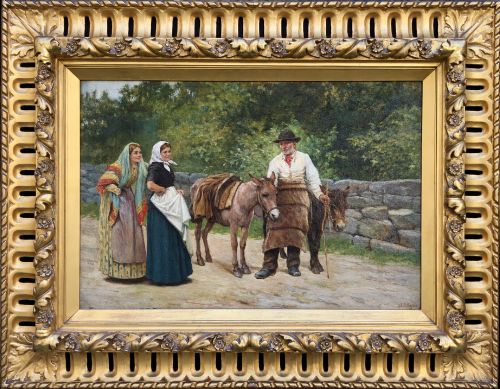
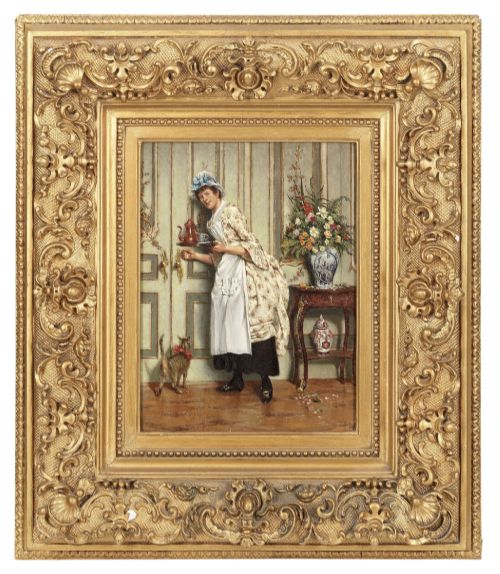
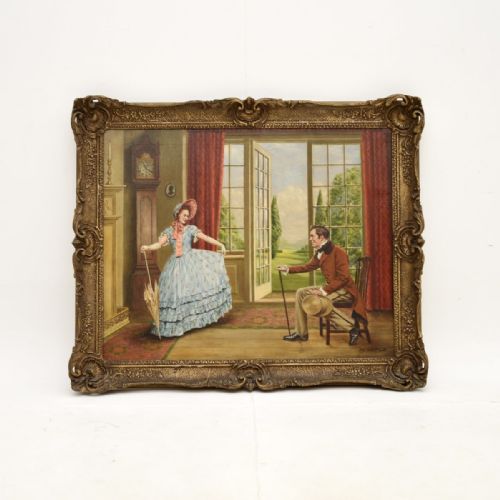
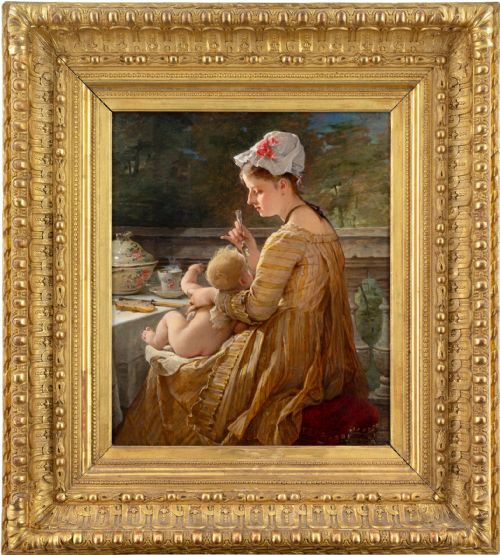
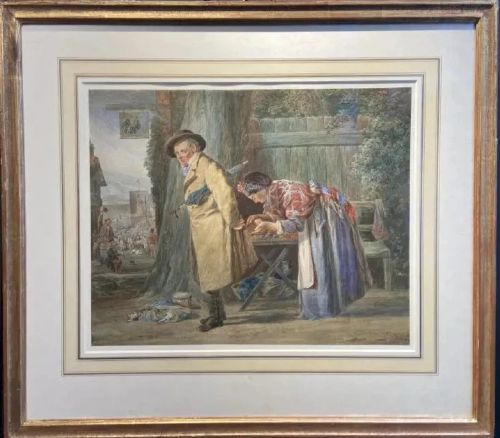
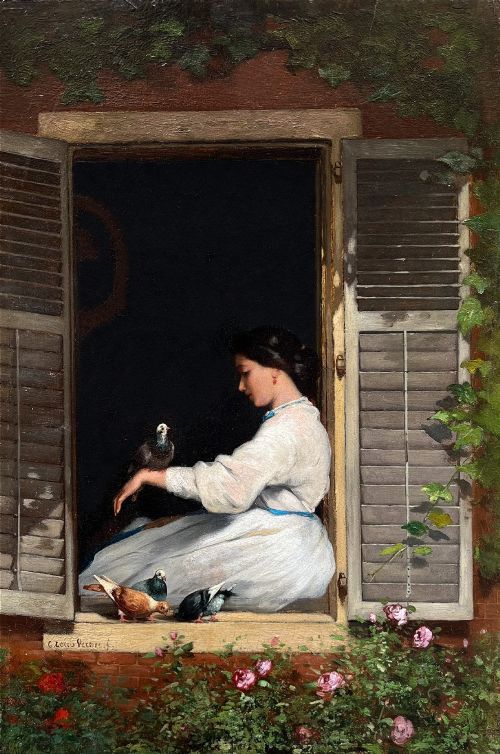
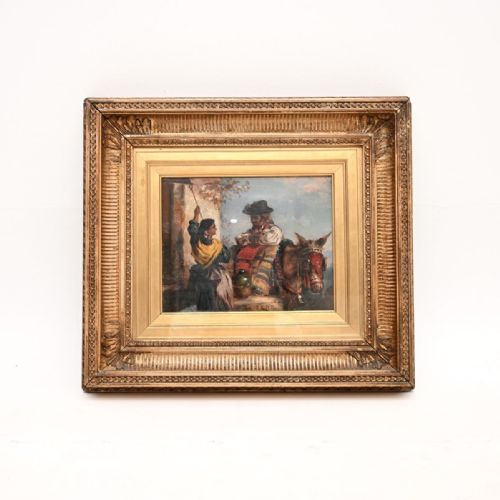
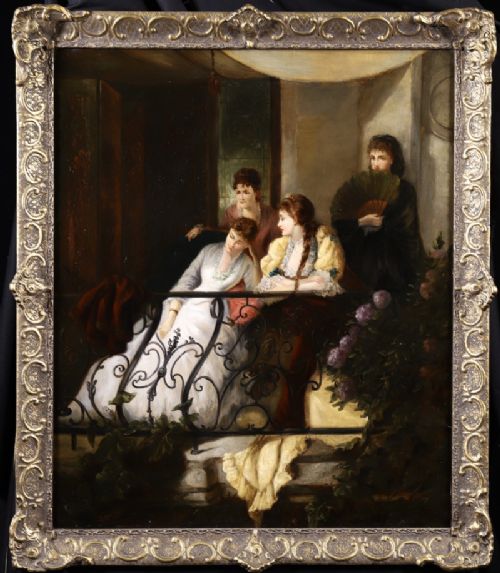
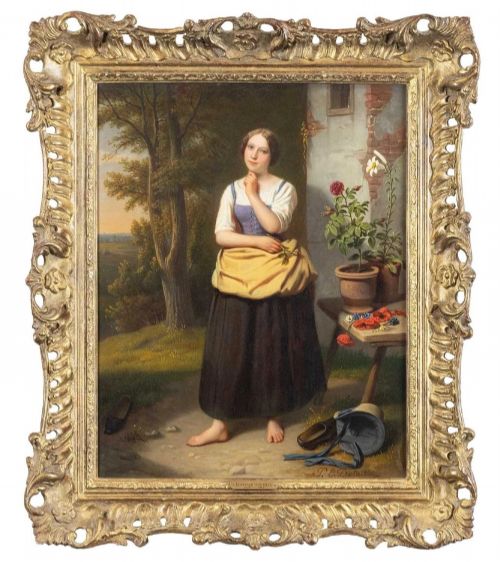
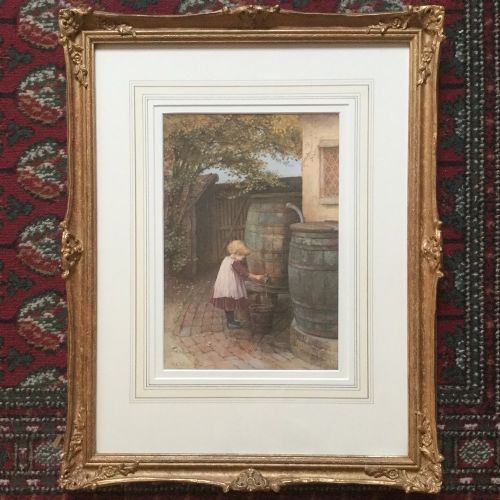
Victorian figurative wall art encompasses oil paintings, watercolours, prints and crystoleoms produced across the nineteenth century and into the early twentieth century. These works concentrate on human subjects, ranging from formal portraits and intimate domestic interiors to historical, literary and pastoral genre scenes. A buyer exploring this category meets depictions of everyday cottage life, children playing, quiet tea times and dramatic literary moments.
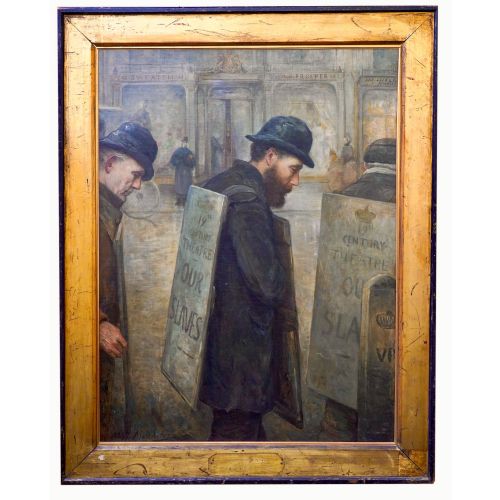
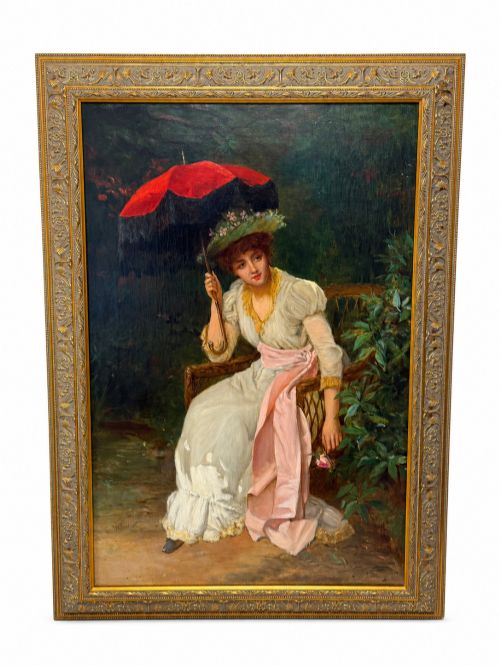
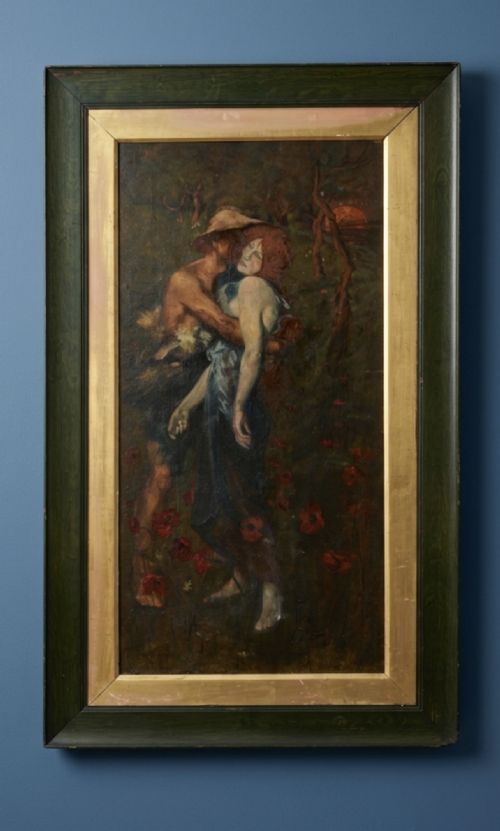
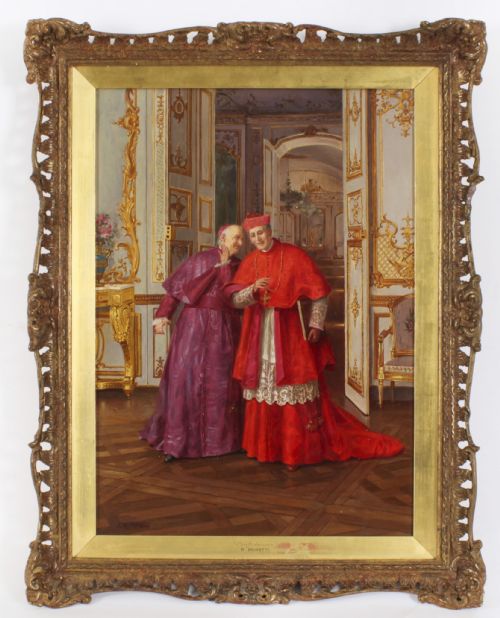
The most common examples on this page are oil paintings on canvas or panel, alongside framed watercolours and nineteenth-century prints. Artists of this era used the human figure to tell stories, record social history and evoke mood within interior spaces. They depict recognisable historical figures, anonymous rural workers, children, and ladies in period costume against detailed architectural or landscape backdrops.
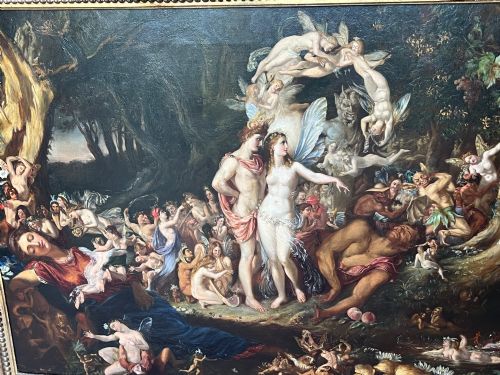
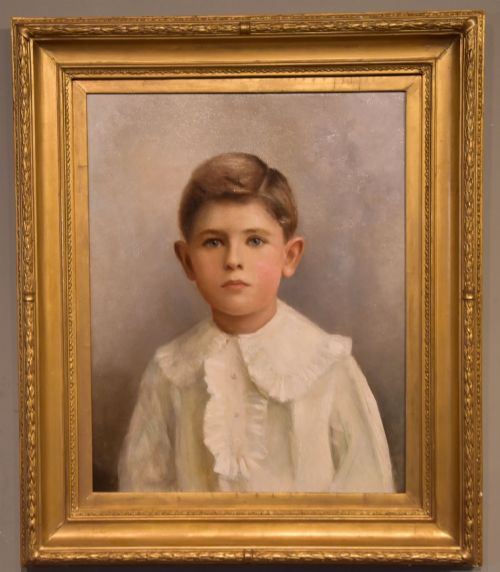
Origins span British and European studios, capturing everything from high Victorian academic realism to late nineteenth-century genre painting. Whether the subject is a single portrait of a boy, a pair of cottage interiors, or a literary narrative from Shakespeare, these pieces reflect the period's fascination with narrative art and character study. They offer a direct window into the domestic priorities and aesthetic tastes of the Victorian era.
Materials and Techniques
Artists built these works primarily using oil paint on stretched canvas or wooden panels, applying pigment to achieve depth in drapery and flesh tones. Many pieces utilise layered glazes to create luminous interior light, particularly in cottage scenes where daylight enters through small windows. Watercolours on paper offer a lighter, more translucent alternative, often finished with delicate brushwork.
Framing forms an integral part of the physical object, employing carved wood and gesso finished with gold leaf or giltwood. These heavy frames were designed to project the artwork outward from the wall, adding architectural weight to the composition. Printmakers also contributed via lithographs, mezzotints, woodblock prints and crystoleoms, applying various mechanical and manual transfer techniques to multiply popular imagery.
Listings feature works spanning the nineteenth century, including academic oils, genre scenes, watercolours, mezzotints and advertising prints.
Distinctions in Quality
The handling of light and narrative tension separates skilled academic and genre painters from competent amateurs. Superior examples integrate background details naturally to support the central figure, while secondary works treat the interior setting as a flat backdrop without atmospheric cohesion.
Sir Joseph Noel Paton·Felix Stone Moscheles·Stephen Samuel Lewin·Alfred Lyndon Grace·Adelaïde Salles-Wagner·Joseph H Barnes·Louis Charles Verwee·Henry Windsor Fry·William Oliver·Renato Moretti·Thomas Kent Pelham·Charles Edward Wilson·Harry Brooker·Charles Haigh Wood·Haynes King·James Kyd·Edward Stodart·Kunisada·Alfred Holst Tourrier·Charles Burton Barber·Frank Hyde·Robert Richard Scanlan·Ralph Hedley·Augustus Jules Bouvier·Jane Maria Bowkett
The Victorian Figurative Wall Art Glossary
- Genre painting
- A style depicting scenes from everyday life, ordinary people, and domestic interiors. These works tell stories about daily routines, family interactions and rural labour.
- Crystoleom
- A convex glass painting technique popular in the nineteenth century where a coloured print is transferred to glass and hand-painted from behind. This method creates an illusion of depth and a luminous surface finish.
- Gesso
- A plaster-like mixture applied to wooden frames before gilding. It provides a smooth base for intricate mouldings and gold leaf application.
- Mezzotint
- A printmaking process of the tonal engraving family where the artist works from dark to light on a roughened copper plate. It allows for subtle gradations of tone and shadow in portraiture.
- Pre-Raphaelite
- An artistic movement focused on detailed observation, bright colours, and complex literary or religious themes. Works in this style reject academic conventions in favour of fidelity to nature.
Victorian Figurative Wall Art: Frequently Asked Questions
What is Victorian figurative wall art?
Victorian figurative wall art comprises paintings, watercolours and prints from the nineteenth century that focus on human subjects. This category includes portraits, historical narratives and domestic genre scenes.
These pieces record the daily lives, fashions and social concerns of the era through human interaction and character studies.
How were these artworks displayed originally?
Original owners displayed these pieces in heavy giltwood and gesso frames designed to dominate reception rooms and parlours. They served as conversation pieces and markers of cultural literacy.
Works were often hung in dense arrangements alongside family portraits and decorative mirrors to fill Victorian wall space.
How do I care for an antique oil painting?
Antique oil paintings require stable environmental conditions away from direct sunlight and extreme temperature fluctuations. Keep them in rooms with moderate humidity to prevent canvas tension issues.
Dust the surface gently with a soft, dry brush and avoid using chemical cleaners or water on either the canvas or the frame.
How can I distinguish a watercolour from an oil painting?
Oil paintings feature a textured surface built up with layers of pigmented oil on canvas or panel, often protected by varnish. Watercolours are executed on paper under glass, showing translucent washes of colour.
Watercolours lack the impasto and heavy gloss of oils, relying instead on the white of the paper to provide brightness.