


Victorian Figural Candlesticks
Victorian figural candlesticks combine sculpture and illumination, giving a room character through cast metal and painted porcelain.
Victorian Figural Candlesticks
When you search for Victorian figural candlesticks, you are looking at items that incorporate human, animal, or allegorical figures into lighting supports. These pieces emerge in various forms during the nineteenth century, including single candlesticks and multi-armed candelabra.
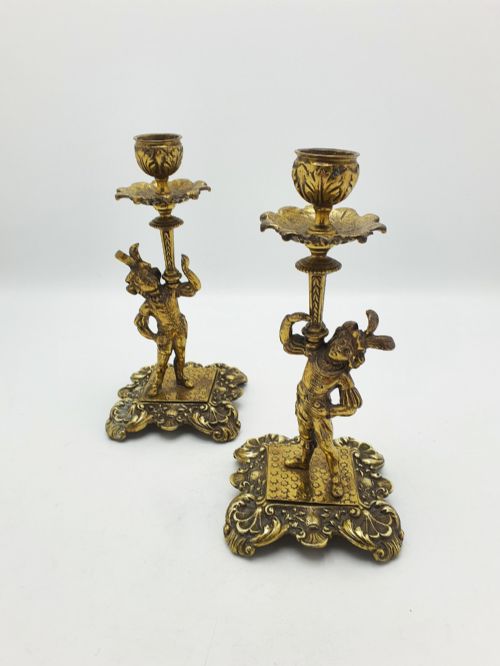
The versions you meet most frequently on this page originate from British, German, and French workshops. They depict cavaliers, soldiers, shepherds, animals, and mythological figures standing on socle or pedestalled bases.
Makers utilise distinct regional aesthetics, shifting from Rococo Revival curves to Egyptian Revival motifs and Black Forest carved wood. Each pair demonstrates how nineteenth-century makers blended decorative sculpture with functional household illumination.
Materials and production methods
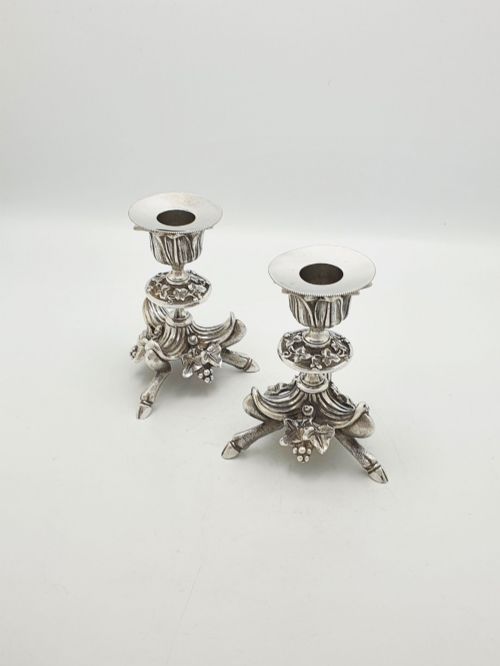
Foundries produced metal examples by casting bronze, brass, spelter, and silver plate, often finishing the surfaces with gilding, gold leaf, or ormolu. These metal pieces rely on detailed moulding to render the drapery, armour, and facial expressions of the figures.
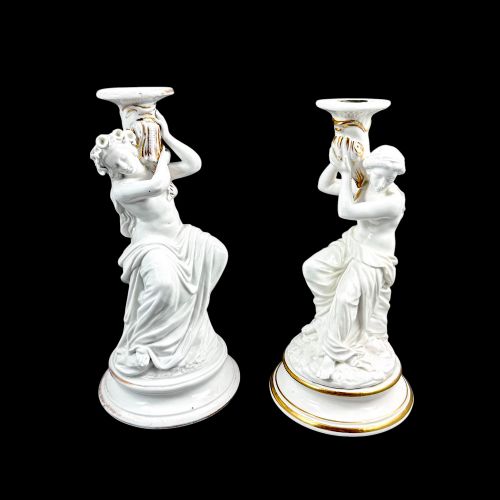
Porcelain works from factories such as Sitzendorf, Volkstedt, Minton, and Royal Worcester involved slip casting or hand modelling. Artisans then painted the figures by hand, adding polychrome enamels and blanc de chine glazes before firing.
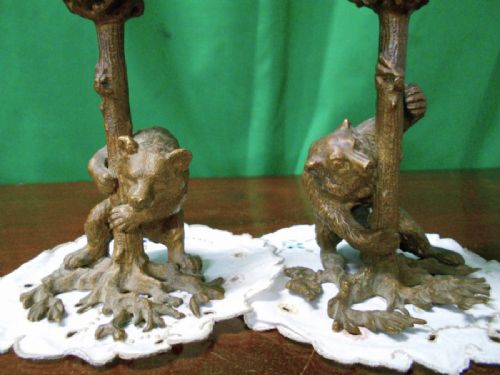
Wood pieces required skilled carving, visible in carved wooden female figures and Black Forest bear designs. These wooden items utilise natural grains and applied patination rather than metal plating or ceramic glazes.
A pair of carved wooden bears holds the candles in one unusual Black Forest piece.
Distinctions in quality
Surface preservation marks the difference between well-maintained items and those with heavy wear. High-grade pieces keep their original fire gilding, silver plating, or hand-painted enamel colours intact without extensive overpainting.
Completeness alters the standing of a pair, particularly with multi-armed candelabra and porcelain figures holding delicate attributes. Pieces retaining their original drip pans, sconces, and unblemished extremities represent the upper tier.
WMF·Sitzendorf·Volkstedt·Royal Worcester·Minton
The Victorian Figural Candlesticks Glossary
- Socle base
- A short plinth or pedestal supporting the figure and candle holder. It gives stability to the vertical sculpture.
- Spelter
- A zinc alloy used as a cheaper alternative to bronze in nineteenth-century metalwork. It frequently received a bronze-coloured coating or paint.
- Blanc de chine
- A white porcelain glaze originating in China but adopted by European factories like Sitzendorf. It creates a smooth, uniform white surface across figural pieces.
- Ormolu
- Finely ground high-carat gold applied to bronze objects through a mercury amalgamation process or via electroplating. It produces a bright, enduring golden finish.
- Candelabra
- A branched lighting fixture holding multiple candles. These branch out from a central figural stem.
- Allegorical figure
- A symbolic human form representing an abstract idea, season, or concept, such as summer or autumn.
Victorian Figural Candlesticks: Frequently Asked Questions
What materials were used to make Victorian figural candlesticks?
These pieces were produced in a wide variety of materials depending on the manufacturing centre and period. Common mediums include cast bronze, brass, spelter, and silver plate, alongside glazed porcelain from major European factories.
Wooden examples also appear, particularly in carved items and Black Forest animal designs. Many metal pieces received secondary finishes such as gold leaf, gilding, or ormolu.
How do I identify Sitzendorf porcelain candlesticks?
Sitzendorf pieces generally feature hand-painted porcelain figures, including shepherds, allegorical characters, and blanc de chine subjects. They often incorporate floral motifs and detailed rococo scrollwork around the base and candle sockets.
Studying the modelling and the palette helps distinguish them from other German factories like Volkstedt or Dresden. The figures usually display characteristic nineteenth-century romantic or pastoral styling.
Were these candlesticks used for everyday lighting?
In the nineteenth century, these objects served both practical illumination duties and decorative display functions on mantelpieces and side tables. Their sculptural forms meant they acted as ornaments even when unlit.
Many pairs show signs of period use around the drip pans and sockets where wax accumulated. Multi-armed versions provided stronger light for formal reception rooms.
How can I tell different revival styles apart?
Revival styles draw on distinct historical periods that influence the posture and dress of the figures. Rococo Revival pieces feature asymmetrical curves, floral elements, and soft pastel porcelain colours.
Renaissance Revival and Neoclassical examples display formal armour, soldiers, cavaliers, or classical drapery. Egyptian Revival items incorporate specific motifs like storks and pharaonic or architectural details.