




Victorian Fainting Chair
A victorian fainting chair offers a low, angled back for semi-reclining comfort.

Victorian Fainting Chair
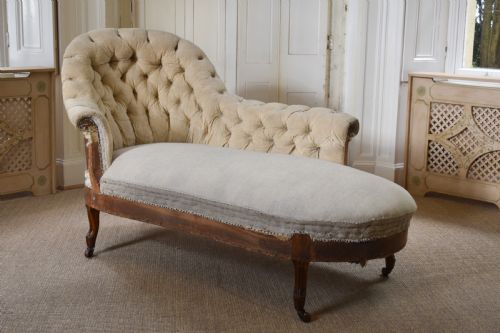
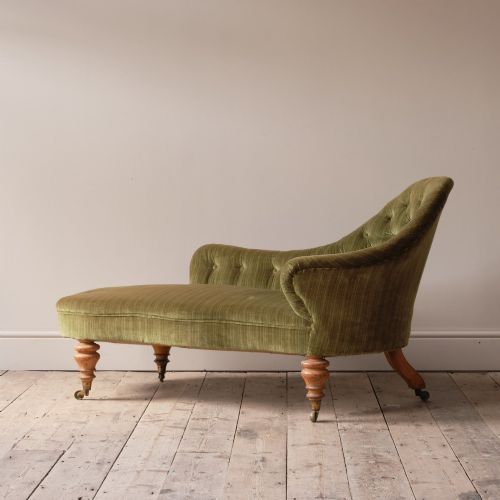
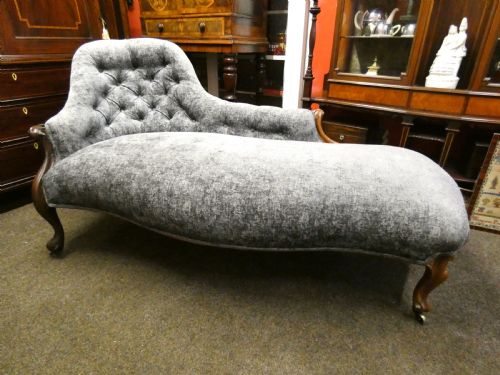
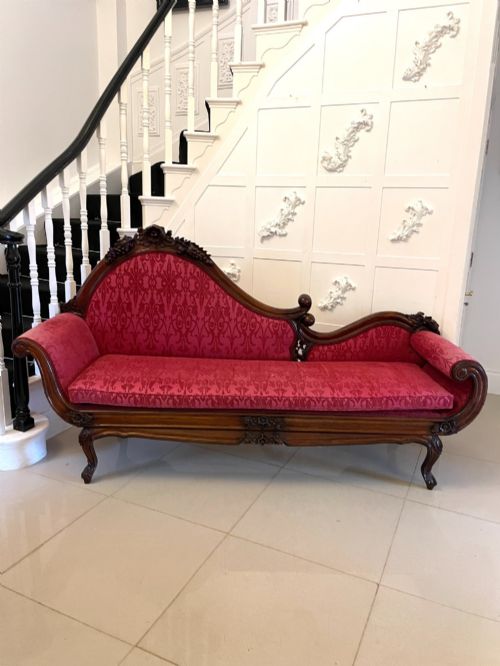
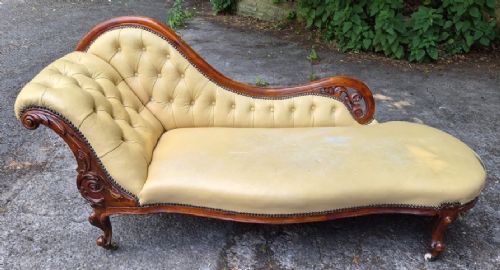
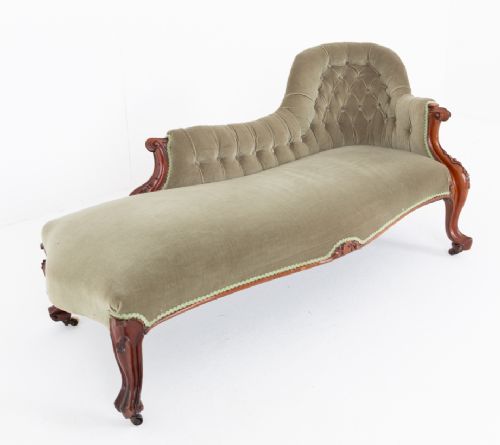
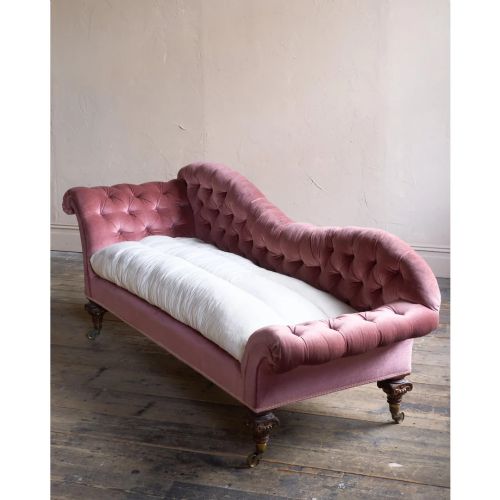
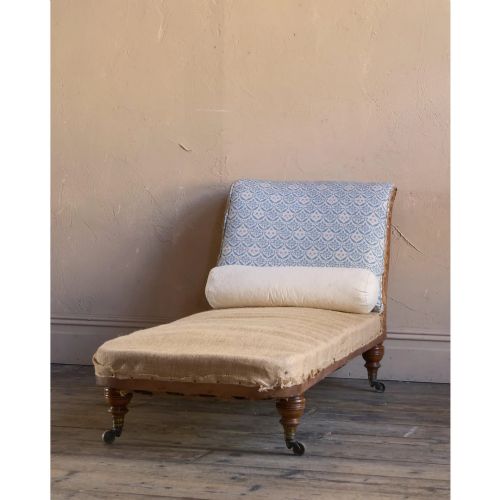
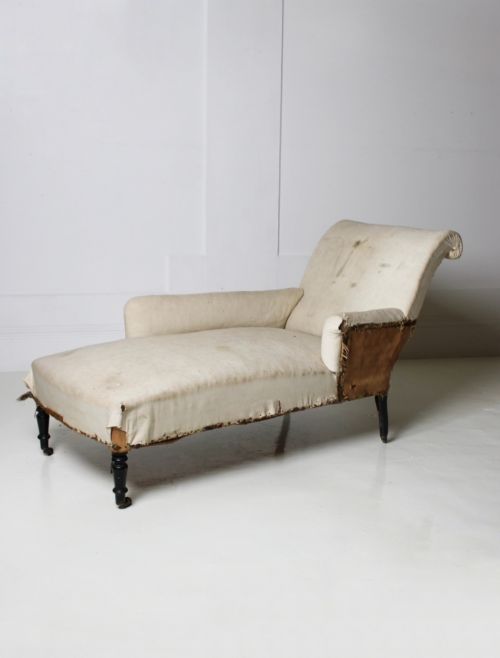
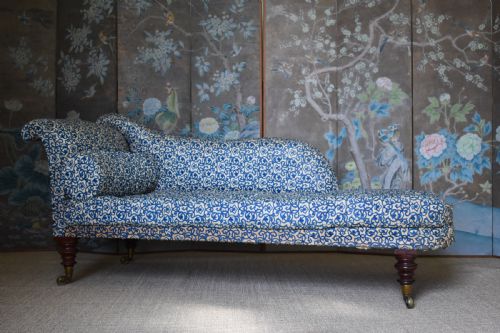
A victorian fainting chair is encountered in forms such as chaise longues, daybeds, and reclining daybeds dating across the nineteenth century. These seating pieces combine a raised end scroll with an extended upholstered body designed for resting in a semi-reclined posture.
The pieces listed span the Victorian period alongside earlier William IV and later Napoleon III influences. Mahogany and walnut frame timbers appear frequently alongside rosewood, supported by brass castors and upholstered in velvet, damask, fabric, or leather.
Materials and construction
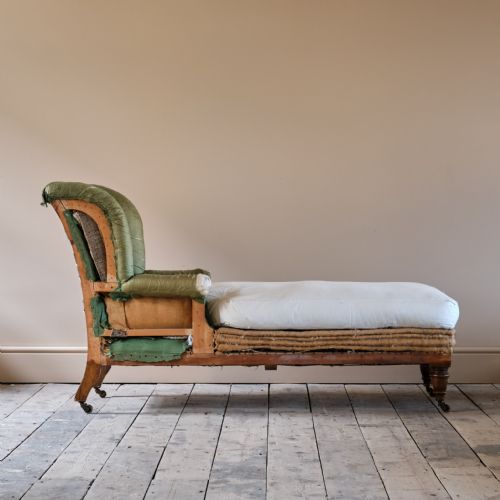
Frames are constructed from solid timber like mahogany, walnut, and rosewood, often shaped with carved details and supported on brass castors. Column legs and piecrust mouldings punctuate the woodwork on specific examples.
Victorian Fainting Chair Retail Price Guide 2026
Typical asking prices for victorian fainting chair among the pieces listed under this phrase on Sellingantiques today, from the lower quarter to the upper quarter. They describe what is for sale here now, not the wider market.
Certain daybeds hide secret storage compartments inside their wooden frames, keeping nineteenth-century belongings tucked completely out of sight.
Distinctions in craftsmanship
Quality rests in the sculptural depth of the timber frame carving and the crispness of details like Ionic column legs or piecrust edges. Dense hardwoods such as mahogany and rosewood provide sturdy structural integrity.
Upholstery execution distinguishes standard work from exceptional output, seen in tight buttoning, robust internal webbing, and the use of quality textiles such as silk damask or supple leather.
Howard and Sons·Holland and Sons·Jas Shoolbred·Miles and Edwards
The Victorian Fainting Chair Glossary
- Chaise Longue
- A long upholstered chair shaped like a sofa combined with a chair, designed for reclining. This French term translates to long chair.
- Daybed
- An upholstered couch or recliner used for resting during daytime hours. It shares similar proportions to the chaise longue.
- Buttoned
- An upholstery technique where indentations are formed by pulling buttons deep into the padding in a diamond pattern. This secures the internal stuffing securely.
- Damask
- A reversible figured fabric woven on a loom, often featuring floral or scroll patterns. It provides a formal appearance on nineteenth-century seating.
- Castor
- A small wheel fitted to the base of furniture legs to ease movement across floors. Brass is the common metal used for these fittings on nineteenth-century frames.
Victorian Fainting Chair: Frequently Asked Questions
How were these chairs used?
These pieces were designed for resting in a semi-reclined position during the day without retiring to a bedroom.
They allowed individuals to lounge comfortably in drawing rooms while wearing restrictive historical garments.
How do I identify a Victorian piece?
Nineteenth-century examples display characteristic timber frames in mahogany, walnut, or rosewood paired with specific upholstery styles like buttoning.
Details such as brass castors and scroll ends help distinguish the period from later reproductions.
Where should I place a daybed?
These long seats suit living rooms, large hallways, or bedrooms where their asymmetrical profile can be viewed from the side.
Position them away from direct sunlight to protect delicate fabrics like velvet and silk damask.
What is the difference between styles?
William IV and early Victorian examples lean towards heavier timber frames with classical architectural details, while Napoleon III pieces introduce ornate moulded edges.
Later Victorian and Edwardian variations often incorporate reclining mechanisms or simpler columnar supports.