




Rosewood Lounge Chair
A rosewood lounge chair brings heavy timber grain and deep domestic comfort into a room, spanning Regency curves and Victorian ease.
Rosewood Lounge Chair
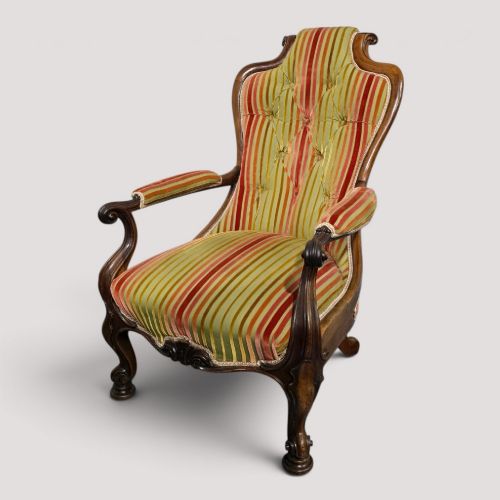
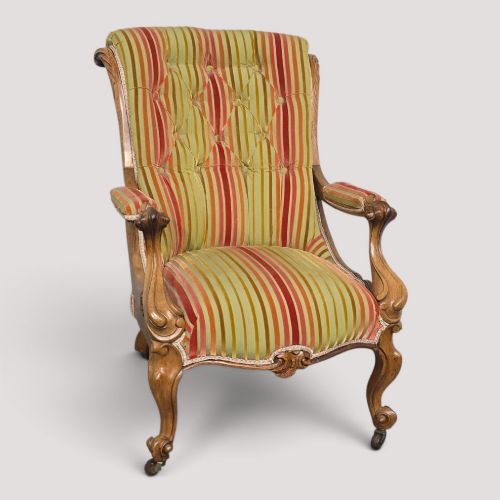
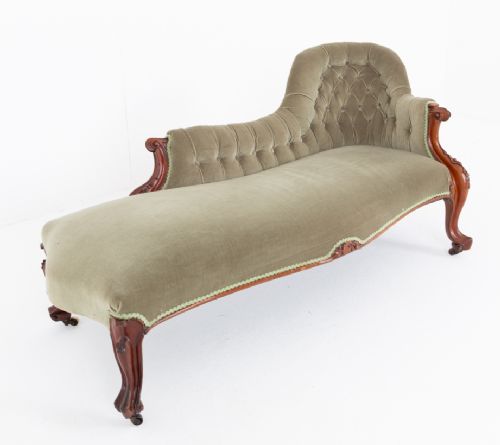
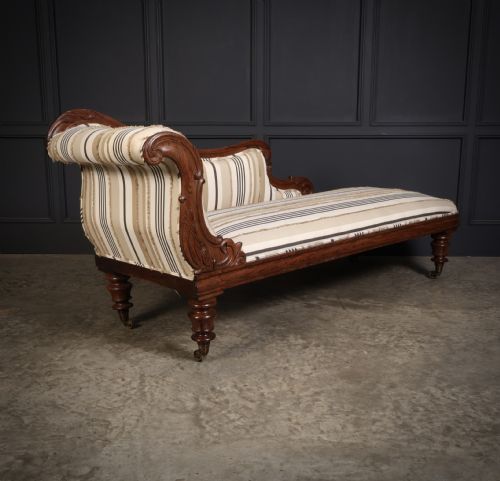
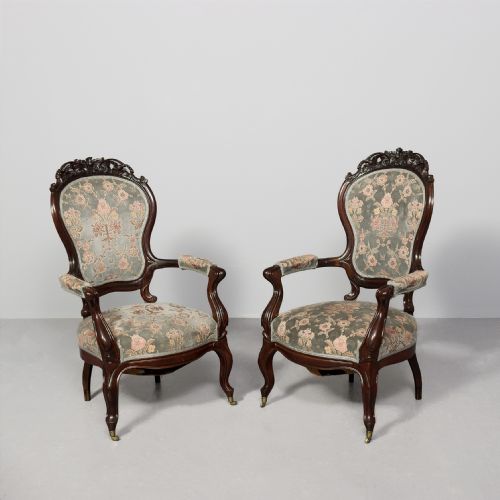
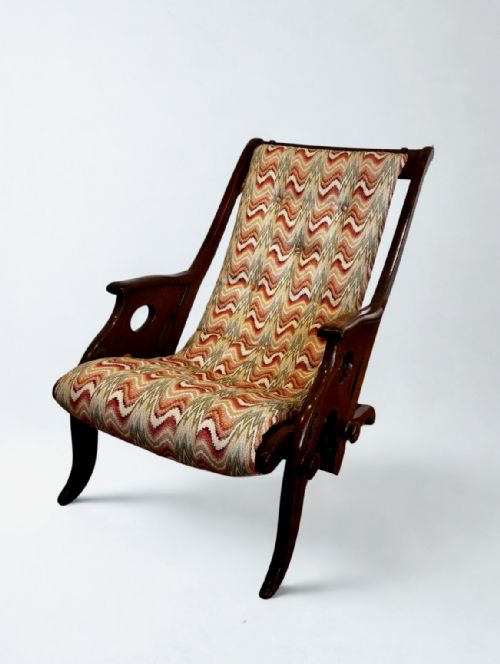
When searching for a rosewood lounge chair, buyers encounter a variety of forms designed for repose, primarily library armchairs, chaise longues, and low nursing chairs from the nineteenth century. These pieces reflect the heavy timber framing favoured during the Regency, William IV, and Victorian eras, often displaying rich reddish-brown figuring in the wood.
The selection ranges from carved cabriole-legged armchairs to Anglo-Indian planter chairs and daybeds. Victorian examples frequently utilise showwood frames paired with buttoned backs, while earlier Regency pieces lean towards architectural lines and library settings.
What varies in quality
Quality rests in the crispness of the timber carving and the architectural proportion of the frame, distinguishing finely hand-carved showwood from simpler joinery. The selection and matching of the rosewood grain across prominent sections dictate the visual weight of the piece.
Integrity of the underlying frame construction and the preservation of original upholstery methods separate everyday seating from exceptional library and drawing-room examples.
Listings span the nineteenth century, featuring Victorian, Regency, William IV, and Edwardian periods executed in rosewood, walnut, and padauk.
J. Herbert McNair
The Rosewood Lounge Chair Glossary
- Showwood
- Timber framing left exposed around the upholstered elements of a chair. This allows the polished grain of the rosewood to frame the fabric.
- Cabriole leg
- A furniture leg that curves outward in a convex arc and tapers inward in a concave arc, ending in a pad or scroll foot. It is common on mid-nineteenth-century seating.
- Chaise longue
- An upholstered long chair or daybed designed for reclining. Nineteenth-century versions often feature a scrolled end rest.
- Parcel gilt
- Partially gilded with gold leaf or paint over a wood or gesso base. This technique highlights specific carved details on the frame.
- Prie Dieu chair
- A low devotional chair featuring a padded top rail for kneeling or resting arms. Victorian examples are frequently framed in rosewood.
Rosewood Lounge Chair: Frequently Asked Questions
How do I identify a Victorian rosewood armchair?
Look for dense timber framing, dark reddish-brown grain, and deep buttoned upholstery typical of mid-nineteenth-century workshops. Carved cabriole legs and showwood rails often accompany these pieces.
Compare the proportion and weight of the frame against Regency designs, which tend to exhibit sharper classical lines and less exuberant carving.
What is an Anglo-Indian planters chair?
An Anglo-Indian planters chair is a deep-seated timber chair featuring extended, flat armrests designed for reclining in colonial climates. They utilise tropical hardwoods like Bombay rosewood.
These pieces often display generous proportions and turned structural elements suited to verandah or library use.
Where should I place a chaise longue?
A chaise longue requires sufficient floor space to be viewed in the round, often suiting a spacious bedroom, library, or drawing room. Its asymmetrical profile acts as a focal point.
Ensure the scrolled end faces away from heavy traffic routes to maintain balance in the room layout.
How do I care for antique rosewood furniture?
Maintain antique rosewood by keeping it away from direct sunlight and sudden temperature changes, which can dry out dense timber. Dust regularly with a dry cloth.
Apply a conservative amount of beeswax periodically to nourish the polished surface without building up residue on the grain.