
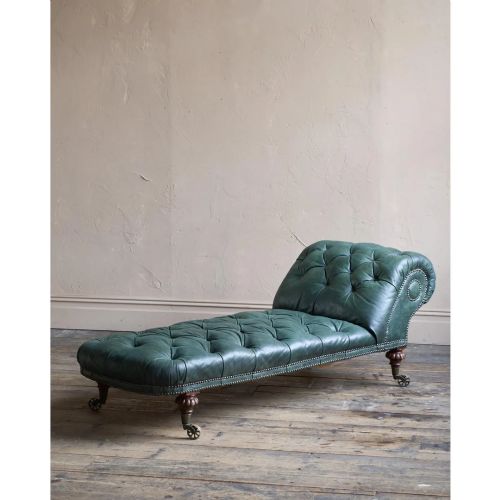
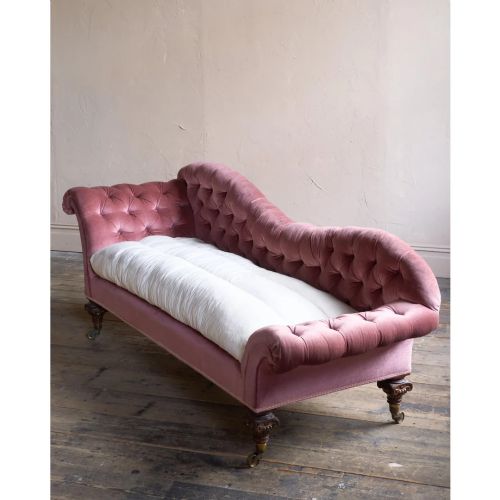
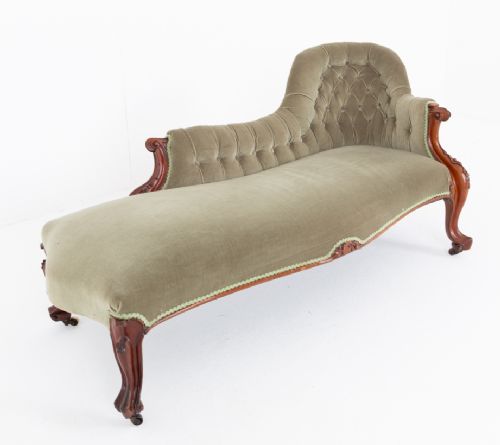


Buttoned Back Chaise
A buttoned back chaise is a long, reclining seat designed for luxurious repose, combining rich upholstery with substantial wooden frames.
Buttoned Back Chaise
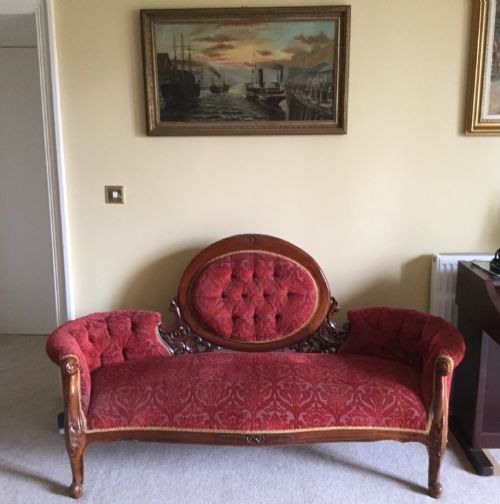
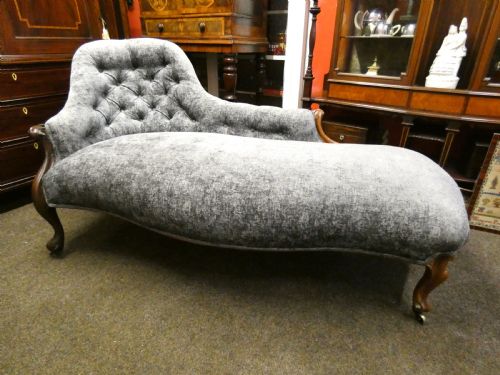
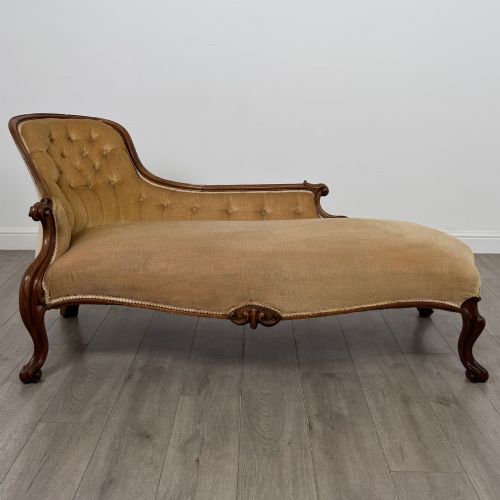
A buttoned back chaise brings together nineteenth-century daybeds, couches, and asymmetric loungers intended for semi-recumbent leisure. The most frequent examples appearing on this page belong to the Victorian era, spanning rosewood and mahogany frames created across the mid-to-late nineteenth century.
Makers and designers working in Regency, William IV, and Louis XVI Revival idioms also produced variations of this form, incorporating single raised ends, double spoon-backs, and scroll arms. Alongside traditional chaises, buyers encounter related seating such as double-ended sofas, conversation seats, and daybeds sharing the characteristic deep-buttoned upholstery.
Origins range from English workshops to French ateliers, reflecting diverse stylistic influences from ornate rococo revival curves to restrained classical columns. These pieces generally serve as principal salon furniture, daybeds for libraries, or occasional seating within large bedrooms.
Materials and construction
Carpenters constructed the primary framework using dense hardwoods including mahogany, walnut, and rosewood, occasionally employing ebonised finishes, gilt decoration, or brass mounts. These structural timbers supported deeply sprung seat bases built to sustain continuous weight and heavy daily use.
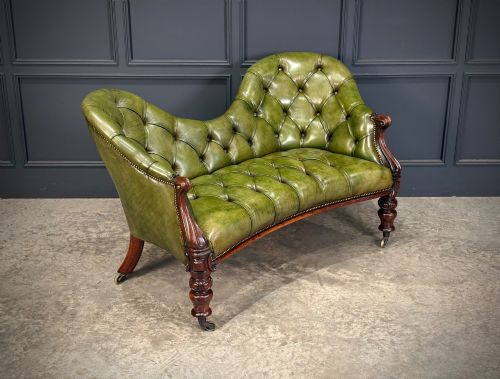
Upholsterers applied horsehair or traditional stuffings beneath surface coverings of velvet, leather, brocade, and fabric. Deep buttoning, executed by drawing cords through the padding to secure tension, created the characteristic diamond pattern across the backrests.
Upholstery materials recorded on these daybeds and settees include velvet, leather, brocade, and fabric.
Judging execution and finish
Quality rests heavily upon the crispness of the timber carving and the architectural integrity of the frame. Finer pieces display deeply sculpted rosewood or mahogany show-wood frames with fluent scrollwork, whereas standard examples rely on simpler turned or column legs.
The precision of the upholstery work distinguishes superior pieces, particularly the symmetry of the buttoning and the choice of high-grade leather, velvet, or brocade. Frames that retain their original joinery stability without excessive movement command greater appreciation among collectors.
Holland & Sons·Miles & Edwards·Howard and Sons
The Buttoned Back Chaise Glossary
- Chaise longue
- A long upholstered chair for reclining, literally translating from French as long chair. These seating forms typically feature a single raised backrest at one end.
- Buttoned back
- Upholstery secured with deep indentations held by buttons in a geometric grid. This technique keeps internal stuffing evenly distributed while adding textural relief.
- Rosewood
- A dense, heavily figured timber prized for nineteenth-century cabinet work and show-wood frames. Its dark grain accepts a high polish.
- Show-wood
- Exposed wooden framing surrounding upholstered areas on antique seating. Skilled carvers decorated these visible structural parts with floral motifs or moulding.
- Daybed
- A piece of furniture combining the functions of a chair and a bed for daytime resting. Examples often integrate low upholstered ends or headboards.
Buttoned Back Chaise: Frequently Asked Questions
Where did people place a buttoned back chaise in a Victorian home?
Owners positioned these reclining seats in formal drawing rooms, large parlours, and private boudoirs where guests gathered or individuals retired to rest during the day.
Their elongated proportions suited placement against principal walls or angled near windows to capture natural light for reading and needlework.
How do I distinguish a Victorian chaise from a Regency example?
Regency pieces lean towards classical restraint, often utilising straight mahogany lines, brass inlay, and scrolling ends inspired by ancient Greek and Roman forms. Victorian variations introduce heavier proportions, exuberant rosewood or walnut carving, and more elaborate button-tufted upholstery.
Studding the frame with specific revival motifs, such as Louis XVI columns or rococo curves, further points towards the later nineteenth-century manufacturing period.
How should I care for antique leather upholstery on a chaise?
Maintain antique leather by keeping it away from direct sunlight and heat sources that dry out the hide and cause cracking. Apply specialist leather conservation creams periodically to nourish the material and preserve its suppleness.
Avoid harsh modern cleaning solvents and dust the buttoned crevices regularly with a soft brush to prevent grit accumulation.