


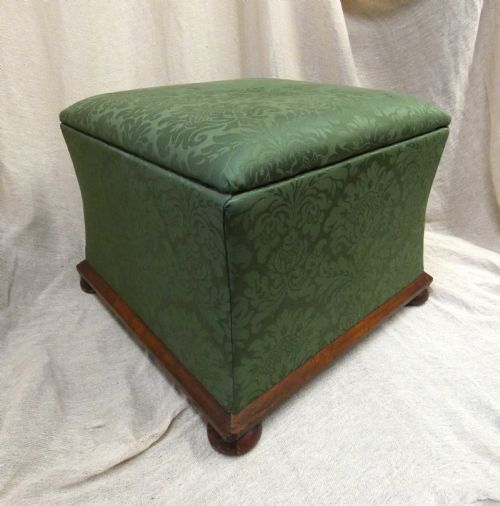


Victorian Fabric Footstool
A victorian fabric footstool brings domestic comfort and period character to a room, offering low seating or a place to rest tired feet.
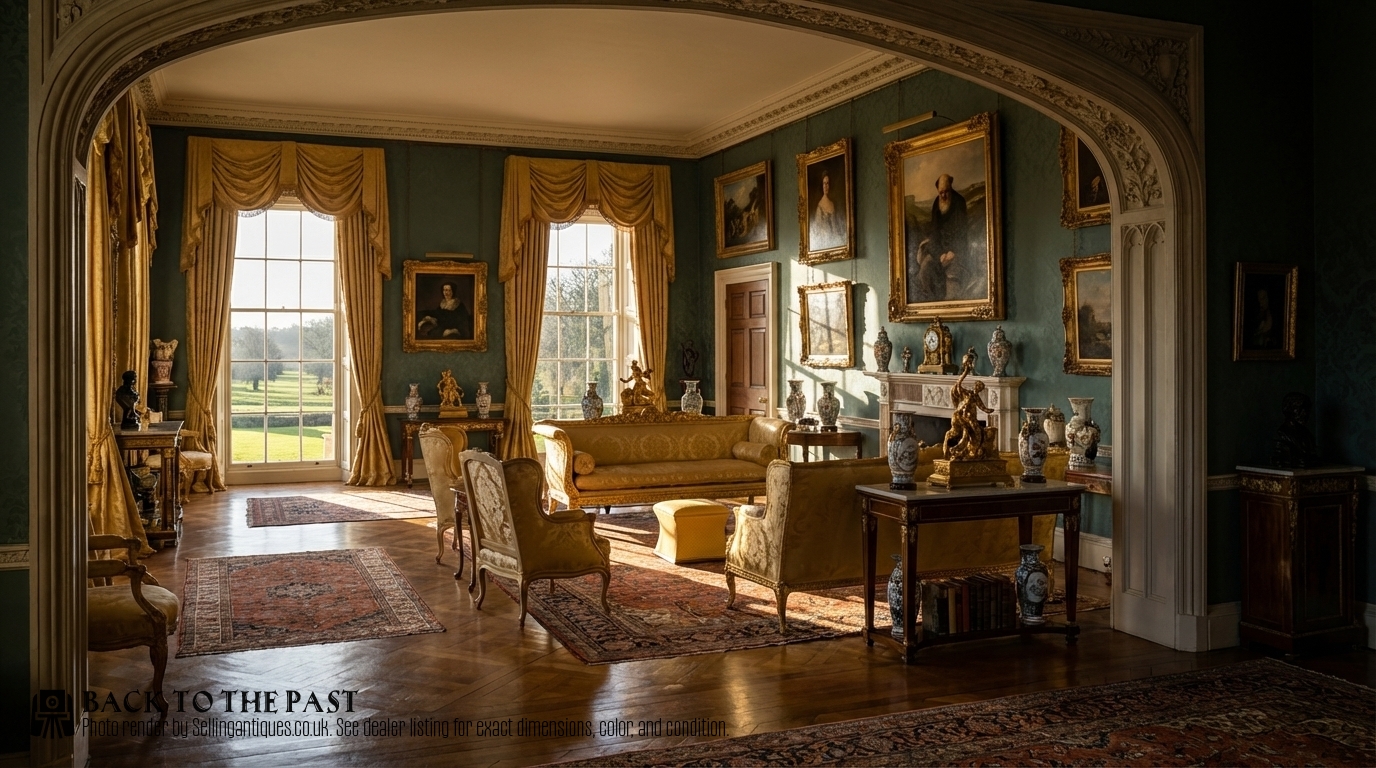
Victorian Fabric Footstool
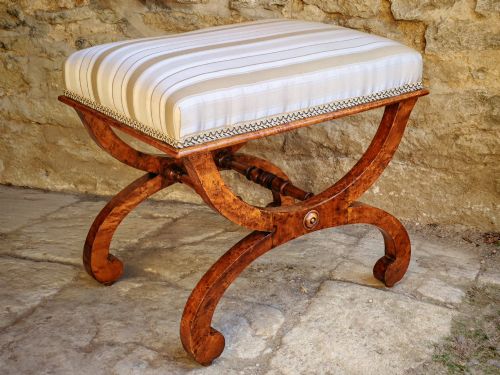
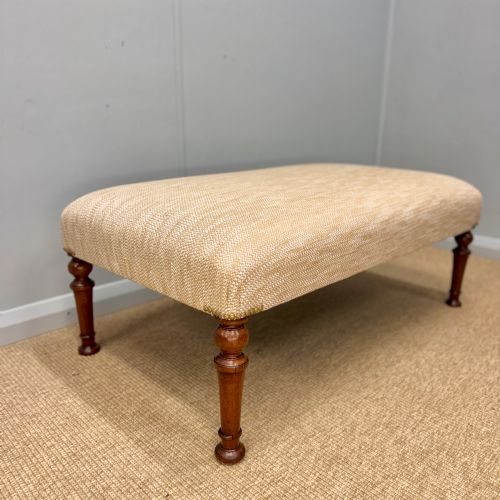
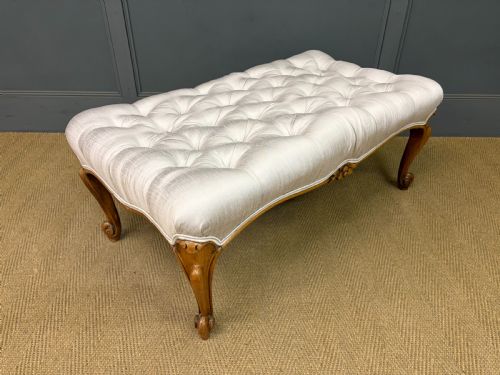
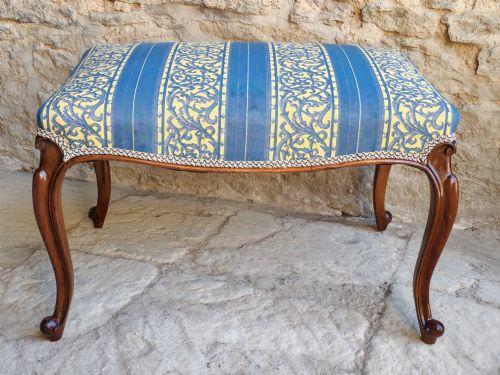
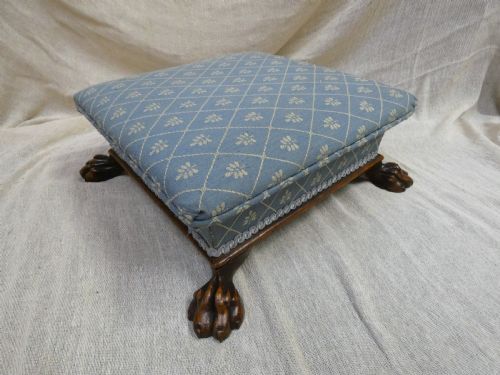
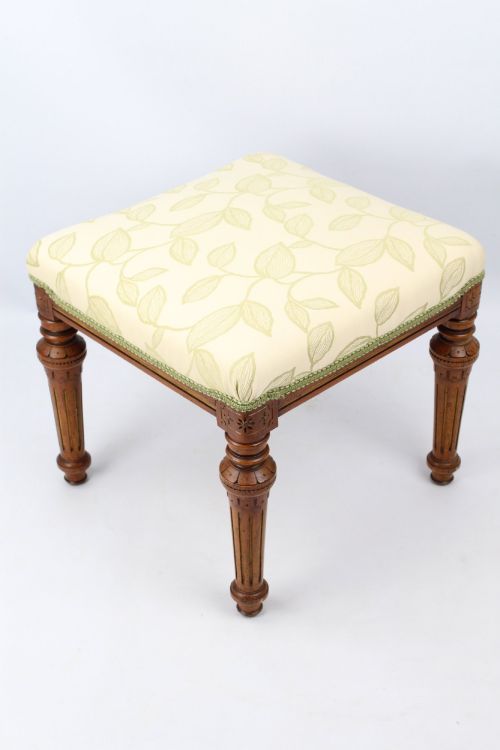
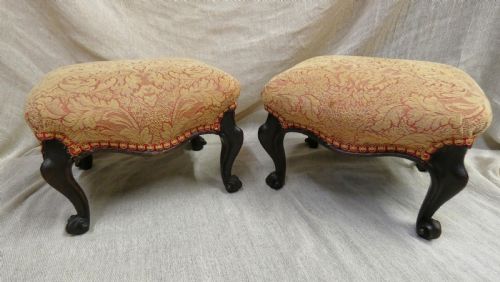
A victorian fabric footstool appears in various timber frames and upholstery combinations across this selection. Buyers find low footstools, larger ottomans, and dressing table stools rooted in the nineteenth century.
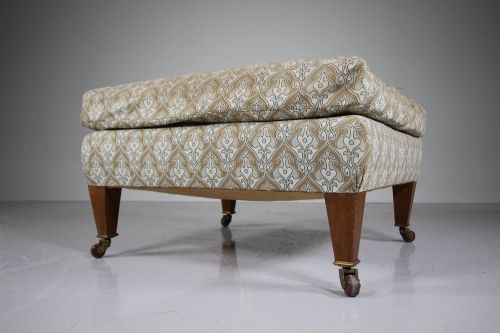
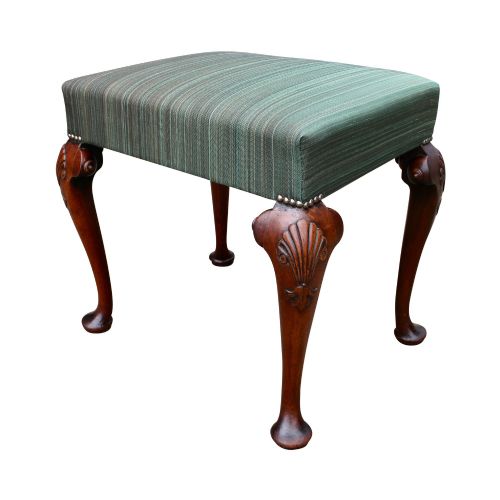
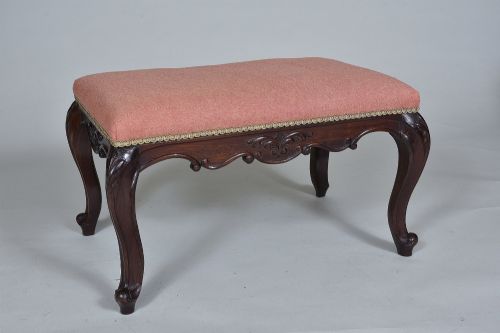
The most common examples on this page feature walnut or mahogany frames paired with fabric upholstery. Many pieces sit low to the floor, occasionally supported on brass castors or cabriole legs.
Makers designed these items for parlours, bedrooms, and drawing rooms. Surviving pieces range from simple footstools to large ottomans with storage compartments.
Materials and Construction Techniques
Frames rely on timbers such as walnut, mahogany, and rosewood, shaped into cabriole legs or solid bases. Joinery methods of the period ensure stability across both small footstools and large ottomans.
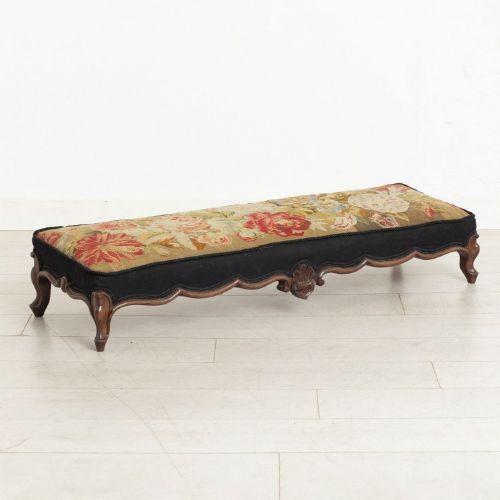
Upholstery fabric covers the padded seats, sometimes featuring needlepoint, buttoning, or original textile coverings. Brass castors frequently provide mobility to larger examples on this page.
Victorian Fabric Footstool Retail Price Guide 2026
Typical asking prices for victorian fabric footstool among the pieces listed under this phrase on Sellingantiques today, from the lower quarter to the upper quarter. They describe what is for sale here now, not the wider market.
Listings feature walnut, mahogany, and rosewood frames paired with fabric upholstery, needlepoint, and brass castors.
Markers of Quality
Quality reveals itself in the carving of the wooden frame and the choice of dense timber like rosewood or walnut. Superior pieces display crisp detailing on cabriole legs and robust internal construction.
The preservation of original fabric or needlepoint influences the appeal of a piece. Finer examples balance substantial proportions with elegant curves and functional elements such as castors or storage.
Howard & Sons·Liberty & Co
The Victorian Fabric Footstool Glossary
- Cabriole leg
- A furniture leg that curves out and then in, resembling an animal's curving leg. This shape appears frequently on walnut and mahogany stools from the period.
- Ottoman
- A low upholstered seat or stool without a back or arms. Larger versions often include internal storage space for blankets or linen.
- Needlepoint
- Canvas worked with wool or silk using counted thread embroidery. This technique decorates the top surface of several antique footstools.
- Castor
- A small wheel mounted on a swivel attached to the legs of furniture. They allow heavy footstools and ottomans to move easily across carpets.
Victorian Fabric Footstool: Frequently Asked Questions
Where should I place a footstool?
These pieces suit living rooms placed before an armchair or sofa. They also function well at the end of a bed or beside a dressing table.
Smaller low stools fit easily into compact spaces while larger ottomans anchor the centre of a room.
How do I care for original fabric?
Vacuum textile surfaces gently using a low suction attachment to remove dust. Protect antique upholstery from direct sunlight to prevent fading.
Avoid liquid cleaners on fragile needlepoint or vintage fabric. Professional textile conservation yields the safest results for delicate items.
Can I use an ottoman for storage?
Certain designs include built-in compartments beneath the upholstered lid. These hollow bases were traditionally used for blankets and linen.
Check the listing details to confirm whether a specific ottoman includes storage capacity.
How do I identify a Victorian stool?
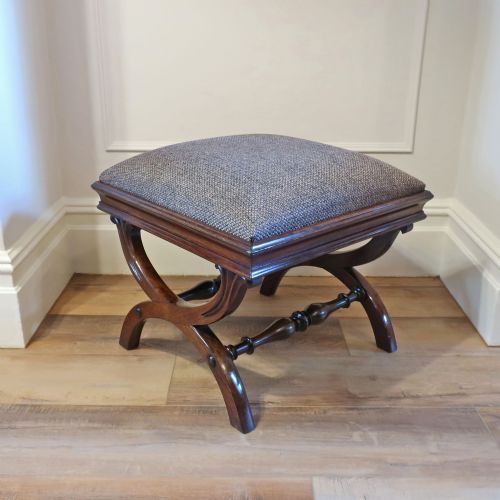
Look for characteristic timbers such as mahogany, walnut, and rosewood combined with period upholstery styles. Cabriole legs and turned wooden supports frequently point to nineteenth-century manufacture.
Details like brass castors and deep buttoning provide further clues to the age of the piece.