



Victorian Executive Chair
A victorian executive chair provides sturdy support and rich mahogany or walnut timber for the working day, combining swivel mechanisms with upholstered leather seats.
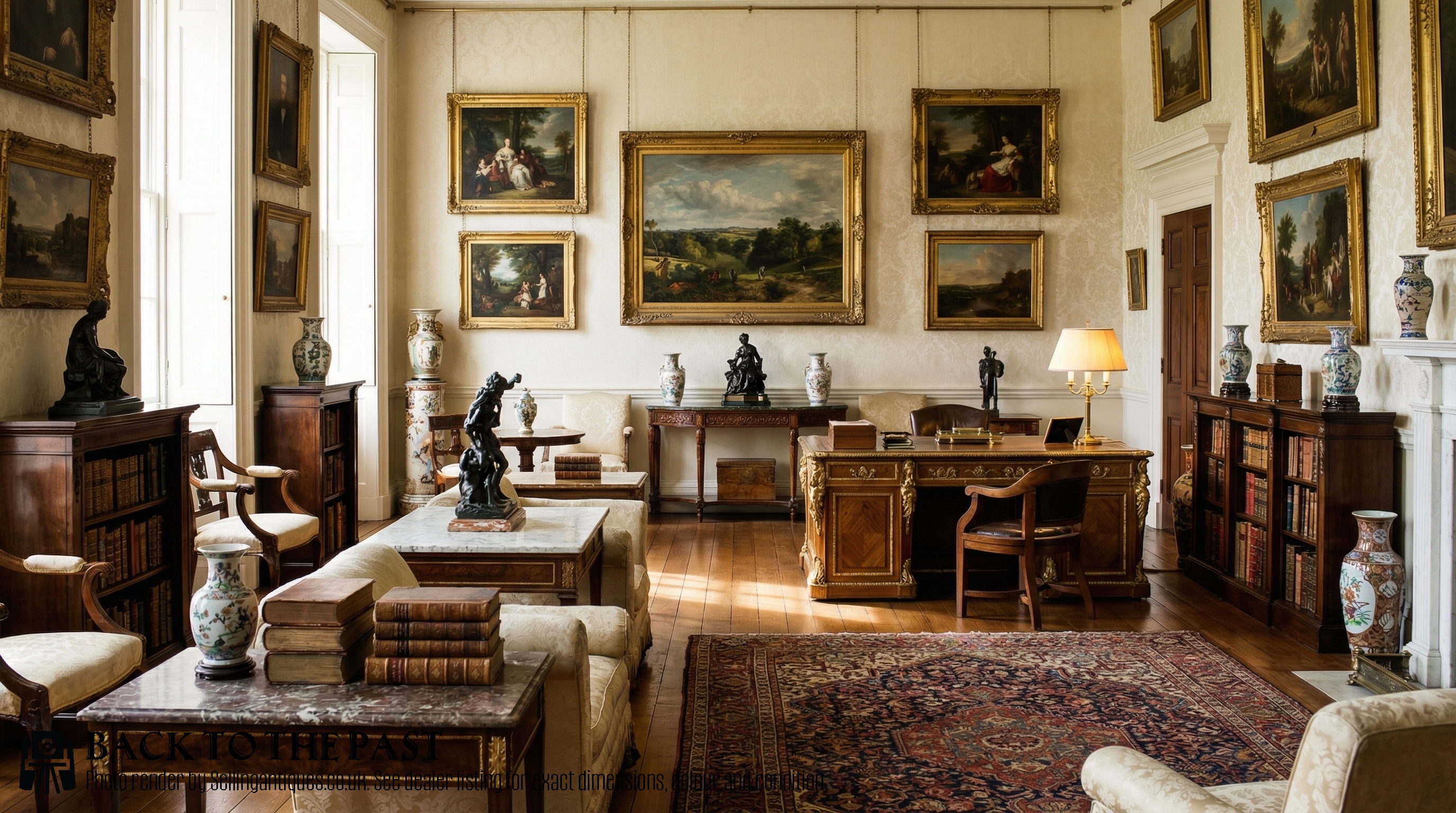
Victorian Executive Chair
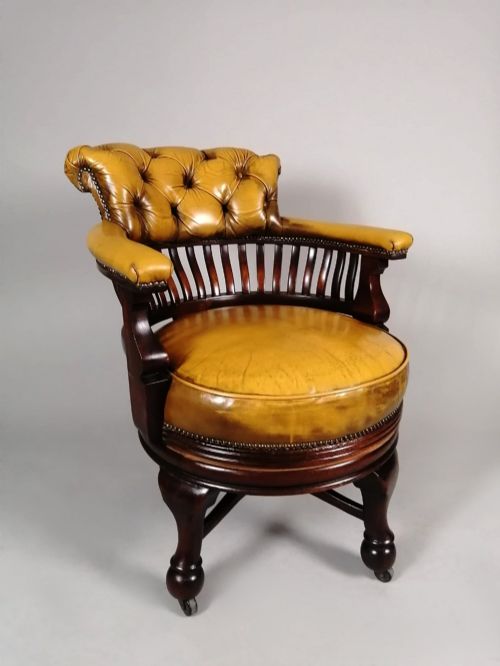
When you search for a victorian executive chair, you are looking at practical nineteenth-century office and library seating designed for sustained work. These pieces combine traditional craftsmanship with mechanical swivel and revolving functions for heavy daily use.
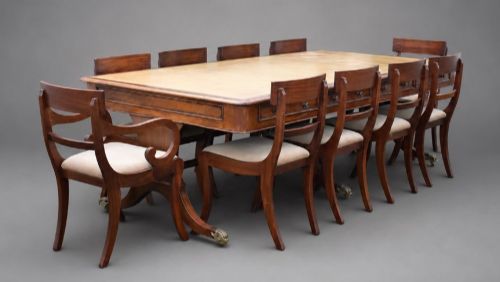
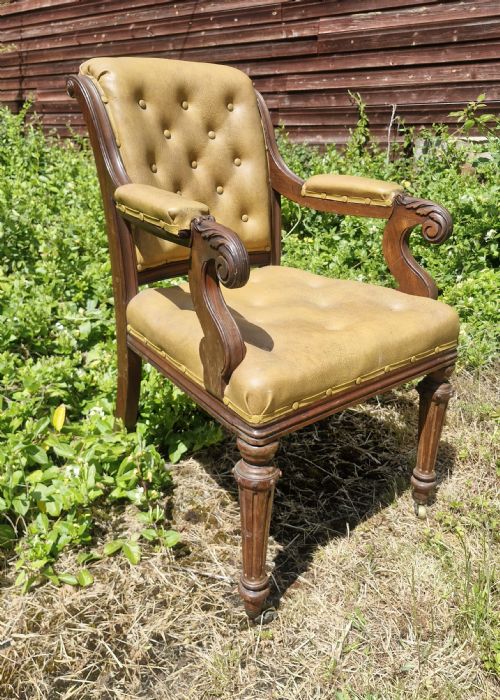
The most common examples on this page are mahogany or oak desk chairs featuring leather upholstery and revolving bases. They span several decades of production from the mid nineteenth century onwards, alongside related library armchairs and boardroom suites.
How they were made
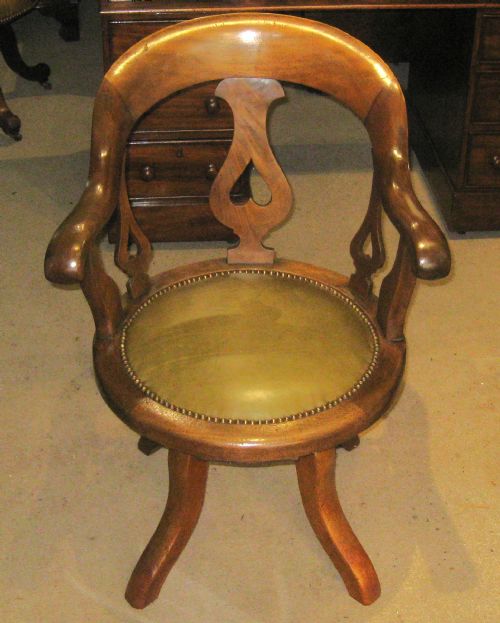
Cabinet makers utilised dense hardwoods such as mahogany, walnut, and oak to build sturdy frames that could withstand constant movement and weight. These timbers were shaped into bow backs and solid armrests, often accented with brass fittings.
Upholsterers integrated leather seats, sometimes featuring buttoning or distressed finishes, alongside iron and cast iron swivel mechanisms hidden beneath the wooden seat. Bentwood techniques also appear in later nineteenth-century examples for curved structural elements.
Some gentlemen required specialised seating for gaming rooms, proving that nineteenth-century relaxation involved serious furniture.
What varies in quality
Quality rests in the weight of the timber and the robustness of the revolving mechanism beneath the seat. Heavier grades of mahogany and oak provide superior structural stability compared to lighter alternatives.
The finish of the leather and the integration of the swivel action distinguish finer examples. Original brass hardware and well-executed joinery separate standard workshop output from exceptional pieces.
Boston Chair Company
The Victorian Executive Chair Glossary
- Revolving
- A seating mechanism allowing the top of the chair to turn full circle on a central spindle. This feature is essential for office and desk environments.
- Bow back
- A curved wooden backrest formed from a continuous piece of timber sweeping around the sitter. It offers ergonomic support for long hours at a desk.
- Bentwood
- Wood softened by steam and bent into curved shapes without breaking. This technique creates graceful structural curves in late nineteenth-century seating.
- Library armchair
- A comfortable upholstered chair designed for reading rooms and studies. These pieces often feature padded armrests and leather upholstery.
- Distressed leather
- Leather that shows natural ageing, scuffs, and softening from decades of handling. This surface texture develops through continuous use.
Victorian Executive Chair: Frequently Asked Questions
Can I use a victorian executive chair daily?
These pieces were built for heavy daily use in offices and libraries, utilising durable hardwoods and sturdy mechanical components. They function well at modern desks when checked for structural stability.
Ensure the swivel mechanism moves smoothly and the timber frame remains solid before placing the chair into regular service. Regular conditioning keeps the leather upholstery supple.
How do I identify a swivel desk chair?
Look beneath the wooden seat for an iron or cast iron spindle mechanism that allows the top portion to rotate independently of the base. This mechanical design distinguishes office chairs from standard library armchairs.
Many examples also incorporate four-legged or spider bases with castors for mobility across floor surfaces. The presence of a height-adjustment screw or revolving column confirms the office function.
What woods were used for office chairs?
Cabinet makers relied primarily on mahogany, oak, and walnut to construct the heavy frames required for desk seating. Mahogany provides a dense, rich grain, while oak offers rugged durability.
Rosewood also appears on select seating from earlier periods. These hardwoods resist the strain of constant movement and swiveling.
Are the leather seats original?
Many nineteenth-century desk chairs retain patinated leather that shows age and wear from decades of use. Some pieces feature replacement leather applied during restoration work to ensure longevity.
Examine the tacking and the texture of the hide to assess whether the upholstery dates to the original period of manufacture. Both patinated original leather and fresh upholstery serve functional roles.