



Victorian Etched Wine Carafe
When you search for a Victorian etched wine carafe, you are looking at functional glassware designed to serve wine with style during the nineteenth century.

Victorian Etched Wine Carafe
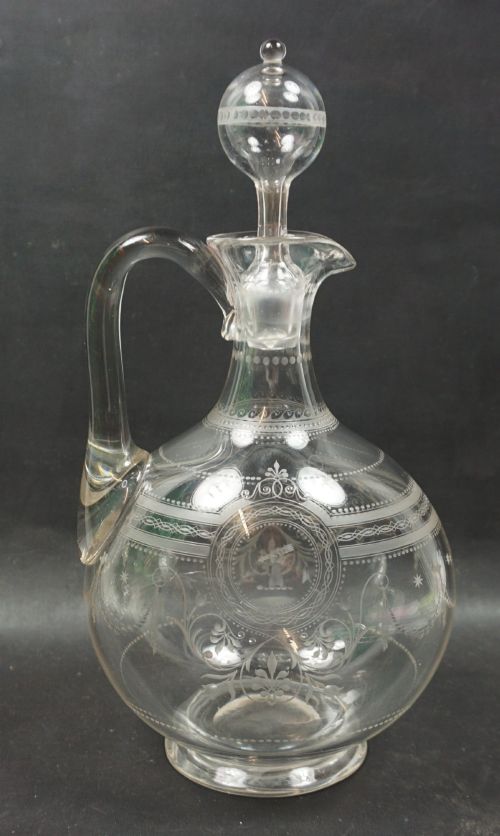
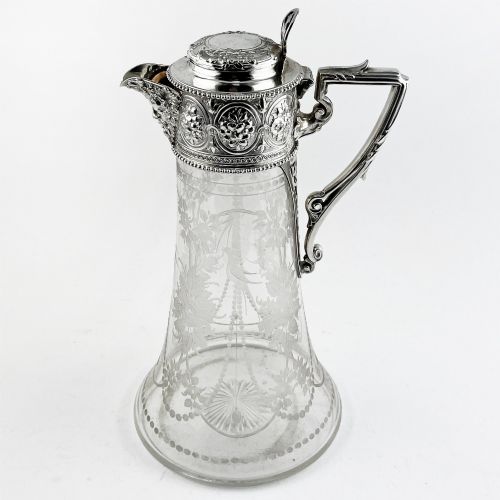
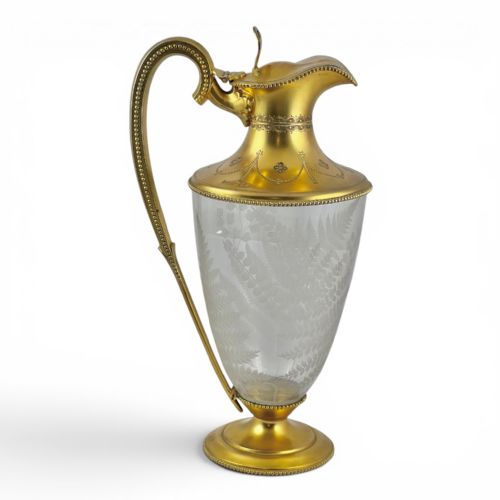
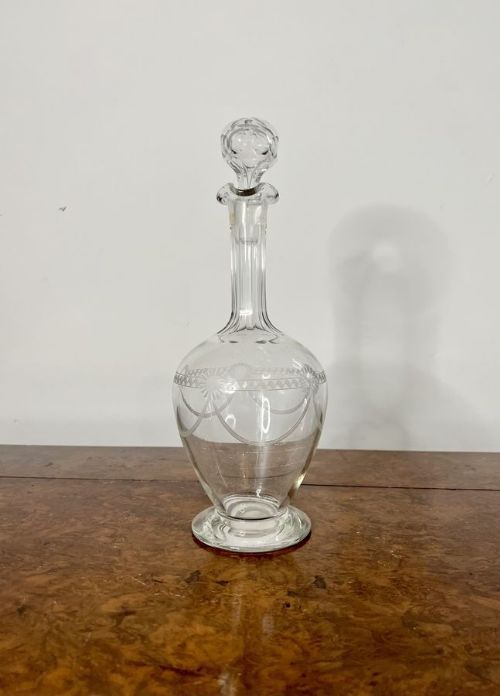
A Victorian etched wine carafe encompasses vessels shaped for serving wine, appearing in forms such as claret jugs, ewers, and traditional decanters. The pieces documented here span from the 1860s through the 1890s, alongside related items from adjacent periods.
You will encounter vessels fashioned from clear glass, coloured glass including ruby, cranberry, and green overlays, often fitted with silver or silver-plated mounts. The surface decoration typically relies on floral patterns and grape and vine motifs.
The practical form serves the dining table or sideboard, combining glass bodies with spouts, handles, and stoppers. These vessels reflect the dining habits and decorative tastes of the Victorian era.
How they were made
The manufacture of these pieces combines glassblowing and cutting techniques with metalworking for the mounts and handles. Glass bodies are formed in clear, cut, or coloured variants, then decorated using etching, acid-etching, or engraving.
Victorian Etched Wine Carafe Retail Price Guide 2026
Typical asking prices for victorian etched wine carafe among the pieces listed under this phrase on Sellingantiques today, from the lower quarter to the upper quarter. They describe what is for sale here now, not the wider market.
Materials recorded across the inventory include lead crystal, sterling silver, silver plate, and coloured glass overlays in green, ruby, and cranberry tones.
What varies in quality
The distinction between tiers rests upon the crispness of the glass cutting, the depth and detail of the acid etching, and the weight of the metal mounts. Superior examples demonstrate precise hand-etching and substantial silver work rather than light plating.
Design complexity also sets pieces apart, with elaborate coloured glass overlays and figural mounts representing more ambitious production. The integration between the glass body and the metal collar determines the overall harmony of the vessel.
Asprey and Co. Ltd·Elkington
The Victorian Etched Wine Carafe Glossary
- Claret jug
- A pouring vessel specifically designed for serving claret or red wine, typically featuring a handle, spout, and hinged lid. These vessels often combine glass bodies with silver-plated or sterling silver mounts.
- Etched glass
- Glass decorated by applying an acid or using a tool to eat into the surface, creating permanent designs. Grape and vine motifs are common subjects found on these vessels.
- Silver plate
- A base metal coated with a thin layer of silver, widely utilised for the handles, collars, and lids of Victorian tablewares. This technique provided the appearance of solid silver at a lower cost.
- Cranberry glass
- A transparent red glass coloured by the addition of gold oxide during manufacturing, popular for decorative tablewares. It appears in pieces from the late nineteenth and early twentieth centuries.
- Decanter
- A stoppered glass vessel used for holding and serving wine or spirits. They range from simple clear glass forms to heavily cut and engraved examples.
Victorian Etched Wine Carafe: Frequently Asked Questions
What is a Victorian etched wine carafe used for?
These vessels were designed to hold and serve wine at the dining table during the nineteenth century. They allowed hosts to present wine attractively while controlling the pour.
Today, they function both as decorative dining accessories and as usable vessels for serving wine. Their combination of etched glass and metal mounts makes them prominent sideboard displays.
How do I tell an original Victorian piece apart?
Look for the weight and clarity of the glass, hand-cut or acid-etched detailing, and the construction of the metal mounts. Nineteenth-century pieces often show specific wear patterns and manufacturing traits consistent with period techniques.
Marks on the silver or silver plate can help narrow down the period and origin. The presence of hand-applied decoration rather than modern stenciling is a strong indicator of age.
What materials were commonly used in these decanters?
The primary material is glass, which appears as clear lead crystal, cut glass, or coloured glass such as ruby, cranberry, and green overlay. Metal components are fashioned from sterling silver, silver gilt, or silver plate.
These materials were chosen for their durability and visual appeal on the dining table. The contrast between clear or coloured glass and polished metal defines the appearance of the pieces.