
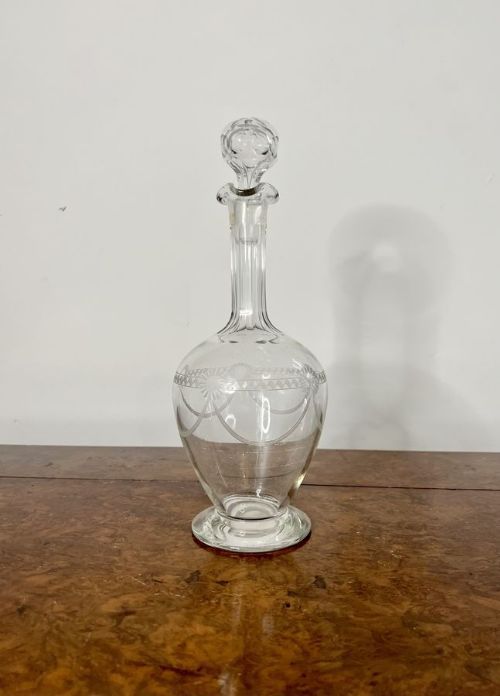
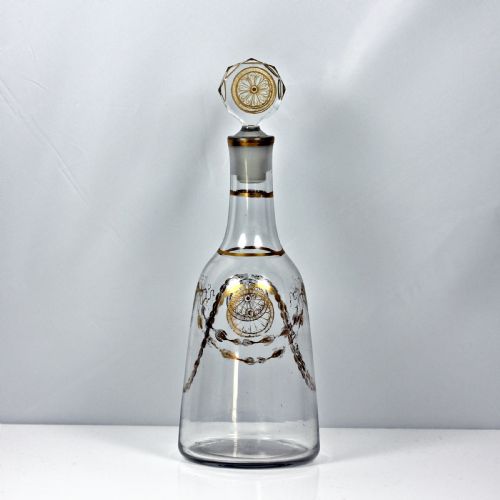


Spirit Decanter Stopper
A spirit decanter stopper provides the crucial finishing seal for antique vessels, preserving contents while completing the profile of nineteenth and eighteenth century bottles.

Spirit Decanter Stopper
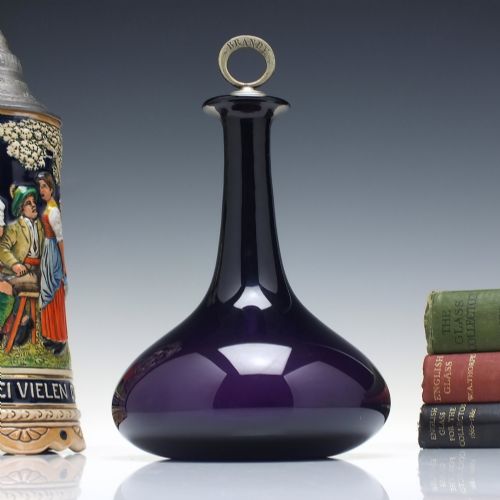
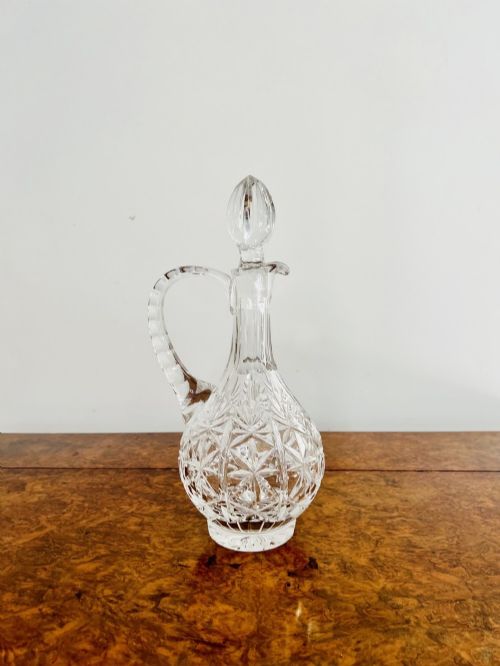
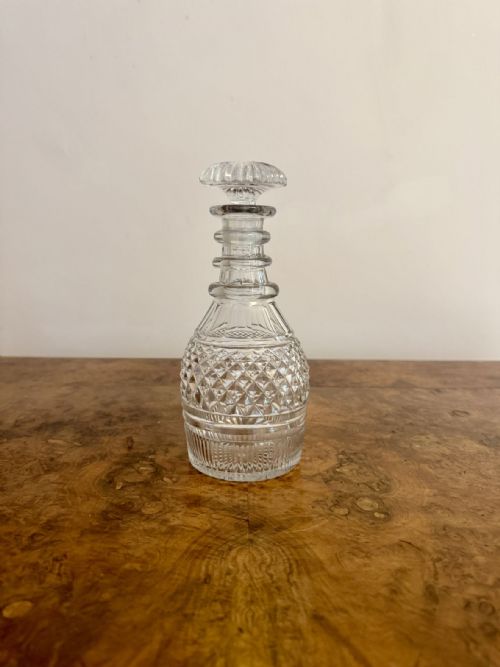
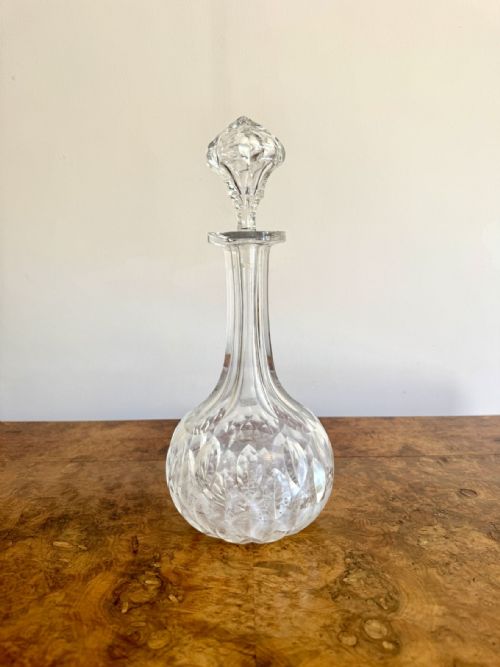
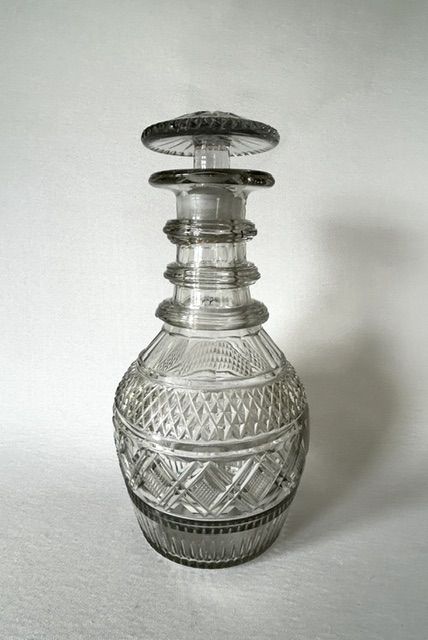
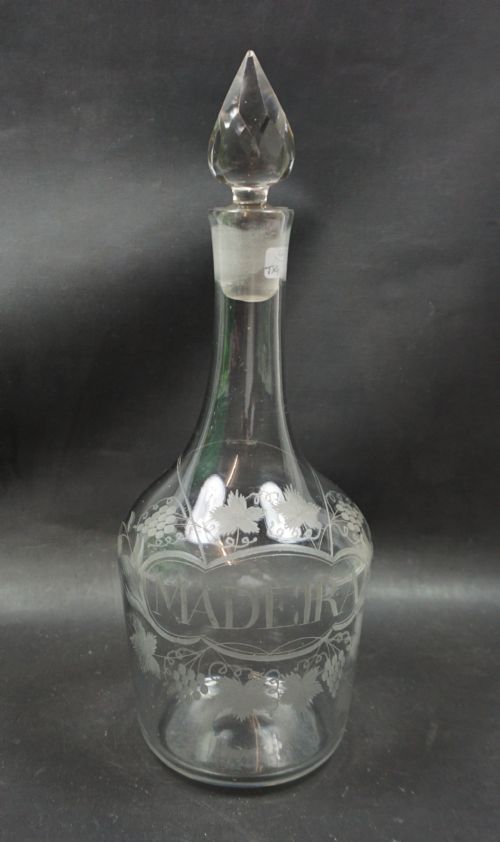
A spirit decanter stopper is encountered primarily across Victorian, Edwardian, and Georgian periods, accompanying vessels designed for port, sherry, whisky, and brandy. The inventory on this page ranges from eighteenth century Georgian pieces to Edwardian examples, spanning forms like the shaft and globe, ship's decanter, and prism cut vessels.
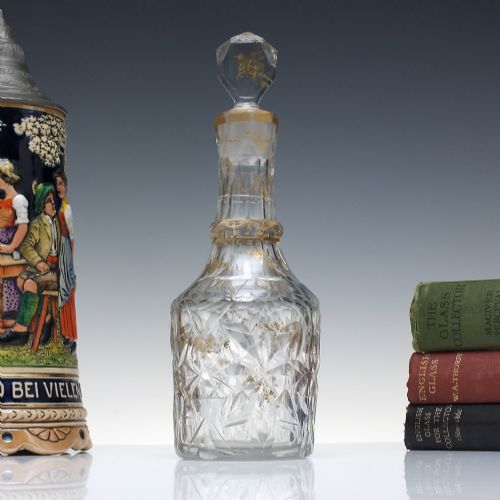
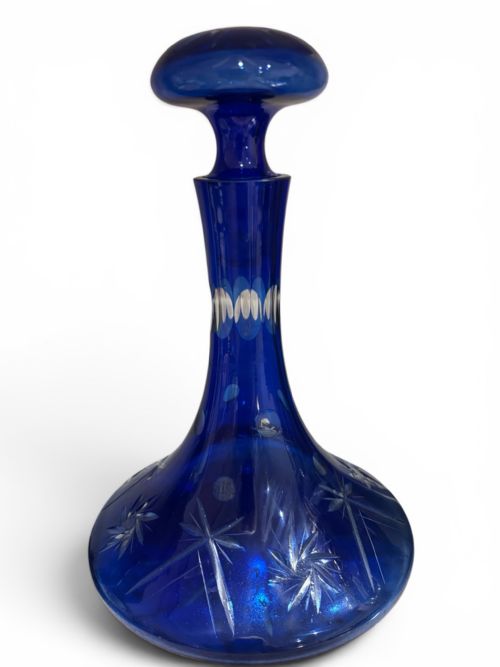
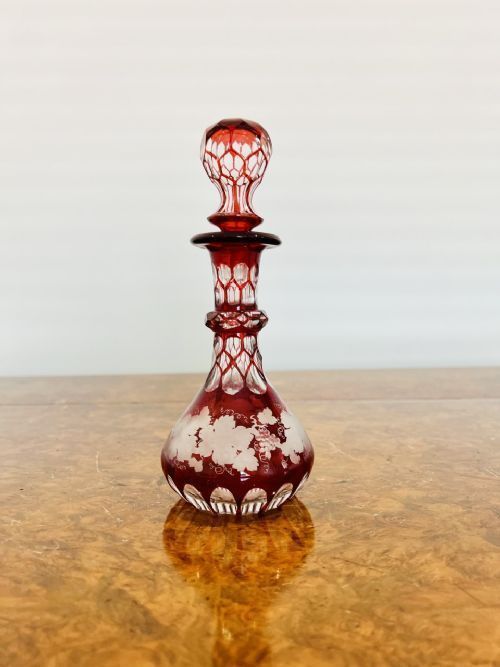
Most pieces met here belong to the broader category of cut glass and crystal bottles, often featuring matching ground stoppers designed specifically for the neck of the individual vessel. Collectors find variations from plain clear glass to coloured bohemian crystal and Bristol blue glass, reflecting the decorative preferences of each distinct decade.
Materials and construction methods
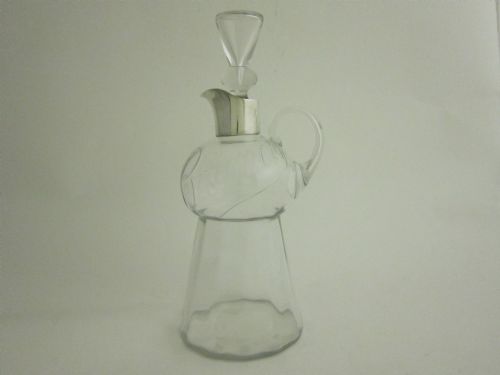
Makers utilised clear glass, lead crystal, and coloured glass, frequently applying hand cutting techniques to create facets that catch the light. Workshops also combined glass bodies with sterling silver mounts and enamel decoration, demonstrating the collaborative skills of glassblowers and metalworkers.
Techniques visible in the archive include optical blowing, wheel engraving, and gilding, with specific houses like the atelier of James Giles applying intricate painted details. Ground glass fitters ensured each stopper matched the interior neck of its specific decanter securely.
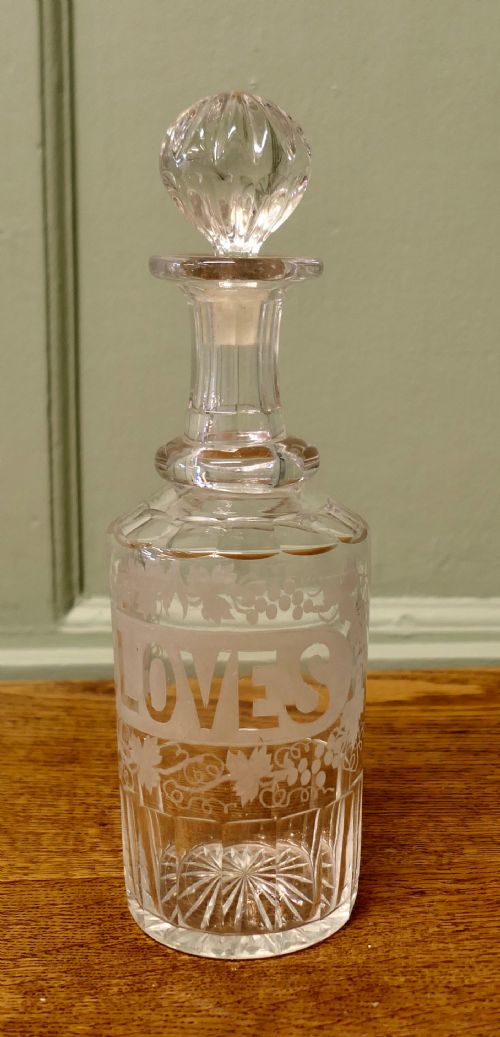
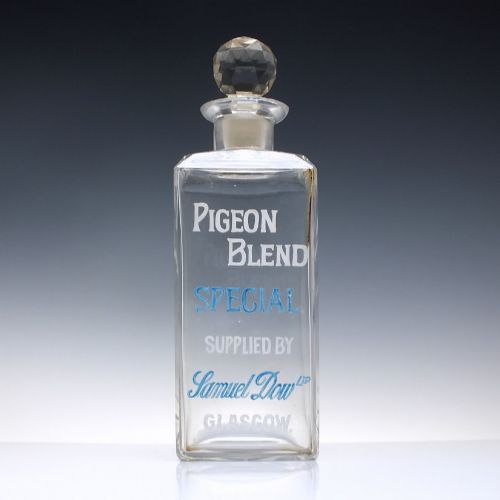
Some nineteenth century vessels were specifically labelled for pigeon blend whisky or cloves.
Factors influencing execution and grade
The standard of a piece depends heavily on the precision of the glass cutting and the clarity of the metal, with high grade lead crystal offering greater brilliance than standard utility glass. Exceptional examples display crisp facet work, heavy proportions, and harmonious integration between the stopper and the main body.
Secondary elements such as hand engraving, silver mounting, and enamel work elevate specific items, distinguishing standard production bottles from showcase pieces produced by notable makers or specialised workshops.
James Giles·James Powell·Stevens and Williams
The Spirit Decanter Stopper Glossary
- Prussian decanter
- A specific bottle shape featuring a tapering body and multiple neck rings, popular during the Georgian and Regency periods. These vessels typically require a sturdy, mushroom shaped stopper.
- Lead crystal
- A heavy glass variety containing lead oxide, prized for its high refractive index and resonant ring when struck. This material allows for deep, sharp facet cutting.
- Mell decanter
- A mallet shaped vessel with a wide base and tapering shoulders, frequently produced in coloured glass during the early nineteenth century. They often feature matching flared or faceted stoppers.
- Ground stopper
- A glass stopper featuring a hand abraded lower section designed to create an airtight seal inside the neck of a decanter. Each stopper was ground to fit its specific bottle during production.
- Ship's decanter
- A low, wide based vessel designed with a broad centre of gravity to prevent tipping at sea. The accompanying stoppers are usually broad and flat to maintain stability.
Spirit Decanter Stopper: Frequently Asked Questions
How do I match a loose spirit decanter stopper?
Matching a loose stopper requires measuring the diameter of the ground glass peg and checking the optical clarity and tint of the glass to ensure it matches the vessel.
Differences in period manufacturing techniques mean that stoppers are rarely interchangeable without careful fitting to the specific neck.
Were spirit decanter stopper designs period specific?
Stoppers evolved alongside bottle forms, shifting from heavy Georgian mushroom shapes to intricate cut glass and silver mounted Edwardian variations.
Examining the facet style and glass weight helps connect a stopper to its correct decade.
What caused colour variations in antique glass?
Grave metal compositions and mineral oxides added to the molten batch produced distinct hues like Bristol blue, amethyst, and cobalt crystal.
Specific furnaces utilised local materials and proprietary recipes that define the visual character of nineteenth century pieces.
How should I clean antique decanters safely?
Cleaning requires warm water and mild detergent, avoiding harsh abrasives that might scratch the interior or damage old glass surfaces.
Stoppers should be washed separately and dried thoroughly before being replaced in the neck.