



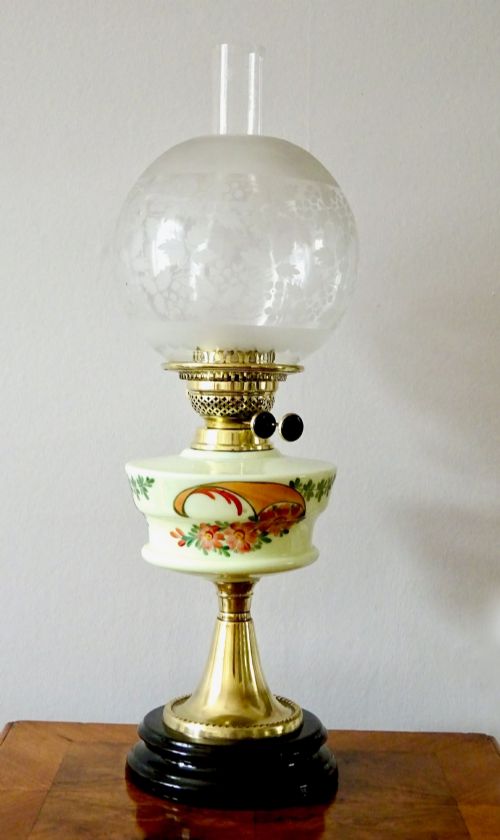
Victorian Etched Shade Lamp
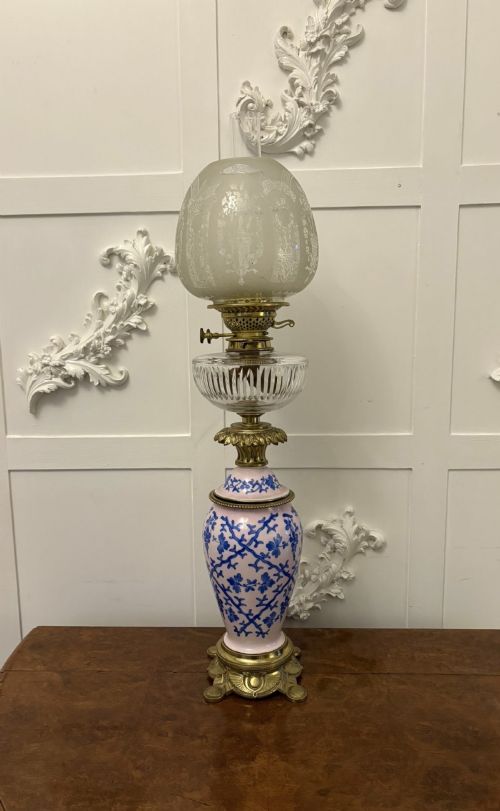
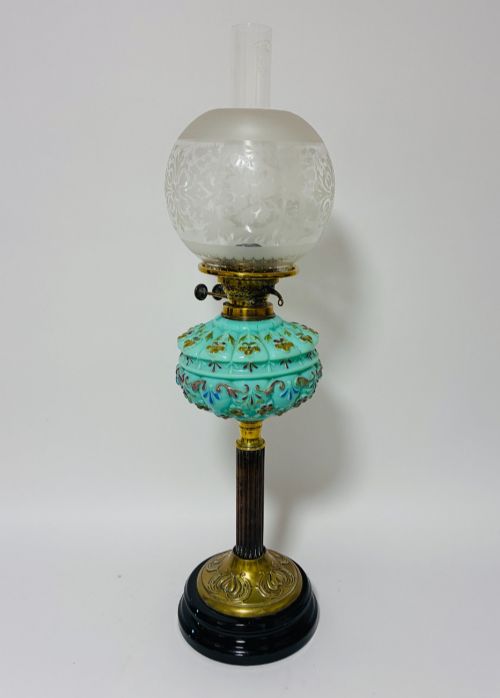
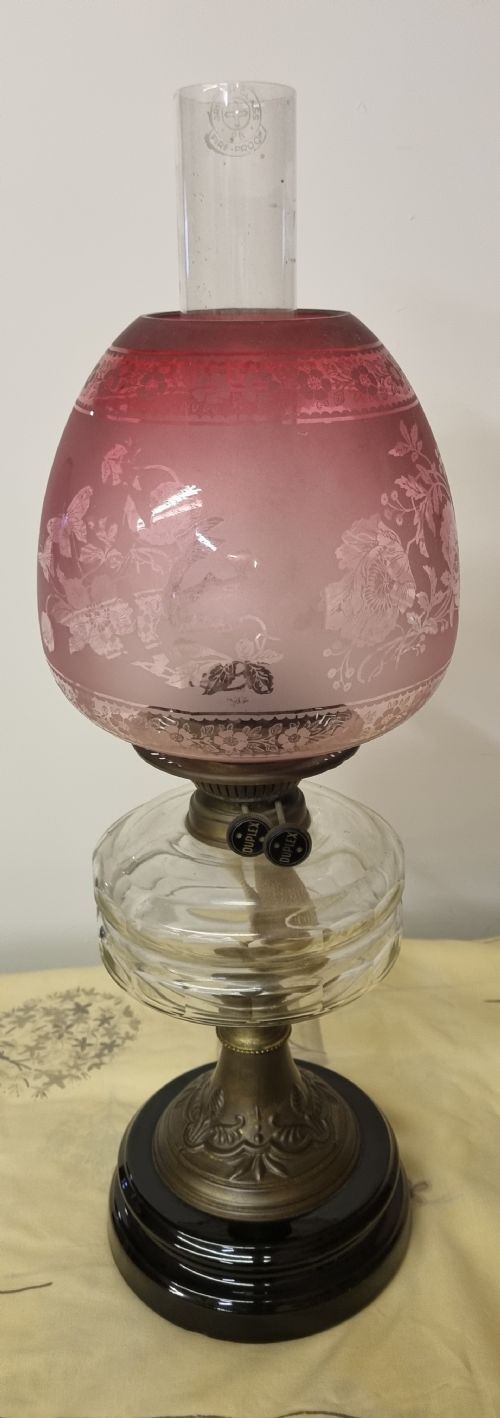
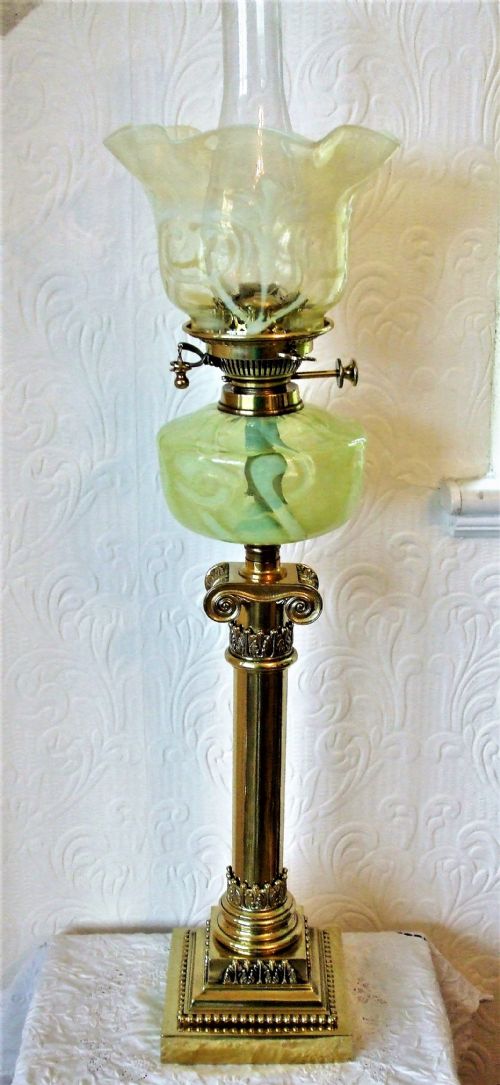
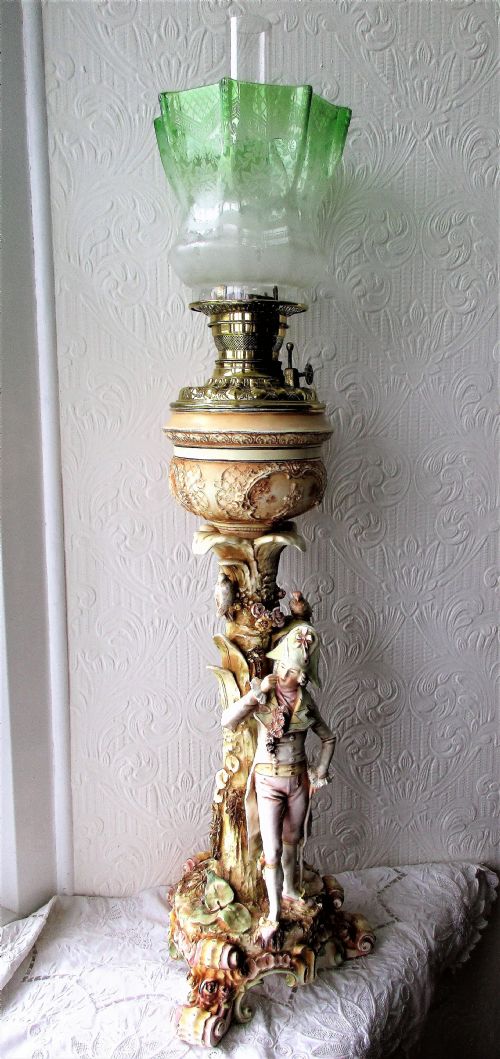
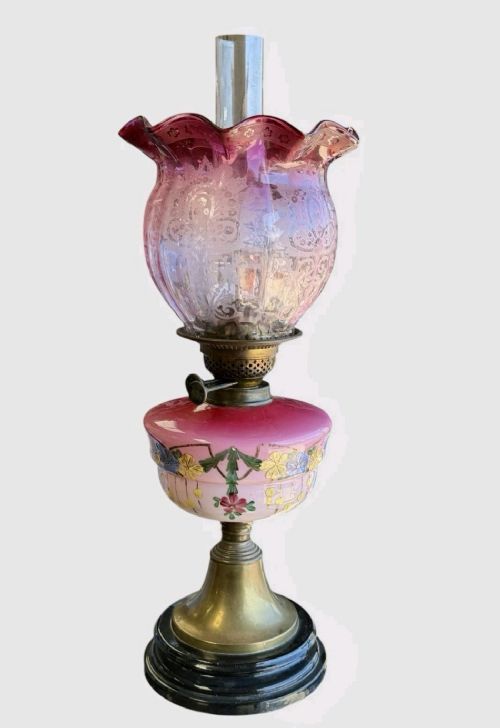
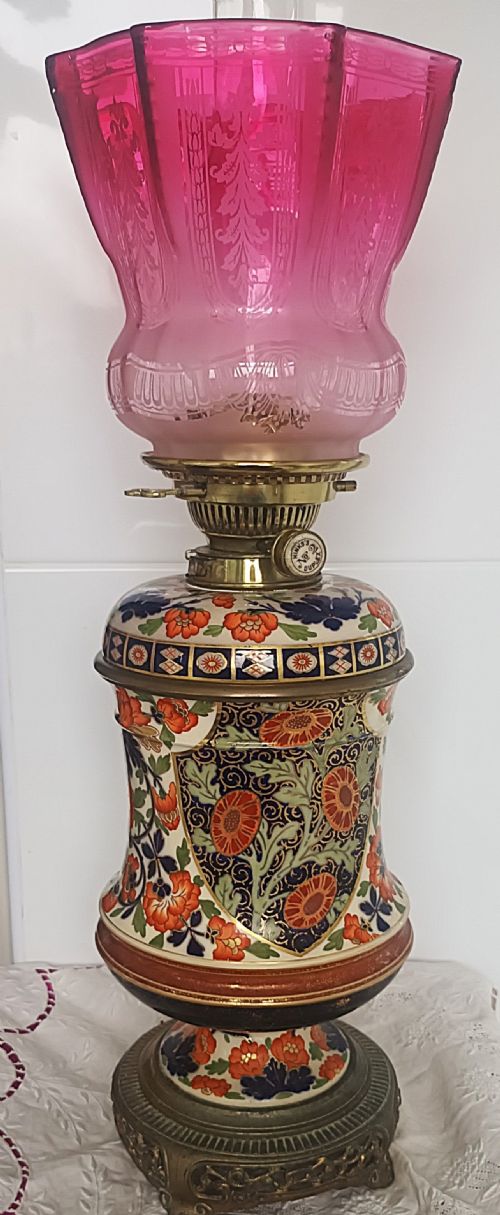
These Victorian etched shade lamp pieces combine brass and ceramic bases with decorated glass globes to provide period character.
Victorian Etched Shade Lamp
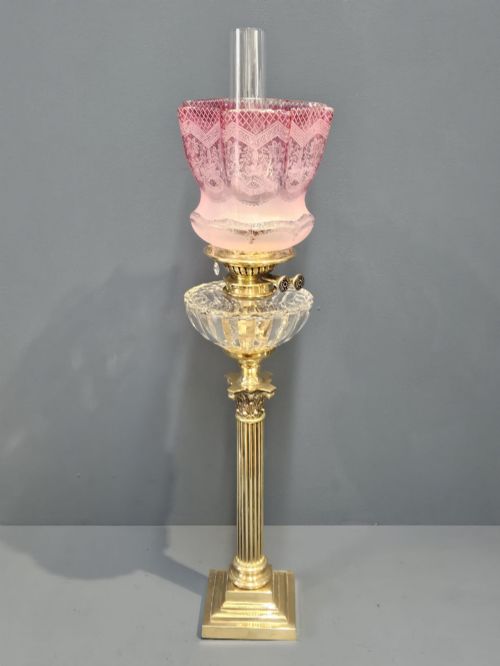
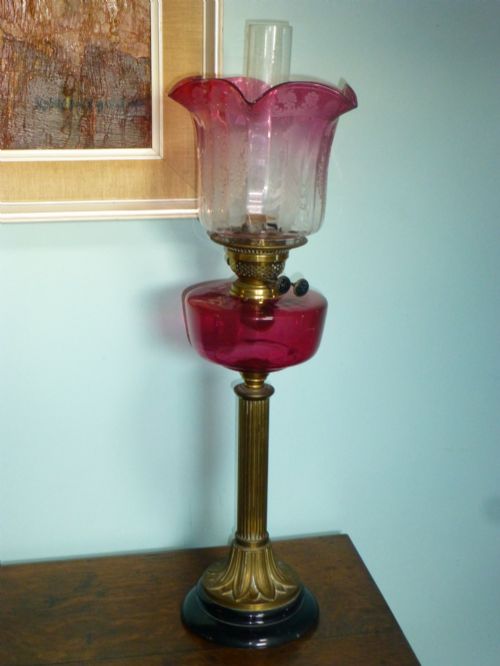
A victorian etched shade lamp brings together a heavy metal or ceramic reservoir column and an acid-etched glass globe. These domestic light fittings appear most frequently as oil lamps featuring brass Corinthian or Ionic columns supporting cranberry, ruby, or clear glass shades.
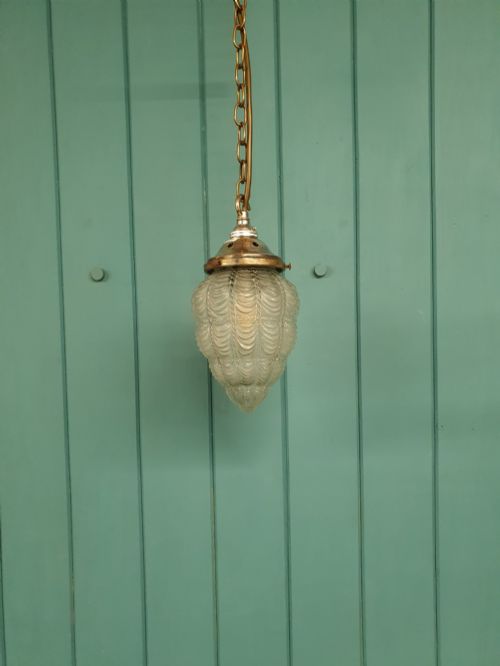
The inventory on this page ranges from tall telescopic brass standards and porcelain figural vessels down to smaller pendant lights and table lamps. Makers and manufacturers utilised various forms, including double burner duplex mechanisms and decorative glass fonts paired with etched tulip globes.
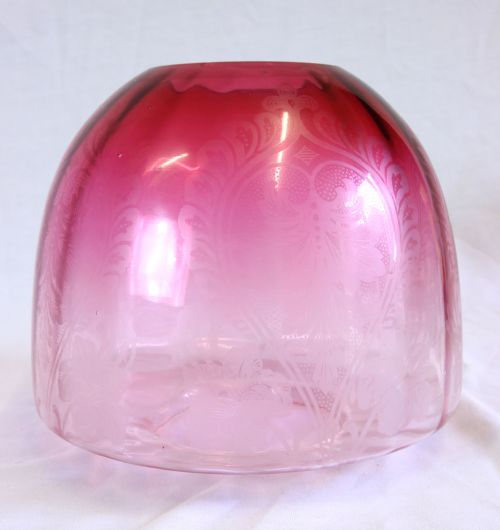
Originating predominantly from the nineteenth century, these pieces encompass Victorian, Edwardian, and revival styles such as French Rococo. Collectors find both complete functional units and individual replacement glass shades in shades of cranberry, green, amber, and pink.
Materials and Construction
Makers constructed the columns and bases primarily from cast brass, silver plate, and glazed porcelain, frequently incorporating classical architectural details like fluted pillars. These structural elements support heavy glass reservoirs and fonts, which appear in plain crystal, opaque white, and saturated colours like cranberry and ruby.
The characteristic shades depend upon acid-etching techniques applied to frosted or clear glass, producing botanical and geometric patterns that diffuse the light. Burner assemblies utilise brass and copper components, often featuring duplex twin-wick systems stamped with manufacturer names.
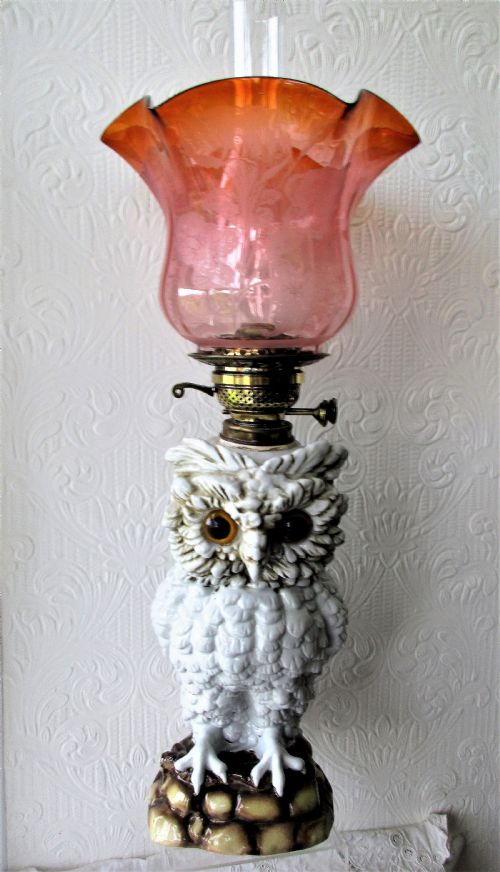
German porcelain workshops produced whimsical figural lamp bases shaped like wise old owls with piercing glass eyes.
Distinctions in Quality
The distinction between standard domestic lighting and finer examples rests in the crispness of the brass casting and the depth of the glass etching. Superior columns display sharp architectural detailing on Corinthian capitals, whilst lesser pieces rely on simpler, plain brass stems.
Glass quality separates ordinary production from the best examples, evident in the weight of the font and the clarity of the acid-etched patterns on the shade. Matched sets where the font and shade share identical colour and decorative motifs command greater interest than assembled combinations.
Hinks of Birmingham·Taylor Tunnicliff·Sitzendorf
The Victorian Etched Shade Lamp Glossary
- Duplex burner
- A double-wick burner mechanism that produced a brighter flame than single-wick alternatives. These were common on larger nineteenth-century domestic lamps.
- Corinthian column
- A classical architectural column style featuring ornate acanthus leaves on the capital. Many nineteenth-century brass lamps adopted this profile.
- Font
- The reservoir that holds the paraffin or oil within the lamp body. These appear in brass, ceramic, and coloured glass.
- Tulip shade
- A flared glass shade resembling an open flower shape. They were widely used to direct and soften light on period table lamps.
- Acid etching
- A decorative technique using acid to cut designs into the surface of glass. This method created the frosted floral patterns seen on Victorian globes.
Victorian Etched Shade Lamp: Frequently Asked Questions
How do I operate an old oil lamp?
Most period lamps utilise a thumbwheel to raise or lower the cotton wick through the metal burner gallery. You remove the glass shade and chimney to access the burner when filling the font with paraffin or lamp oil.
It is essential to trim the wick flat before lighting to ensure an even flame and prevent smoke. Modern users often convert these bodies for electricity, though the original burners can still be burned safely with care.
Are the glass shades original to the bases?
Many nineteenth-century lighting pieces have suffered breakages over the decades, leading to replacement shades being paired with older columns. You can assess originality by checking for consistent wear, matching glass chemistry, and period-correct fitter sizes.
Even when assembled later, a harmonious combination of a brass base and an acid-etched cranberry shade preserves the intended aesthetic of the period.
How do I clean a brass and glass lamp?
Brass components benefit from gentle dusting and occasional cleaning with non-abrasive metal polish to maintain their natural sheen without removing the aged patina. Avoid harsh chemical dips that strip the historic surface character entirely.
Glass fonts and etched shades wash safely in warm soapy water using a soft cloth. Take care around acid-etched or hand-painted surfaces to protect the delicate frosted decorations.
What is a duplex burner?
A duplex burner uses two parallel flat wicks housed side by side under a single gallery, allowing the lamp to produce significantly more illumination than standard single-wick models. This mechanism became popular during the Victorian era for main living spaces.
Inventors and manufacturers patented various improvements to these mechanisms, and stamped names on the brass thumbwheels often identify the original maker.