
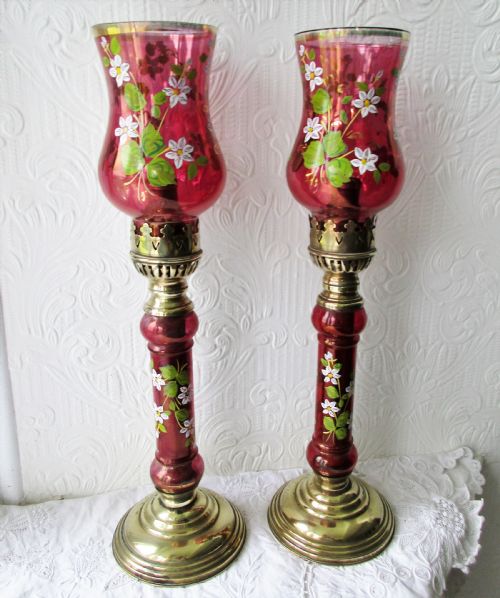
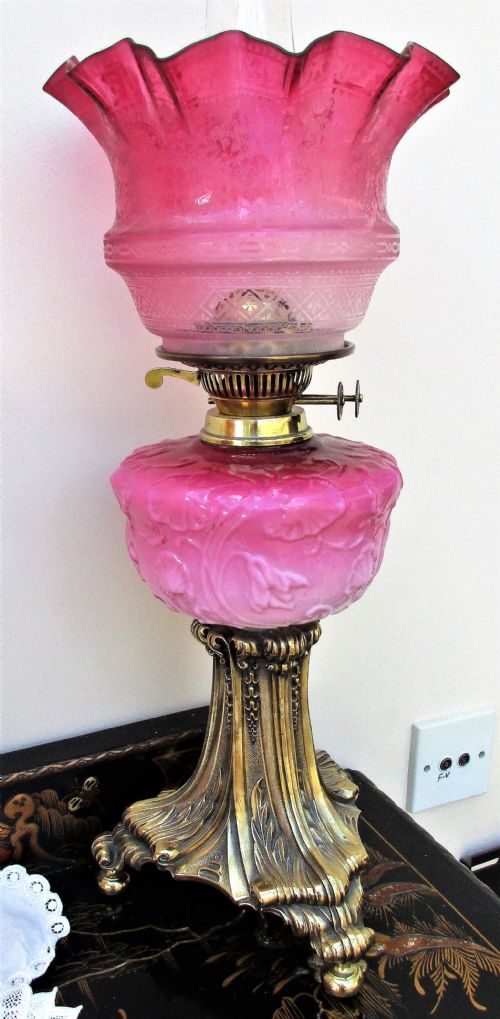
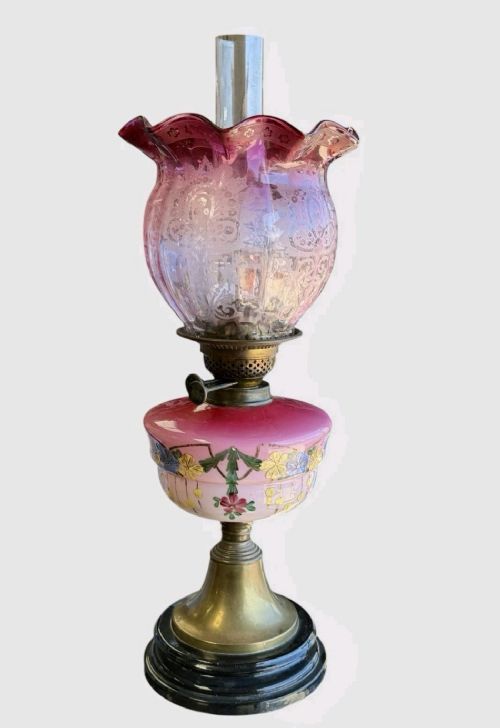
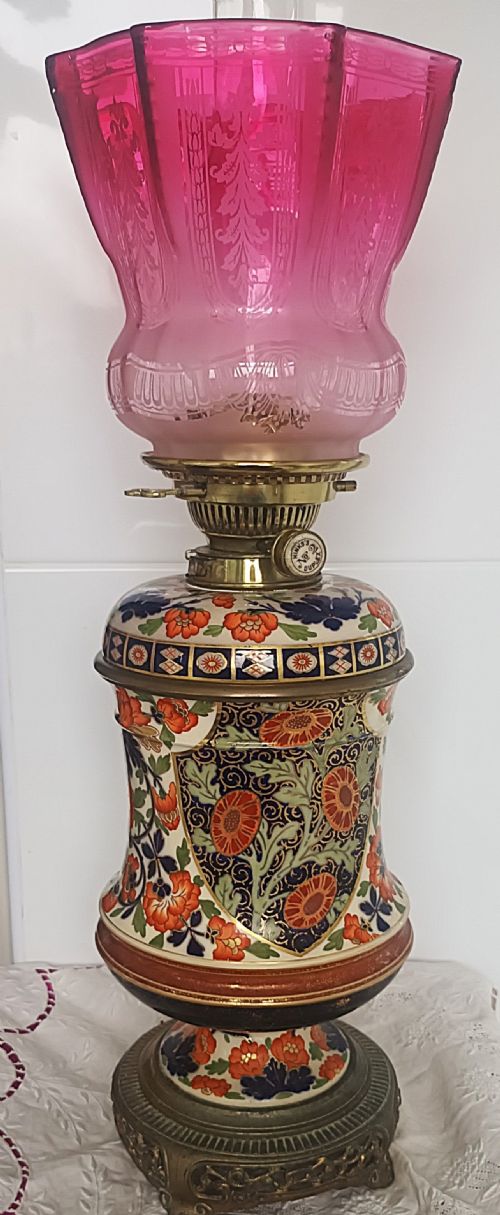
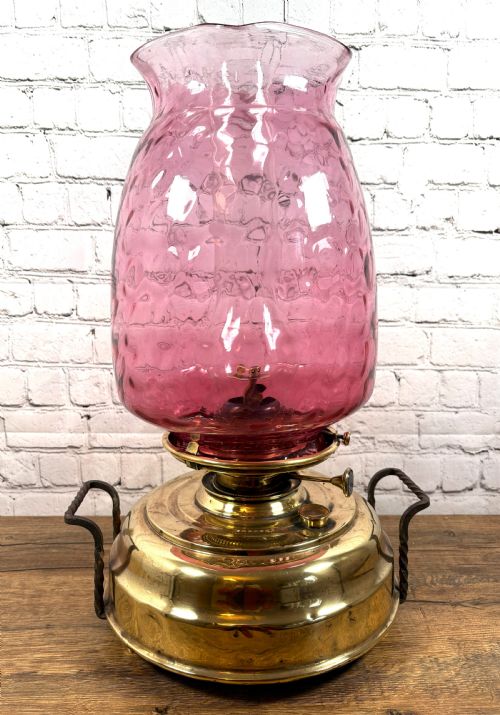


Brass Cranberry Glass Lamp
These pieces of brass cranberry glass lamp combine warm metalwork with deep pink-red glass to create functional domestic illumination from past centuries.
Brass Cranberry Glass Lamp
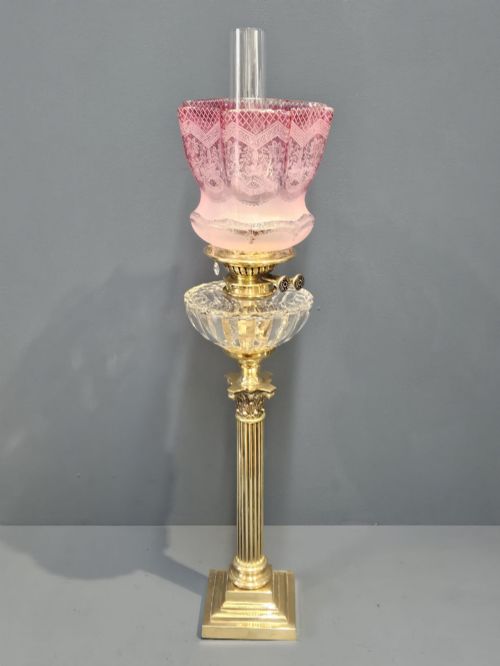
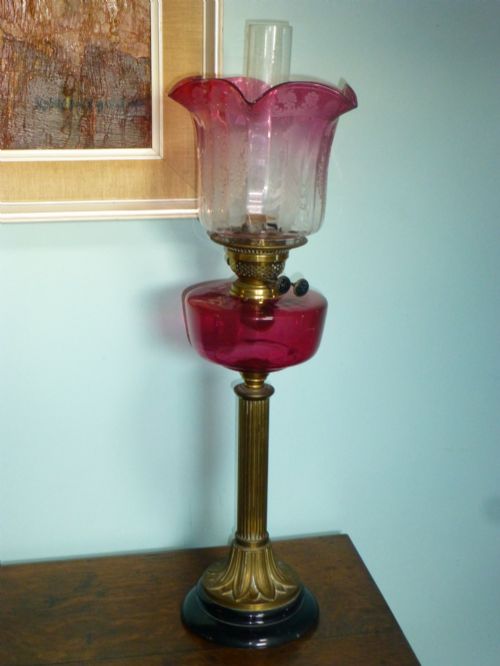
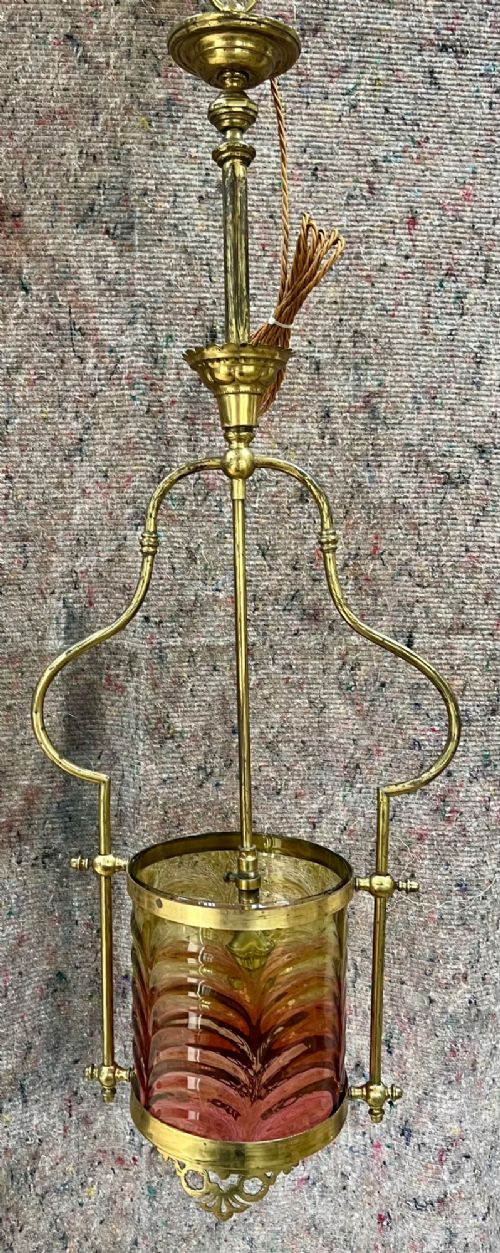
A brass cranberry glass lamp is a domestic lighting fixture combining a yellow-metal base with distinctively tinted glass shades or fonts. The pieces found here range from table-standing models to taller floor standards and hanging ceiling lights.
Most examples originate from the Victorian and Edwardian eras, spanning the nineteenth and early twentieth centuries. Buyers frequently encounter oil lamps featuring brass columns paired with cranberry glass components, alongside later electrical conversions.
The assortment includes various forms such as Corinthian column designs, duple burner systems, and chamber lamps. Makers and manufacturers utilise ceramic bases, marble stems, and iron elements to support the primary brass and glass structures.
Materials and construction
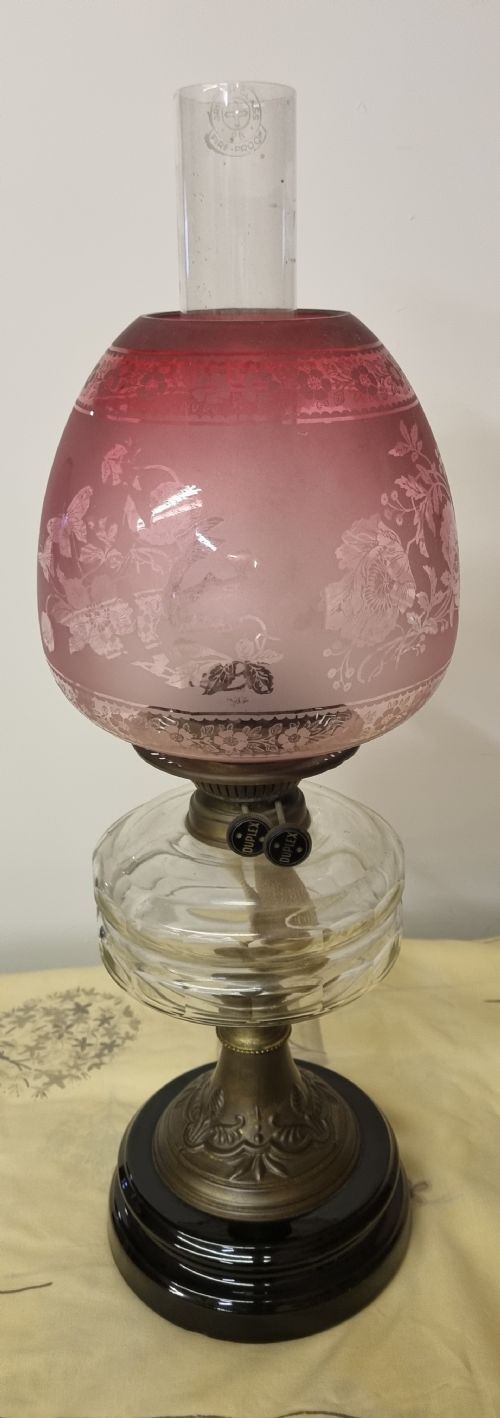
Makers shaped the bright red glass by introducing gold chloride or copper to the molten batch during production. Artisans then blew or pressed this coloured material into shades, fonts, and globes, sometimes applying hand-painted details, etchings, or crimped edges.
Foundations and structural columns relied on cast, spun, or polished brass. Workshops integrated ceramic reservoirs, marble plinths, and iron fittings to provide stability and mechanical housing for duplex burners and wick mechanisms.
Materials recorded across the inventory include brass, cranberry glass, ceramic, marble, iron, and cut glass.
Factors of distinction
Superior items exhibit substantial weight in their solid brass castings and feature crisp architectural detailing such as fluted columns or Corinthian capitals. The depth of colour and precision of hand-etching on the glass shade also distinguish finer examples from standard production.
Completeness alters the character of these objects, particularly when original burners, matching fonts, and undamaged glass shades remain intact. The integration of maker-marked components or specialised mechanisms like Veritas burners elevates specific items within the range.
Hinks·Taylor Tunnicliff·Veritas·Sitzendorf
The Brass Cranberry Glass Lamp Glossary
- Cranberry glass
- A rich pinkish-red glass created by adding gold salts to the molten batch. It is widely seen in nineteenth-century lamps and tableware.
- Duplex burner
- A high-output double-wick mechanism popular on Victorian oil lamps. It provides significantly brighter illumination than single-wick variants.
- Standard lamp
- A tall floor-standing lighting fixture. These examples often feature adjustable heavy brass stands.
Brass Cranberry Glass Lamp: Frequently Asked Questions
How do I date a brass cranberry glass lamp?
Dates are estimated through stylistic indicators, burner patents, and manufacturing techniques recorded across nineteenth and early twentieth-century examples. Victorian pieces often feature heavy brass castings and Corinthian columns, while Edwardian versions lean towards simpler or Art Nouveau lines.
Examining the metal components, burner stamps, and glass manufacturing methods helps narrow the production window. Reference guides and maker marks on the wick winders offer further chronological clarity.
Are these lamps still suitable for burning oil?
Many original oil lamps remain mechanically complete with their burners, galleries, and wick mechanisms intact. Collectors often retain these functional parts for display or traditional use.
Conversely, numerous pieces have been safely converted to electricity for modern household use. Buyers should inspect the internal wiring of converted lamps before connecting them to mains power.
How should I clean the brass and glass?
Brass components respond well to gentle cleaning with appropriate metal polishes, avoiding abrasive cloths that might damage fine surface details. Glass shades require warm soapy water and careful handling to preserve any hand-painted motifs or etched patterns.
Harsh chemical cleaners should be kept away from both antique metal surfaces and coloured glass. Regular dusting prevents grime accumulation on delicate crimped rims and intricate columns.
What is the difference between a table lamp and a standard lamp?
Table lamps are proportioned to sit on furniture surfaces, featuring compact brass columns and smaller cranberry glass fonts or shades. They were designed for close-range illumination in parlours and studies.
Standard lamps stand much taller on floor-standing bases, sometimes incorporating adjustable stems to project light across a wider room space. Both forms utilise similar brass and coloured glass material vocabularies.