



Victorian Etched Goblet
These Victorian etched goblets bring substance and nineteenth-century craftsmanship directly to the table.
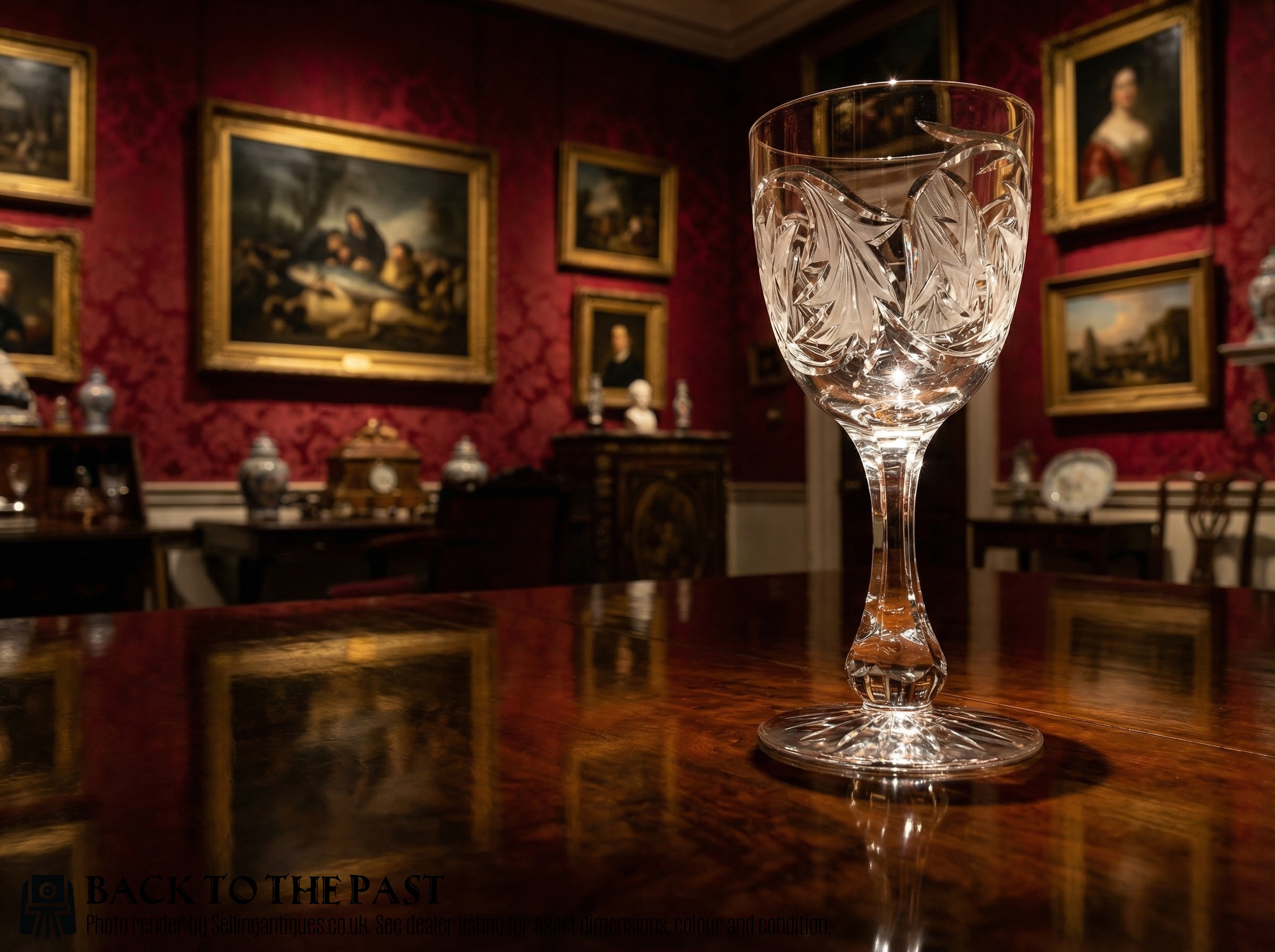
Victorian Etched Goblet
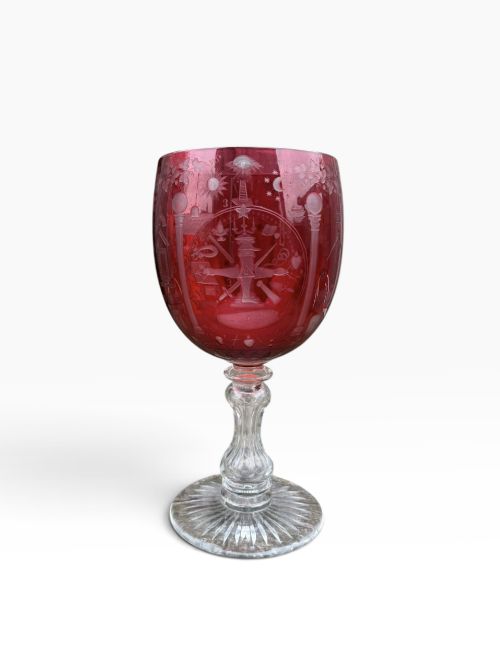
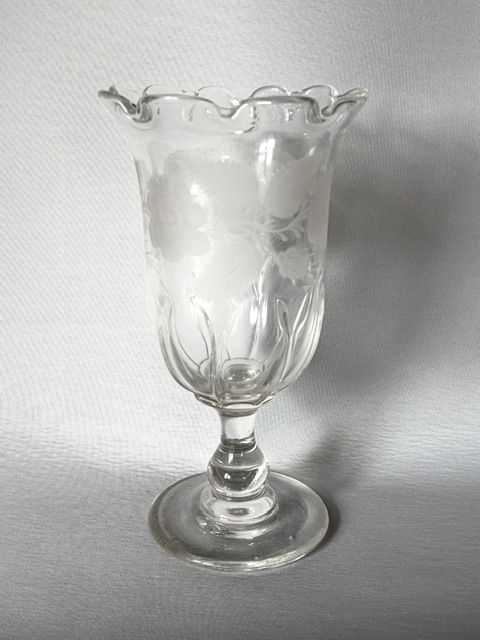
A Victorian etched goblet is a heavy drinking vessel or decorative piece produced during the nineteenth century, often taking the form of a rummer, wine glass, or celery vase. These pieces emerge in clear glass, lead crystal, and occasionally amber or cranberry glass, reflecting the diverse output of English and Bohemian glassworks.
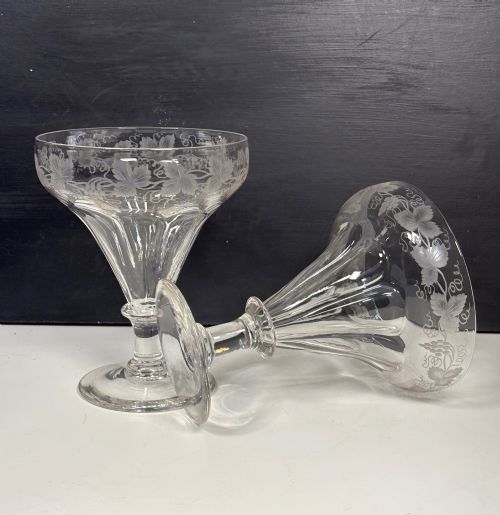
The version most commonly met on this page is the standard wine goblet or rummer decorated with wheel-engraved or acid-etched motifs such as ferns, vines, and birds. They date across the Victorian period, with examples spanning from the middle decades through to the turn of the twentieth century.
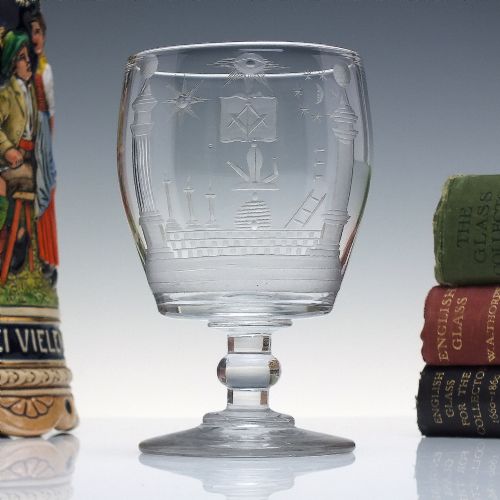
Beyond standard drinking vessels, the category broadens to include pairs, harlequin sets, and larger centrepiece bowls. Buyers find everything from single Masonic presentation pieces to matched sets intended for formal dessert dining.
How they were made
Makers formed these items using lead crystal, flint glass, or coloured glass, shaping the molten material by hand before applying cutting techniques. Craftsmen then decorated the surfaces using wheels to engrave deep botanical or geometric designs into the body.
Acid-etching also appears on pieces from the later part of the period, allowing for precise, frosted patterns without mechanical cutting. Combinations of wheel-cutting, frosting, and acid work created varied textures across both English and Bohemian items.
The documented periods span the Victorian era, including Bohemian styles from around nineteen hundred.
What varies in quality
The depth and clarity of the metal separate standard production from finer work, with high-lead crystal offering superior weight and light refraction. The crispness of the wheel engraving or acid work dictates the artistic merit of the decoration, where sharp, detailed botanical motifs outperform shallow or blurred lines.
Consistency across a matched set also dictates desirability, particularly with larger groupings of wine glasses or rummers. Single presentation pieces stand out through exceptional scale or specialised iconography, such as Masonic emblems.
Stevens & Williams
The Victorian Etched Goblet Glossary
- Rummer
- A large, sturdy drinking glass popular in the nineteenth century, typically featuring a short stem and a capacious bowl suited to ale or wine. Rummers often display heavy lead crystal construction.
- Celery vase
- A tall vessel designed to hold stalks of celery on the Victorian dining table. These pieces share the heavy footed form and etched decoration seen on drinking goblets.
- Lead crystal
- Glass containing lead oxide, which increases weight, brilliance, and the time available for hand-cutting. This material forms the base of the clearest nineteenth-century tableware.
- Flint glass
- A clear, heavy type of glass historically used for quality tableware and optical instruments. It provides a bright, resonant body well-suited to wheel engraving.
- Acid cut cameo
- A technique using acid to eat away layers of coloured glass to create a raised design against a contrasting background. This method produces a frosted, multi-toned surface.
Victorian Etched Goblet: Frequently Asked Questions
What is a Victorian etched goblet?
A Victorian etched goblet is a nineteenth-century drinking vessel or decorative glass item featuring hand-applied engraved or acid-etched decoration.
These pieces range from heavy rummers and wine glasses to celery vases and centrepiece bowls produced in England and Bohemia.
How do I date a Victorian glass goblet?
Dating relies on stylistic clues, glass composition, and the specific cutting or etching techniques used during the nineteenth century. Earlier pieces often utilise heavy flint glass with deep wheel engraving, while late Victorian examples feature acid-etched frosted motifs.
Masonic inscriptions or specific registry marks sometimes provide more precise decades within the broader Victorian era.
Can I use these antique goblets for wine?
These goblets function well for serving wine or port at the table, provided they are washed by hand.
Their robust lead crystal or flint glass construction makes them durable enough for occasional use, though many collectors prefer to display delicate sets.
What motifs appear on these goblets?
Botanical designs such as ferns, fruiting vines, and leaves dominate the engraved decoration across nineteenth-century glassware.
Other examples feature birds like herons, geometric cuts, frosted cameo work, or symbolic Masonic iconography.
Are coloured glass goblets Victorian?
Coloured glass was widely produced during the Victorian period, alongside standard clear lead crystal and flint glass.
Pieces appear in distinct tones such as cranberry and amber, frequently associated with English and Bohemian manufacturing traditions.