

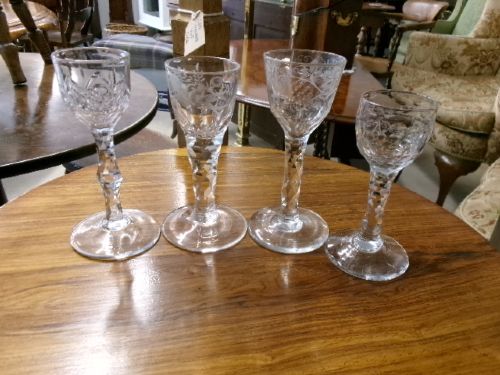

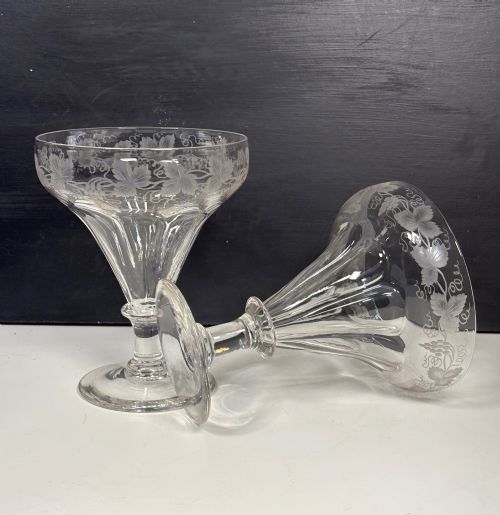


Etched Glass Wine Glass
When you handle an etched glass wine glass, you hold drinking vessels carrying centuries of decorative glasswork from Victorian and Georgian hands.
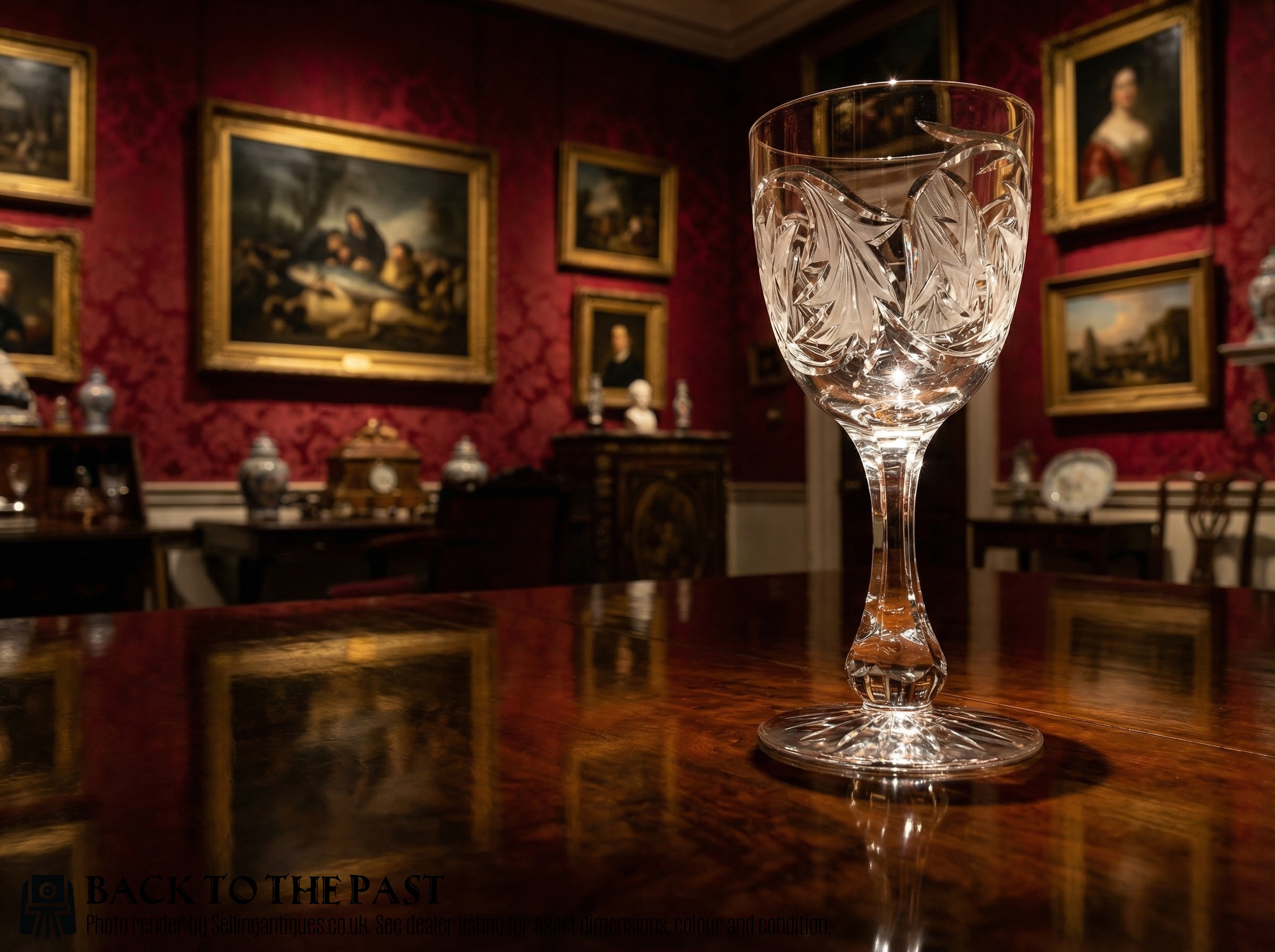
Etched Glass Wine Glass
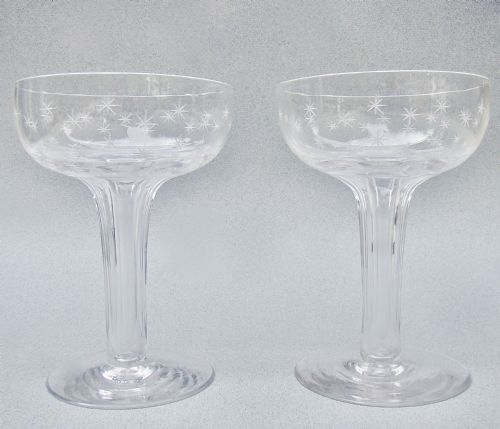
An etched glass wine glass represents drinking vessels fashioned predominantly during the Victorian period alongside Georgian and Edwardian examples. You encounter matching sets of dessert wine glasses, tall hock glasses, and individual stems featuring surface decoration.
The forms span simple bowls with decorated rims to hollow stems, air twists, and coloured crystal overrides. These vessels trace domestic dining history from late eighteenth century examples through to turn of the twentieth century Bohemian styles.
Materials and Working Methods
Maker operations utilised lead crystal, clear glass, and coloured overlays of ruby or amber over crystal. Surface patterns arrived via acid biting or wheel engraving, cutting designs directly into the body of the glass.
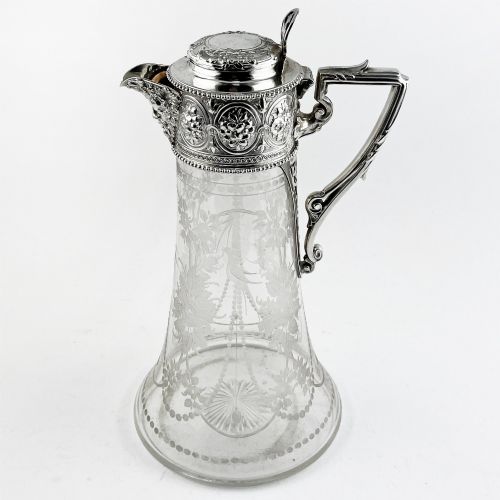
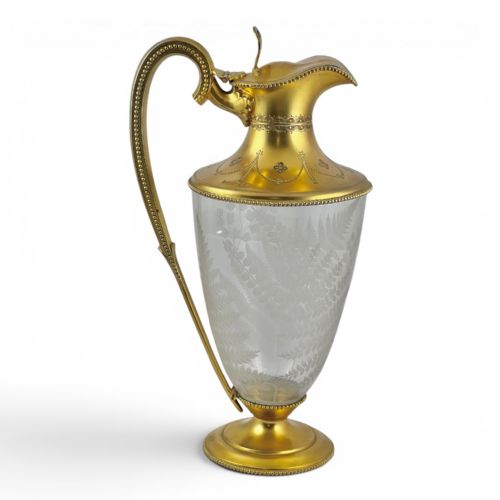
Metal mounts in silver plate, sterling silver, and gilt bronze appear alongside the glass elements, often joining blown bowls to fashioned stems and wide foot bases.
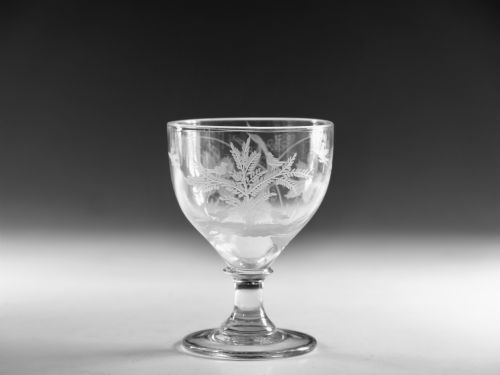
Nineteenth century diners enjoyed wine from glasses etched with industrious hunting scenes and creeping vines.
Distinctions in Standard
The depth and crispness of the wheel engraving or acid etching dictate visual sharpness across the bowl and foot. Crisp fruit and vine motifs or hunting scenes show firmer control than softer, shallower surface scratching.
Matching consistency within a set alters the standing of the pieces, alongside the clarity of the lead crystal and the precise alignment of applied silver plate or sterling mounts.
Asprey and Co. Ltd·Stevens and Williams·Elkington
The Etched Glass Wine Glass Glossary
- Rummer
- A heavy drinking glass with a short stem and wide bowl, frequently produced in the Georgian period. These sturdy vessels served ales and wines at taverns and dining tables.
- Air Twist
- A decorative stem enclosing spiral threads of tiny air bubbles trapped inside the molten glass during formation. This technique requires exceptional skill from the glassblower.
- Roemer
- A traditional continental European large wine glass, often featuring an amber or green bowl atop a studded stem. Bohemian makers produced these in quantity during the nineteenth century.
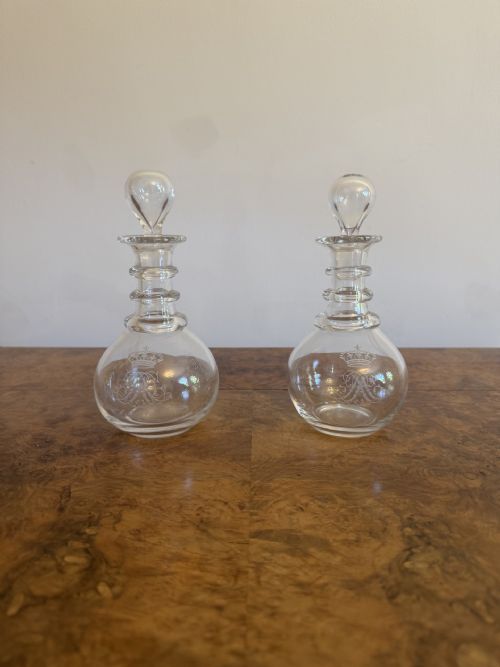
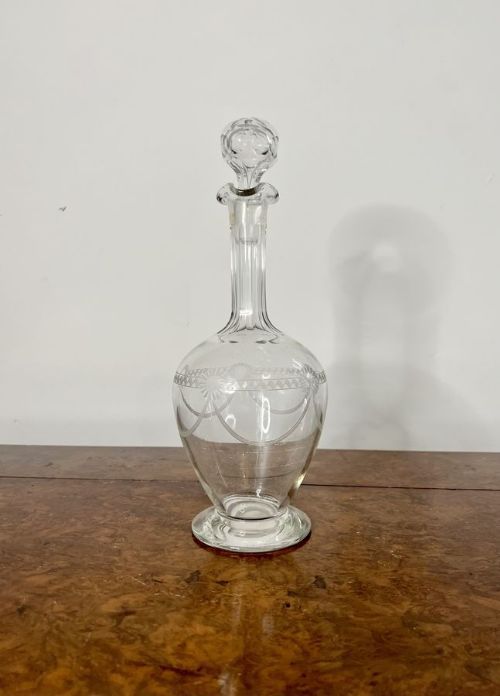
- Hock Decanter
- A tall bottle designed for Germanic white wines, commonly rendered in colour over crystal glass. These vessels match tall hock wine glasses.
- Fruiting Vine
- A common decorative motif depicting grape clusters and leaves etched into the glass surface. This pattern appears frequently on Victorian dessert wine glassware.
Etched Glass Wine Glass: Frequently Asked Questions
Can I use these glasses for daily dining?
These fragile vessels demand gentle handling due to their age and the delicate nature of hollow stems and thin bowls. Reserve them for special occasions rather than regular everyday use.
Store them securely on stable shelving where stems cannot knock against neighbouring items.
How do I distinguish Victorian from Georgian glasses?
Georgian examples often feature heavier lead metal, simpler air twist stems, and hand-cut facets without the chemical acid etching common later. Victorian items frequently showcase star motifs, botanical engraving, and matched sets.
Examine the foot base and pontil mark underneath to gather clues regarding the manufacturing era.
What does colour over crystal mean?
This technique involves casing a layer of coloured glass over a clear crystal core before cutting through the outer layer. The process creates striking contrast where the etched pattern reveals the clear glass beneath.
Bohemian and English makers utilised ruby, green, and amber overlays during the nineteenth century.