



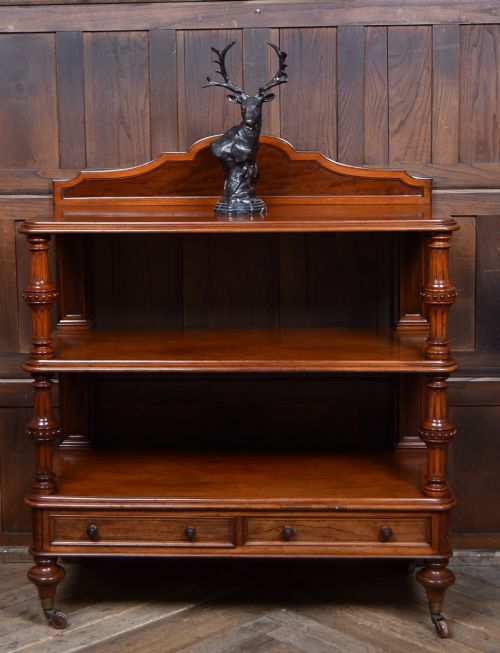
Victorian Etagere Display Stand
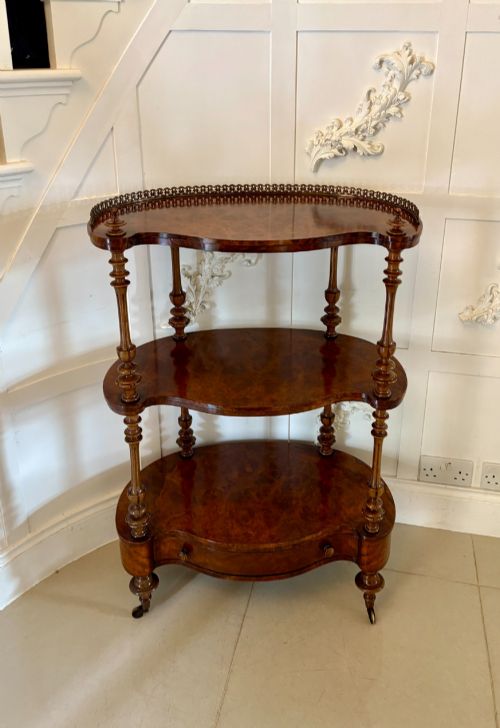
A victorian etagere display stand brings tiered elegance to a room, offering open shelves designed to showcase treasured objects with distinct period character.
Victorian Etagere Display Stand
A victorian etagere display stand combines utility and decorative display through multiple stacked tiers supported by slender uprights or columns. These tiered pieces function as focal points in a room, traditionally holding ceramics, books or ornaments.
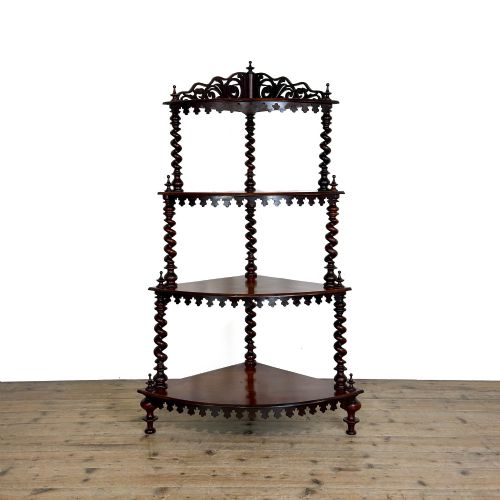
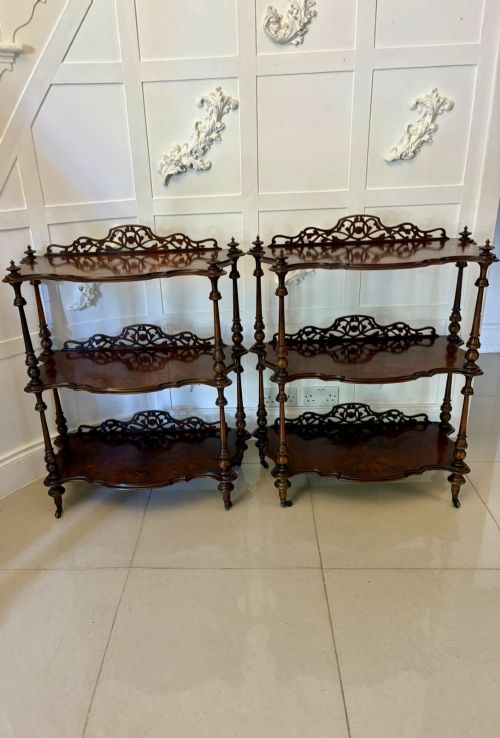
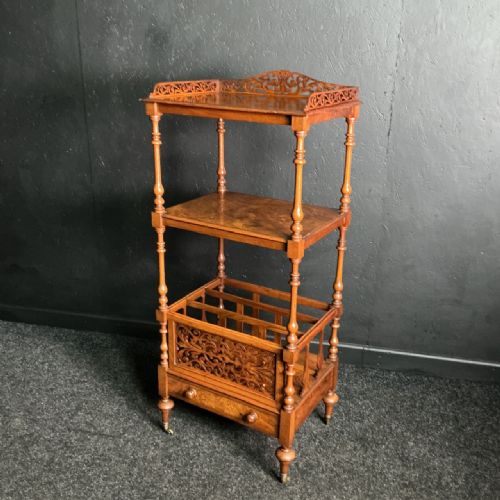
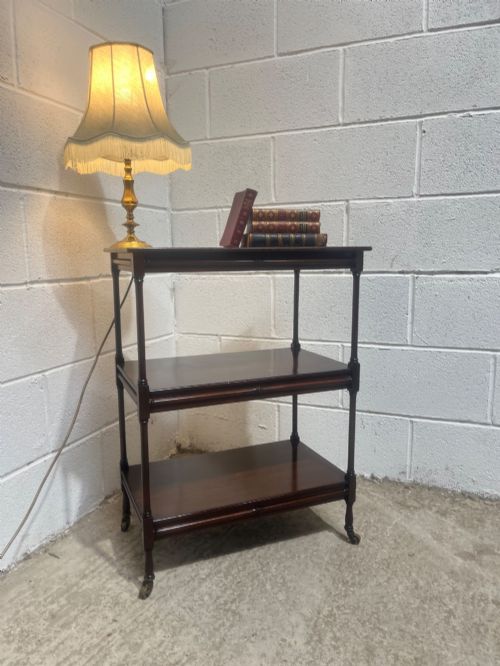
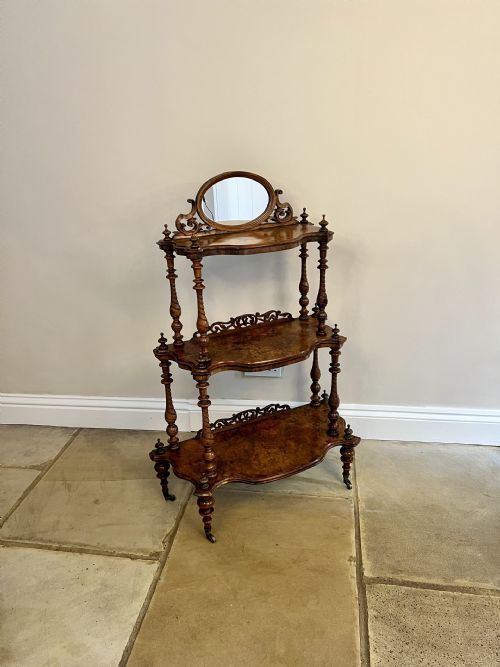
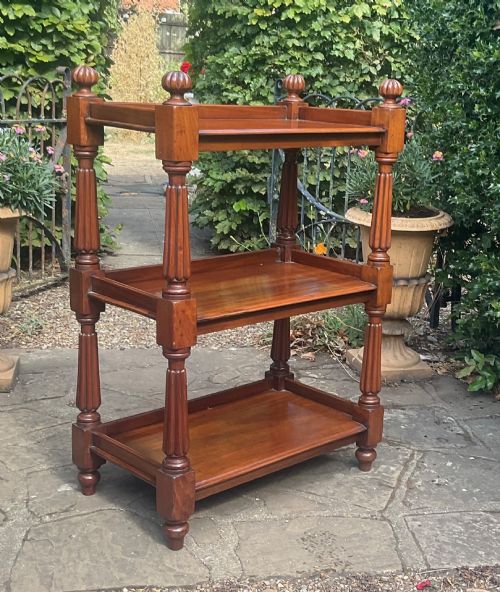
The versions most commonly met on this page span the nineteenth century, ranging from simple three-tier mahogany corner units to serpentine burr walnut centerpieces. Forms vary from dedicated corner shelves to freestanding buffets and rolling dumb waiters.
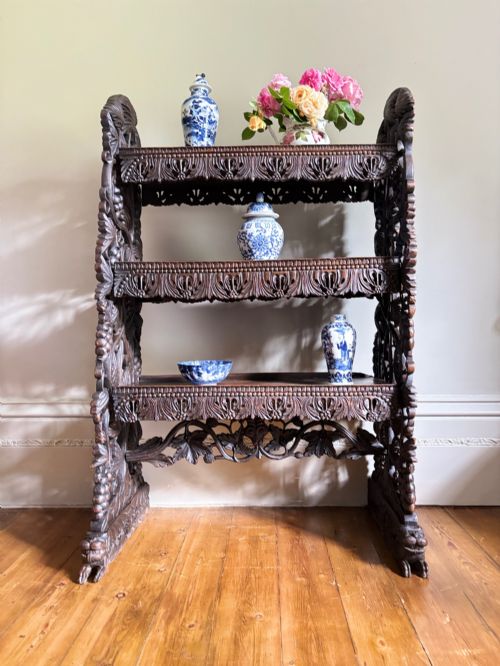
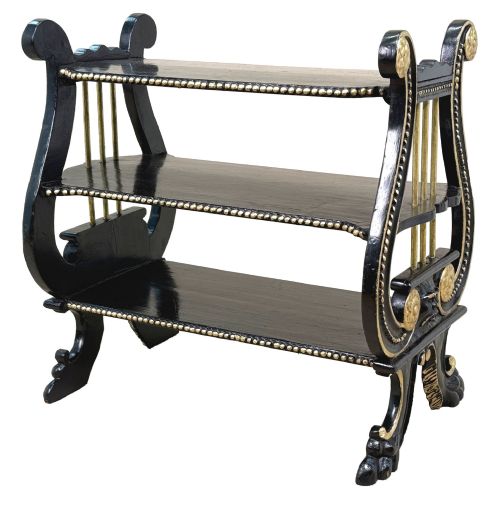
Makers and cabinetmakers adapted these tiers to diverse aesthetic movements, producing Anglo-Indian padauk shelves alongside French revival marquetry pieces and ebonised designs.
Woods, Metals and Construction Techniques
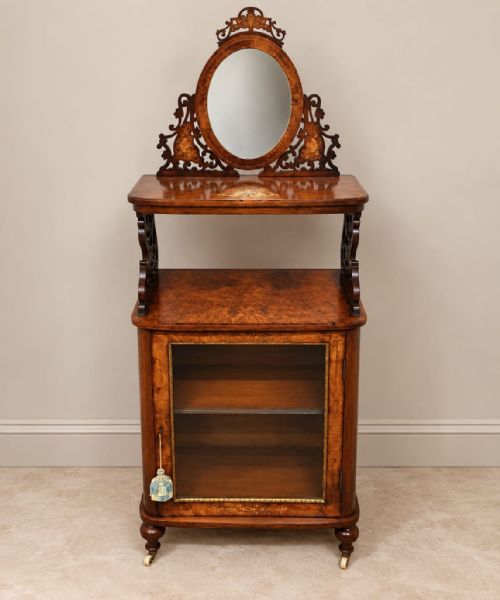
Makers relied heavily on rich timbers such as mahogany, walnut and burr walnut, frequently utilising rosewood and ebonised wood for darker, more formal finishes. Grain selection mattered deeply, with burr veneers chosen for visible tabletops and shelves.
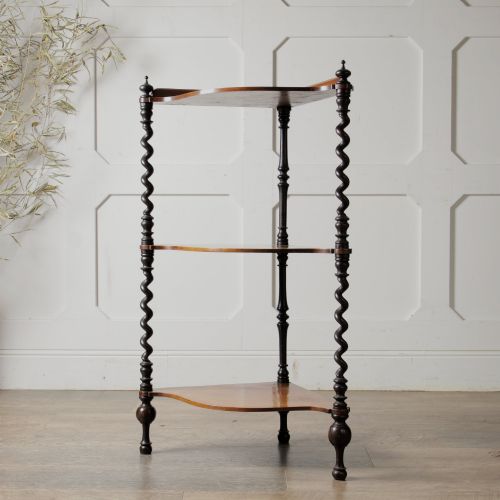
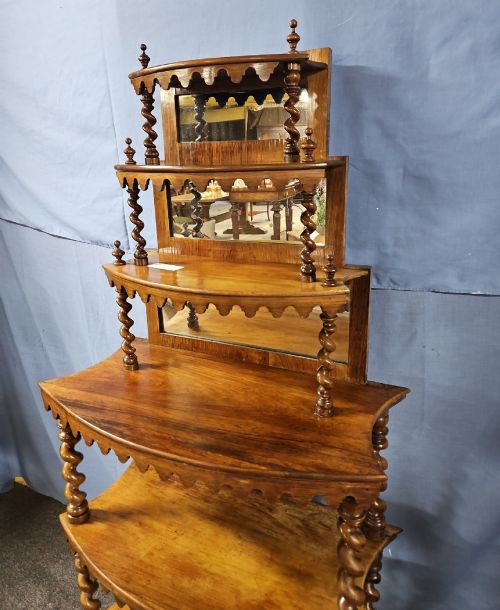
Structural embellishments include brass mountings, gilt metal details, parcel gilding and marquetry inlaid decoration. Turning appears frequently in uprights and barley twist supports, lending vertical rhythm to the stacked tiers.
Listings feature woods including mahogany, walnut, burr walnut, rosewood, teak and padauk alongside ebonised finishes and bamboo.
Assessing Craftsmanship and Proportion
Quality reveals itself in the choice of timber and the precision of the veneer work, particularly on serpentine or curved shelves where grain alignment demands high skill. Finer pieces display careful turning, crisp marquetry and robust joints that support multiple tiers without sagging.
The distinction between standard utility items and exceptional pieces lies in decorative restraint and harmonious proportions. Superior examples integrate brass mounts or gilt details cleanly into the overall silhouette rather than relying on heavy ornament.
Edwards & Roberts·Gabriel Viardot
The Victorian Etagere Display Stand Glossary
- Etagere
- A piece of furniture consisting of a set of open shelves for displaying small objects or ornaments. It originated in France and gained popularity during the nineteenth century.
- Whatnot
- A multiple-tier shelving unit used for displaying curiosities and ornaments. The name reflects its versatile utility for whatever objects needed a surface.
- Burr walnut
- Wood taken from the warted excrescences of a walnut tree, yielding highly figured and swirling grain patterns. Cabinetmakers used it extensively for veneering top surfaces on high-status Victorian furniture.
- Marquetry
- Decorative inlay work where thin pieces of wood, shell or metal are fitted into a veneer to form geometric or pictorial designs. It appears on the shelves and panels of finer nineteenth-century cabinets.
- Barley twist
- A type of furniture turning resembling the spiral twist of a barley sugar stick. It adds texture and dynamic vertical lines to the upright supports of tables and shelving units.
Victorian Etagere Display Stand: Frequently Asked Questions
What is a victorian etagere display stand used for?
These tiered pieces were designed to hold decorative objects, books and small ornaments within principal rooms. They served as open display units rather than enclosed storage.
Today, they function similarly in domestic interiors, providing vertical display space for ceramics, plants or collections without making a room feel crowded.
How do I tell an etagere from a whatnot?
The terms often overlap in nineteenth-century furniture, but an etagere traditionally emphasises lighter display functions with French stylistic influences. A whatnot frequently refers to multi-tiered shelving units of English manufacture.
Both forms share the characteristic stacked platform design, though etageres more commonly feature marquetry, brass mounts or ebonised finishes.
Where should I place a corner whatnot?
Corner units were specifically constructed to fit snugly into ninety-degree room angles, making efficient use of dead space. They suit smaller rooms or hallways where a freestanding rectangular shelf would obstruct pathways.
Positioning them away from direct sunlight and strong heat sources protects the polished walnut or mahogany surfaces from fading and veneer lifting.
How do I care for burr walnut shelves?
Burr walnut requires gentle dusting with a soft, dry cloth to prevent abrasive particles from scratching the polished surface. Avoid applying modern silicone sprays or heavy waxes that can build up and dull the grain.
Maintaining stable indoor humidity levels prevents the fine timbers and delicate veneers from drying out or splitting over time.