


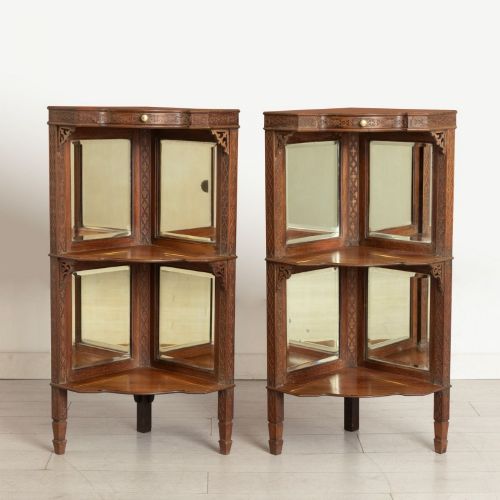


Victorian Etagere Cabinet
A victorian etagere cabinet brings open display shelves together with enclosed storage, offering a versatile focal point for curated rooms.
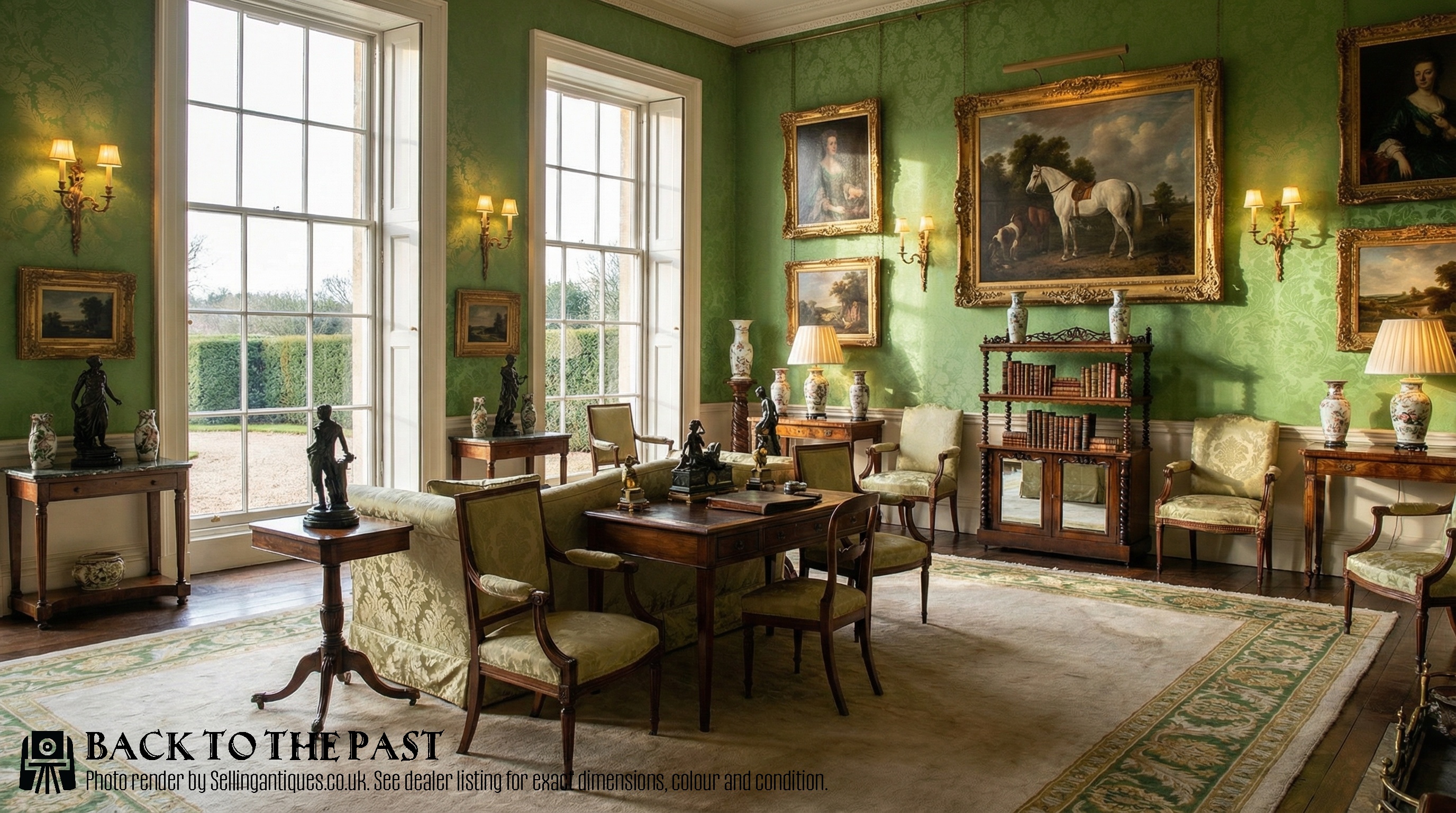
Victorian Etagere Cabinet
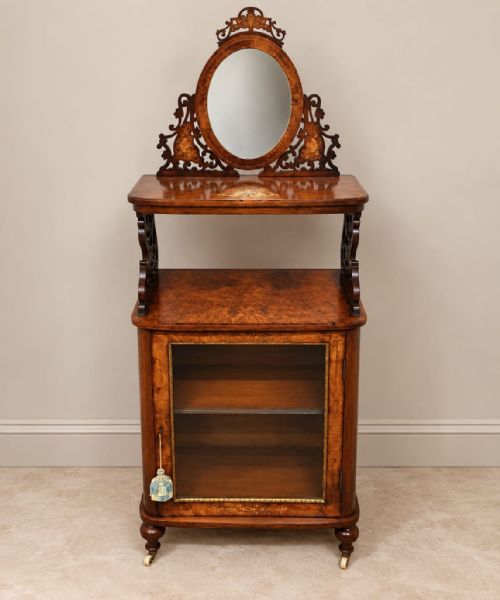
A victorian etagere cabinet combines tiered open shelving with cupboard bases or enclosed display compartments, serving varied domestic functions across nineteenth-century interiors. These pieces appear in forms such as corner units, side cabinets, and multi-tiered whatnots, bridging the gap between decorative display and practical storage.
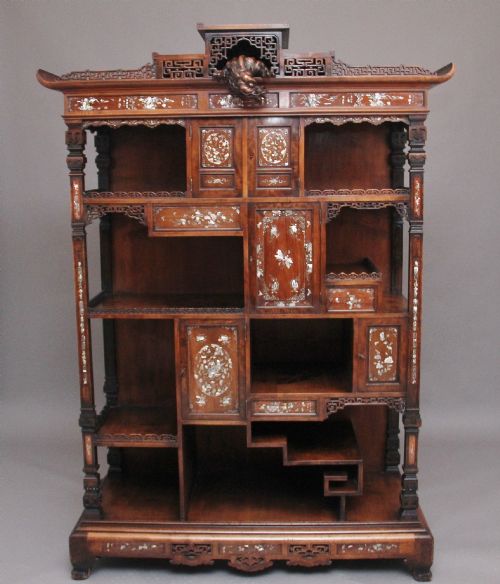
Makers utilised woods including walnut, mahogany, rosewood, and bamboo, alongside glass, brass, mirror, and lacquer. Pieces span styles from the Aesthetic Movement and Japonisme to Rococo Revival and Regency influences, reflecting shifting tastes throughout the nineteenth century.
Buyers encountering this category will find multi-tiered display stands, music cabinets, and hanging wall shelves alongside traditional floor-standing configurations. The selection ranges from compact corner designs to large freestanding cabinets resting on turned feet and original castors.
Materials and construction methods
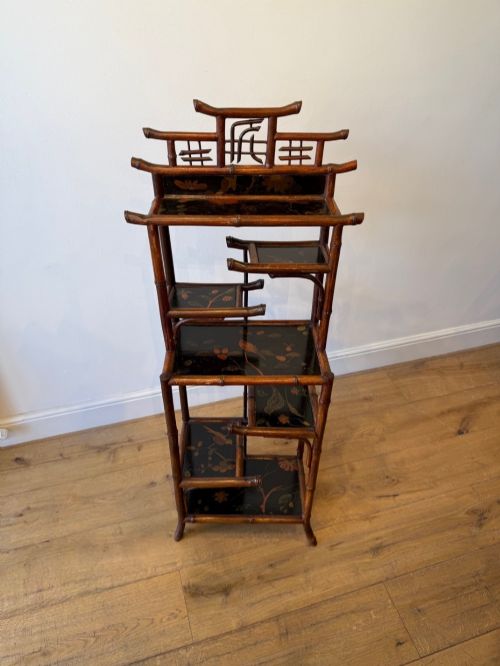
Cabinet makers built these pieces using solid and veneered timbers such as burr walnut, mahogany, amboyna, and rosewood, frequently incorporating marquetry inlay, giltwood, and gesso ornamentation. Alternative constructions employed bamboo frames combined with lacquer panels, aligning with late nineteenth-century Japonisme tastes.
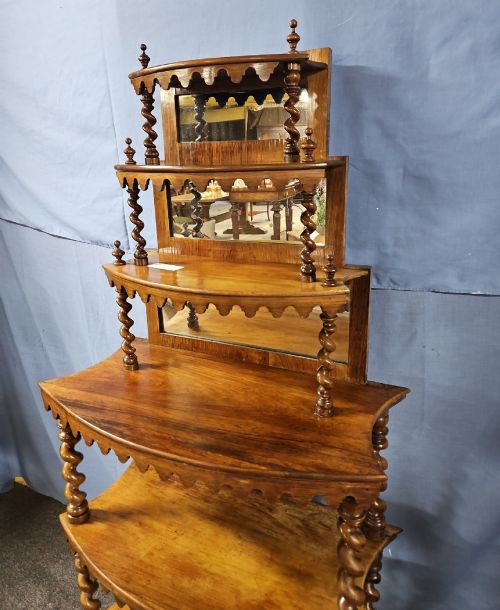
Structural elements frequently included barley twist supports, carved woodwork, and mirrored backs designed to reflect light through displayed objects. Iron, brass, and glass components completed the fittings, whilst turned feet and castors provided mobility for larger side cabinets and display units.
Object types span corner cabinets, music cabinets, chiffoniers, wall shelves, and multi-tiered whatnots with mirrored backs and turned feet.
Distinguishing quality across pieces
Quality reveals itself in the selection of timbers, such as figured burr walnut or dense rosewood veneers, and the precision of inlaid marquetry work. Finer examples display crisp carving on giltwood, gesso, or mahogany frames rather than cast repetitions.
Construction integrity separates standard utility furniture from high-end workshop production, visible in stable tier joints, original brass castors, and intact mirrored glass panels. The sophistication of the design, whether an elaborate music cabinet or a multi-tiered etagere, dictates the standing of the piece.
Gabriel Viardot·Edwards & Roberts
The Victorian Etagere Cabinet Glossary
- Etagere
- A piece of furniture consisting of a set of open shelves for displaying small objects or ornaments. These tiers allow for varied spatial arrangements within a room.
- Whatnot
- A multi-tiered piece of furniture used for storing or displaying books, ornaments, or curiosities. It gained widespread popularity during the nineteenth century.
- Marquetry
- The art and craft of applying pieces of veneer to a structure to form decorative patterns. Craftsmen utilised contrasting timbers to create floral or geometric designs.
- Chinoiserie
- European imitation and interpretation of Chinese and East Asian artistic traditions. This aesthetic influenced cabinet decoration through lacquerwork and motifs.
- Japonisme
- The study and influence of Japanese art and design on Western practitioners. It popularised the use of bamboo and asymmetric shelving units.
Victorian Etagere Cabinet: Frequently Asked Questions
What is a victorian etagere cabinet used for?
These pieces served as multi-functional furniture for displaying porcelain, books, and decorative objects while offering enclosed storage in cupboard bases. Their tiered shelving allowed households to showcase curated collections in drawing rooms and parlours.
Over time, their role evolved from utilitarian display stands to focal decorative items that combined open shelving with secure cabinet space.
How do I identify the period of a cabinet?
Dating relies on examining the timber species, construction techniques, and stylistic markers such as Aesthetic Movement bamboo or Rococo Revival carving. Nineteenth-century pieces frequently feature hand-turned supports, original brass castors, and specific veneer choices like burr walnut or rosewood.
Hardware inspection, including brass hinges and drawer linings, further clarifies the manufacturing era alongside any maker stamps or workshop signatures.
Where should I place an etagere in my home?
Corner models fit compactly into unused room junctions, while freestanding side cabinets and multi-tiered whatnots anchor larger walls or open living spaces. Mirrored variants benefit from placement near light sources to brighten darker corners of a room.
Their combination of shelving and enclosed storage makes them practical in hallways, studies, and reception rooms for displaying collections.
What is the difference between a whatnot and an etagere?
A whatnot traditionally consists of simple open tiers designed strictly for display, whereas an etagere often incorporates more decorative framing and varied compartment styles. Many nineteenth-century examples blur these lines by adding enclosed cupboard bases to open shelving units.
Both forms served similar display functions in period interiors, though etageres frequently lean towards lighter, more ornamental designs.