
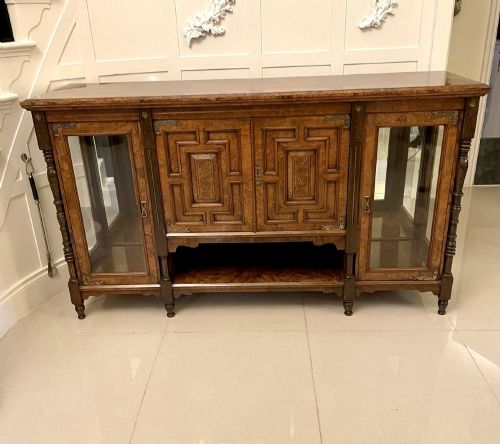
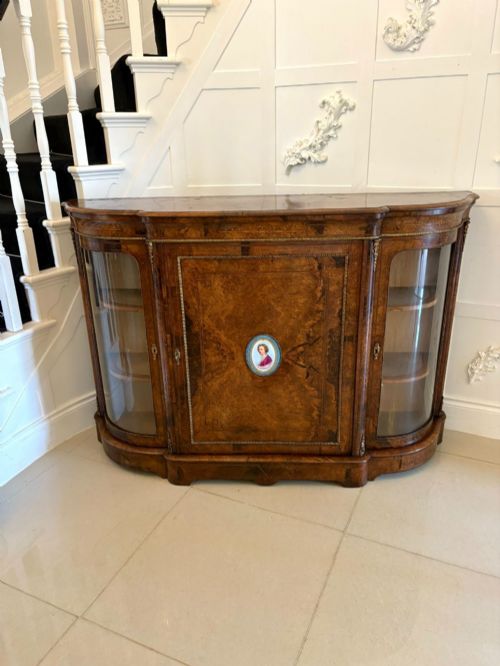
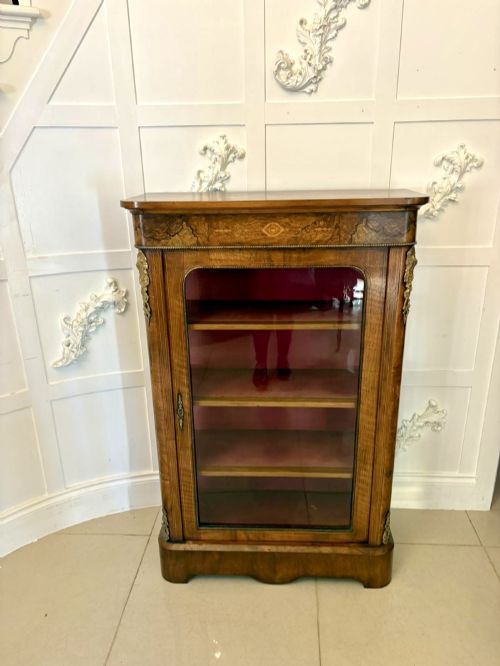
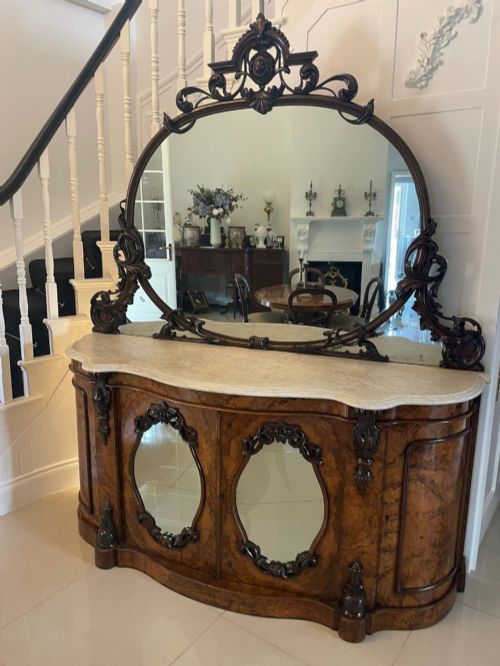


Victorian Credenza Display Cabinet
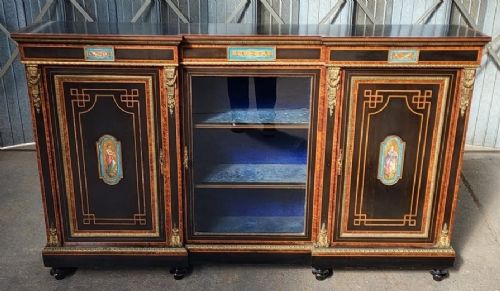
A victorian credenza display cabinet brings grand nineteenth-century presence to a room, combining architectural timber with fine glazed display space.
Victorian Credenza Display Cabinet
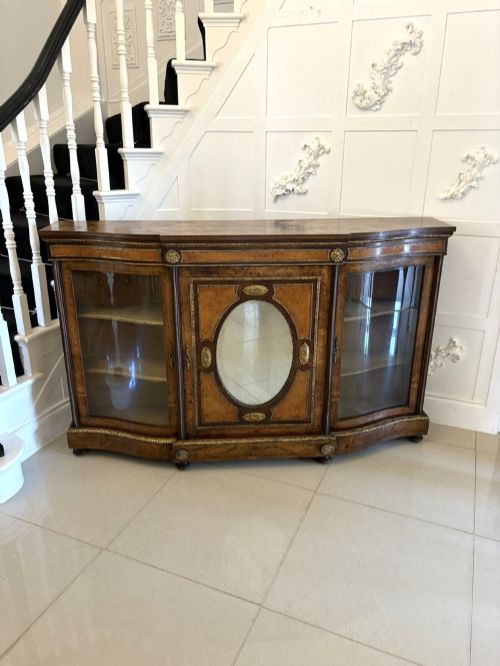
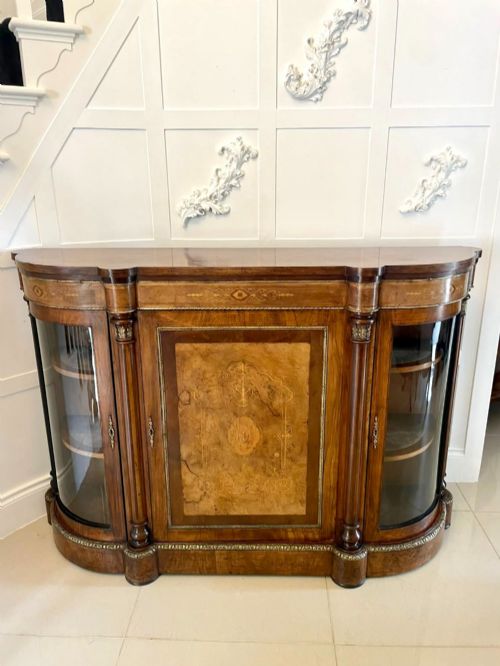
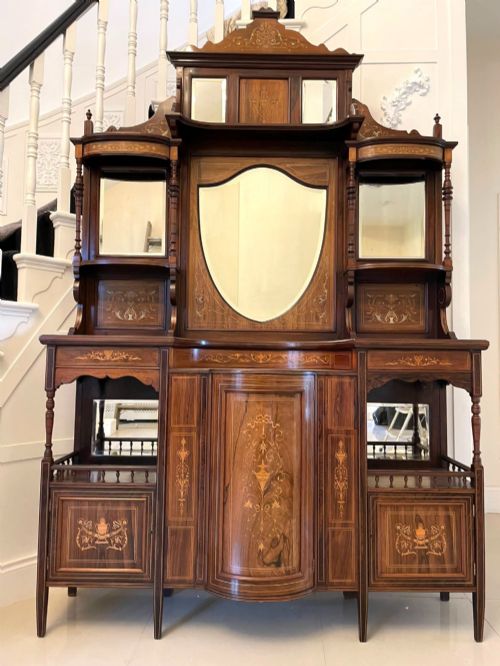
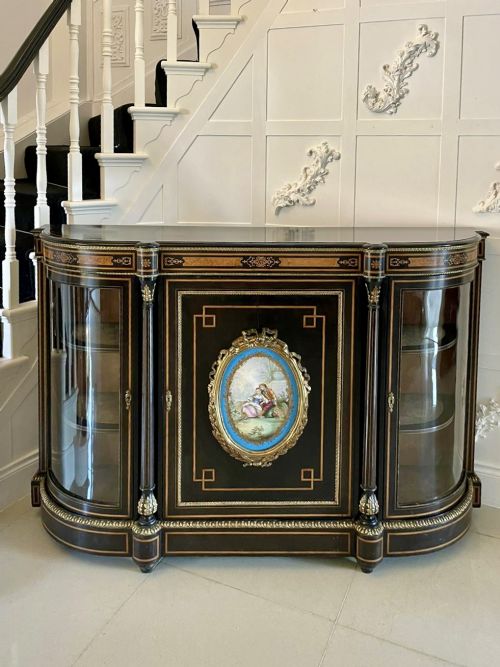
A victorian credenza display cabinet is a substantial low storage piece designed for nineteenth-century drawing rooms, frequently pairing central glass-fronted cupboards with flanking curved side cabinets. These pieces often incorporate mirrored backs and display shelving, serving both as decorative furniture and functional storage.
How They Were Made
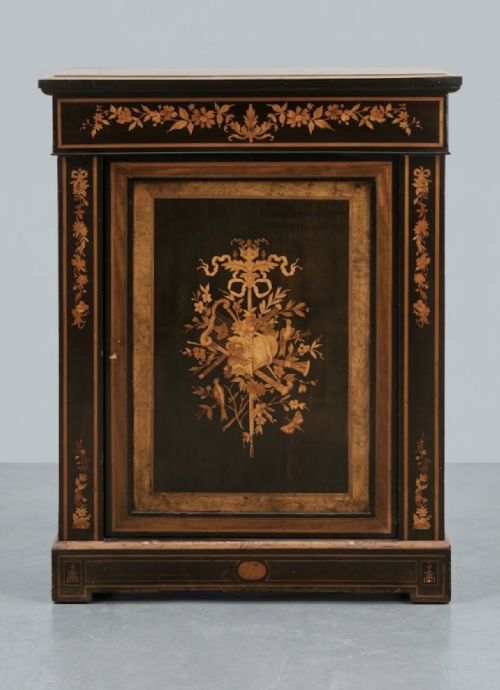
Cabinetmakers built these pieces using supportive carcases of pine or oak, then veneered the visible surfaces with figured timbers like burr walnut, amboyna, and satinwood. Marquetry panels were meticulously cut by hand, assembling contrasting woods into floral or geometric motifs.
Gilded bronze, known as ormolu, was cast and chased to edge doors, frame porcelain plaques, and highlight architectural corners. Glass panes for the central and side display sections were hand-blown or cylinder-drawn, fitted into shaped wooden or brass framing.
Some nineteenth-century makers secreted shallow velvet-lined drawers behind decorative friezes, perfect for hiding clandestine love letters.
What Varies in Quality
The choice of timber underpins the hierarchy of these cabinets, where richly figured burr walnut or exotic amboyna commands higher regard than plain mahogany or standard walnut. The depth and precision of the marquetry inlay further separate standard production from exceptional cabinet work.
Mount quality dictates the finish at the upper end, where heavy, finely chased ormolu mounts replace simpler gilt metal trim. Structural joinery, serpentine shaping of the front timber, and the crispness of carved elements like mirror backs indicate the workshop standard.
Gillows·Lamb of Manchester·Edward Holmes Baldock·Maison Gagneau·Collinson & Lock
The Victorian Credenza Display Cabinet Glossary
- Credenza
- A low nineteenth-century cabinet typically featuring a central cupboard flanked by glass-fronted side cabinets. These items originally stood against drawing room walls for displaying porcelain and serving.
- Marquetry
- Decorative veneer work forming pictures or patterns by assembling thin pieces of wood. Makers used varied timbers to create contrasting floral and geometric designs.
- Ormolu
- Gilt bronze mounts applied to furniture edges and panels. This cast metalwork provided bright metallic contrast against dark woods.
- Pier Cabinet
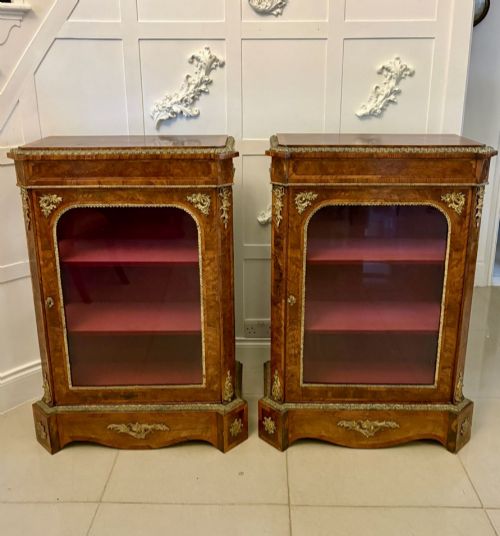
- A narrow display cabinet designed to fit the wall space between windows. These upright pieces often feature single glazed doors and gilt mounts.
Victorian Credenza Display Cabinet: Frequently Asked Questions
Where were these cabinets placed?
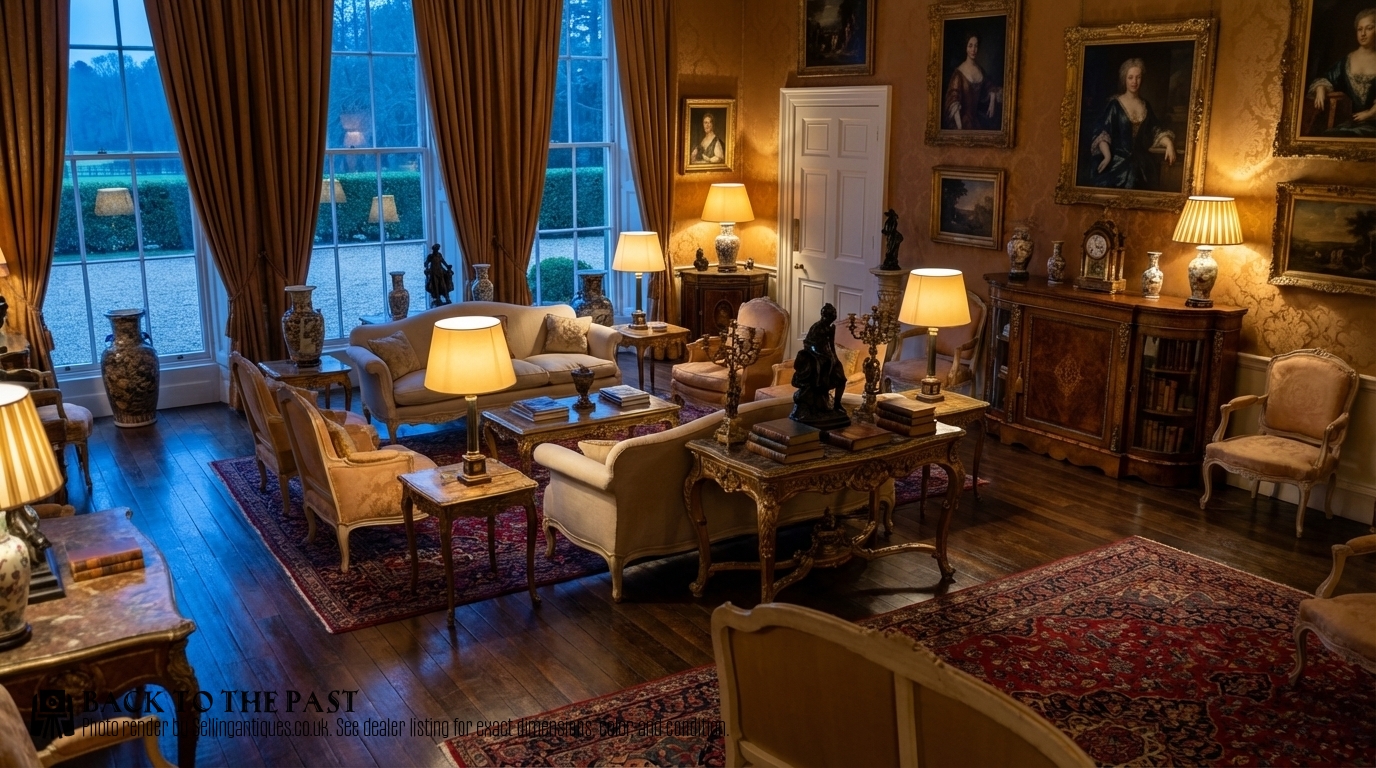
These cabinets typically stood against the main drawing room wall, often beneath a large mirror or between tall windows. Their low profile ensured they did not obstruct sightlines across the formal reception rooms.
Interior layouts of nineteenth-century homes positioned these pieces to catch natural light, illuminating the porcelain and decorative objects housed behind the glass doors.
How do I care for the veneer?
Protect the polished timber surfaces by keeping the cabinet away from direct sunlight and steady heat sources. Applying a quality beeswax occasionally helps maintain the lustre of the burr walnut or rosewood.
Avoid using modern liquid polishes or silicone sprays, which can penetrate hairline cracks in the aged finish and damage the underlying veneer.
What is the difference between a credenza and a pier cabinet?
A credenza is a wide, low cabinet featuring three distinct sections, usually with a central door and curved side display compartments. They dominate the long walls of a principal reception room.
A pier cabinet stands tall and narrow, built specifically to occupy the masonry wall space between two windows. These upright glazed cabinets house smaller collections of ceramics and glass.
Can I adjust the internal shelving?
Most period cabinets feature fixed internal timber supports or traditional wooden ledges that hold the original velvet-lined or plain wooden shelves. Altering these historic configurations is uncommon because it disturbs the original interior fabric.
When loading the shelves, distribute weight evenly across the timber boards to protect the antique framing and glass panels from undue stress.