

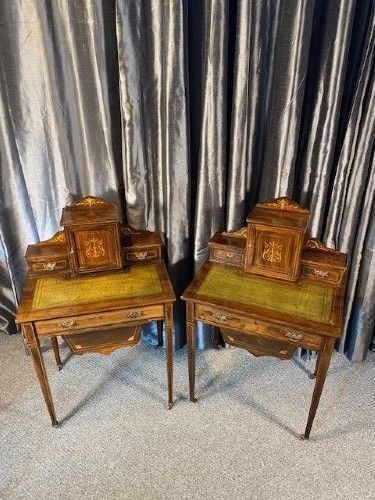
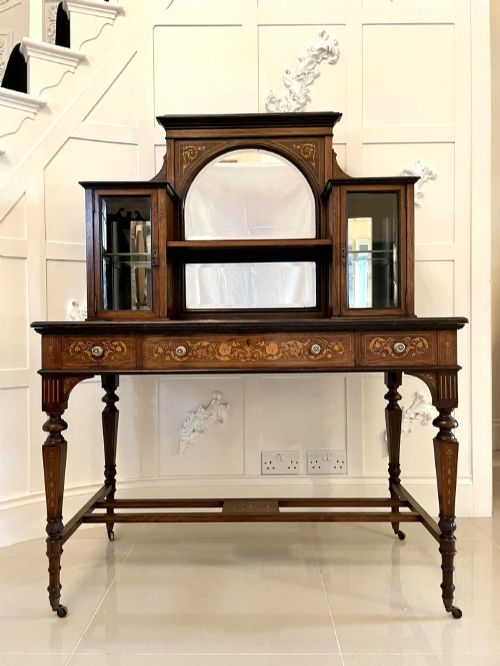
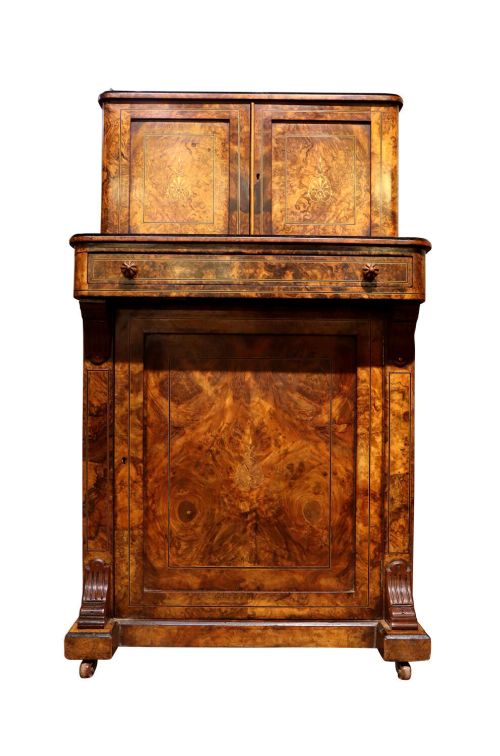
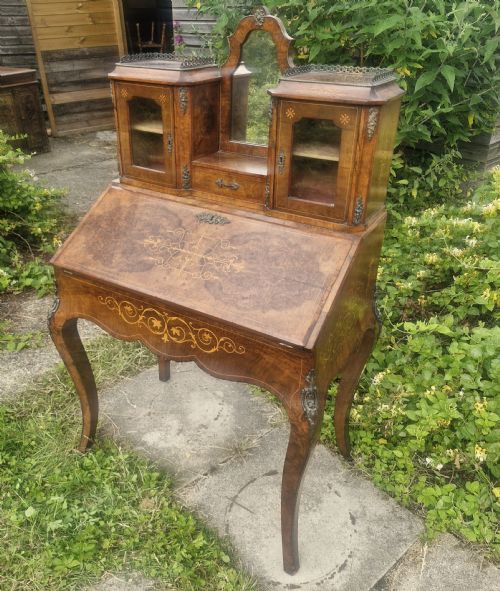


Victorian Escritoire
A victorian escritoire is a dedicated writing cabinet designed to conceal private correspondence, combining a upright profile with a drop-down writing surface.
Victorian Escritoire
When you search for a victorian escritoire, you encounter upright writing cabinets and fall-front desks spanning the nineteenth century. The examples on this page range from tall mahogany escritoires and cabinet desks to compact bureau de dame forms and rosewood writing cabinets.
The layout typically incorporates a fall-front or cylinder flap that lowers to reveal fitted pigeonholes and small drawers for stationery. These pieces bridge the gap between a chest of drawers and a writing desk, offering secure vertical storage alongside a functional work surface.
How they were made
Cabinetmakers utilised dense timbers such as mahogany, walnut, and rosewood, often applying burr walnut or satinwood veneers to create striking figure on the exterior. Marquetry inlay, brass mounts, and glazed compartments appear across French revival and Sheraton revival interpretations.
Structural integrity relies on traditional joinery, with dovetail construction used for the internal drawers and sturdy carcases supporting the heavy drop-front flaps. Leather writing inserts frequently line the interior fall, providing a smooth surface for handwriting.
Some nineteenth-century escritoires feature hidden compartments behind dummy book spines to keep love letters safe.
What varies in quality
The distinction between standard cabinetwork and exceptional pieces rests upon the choice of timber figure and the precision of the marquetry or brass inlay. Exhibition quality examples display meticulous hand-cut details and sophisticated internal engineering.
Proportion and execution define the hierarchy of these desks, from simple mahogany uprights to elaborate satinwood and kingwood cabinet desks bearing maker signatures. The complexity of the internal fitments and the quality of the secondary timbers further separate master workshops from provincial joinery.
George Faulkner Armitage·Morris & Co·Edwards & Roberts·Gregory & Co
The Victorian Escritoire Glossary
- Escritoire
- An upright writing cabinet featuring a fall-front flap that conceals inner compartments. It provides vertical storage while maintaining a compact footprint.
- Bonheur de jour
- A light ladies writing desk topped with a small cabinet or set of pigeonholes. This French form gained popularity during the nineteenth century.
- Fall-front
- A hinged writing flap that drops from a vertical position to form a horizontal desk surface. It locks shut to secure the correspondence inside.
- Marquetry
- Decorative patterns formed by the insertion of contrasting veneers into wood. Cabinetmakers utilised this technique for floral and geometric motifs.
- Secretaire
- A piece of furniture containing a built-in writing drawer or drop-front compartment. The term encompasses various desk formats from this era.
Victorian Escritoire: Frequently Asked Questions
What is a victorian escritoire?
A victorian escritoire is an upright writing cabinet featuring a fall-front panel that opens to reveal internal drawers and pigeonholes. It provides vertical storage for stationery while offering a fold-down surface for correspondence.
These pieces combine the utility of a desk with the enclosed storage of a small cabinet. They appear in woods like mahogany, burr walnut, and rosewood across various nineteenth-century styles.
How were these desks used?
These cabinets served as private spaces for writing letters, storing documents, and keeping personal accounts. The lockable drop-front flap protected confidential correspondence from casual view.
The fitted interior compartments organised paper, envelopes, and writing implements in a compact footprint. Wealthy households placed them in drawing rooms, boudoirs, or private studies.
Where should I place an escritoire?
An escritoire suits spaces where floor area is limited, as its upright design maximises vertical storage without projecting far into the room. Living rooms, studies, and bedrooms accommodate their proportions effectively.
Ensure the placement allows sufficient clearance for the fall-front flap to lower completely horizontal. Position the cabinet away from direct sunlight to protect vulnerable wood veneers and leather inserts.
How do I identify different styles?
Nineteenth-century writing cabinets reflect diverse design revivals, from French Louis XV curves and marquetry to Arts and Crafts oak construction. Details like bamboo frameworks, lacquer finishes, or satinwood crossbanding indicate specific aesthetic influences.
Examining the secondary timbers, hardware types, and inlay motifs helps determine the period and regional origin. Maker signatures or stamps on the drawer linings provide definitive attribution.