
Victorian Equestrian Painting
Victorian equestrian painting captures horses, riders, and hounds across canvas through the distinct lens of nineteenth-century sporting art.
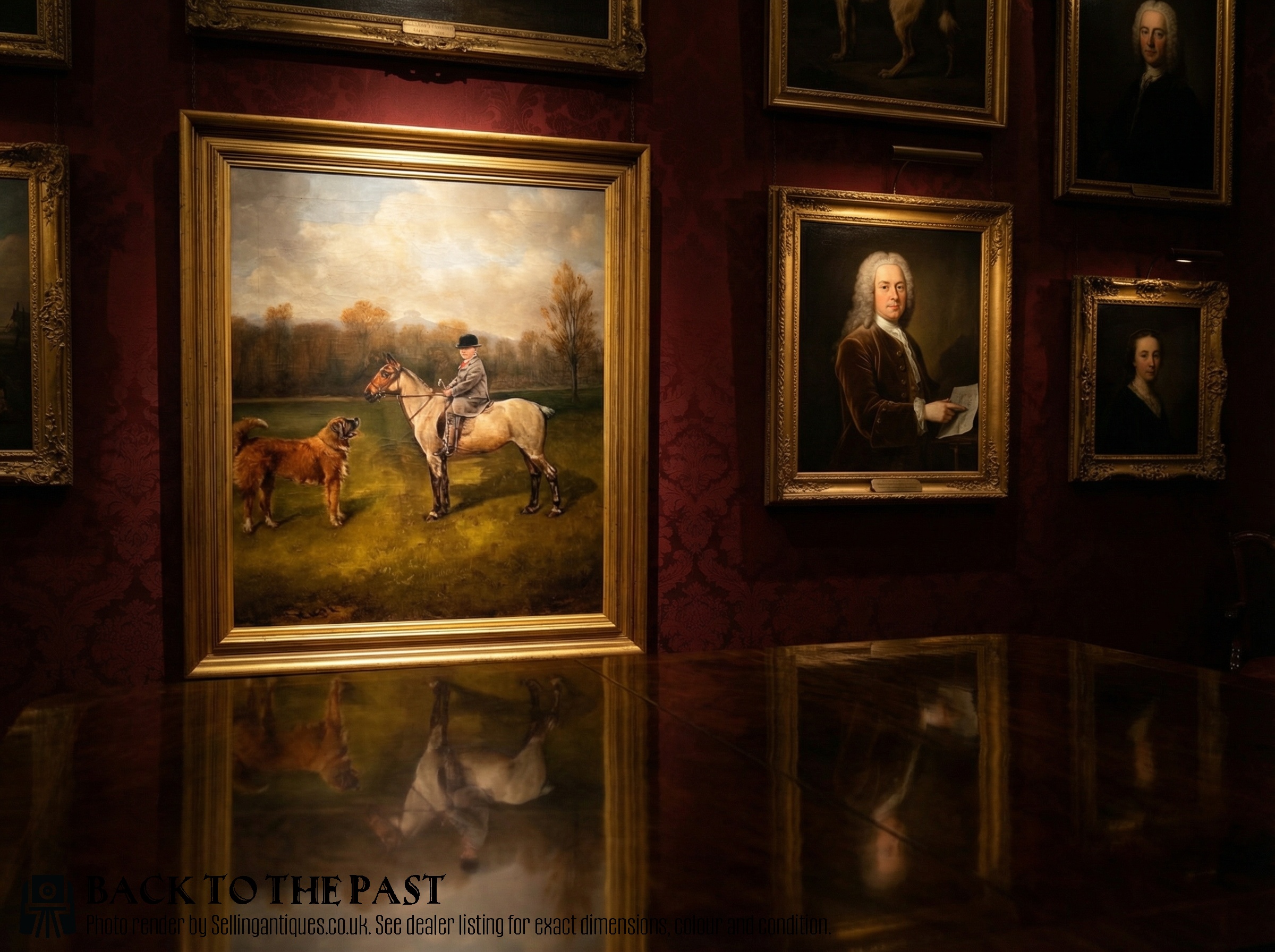
Victorian Equestrian Painting
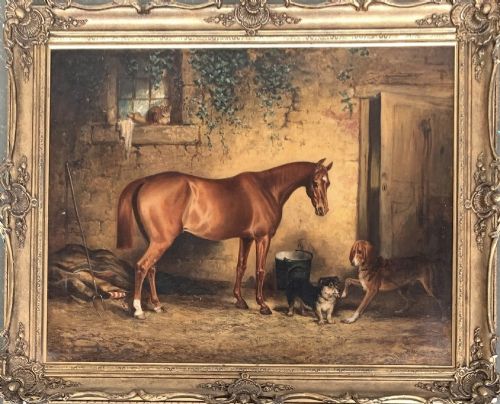
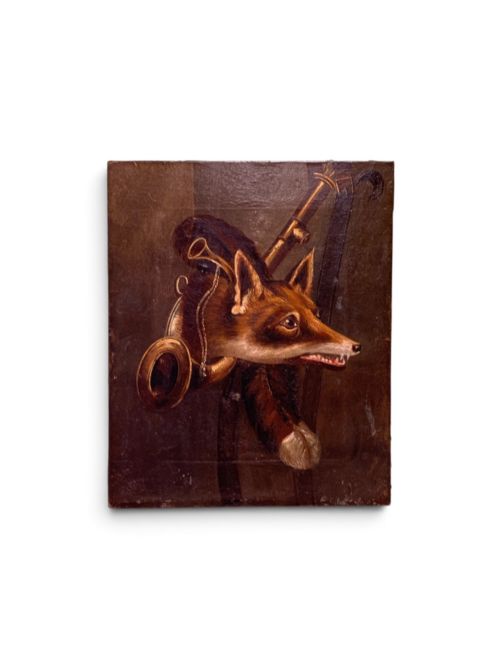
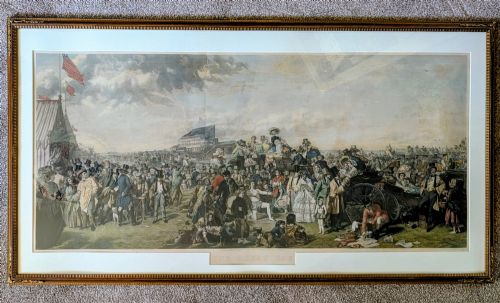
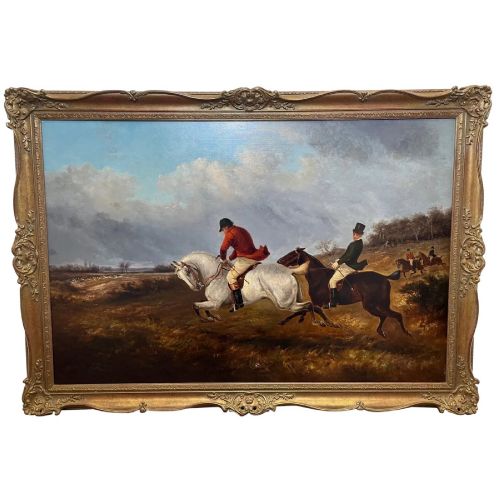
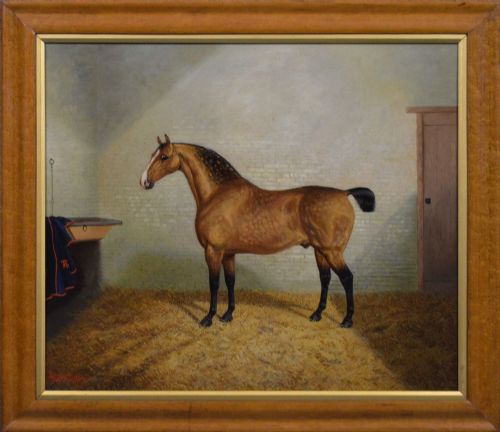
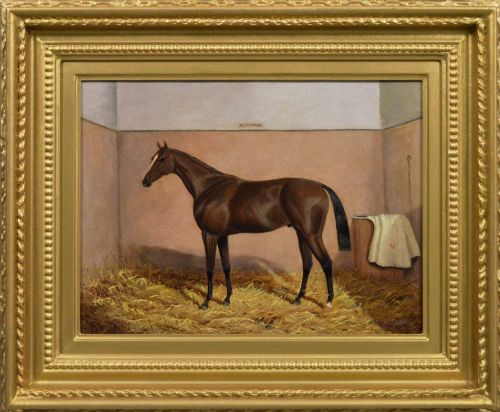
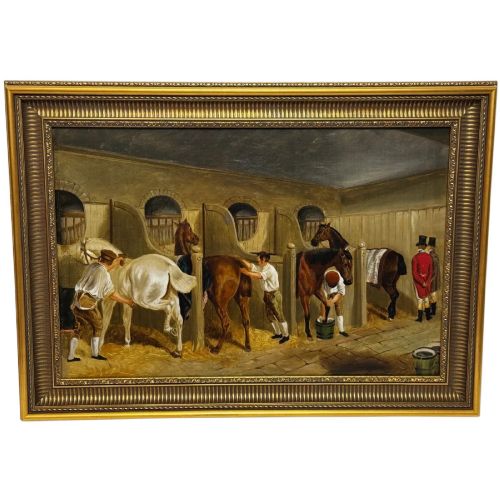
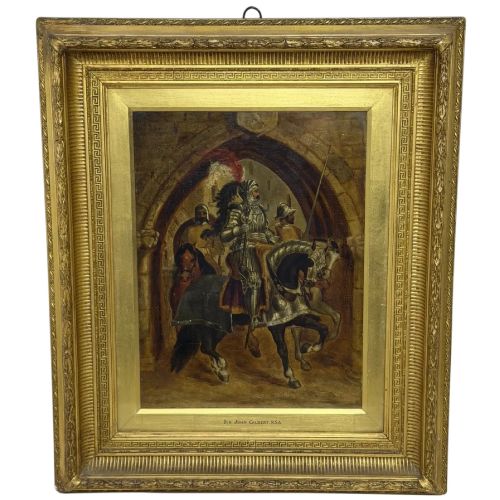
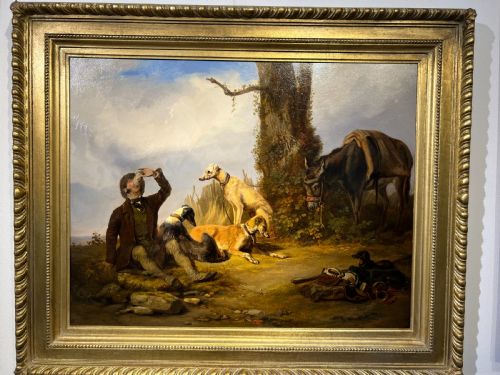
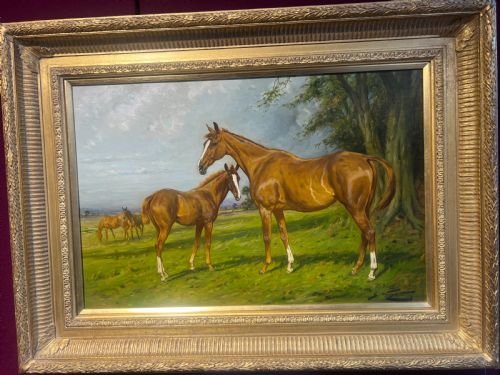
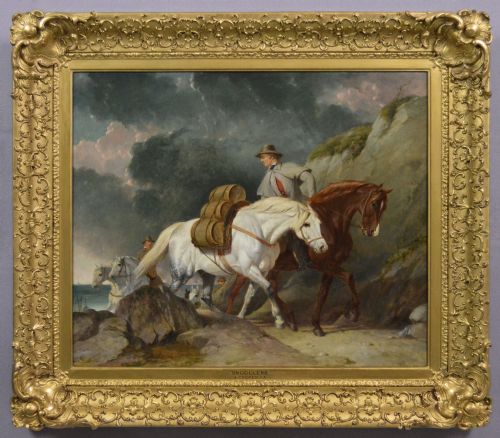
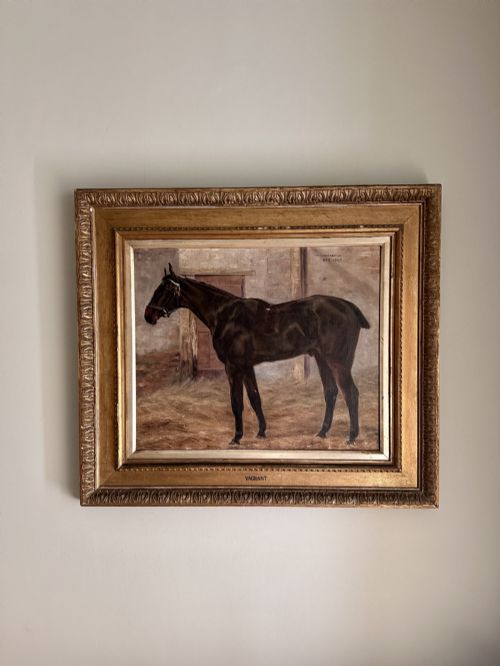
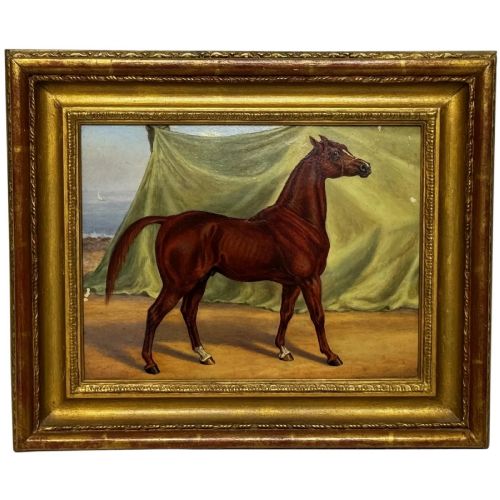
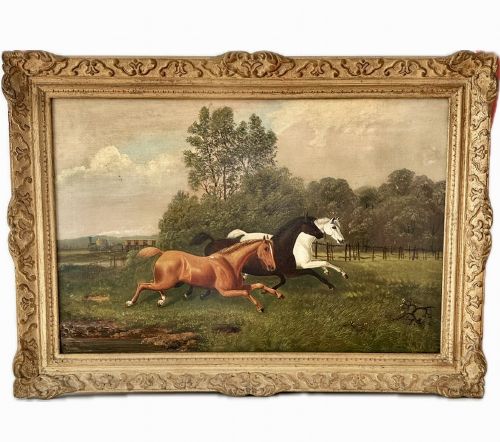
A victorian equestrian painting portrays horses in varied settings, ranging from stable interiors and portraits of named racehorses to dynamic hunting scenes across open landscapes.
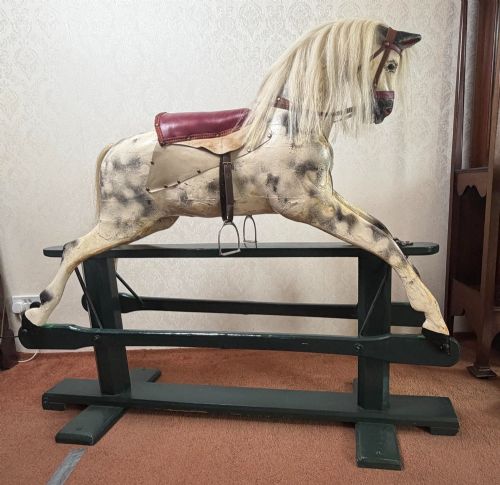
Most examples found here date from the nineteenth century, including specific decades such as the eighteen-fifties, eighteen-eighties, and eighteen-nineties, alongside related rocking horses and watercolours.
The subjects extend from purebred Arabians and champion thoroughbreds with their jockeys to working animals in rural and coastal scenes.
How They Were Made
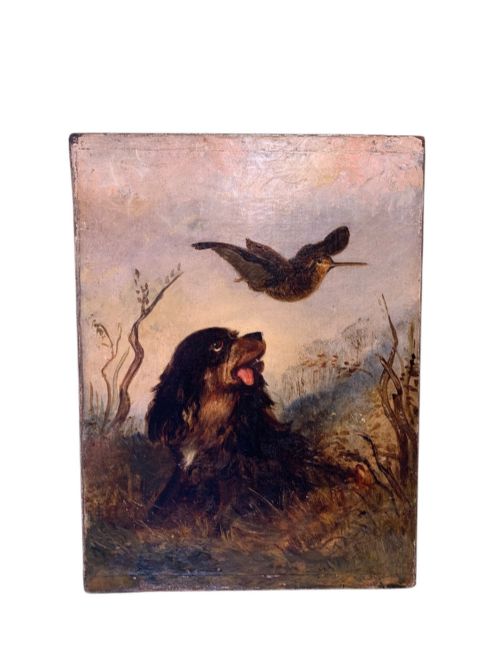
Artists worked primarily in oil paint applied to canvas or wood panels, occasionally employing watercolour on paper for smaller studies and illustrations.
Finished works were housed in period frames, frequently constructed from giltwood or gilt wood to complement the visual weight of the paintings.
A painted glass vase hunting scene proves that nineteenth-century horse enthusiasts liked to drink from foxes.
What Varies in Quality
Anatomical precision and the correct rendering of muscle structure, movement, and proportion distinguish accomplished works from more formulaic studio output.
The reputation of the artist, documented provenance linking the animal to a known estate or race, and the preservation of the original paint surface determine distinction.
Thomas Smythe·Albert Clark·Sir Edwin Henry Landseer·George Wright·Abraham Cooper·Fred Fitzpatrick·Edward Priestley·Thomas Walker Bretland·John Frederick Herring Snr·Herman S Melville·F.A. Clark·John Ferneley Senior·John Arthur Lomax·John Alfred Wheeler·John Frederick Herring Jnr·Basil Nightingale·Edward Lloyd of Ellesmere·George E Sharpe·Léon Joseph Voirin·C R Breytle
The Victorian Equestrian Painting Glossary
- Oil on Canvas
- A traditional painting medium where oil paint is applied to stretched woven fabric. This combination allows for rich blending and durable preservation.
- Giltwood
- Carved wood coated with gold leaf or a gold-coloured finish. It provides a reflective decorative border common in nineteenth-century framing.
- Sporting Art
- A genre of painting dedicated to rural sports, horses, dogs, and field pursuits. It gained significant popularity during the Victorian era.
- Equine Portrait
- A specialised painting focused on the likeness and conformation of an individual horse. These works frequently recorded champion racehorses or favoured hunters.
Victorian Equestrian Painting: Frequently Asked Questions
What is a victorian equestrian painting?
It is a nineteenth-century artwork depicting horses, often in portraits, racing contexts, or hunting scenes.
These pieces reflect the period's fascination with thoroughbred breeding, field sports, and animal companionship.
How were these paintings framed?
Many examples are housed in original giltwood frames designed to enhance the depth and richness of the canvas.
Such frames often feature decorative moulding consistent with nineteenth-century interior aesthetics.
Are all the subjects racehorses?
While famous racehorses and hunters form a large part of the subject matter, the works also show working horses, stable scenes, and animals in landscapes.
Some compositions incorporate riders, hounds, or farmyard animals alongside the main equine subject.
How can I tell the period of the painting?
Dating relies on recorded artist lifespans, specific stylistic conventions of nineteenth-century sporting art, and occasional dated signatures on the canvas.
Period framing materials and stretcher construction also offer clues to the approximate decade of creation.