

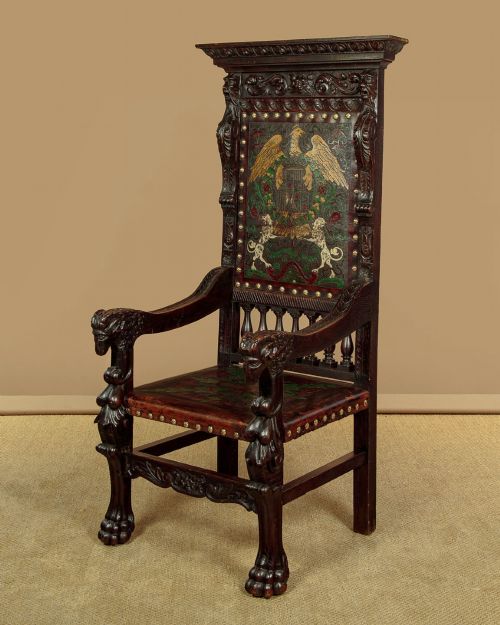


Renaissance Revival Painting
Renaissance revival painting brings the grand decorative ambition of earlier centuries into nineteenth-century interiors through canvas, panel, and enamel.
Renaissance Revival Painting
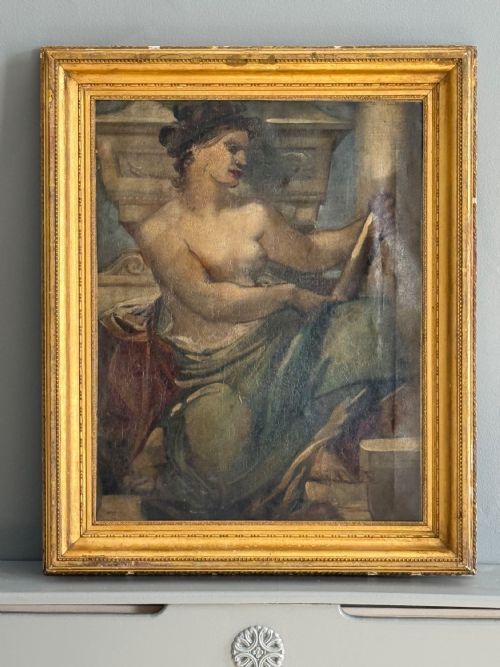
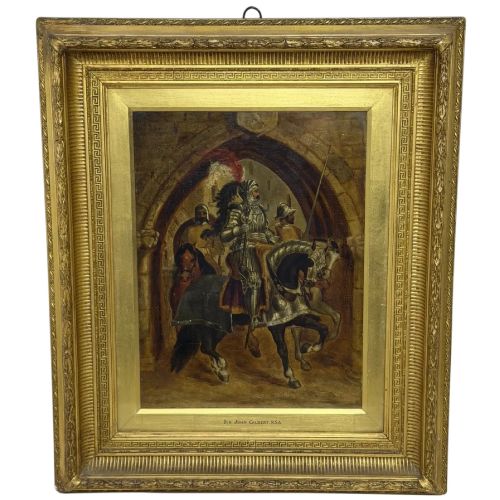
When you search for renaissance revival painting, you encounter nineteenth-century works that consciously emulate sixteenth-century compositions, religious themes, and portraiture. These pieces draw heavily on Italian and Northern European sources, often taking the form of oil on canvas or painted wood.
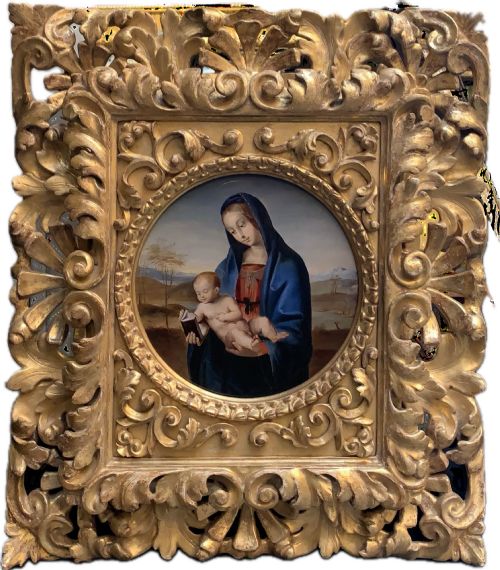
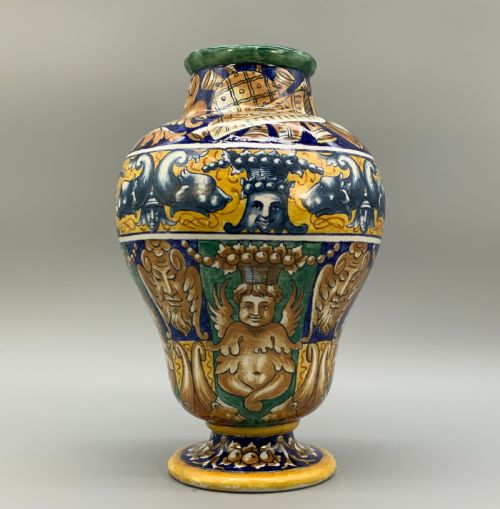
The selections available here range from direct copies of masters such as Raphael to elaborate decorative panels and enamel plaques. Alongside traditional canvases, the grouping includes ceramics, majolica, and carved furniture that share the same historical aesthetic.
Nineteenth-century artists and craftspeople utilised historical motifs to satisfy a Victorian appetite for scholarly romance and antiquity. Each object reflects a nineteenth-century interpretation of Renaissance ideals rather than a sixteenth-century original.
Materials and Technique
Oil on canvas forms the core of these pictorial works, applied with techniques mimicking earlier schools and old master followers. Painters worked on canvas and wood panels, sometimes incorporating specialised framing and decorative book cover bindings.
Beyond canvas, makers utilised earthenware, tin glaze, and enamel on copper to achieve rich polychrome surfaces. These ceramic and metallic supports allowed for intricate detail in imitation of Renaissance majolica and Limoges enamels.
The material palette includes bronze, porcelain, enamel, and carved oak across various decorative forms.
Markers of Quality
Quality rests upon the execution of detail and the fidelity of the historical revival style. Superior works demonstrate accomplished brushwork and careful draughtsmanship, particularly in figurative subjects and portraits.
The depth of the glaze on ceramics and the precision of the enamel work distinguish finer decorative pieces from standard production. Material selection, such as the quality of the wood in carved panels and furniture, further separates standard items from exceptional ones.
White, Allom and Co·Ulisse Cantagalli·Icilio Federico Joni·Gien Faience
The Renaissance Revival Painting Glossary
- Majolica
- Tin-glazed earthenware decorated with opaque colours, often featuring historical or mythological narratives. This technique was widely revived in nineteenth-century Italy and France.
- Enamel
- Vitrified glass fused to a metallic base such as copper, popular in Limoges-style plaques and decorative vessels. The process requires precise kiln firing to achieve rich chromatic depth.
- Oil on canvas
- Pigment bound in drying oil applied to a stretched woven fabric support. This medium dominated nineteenth-century interpretations of Renaissance portraiture and religious art.
- Revival
- A stylistic movement where nineteenth-century makers reinterpreted historic aesthetics from earlier periods. It encompasses architecture, painting, and decorative arts inspired by the sixteenth century and earlier.
- Tavolette
- Painted wooden book cover bindings associated with Sienese archives and decorative practices. Nineteenth-century examples emulate these medieval and Renaissance administrative artefacts.
Renaissance Revival Painting: Frequently Asked Questions
Are these paintings from the Renaissance?
These pieces date from the nineteenth century, created during a period that revived sixteenth-century artistic styles.
Artists drew inspiration from masters such as Raphael, producing careful studies and revival works rather than original sixteenth-century art.
What mediums besides canvas appear here?
The selection extends beyond traditional oil paintings to include painted enamel on copper and tin-glazed earthenware.
Ceramic plaques, majolica vessels, and carved wooden panels also represent the breadth of nineteenth-century revival craftsmanship.
How do I style these pieces at home?
These works suit traditional interiors, libraries, and studies where historical portraits and religious panels create a scholarly atmosphere.
Pairing framed oils with decorative majolica or enamel plaques establishes a cohesive nineteenth-century collector aesthetic.
How can I identify a revival work?
Examine the framing, materials, and canvas condition, which typically display nineteenth-century manufacturing methods.
Signatures, stamps, and specific revival techniques such as nineteenth-century majolica glazing provide clues to their true age.