




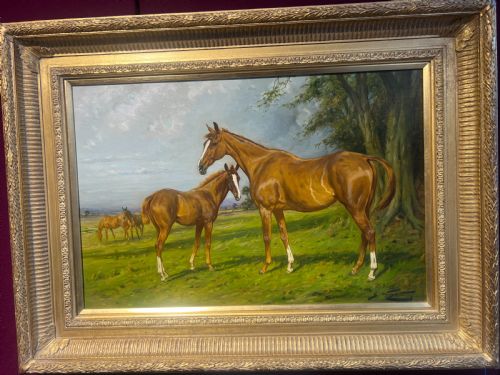
Victorian Equestrian Landscape Art
Victorian equestrian landscape art brings together horses, hounds, and countryside views across the nineteenth century.
Victorian Equestrian Landscape Art
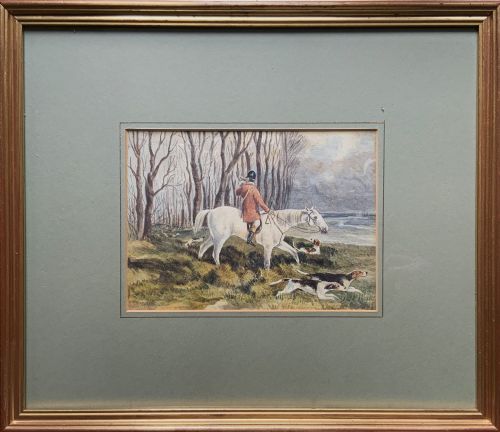
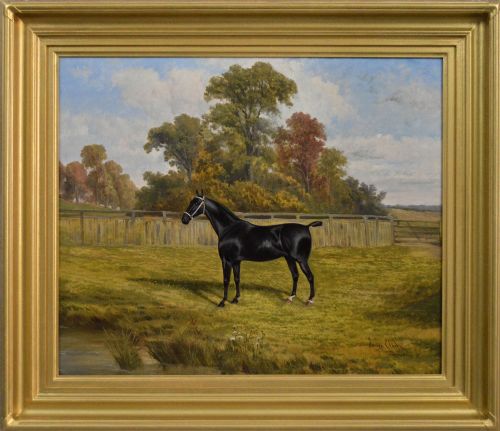
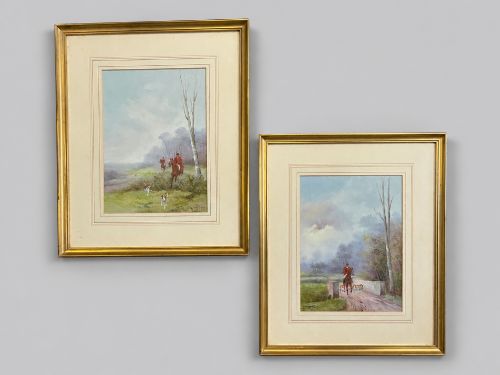
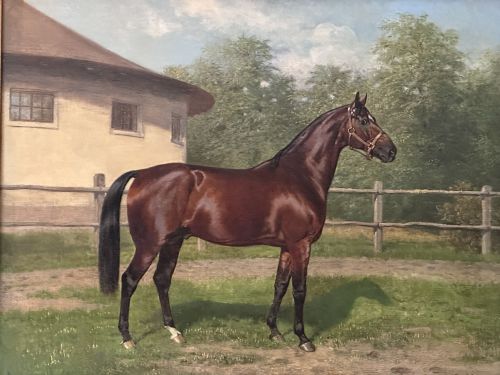
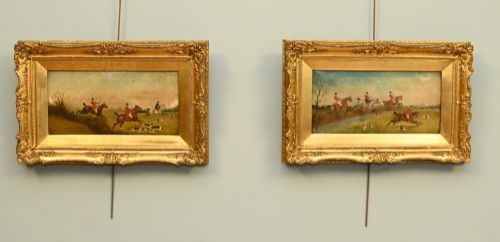
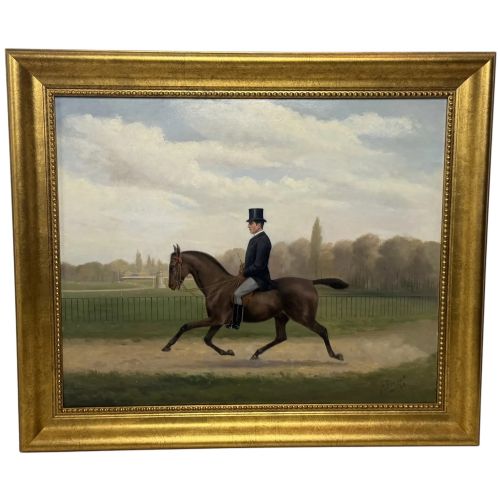
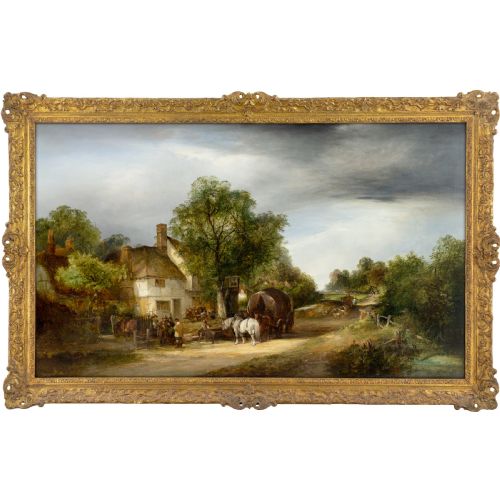
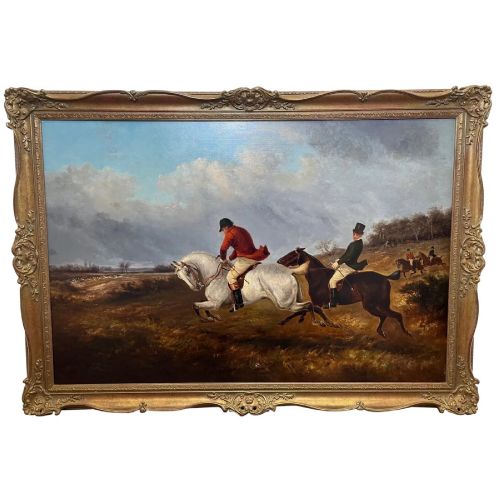
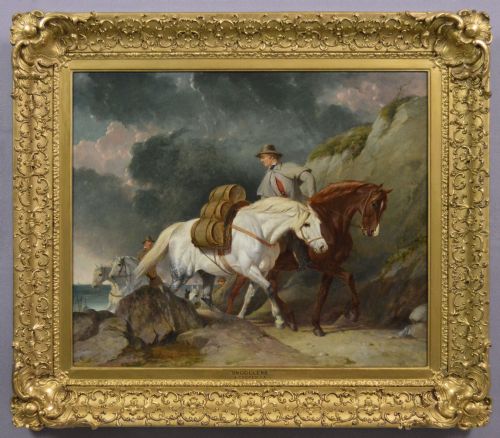
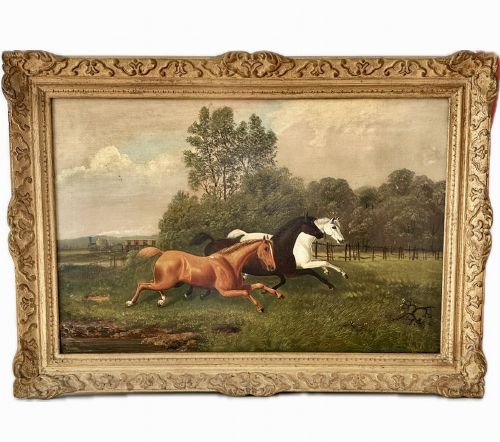
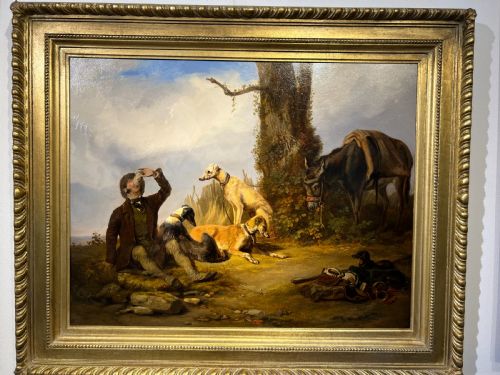
Victorian equestrian landscape art captures horses and riders set within expansive rural scenes, hunting fields, and coaching routes. These works range from peaceful farmyard compositions to dynamic hunting scenes across open country.
The pieces on this page draw from nineteenth century painting traditions, frequently pairing animal subjects with detailed British topography. Buyers encounter oil paintings on canvas alongside watercolours and occasional needlework pictures.
Framed watercolours and oil paintings dominate the selection, often housed in gilt wood frames with gesso mouldings. Subjects stretch from Hyde Park rides to West Country hunting parties.
Materials and Technique
Artists relied primarily on oil paint applied to stretched canvas or wood panels, building up animal forms and landscape backgrounds through layered brushwork. Watercolours on paper provide a lighter medium for detailed rural vignettes and portraiture.
Frames utilise wood foundations coated in gesso and finished with gold leaf or gilt paint to create reflective borders. Silk needlework pictures introduce textile threads to render architectural and landscape details.
Pigments capture natural lighting effects across varied weather conditions, from snowy coaching scenes to clear moorland views.
Victorian Equestrian Landscape Art Retail Price Guide 2026
Typical asking prices for victorian equestrian landscape art among the pieces listed under this phrase on Sellingantiques today, from the lower quarter to the upper quarter. They describe what is for sale here now, not the wider market.
Several horses share their landscape views with observant farmyard ducks, chickens, and stray goats.
Distinctions in Quality
Anatomy and movement separate standard topographical records from superior horse portraiture. Master painters render muscle structure, tension in reins, and equine expressions with precise anatomical accuracy.
Compositional balance determines overall success, separating cluttered farmyard views from harmonious landscapes where horses integrate naturally with background terrain and atmospheric lighting.
Frame craftsmanship contributes significantly to the integrity of a piece, with original gilt wood and gesso mouldings preserving the period context of nineteenth century works.
Edward Charles Williams·William Shayer·Thomas Smythe·Robert W. Macbeth·Sir Edwin Henry Landseer·George Wright·Abraham Cooper·Edward Priestley·C R Breytle·Herman S Melville·John Ferneley Senior·Herbert Dicksee·John Frederick Herring Jnr·John Frederick Herring·Arthur Longley Vernon·Helena Maguire·Fannie moody·John Alfred Wheeler·Alfred Duke·John Charles Maggs·Robert cleminson·William J Hodgson
The Victorian Equestrian Landscape Art Glossary
- Gesso
- A plaster mixture applied to wood frames before gilding. This substance creates a smooth surface for detailed moulding work.
- Giltwood
- Wood that has been coated with gold leaf or gilt paint. It frames many nineteenth century oil paintings.
- Etching
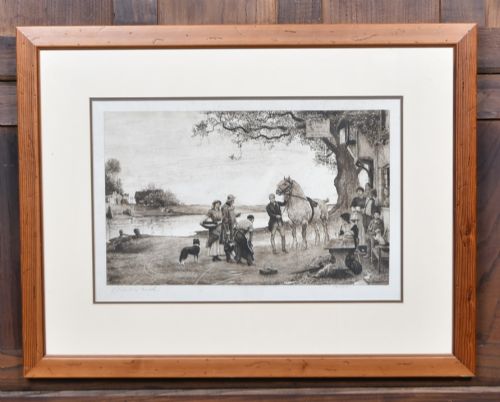
- A printmaking process where acid cuts lines into a metal plate to hold ink. Artists use this technique for monochrome rural scenes.
- Watercolour
- A paint consisting of water-soluble pigments. These works appear on paper surfaces.
- Needlework Picture
- A textile artwork created with thread on fabric backing. Silk versions depict racing tracks and rural subjects.
Victorian Equestrian Landscape Art: Frequently Asked Questions
What subjects appear in these works?
These pieces depict horses in varied settings, including hunting fields, farmyards, coaching routes, and rural landscapes.
Artists also include dogs, riders, farm animals, and architectural elements such as country inns or blacksmiths.
How do I care for nineteenth century oil paintings?
Keep paintings away from direct sunlight and fluctuating humidity to protect the canvas and oil pigments.
Dust surfaces gently with a soft, dry brush and avoid using chemical cleaning agents on the paint or gilt frames.
Are watercolours framed differently from oils?
Watercolours require protective glass and mount boards to shield the paper from moisture and atmospheric dust.
Oil paintings on canvas remain open to the air within their frames, supported by wooden stretchers behind the fabric.
How can I identify the period of a painting?
Examine the materials, stretcher construction, and framing styles characteristic of nineteenth century workshops.
Artist signatures, handwritten inscriptions on the reverse, and stylistic markers of Victorian realism offer further chronological context.