
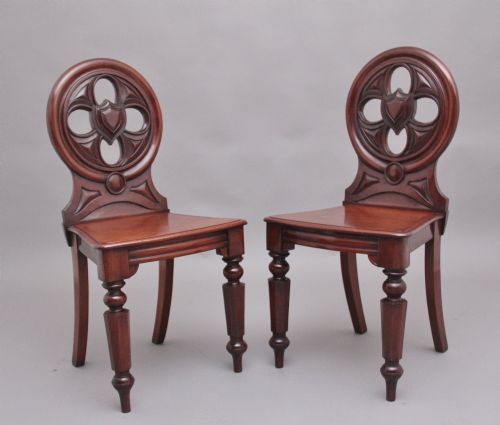
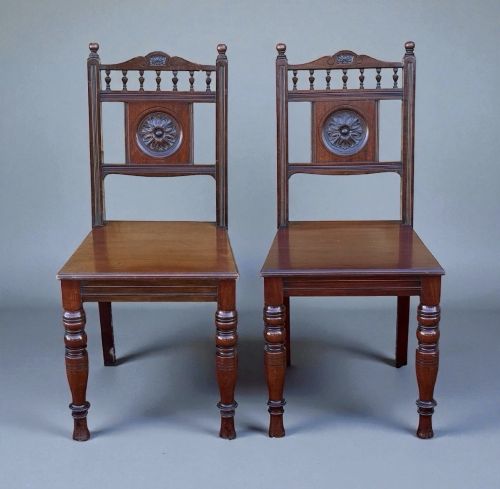
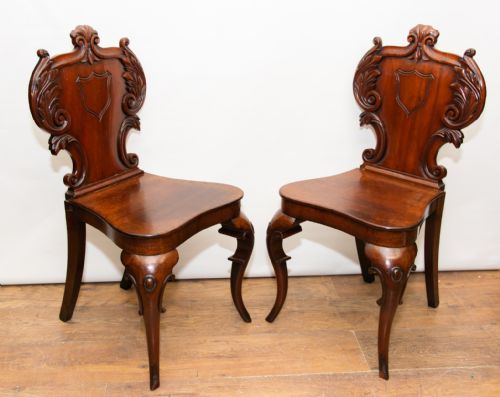
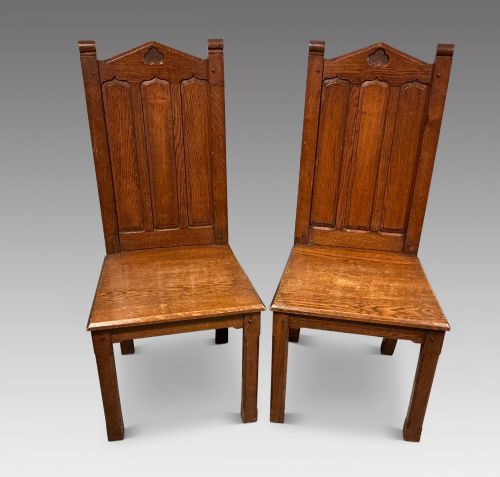
Victorian Entry Seating
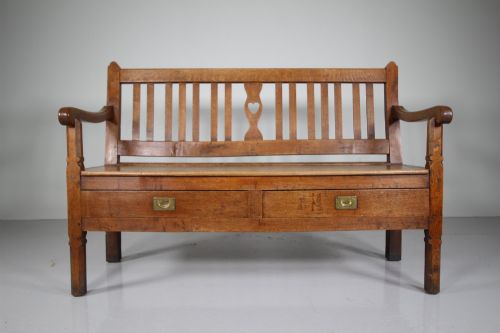
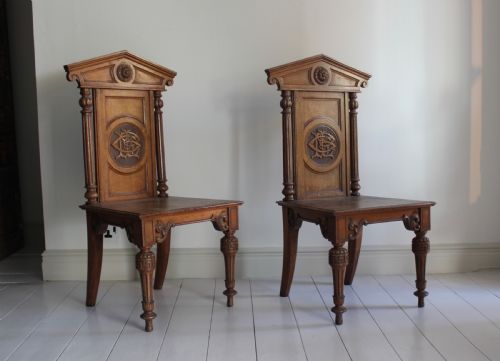
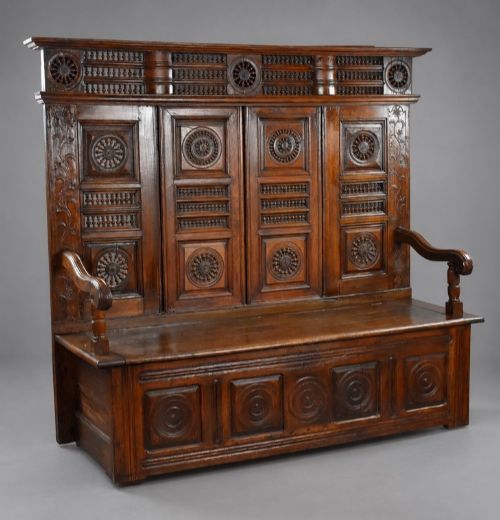
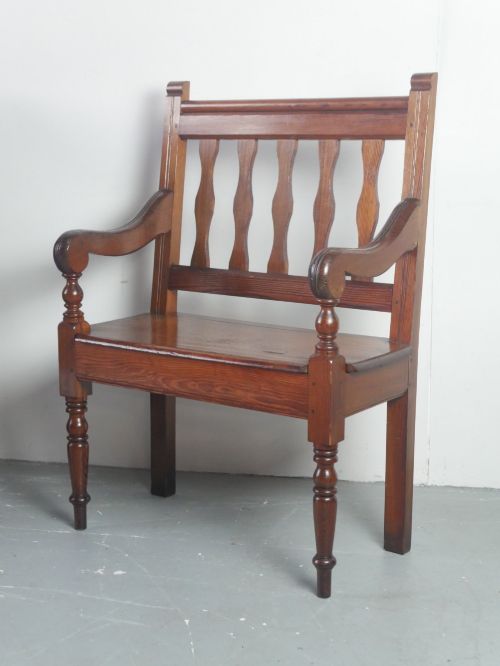
Victorian entry seating brings functional presence to a hallway through timber benches, settles and carved chairs.
Victorian Entry Seating
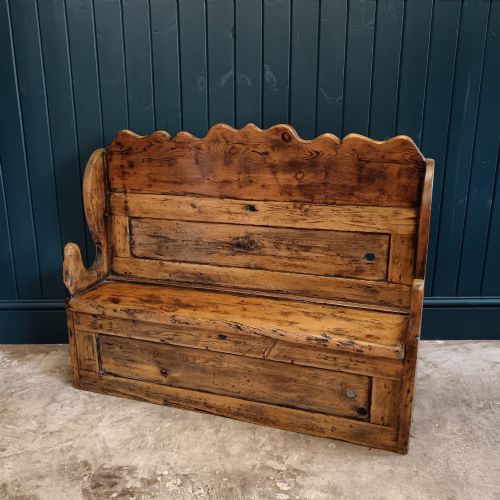
Victorian entry seating encompasses hall chairs, benches, settles and hall stands designed for the corridor or reception space. These pieces serve immediate utilitarian purposes upon entering a home, offering places to sit or store items.
The selections span various regional characters, from Welsh country examples and Irish country house benches to Scottish reception seats and English designs. Forms range from single side chairs to long settles with lift-up seats and box compartments.
Makers and craftsmen of the period utilised prevailing styles such as Gothic Revival, Jacobean Revival and country vernacular. The assortment relies heavily on sturdy seating built to handle high-traffic transitional areas.
Materials and Construction
Makers constructed these pieces primarily from solid hardwoods and softwoods including oak, mahogany, pine, pitch pine, elm and walnut. Brass hardware appears on selected functional components.
Joinery techniques involve robust panel construction, carved wooden backs and occasional painted finishes in grey, cream or blue. Certain items incorporate lift-up lids for box settles and church pews.
Several items double as church pews rescued from Cotswold parishes, bringing solemn ecclesiastical posture straight into the domestic hallway.
Distinctions in Quality
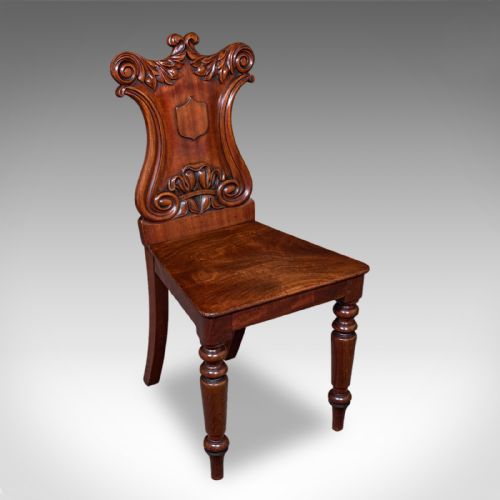
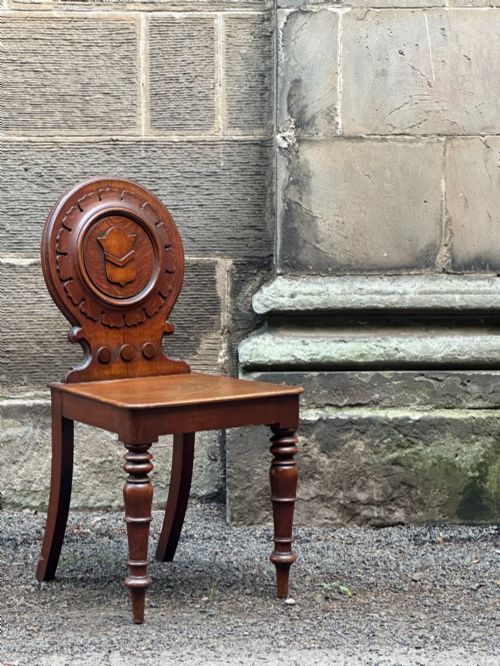
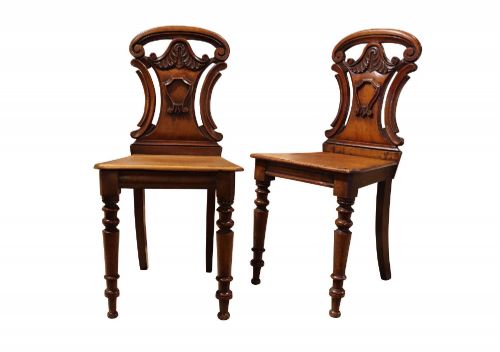
Quality rests in the depth and crispness of carved wooden details, such as shield backs, shell motifs and panelled ornamentation. Dense timbers like mahogany and mature oak command greater structural integrity than softer woods.
Proportion and regional character distinguish finer examples from standard utility seating. Original painted surfaces or well-preserved timber patination elevate the standing of individual pieces.
The Victorian Entry Seating Glossary
- Settle
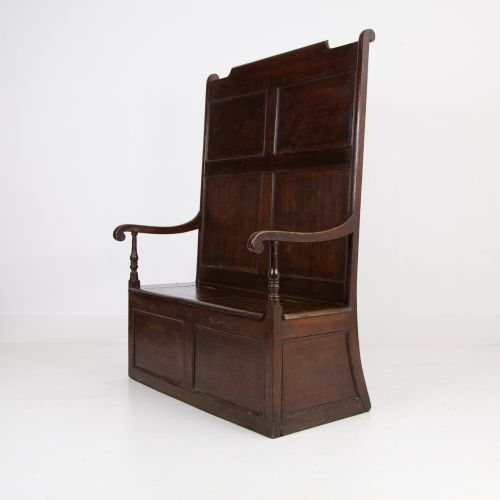
- A wooden bench with high back, solid arms and often a closed base or box seat for storage. It kept draughts away from the user in hallways and living spaces.
- Hall Chair
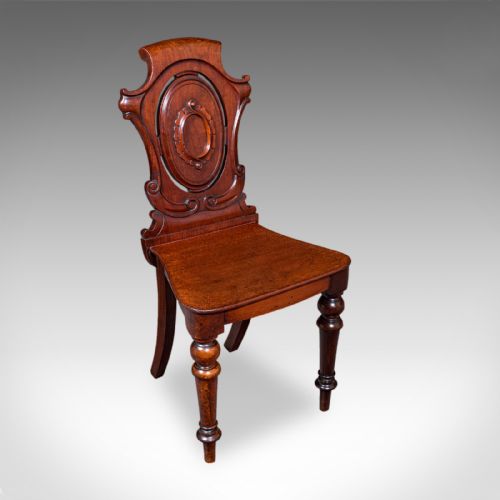
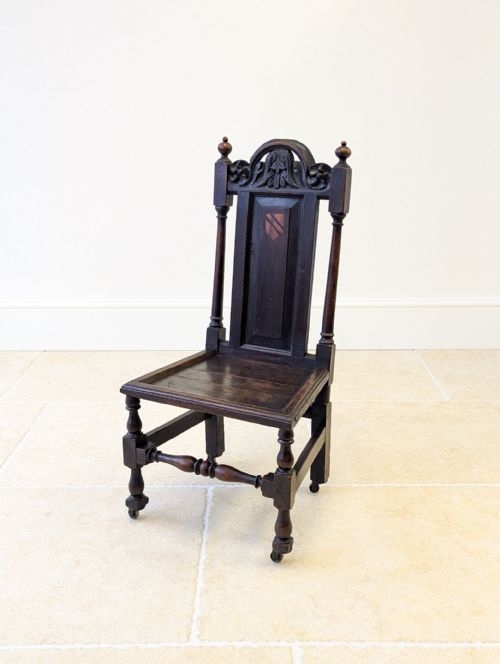
- A rigid wooden side chair placed in an entranceway, usually featuring a solid carved seat and decorative back rather than upholstery. These were intended for brief sitting.
- Gothic Revival
- An architectural and decorative style drawing on medieval forms, featuring pointed arches, tracery and heavy carved woodwork. This aesthetic heavily influenced nineteenth-century seating.
- Pitch Pine
- A durable resinous softwood utilised for pews and benches during the nineteenth century. It provides distinct grain patterns and robust endurance.
- Box Settle
- A bench incorporating a hinged seat that lifts to reveal a storage compartment beneath. It combines seating with functional hallway storage.
Victorian Entry Seating: Frequently Asked Questions
What is the difference between a hall bench and a settle?
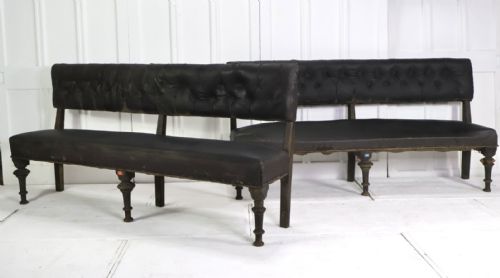
A hall bench typically offers open seating with a backrest and legs, whereas a settle incorporates solid enclosed sides and often a box compartment beneath the seat.
Both items served nineteenth-century entryways, but settles provided additional storage and protection from cold draughts near the front door.
Were hall chairs meant for comfortable sitting?
Hall chairs were designed for brief utility rather than long periods of relaxation, which explains their solid wooden seats and upright wooden backs.
Visitors or family members used them momentarily while waiting or removing outdoor garments in the hallway.
How do I identify a Gothic Revival piece?
Gothic Revival seating displays architectural motifs borrowed from medieval buildings, including pointed arches, quatrefoils and heavy relief carving in oak or pitch pine.
These details give the furniture a solemn, monumental appearance suited to Victorian entrance halls.