
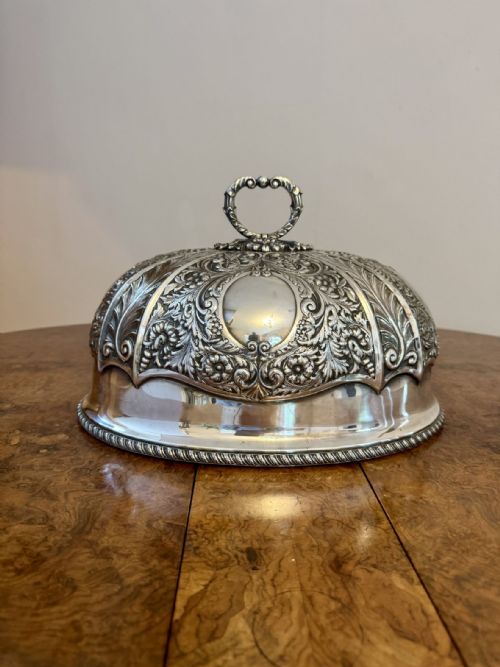


Victorian Engraved Platter
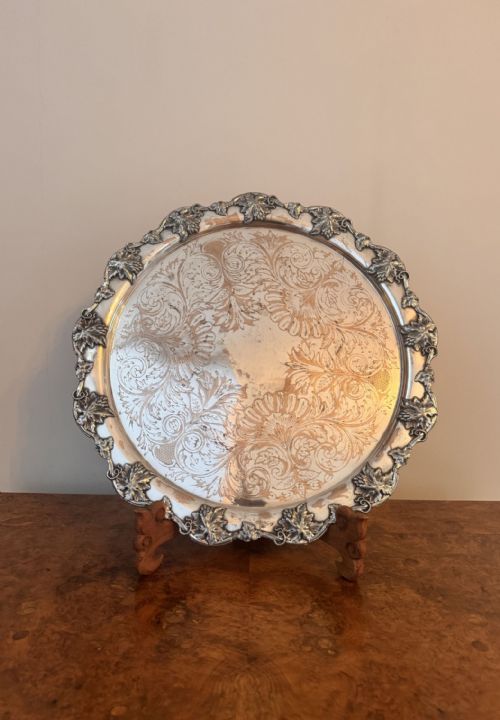
A victorian engraved platter brings weight and intricate surface pattern to the table, combining nineteenth century metalwork with functional service.
Victorian Engraved Platter
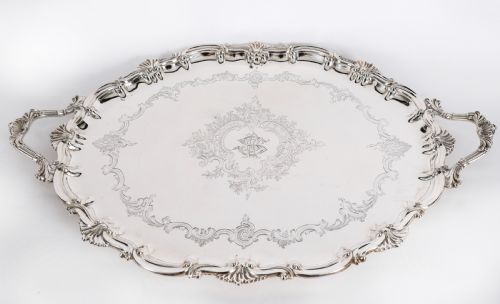
When searching for a victorian engraved platter, buyers encounter a diverse selection of nineteenth century serving pieces designed for display and hospitality. These objects span circular trays, oval salvers, meat domes, and large chargers intended for afternoon tea and formal dining.
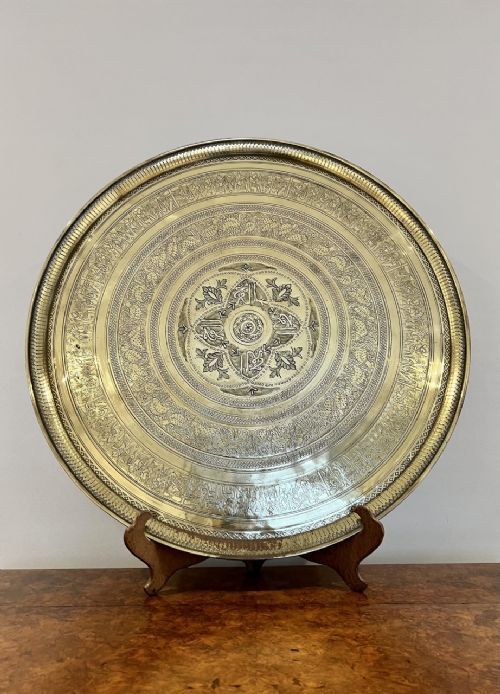
The dominant material encountered on this page is silver plate over base metal, alongside Sheffield plate, copper, brass, and sterling silver. English workshops produced the majority of these items, complemented by Indian Colonial, Persian, and Anglo-Indian regional variants.
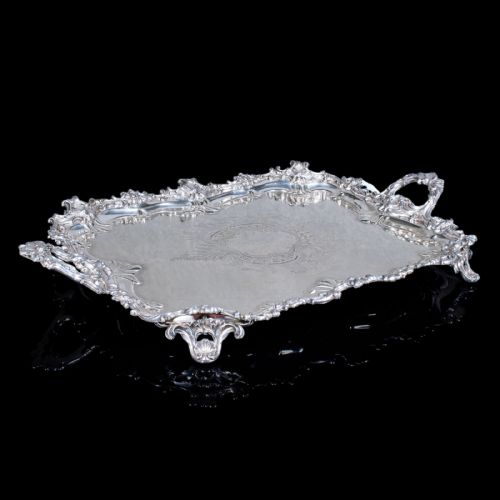
Forms vary from simple round serving dishes with floral engraving to elaborate reticulated trays and heavy presentation pieces. Buyers find both everyday domestic servers and specialised items like meat drainers and gallery trays.
Materials and Craftsmanship
Silversmiths and metalworkers utilised silver plate, EPNS, copper, and brass as foundations for these serving pieces. Techniques involved rolling base metals, applying silver layers via electroplating or older Sheffield plating methods, and hand-chasing or engraving the surface.
Decoration relied heavily on incised floral motifs, geometric borders, and pierced or reticulated rims. Heavier items required durable casting for handles and raised borders to support daily service use.
Several heavy meat domes wait on this page ready to hide the Sunday roast from curious family members.
Distinctions in Quality
Quality rests in the crispness of the hand-engraving and the structural integrity of the metal base. Superior pieces display deep, well-defined chasing that remains sharp across the entire surface rather than worn or shallow stamping.
The weight of the tray and the execution of applied rims and handles distinguish workshop standards. Finer items balance substantial metal thickness with balanced proportions and secure joints.
Thomas Bradbury & Sons·John Harrison·Walker & Hall·Padley Parkin·J Dixon & Sons·Fenton Russel·Elkington·Lee & Wigfull·J.H. Potter·Tiffany & Co
The Victorian Engraved Platter Glossary
- EPNS
- Electroplated Nickel Silver. This designates a base metal core of nickel silver coated in a layer of silver through an electrical process.
- Sheffield Plate
- An early fusing technique. This involves fusing a sheet of silver to a thicker copper core before rolling and forming the metal.
- Salver
- A flat serving tray. These usually feature a raised rim and rest on small feet for presenting drinks or small dishes.
- Reticulated
- Pierced or openwork decoration. Metal is cut away in geometric or floral patterns to create a decorative lattice border.
- Chasing
- Surface decoration. Artisans push the metal from the front using hammers and punches to create raised designs without removing material.
Victorian Engraved Platter: Frequently Asked Questions
How were these platters used?
Victorian households utilised these platters for serving afternoon tea, roasted meats, and beverages during formal dining occasions. Large chargers and salvers also served as decorative centrepieces on sideboards when not in active use.
The heavier metal domes and meat covers kept food warm between the kitchen and the dining table. Everyday domestic service relied on silver plated versions, while sterling silver and presentation pieces marked special occasions.
What metal is underneath the silver plate?
Most silver plated items on this page use a base metal core, commonly nickel silver or copper, which provides durability and weight. Sheffield plate items specifically employ a copper foundation fused directly with a thin sheet of silver.
Base metal composition varied by workshop and period, with brass and copper also appearing unplated in regional English, Indian, and Persian examples. Understanding the metal layers helps determine the age and method of manufacture.
How do I care for silver plated serving trays?
Regular maintenance requires gentle cleaning with a soft cloth and non-abrasive silver polish to preserve the plated surface. Avoid harsh chemical dips that strip away the remaining silver layer over time.
Store the tray in a dry environment and use acid-free tissue if wrapping for storage. Proper handling prevents unnecessary wear on the engraved patterns and raised rims.
How can I tell the date of a tray?
Dating relies on a combination of maker marks, manufacturing techniques, and the style of engraving. Pieces marked as Sheffield plate often point to earlier nineteenth century production before electroplating became widespread.
Stylistic shifts, such as the transition from plain surfaces to Victorian floral engraving or later aesthetic movement designs, provide further chronological clues. Examining the construction of handles and feet also helps narrow down the decade.