



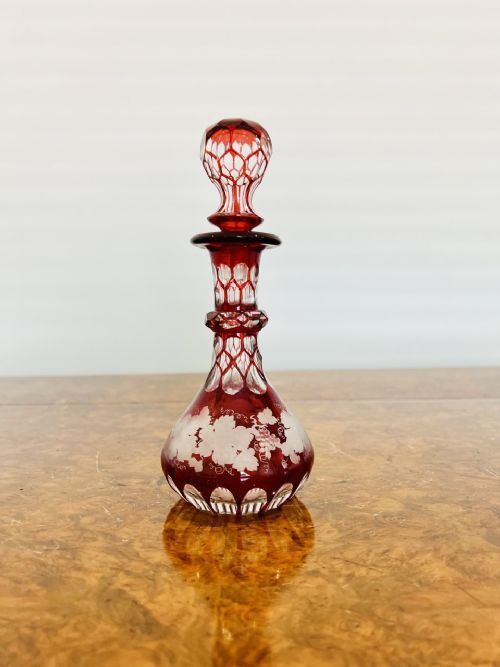


Victorian Engraved Decanter
A victorian engraved decanter brings nineteenth-century craftsmanship to the table, combining cut crystal with delicate wheel-cut flora and fauna.
Victorian Engraved Decanter
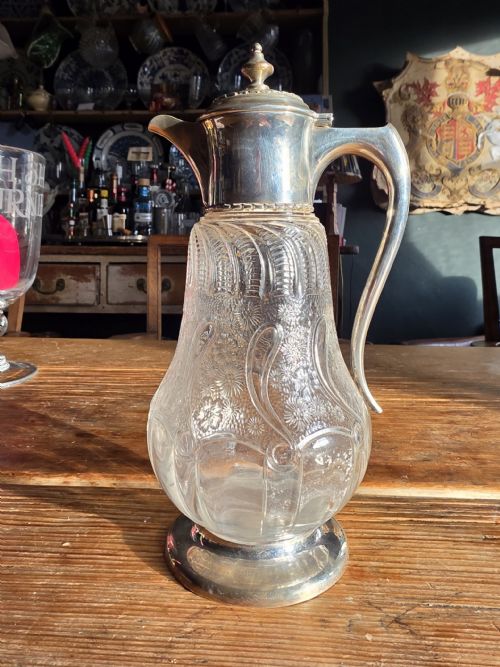
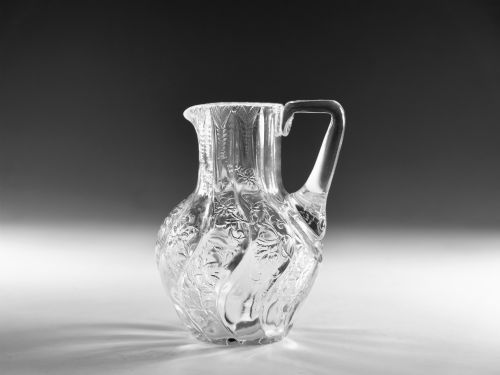
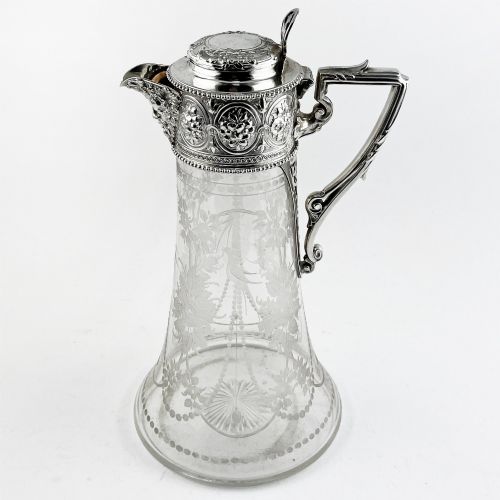
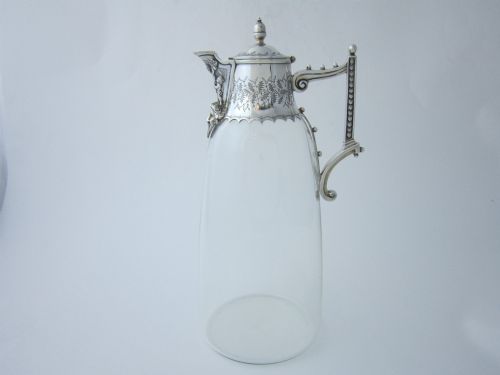
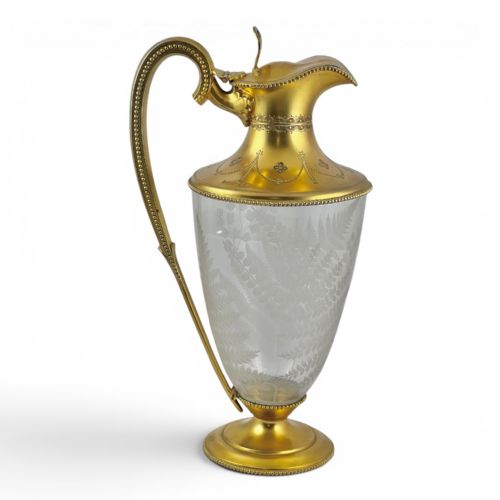
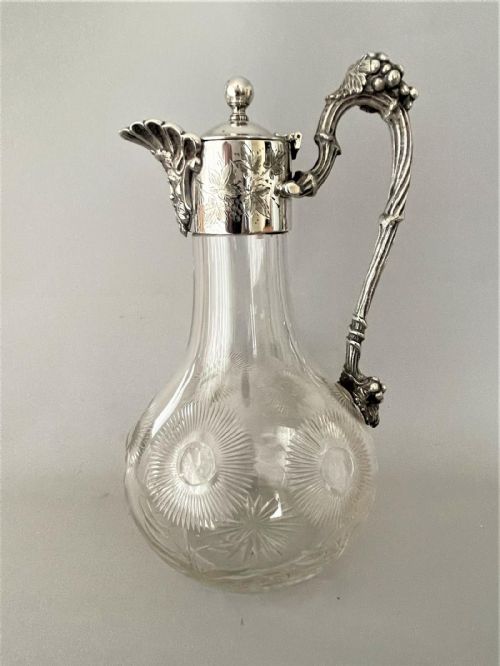
When searching for a victorian engraved decanter, collectors encounter various serving vessels including claret jugs, spirit flasks, and wine decanters dating from the nineteenth century. These pieces combine functional storage with decorative engraving, frequently featuring botanical motifs like ferns, grapes, and vines.
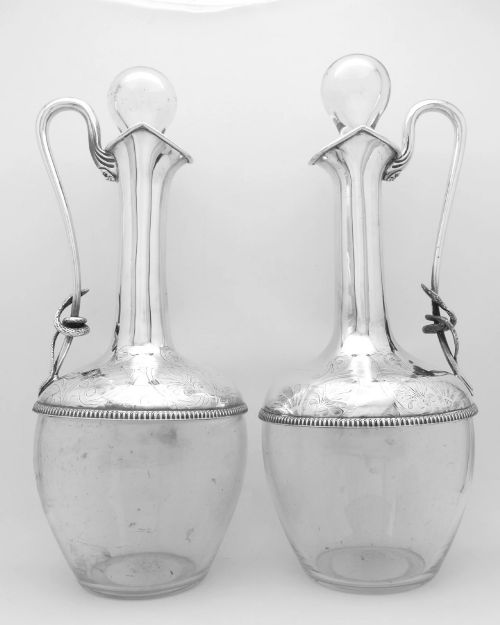
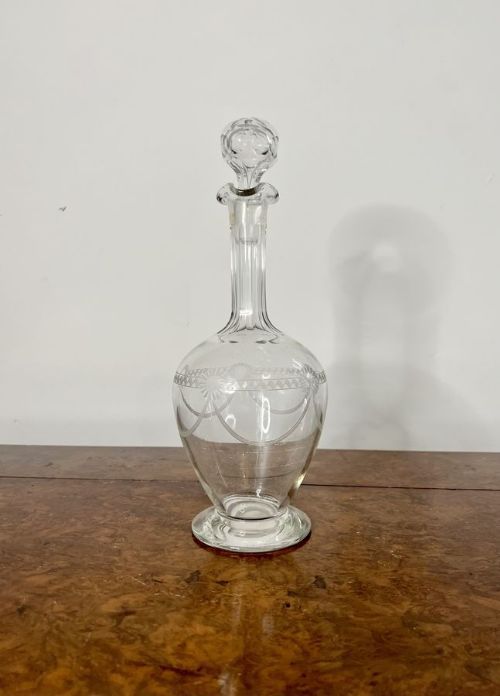
The versions most commonly met on this page are shaft and globe forms or mallet decanters produced during the mid to late Victorian period. Makers utilised coloured overlay glass as well as clear lead crystal, sometimes mounting the vessels in sterling silver or silver plate.
Materials and technique
Glassmakers produced these vessels using heavy lead crystal or coloured glass, often applying cranberry or amethyst overlays that were subsequently cut away to reveal clear glass beneath. This thermal manipulation required considerable skill to ensure the vessel maintained structural integrity during shaping and cooling.
The characteristic ornamentation relies on wheel-engraving, where artisans pressed the glass against rotating stone or copper wheels of varying sizes to carve intricate botanical patterns. Polishing followed the initial cut to restore transparency and brilliance to the recessed details.
Metal mounts, collars, and handles in sterling silver or silver plate were then fitted to the glass bodies, occasionally incorporating hinged lids or elaborate spout designs.
Separating the ordinary from the exceptional
The distinction between standard production and top-tier examples lies primarily in the depth, precision, and artistic fluency of the wheel-engraving. Superior pieces display crisp details in complex subjects like birds, butterflies, or heraldic crests, whereas lesser vessels feature shallow, hurried linear patterns.
The quality of the glass metal itself determines overall weight and resonance, with high-lead crystal offering superior light refraction and clarity compared to basic soda-lime glass. Furthermore, the weight and craftsmanship of accompanying silver mounts indicate the original cost and ambition of the piece.
Asprey and Co. Ltd·Stevens and Williams·Richardsons
The Victorian Engraved Decanter Glossary
- Claret Jug
- A specialised pouring vessel designed specifically for serving red wine, usually featuring a handle and a hinged metal lid. These jugs frequently combine cut glass bodies with ornate silver or silver-plated mounts.
- Shaft and Globe
- A distinct bottle silhouette characterised by a long, slender neck above a bulbous, spherical body. This form offers stability and an ample surface area for extensive floral or fern engraving.
- Wheel-Engraved
- A technique where glass is held against small, rotating abrasive wheels to cut deep, precise designs into the surface. It differs from acid etching by producing varied depths and a polished finish.
- Overlay Glass
- A method involving a core layer of clear or coloured glass encased in one or more outer layers of contrasting colour. Cutting through the exterior layer exposes the underlying shade to create high-contrast patterns.
- Decanter Label
- A small tag suspended by a chain around the neck of a bottle to identify its contents, such as claret, sherry, or madeira. These markers were frequently cast or pierced in sterling silver during the Victorian era.
Victorian Engraved Decanter: Frequently Asked Questions
How were Victorian decanters used?
These vessels served to decant wine and spirits from bulk storage containers into polished crystal for formal dining and drawing room hospitality. They allowed hosts to present beverages clearly while removing sediment from aged wines.
Servants or hosts used accompanying silver labels to identify the contents, ensuring guests knew whether the bottle held claret, sherry, or brandy during evening gatherings.
Can I still use them to serve wine?
These bottles remain entirely functional for serving wine and spirits today, provided the interior is clean and free of stubborn staining. Many collectors enjoy using them for formal dinners, appreciating the tactile weight and historical connection.
Ensure that any silver-plated or sterling mounts are dried immediately after washing to preserve the metalwork alongside the glass.
How do I date a piece?
Dating relies on a combination of stylistic clues, glass manufacturing techniques, and any accompanying hallmarks on silver mounts. Pontil marks on the base, the depth of the metal collar, and the specific motifs used in the wheel-engraving help narrow the production period.
Victorian pieces often display registration marks or assay office stamps on their silver components, providing definitive year markers for the metalwork.