





Victorian Engraved Crystal Jug
These heavy lead crystal vessels, formed to serve wine at Victorian dining tables, bring tactile brilliance to any modern sideboard.
Victorian Engraved Crystal Jug
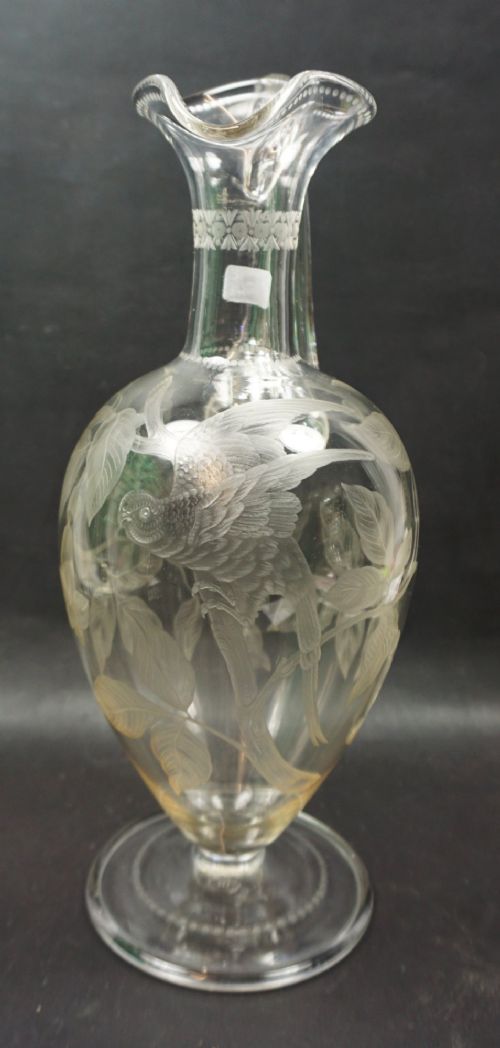
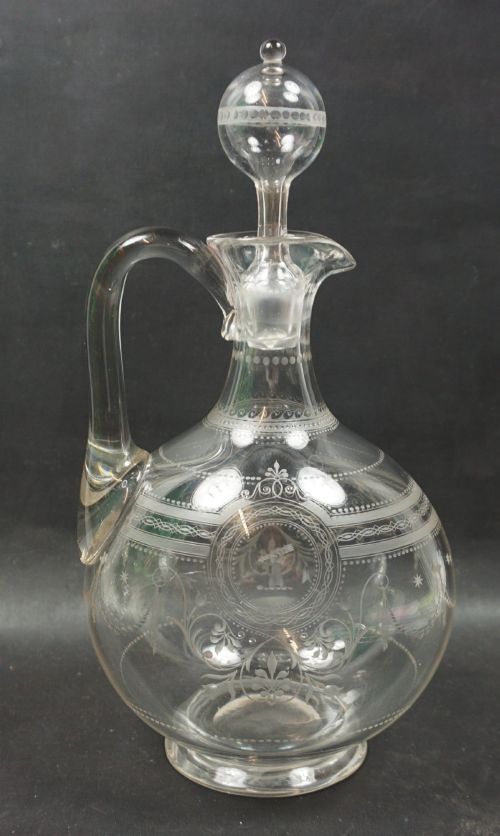
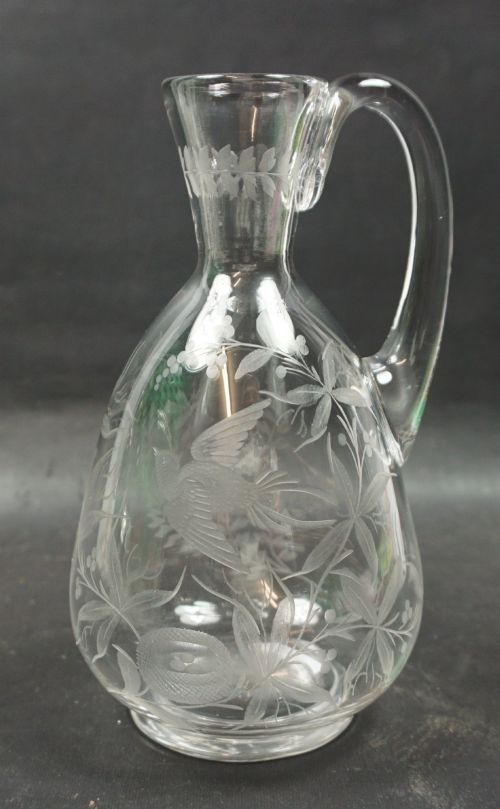
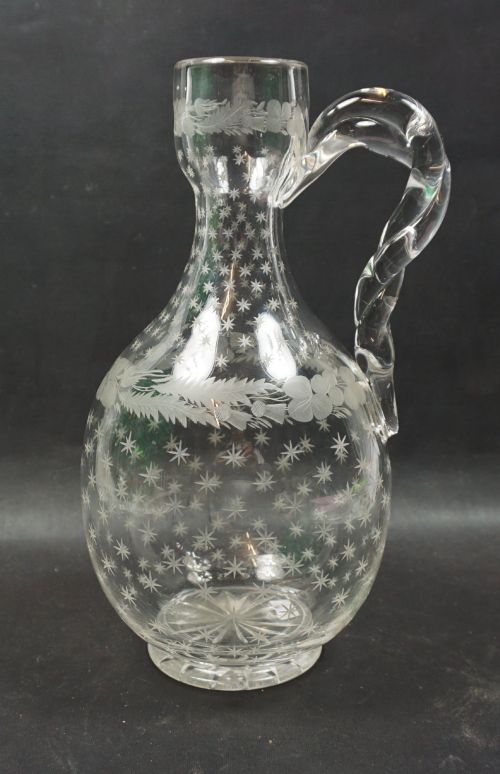
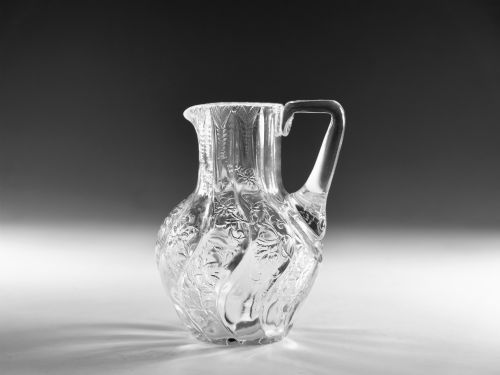
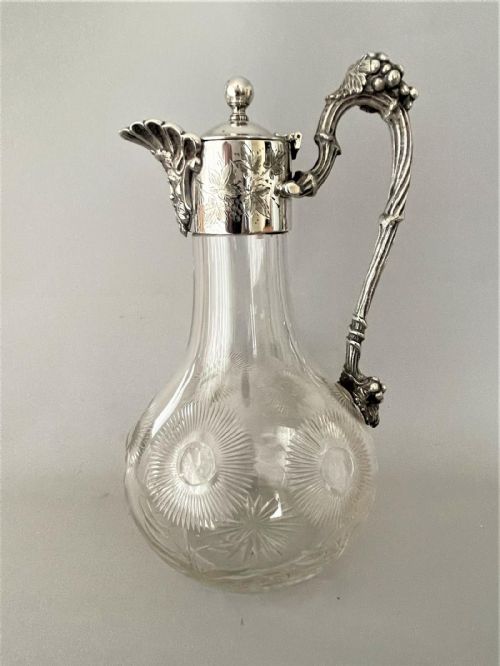
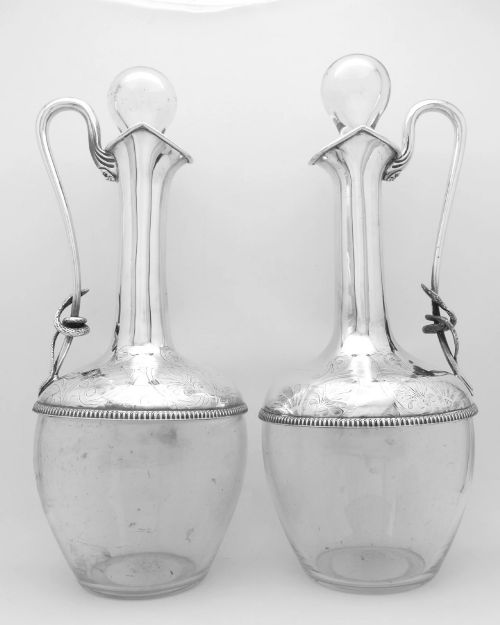
A victorian engraved crystal jug takes several specific forms on this page, most commonly appearing as claret jugs, wine decanters, and serving ewers. These pieces originate across the nineteenth century, with strong representation from the eighteen-eighties alongside Edwardian and mid-twentieth-century examples.
Makers combine heavy glass bodies with metal mounts, pairing lead crystal and cut glass with silver plate or solid sterling silver. The decorative schemes utilise wheel engraving and etching to depict dolphins, fruiting vines, stars, crests, flowers of the union, and royal insignia.
Buyers encounter distinct variations in scale, from pint-sized vessels to large presentation pieces. Handles and spouts often feature naturalistic or mythological elements, such as serpent motifs and Bacchus masks, which elevate simple servingware into ornamental focal points.
Materials and construction methods
Glassmakers form the vessels using lead crystal or heavy cut glass, which provides the optical clarity and substantial weight required for fine table service. Surface decoration is achieved through hand wheel engraving and etching, cutting intricate botanical, heraldic, or marine patterns directly into the glass surface.
Mounts and hardware utilise silver plate, solid sterling silver, or cast metal components secured to the neck and rim. Master craftsmen incorporate specialised functional details, including hinged lids, shaped spouts, and serpent-formed handles, integrating metalwork seamlessly with the glass bodies.
Victorian Engraved Crystal Jug Retail Price Guide 2026
Typical asking prices for victorian engraved crystal jug among the pieces listed under this phrase on Sellingantiques today, from the lower quarter to the upper quarter. They describe what is for sale here now, not the wider market.
Listings feature vessels produced across the nineteenth and twentieth centuries, utilising lead crystal, silver plate, and hand wheel engraving.
Judging quality and craftsmanship
Quality rests primarily on the depth, precision, and clarity of the wheel engraving on the crystal surface. Superior examples display crisp, confident cutting that catches the light cleanly, whereas lesser pieces show shallow or blurred surface work.
The weight of the glass and the execution of the silver or silver-plated mounts dictate the upper tier of manufacture. Integrated details like cast Bacchus masks or detailed serpent handles demonstrate a higher standard of design and workshop capability than standard production items.
William Comyns·Asprey and Co. Ltd·Stevens and Williams·Richardsons
The Victorian Engraved Crystal Jug Glossary
- Claret jug
- A specialised vessel designed specifically for serving red wine at the formal dining table. These pieces typically feature a hinged metal lid and a secure handle for pouring.
- Lead crystal
- A type of glass containing metallic oxide that increases weight, refractive index, and brilliance. This material allows for deep, sharp wheel engraving.
- Wheel engraving
- A technique where a glass blank is held against a rotating abrasive wheel to carve intricate designs. It requires steady skill to achieve smooth, dimensional patterns.
- Silver plate
- A layer of silver fused to a base metal substrate, commonly utilised for mounts and handles on nineteenth-century serving vessels. It offered the appearance of solid silver at a reduced cost.
- Ewer
- A large jug with a wide spout and elaborate handle, traditionally used for holding water or wine. In nineteenth-century dining, these often functioned as decorative wine decanters.
Victorian Engraved Crystal Jug: Frequently Asked Questions
What is a claret jug used for?
These vessels were created to decant and serve red wine during formal Victorian dinners. The generous bowls allowed wine to breathe before pouring.
Today, they function well as decorative dining table centerpieces or functional decanters for modern gatherings.
How do I date a glass ewer?
Dating relies on stylistic markers, glass weight, and the character of the metal mounts. Nineteenth-century pieces often feature hand-cut crystal and robust silver plate.
Makers marks and specific engraving motifs also help establish the decade of production.
What is the difference between cut glass and crystal?
Lead crystal contains additives that increase density and light refraction, giving the material a distinctive ring when struck and superior clarity. Cut glass encompasses a broader category of pressed or carved glass wares.
Crystal vessels generally support finer, deeper hand engraving due to the softness of the material.