
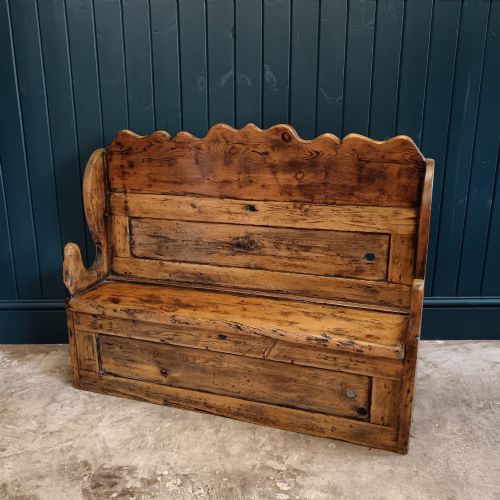
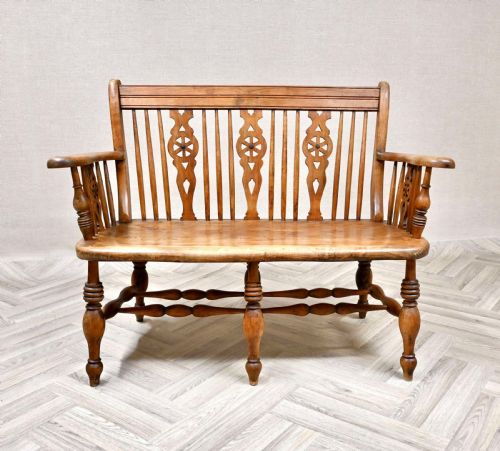
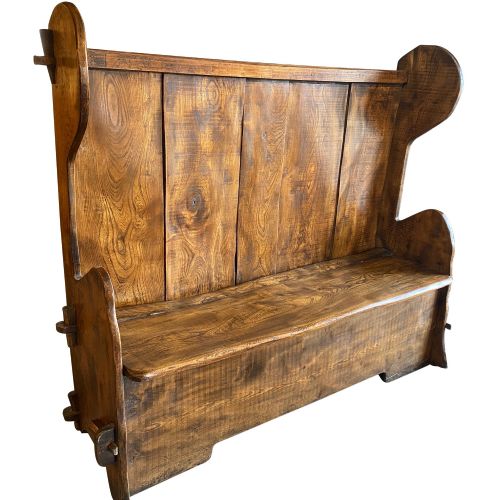


Victorian Elm Bench
A victorian elm bench brings honest, hard-wearing country character to a hall or kitchen through rich grain and sturdy timber.
Victorian Elm Bench
When you search for a victorian elm bench, you enter a world of utilitarian country seating shaped by 19th-century makers for demanding domestic and agricultural work. These pieces span simple four-seater forms, long dining benches, box settles with storage, and occasional workshop stools.
How they were made
Makers relied on solid elm for its dense, interlocking grain and resistance to splitting, often pairing it with oak, pine, ash, or yew for structural stability. Burr elm surfaces add striking natural patterning to higher-status pieces.
Joinery techniques prioritize absolute utility, utilising thick planks, sturdy trestles, and peg construction designed to endure decades of hard use in country houses, dairies, and halls.
The listings on this site demonstrate a strong prevalence of 19th-century elm combined with secondary timbers like oak, pine, and ash.
What varies in quality
The distinction between a standard utility seat and a superior example rests in the timber selection and the retention of original surfaces. Richly figured burr elm tops and well-matched pairs elevate certain forms well above basic workshop seating.
Proportion and structural integrity dictate value, where untouched patination and original undercarriages outrank heavily restored or altered examples.
The Victorian Elm Bench Glossary
- Elm
- A tough, durable hardwood valued for its resistance to splitting and its distinctive swirling grain pattern. Makers chose it for seats and benches that required immense physical strength.
- Settle
- A wooden bench with a high back and solid arms, often featuring a box compartment beneath the seat for storage. It protected sitters from draughts in traditional rooms.
- Form
- A long, simple wooden bench without a back, used traditionally for dining or communal seating in kitchens and halls. These pieces offer clean lines and straightforward construction.
- Vernacular
- Architecture and furniture built by local craftsmen using traditional regional methods and materials, rather than following high-fashion metropolitan designs.
- Windsor
- A chair or bench style featuring turned legs and spindles wedged directly into a thick solid wooden seat. This construction method provides exceptional rigidity.
Victorian Elm Bench: Frequently Asked Questions
Where do I put a victorian elm bench?
These benches suit narrow hallways, boot rooms, and large farmhouse kitchens where their sturdy proportions handle daily traffic.
They also function effectively at dining tables or beneath windows as low seating.
How do I clean a victorian elm bench?
Dust the timber regularly with a dry cloth and occasionally apply a neutral beeswax to maintain the finish.
Avoid chemical sprays and keep the wood away from direct heat sources to prevent splitting.
Are these benches comfortable for daily sitting?
Most examples offer firm, upright seating without upholstery, reflecting their utilitarian origins in kitchens and workshops.
Adding a loose fabric cushion provides extra comfort for long periods of use.
How do I spot a genuine 19th-century piece?
Examine the timber for deep patination, tool marks, and appropriate wear consistent with heavy domestic or agricultural use.
Construction details like pegged joints and hand-turned supports confirm period manufacture.