
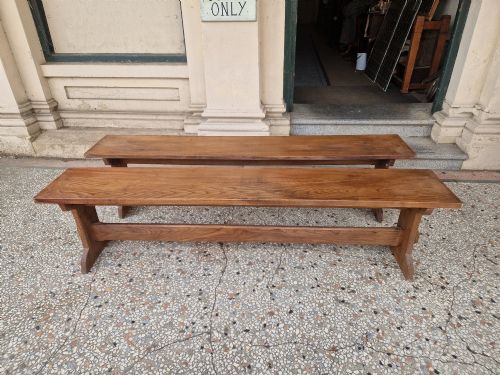


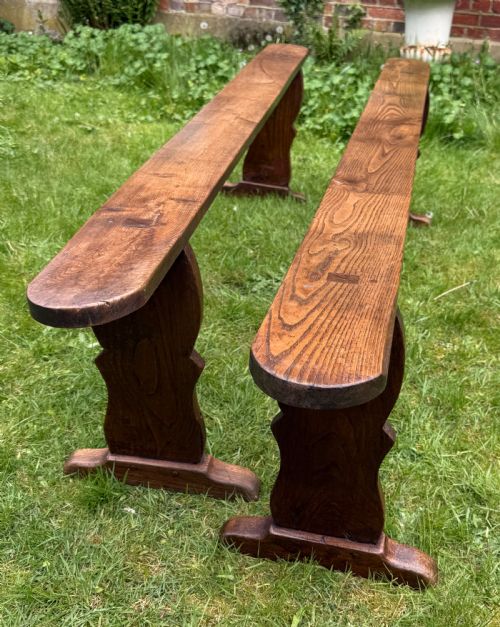
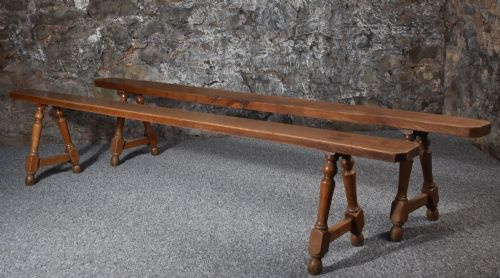
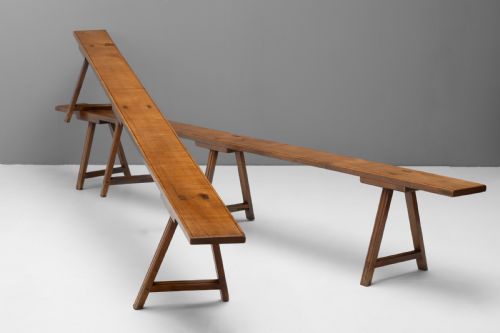
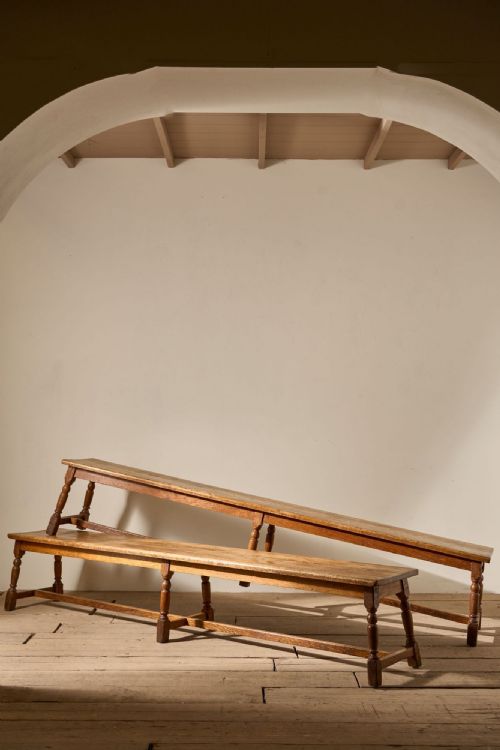


Long Wooden Dining Benches
Long wooden dining benches provide communal seating for large tables, drawing character from solid timber and regional craftsmanship.
Long Wooden Dining Benches
Long wooden dining benches are utilitarian seating forms designed to accommodate multiple diners alongside large tables in domestic and commercial spaces. When searching for long wooden dining benches, buyers encounter sturdy seating solutions rooted in domestic, tavern, and institutional settings from past centuries.
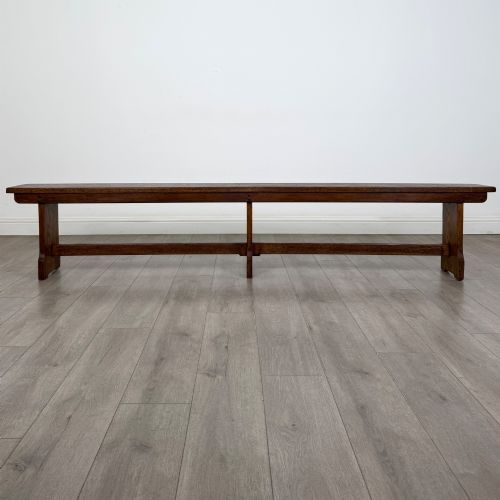
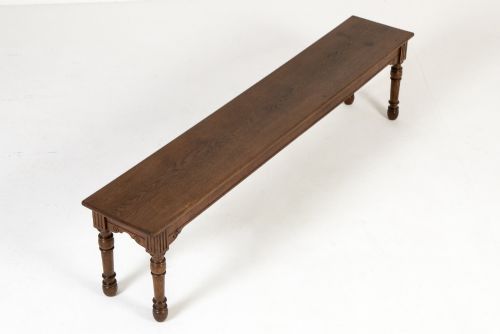
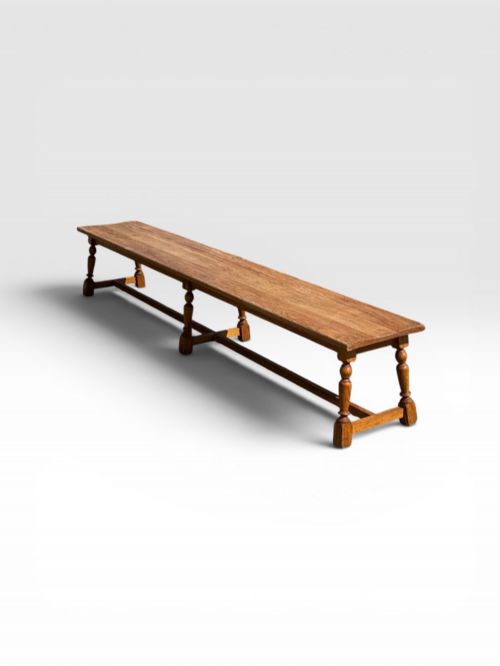
The selection centres on examples fashioned from robust hardwoods and softwoods, spanning periods from the eighteenth century through to the early twentieth century. Common configurations include straightforward plank seats supported by trestle bases, turned legs, or simpler farmhouse frames.
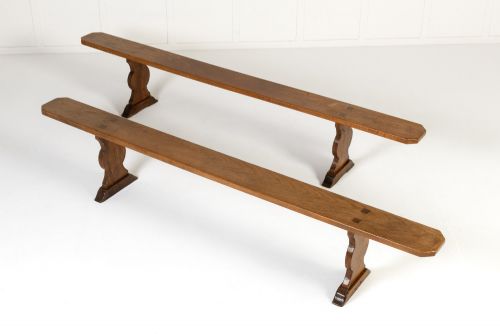
Origins vary across English, Welsh, French, and Scandinavian workshops, reflecting regional preferences in timber selection and joinery. Buyers frequently meet paired sets designed for symmetrical dining arrangements or individual tavern and refectory pieces built for heavy daily use.
Materials and construction methods
Construction relies heavily on native timbers such as oak, pine, elm, cherry wood, and fruitwood, chosen for their structural rigidity and availability. Joinery techniques prioritise durability, utilising mortise and tenon joints to secure heavy plank tops to solid underframes.
Surface treatments range from waxed and polished natural grain finishes to protective layers of traditional paint, particularly seen on Scandinavian and country pieces. Carpenters shaped timber using hand tools, resulting in adzed surfaces, pegged joints, and natural wear that reveal the age of the piece.
A pair of benches carries the silent history of countless hearty suppers and tavern debates.
Distinctions in quality and execution
Quality in these benches rests upon the integrity of the timber and the honesty of the construction, where thicker boards and substantial underframes command greater respect. Superior pieces exhibit well-balanced proportions and harmonious integration between the seat and its supports, avoiding awkward alterations.
The character of the timber surface heavily influences desirability, with well-figured grain, rich patina, and appropriate wear elevating an example above plain or heavily restored equivalents. Consistency within matched pairs also separates standard utility seating from finer dining furniture intended for formal or institutional settings.
The Long Wooden Dining Benches Glossary
- Trestle
- A structural support consisting of a horizontal beam fixed to two splayed legs, commonly found beneath long dining benches and refectory tables.
- Refectory
- A style of long, narrow table and associated seating originally designed for communal dining halls in monasteries and large institutions.
- Patina
- The deep, lustrous surface sheen developed on timber over decades of use, cleaning, and exposure to light.
- Mortise and tenon
- A traditional woodworking joint where a projecting tongue fits snugly into a corresponding cavity to lock two pieces of timber together at a right angle.
Long Wooden Dining Benches: Frequently Asked Questions
How do I choose the right length?
Consider the overall length of your dining table and ensure the bench leaves sufficient clearance at either end for comfortable seating access. Measure your available floor space to allow people to slide in easily without obstruction.
Longer formats often span several feet to accommodate multiple guests, so matching the scale of the seat to the room is essential for a balanced arrangement.
Are pairs harder to find than singles?
Matched pairs intended for symmetrical dining setups appear less frequently than standalone single benches, particularly when sourced from institutional or tavern origins. Many surviving examples were originally built in sets for communal dining.
When pairs do survive together, they provide a balanced appearance along both sides of a large dining table.
What timber is most durable?
Hardwoods such as oak, elm, and cherry wood offer exceptional strength and resistance to heavy daily use over centuries. These dense timbers form robust structures that tolerate frequent movement and sustained weight without losing stability.
Softer woods like pine and fruitwood provide lighter alternatives while still offering reliable service when constructed with thick, solid planks.
How do I care for antique timber?
Maintain the surface by applying natural beeswax periodically to nourish the wood and preserve its existing sheen. Avoid placing wooden seating near direct heat sources to prevent the timber from drying out or splitting.
Clean surfaces gently with a dry or slightly damp cloth, avoiding harsh chemical cleaners that strip the historical finish.