

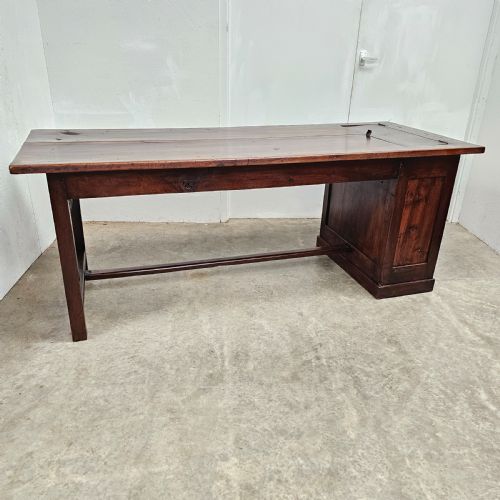


Antique Dining Table Bench
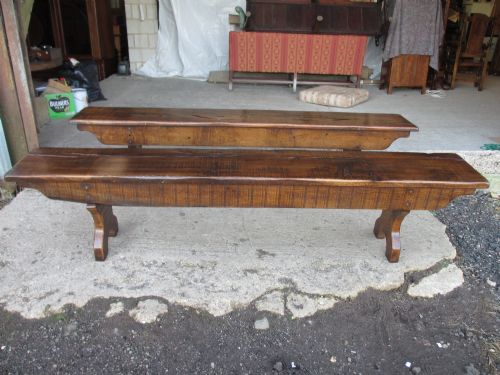
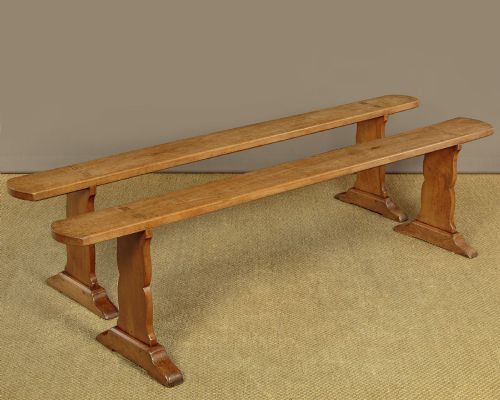
An antique dining table bench offers practical seating rooted in historic craftsmanship, bringing long timber forms and sturdy trestle bases straight to the dining room.
Antique Dining Table Bench
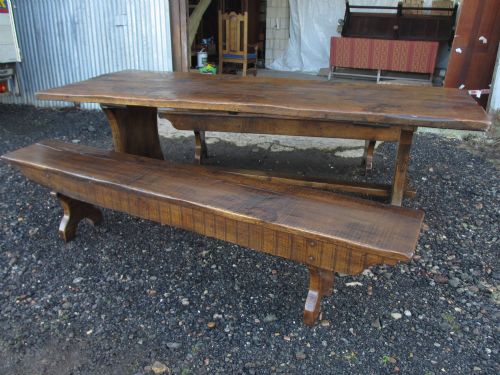
An antique dining table bench provides long, communal seating designed to pair with refectory, tavern or prep tables. These pieces span periods from the Georgian era through the Victorian and Edwardian decades, alongside examples from the nineteenth century.
Buyers most frequently encounter solid timber forms such as oak, elm and cherrywood, often constructed with trestle ends or simple plank tops. Regional varieties include French provincial and rustic farmhouse styles alongside British oak refectory seating.
The selection ranges from matched pairs of cherrywood and elm benches to long single boards intended for daily dining use. Such seating reflects functional domestic history, built to accommodate multiple diners along tavern or kitchen tables.
How they were made
Carpenters constructed these benches using robust hardwoods like oak, elm, sycamore and cherrywood, selected for their structural strength under daily use. Timber preparation often involved simple two-board tops and heavy supporting trestle ends fixed securely to the seat.
Surface treatments vary from scrubbed natural timber to painted finishes in green or distressed tones. Joinery relied on traditional pegged or jointed methods to ensure stability across long spans of heavy wood.
Listings feature oak, elm, pine, sycamore and cherrywood across Georgian, Victorian, Edwardian and nineteenth-century periods.
What varies in quality
Quality rests upon the choice of timber and the integrity of the original construction, distinguishing heavy oak and dense elm from lighter pine alternatives. The balance between the top boards and the trestle supports dictates the overall stability of the bench.
Patina and surface preservation play a central role, where scrubbed sycamore or aged cherrywood display natural wear without compromising the underlying structure. The proportion of long spans to the thickness of the timber determines whether the form remains rigid over time.
The Antique Dining Table Bench Glossary
- Trestle
- A supporting framework consisting of a horizontal beam fixed to two splayed legs, commonly found beneath long dining benches and refectory tables.
- Refectory
- A long, narrow table style traditionally used in communal dining halls and frequently paired with matching long benches.
- Patina
- The surface sheen and colour developed on timber over decades of handling, cleaning and use.
- Sycamore
- A dense hardwood utilised in French provincial furniture, often scrubbed to reveal a pale, clean grain.
Antique Dining Table Bench: Frequently Asked Questions
How do I match a bench to my table?
Consider the length and height of your dining table relative to the proportions of the bench. Long trestle forms work well alongside refectory or tavern tables.
Matching timber species, such as oak or elm, helps create a cohesive appearance within a dining space.
Were these benches used outdoors?
These pieces were built for interior domestic, tavern or kitchen use rather than garden environments. Their construction relies on indoor timbers like cherrywood, sycamore and pine.
Placing them inside preserves the historic surface finish and prevents moisture damage to the joints.
How do I clean a scrubbed timber top?
Scrubbed sycamore and elm surfaces benefit from gentle cleaning with a damp cloth and mild soap. Avoid harsh chemical polishes that can alter the historic patina.
Allow the timber to dry naturally after cleaning to maintain the grain texture.
What is the difference between oak and pine benches?
Oak benches offer heavy, dense construction with strong resistance to daily wear, frequently seen in Edwardian and refectory styles. Pine examples provide a lighter alternative often found in Victorian kitchen settings.
Both materials deliver distinct visual weights depending on the interior scheme.