


19th Century Elm Bench
A 19th century elm bench brings robust vernacular character and warm grain to an interior.
19th Century Elm Bench
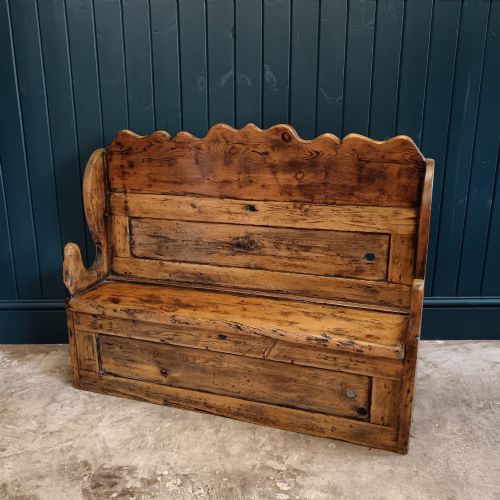
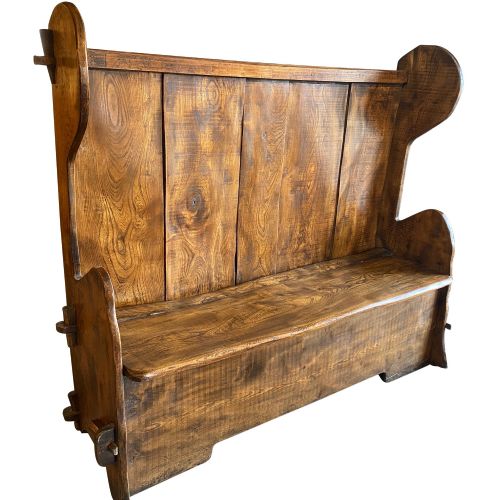
When you search for a 19th century elm bench, you encounter sturdy utilitarian seating produced across European country houses, farms, and provincial workshops. These pieces range from simple plank-top forms and long trestle seating to enclosed box settles with storage.
The version you are most likely to meet on this page is an English or French country piece, often featuring a thick slab seat supported by sturdy legs. Alongside these, occasional Chinese hardwood and elm examples appear, broadening the regional stylistic range.
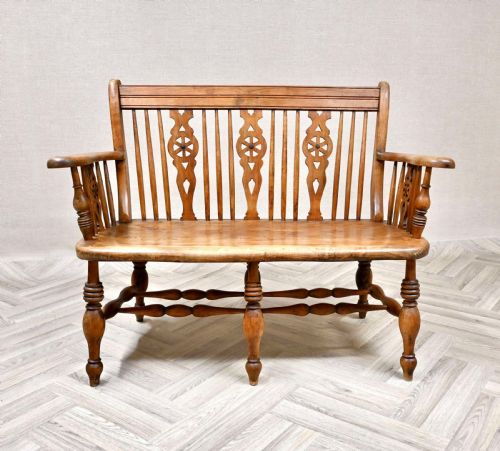
Beyond standard benches, the selection includes related vernacular seating such as Windsor bench seats, pig benches, and window seats. Each form reflects the practical demands of nineteenth-century domestic and agricultural life.
How they were made
Carpenters constructed these benches using solid timbers, pairing elm with secondary woods like oak, pine, ash, and sycamore. Elm was chosen for seats because its interlocking grain resisted splitting under heavy daily use.
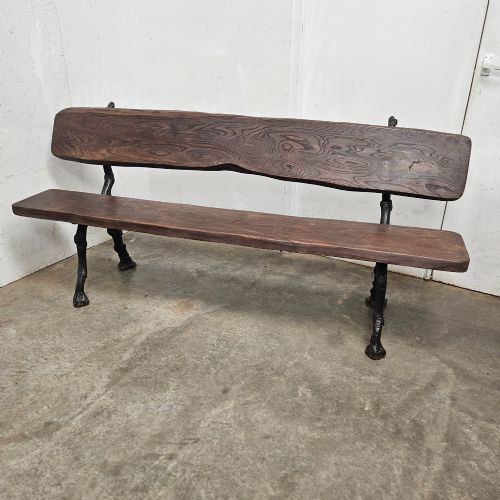
Joining techniques relied on traditional pegged mortise and tenon joints, Windsor-style wedged legs, and sturdy trestle supports. Some specialised workshop items also integrate cast iron framework, particularly in garden or faux bois designs.
Several low agricultural work benches double quite happily as rustic coffee tables after a long retirement.
What varies in quality
Quality in these benches rests on the integrity of the timber and the depth of the surface finish. Pieces with thick, unwarped plank tops and rich, naturally aged patinas sit at the upper end of the scale.
Proportion and structural honesty also dictate distinction, where original wedged joints and minimal later timber intervention preserve the integrity of the piece.
The 19th Century Elm Bench Glossary
- Elm
- A durable hardwood noted for its twisted, interlocking grain that prevents splitting. It was heavily utilised for chair seats and robust bench tops.
- Settle
- A wooden bench with a high back and solid arms designed to block draughts in farmhouses. Some examples incorporate a box base for interior storage.
- Pig bench
- A low, sturdy utilitarian bench traditionally used in agricultural settings. Today these low-slung forms frequently serve as coffee tables.
- Patina
- The surface sheen and colour developed by wood over decades of handling, polishing, and environmental exposure. A rich patina indicates age and authentic use.
- Trestle
- A structural support consisting of a horizontal beam fixed to two splayed legs. This construction allows for long plank surfaces with maximum legroom underneath.
19th Century Elm Bench: Frequently Asked Questions
How do I clean a wooden bench?
Dust the surface regularly with a dry cloth to prevent dirt accumulation. Avoid harsh chemical cleaners that strip the historic finish.
Apply a traditional beeswax occasionally to nourish the dry timber and maintain its natural sheen.
Can I use these benches outdoors?
Most nineteenth-century pieces were designed for indoor domestic or agricultural use and lack weather-resistant treatments. Placing them outside exposes the timber to dampness and rot.
Cast iron and elm garden variants handle sheltered outdoor placement better, provided they stay protected from standing water.
What is a box settle?
A box settle combines a high-backed seat with a compartment built into the base. Households utilised the enclosed space to store blankets and dry goods near the hearth.
These pieces served both as a seat and a functional storage chest in chilly rooms.
How do I identify French country styles?
French provincial and country pieces often employ scrubbed sycamore alongside elm, showcasing lighter tones and cleaner lines. Their trestle tables and benches reflect regional dining traditions from the nineteenth century.
Subtle differences in leg turning and edge profiling distinguish them from English farmhouse equivalents.