
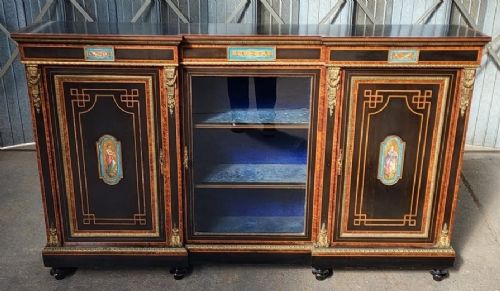

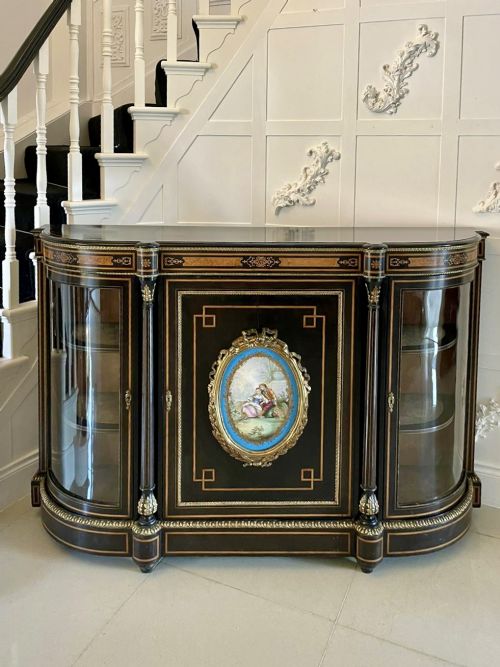
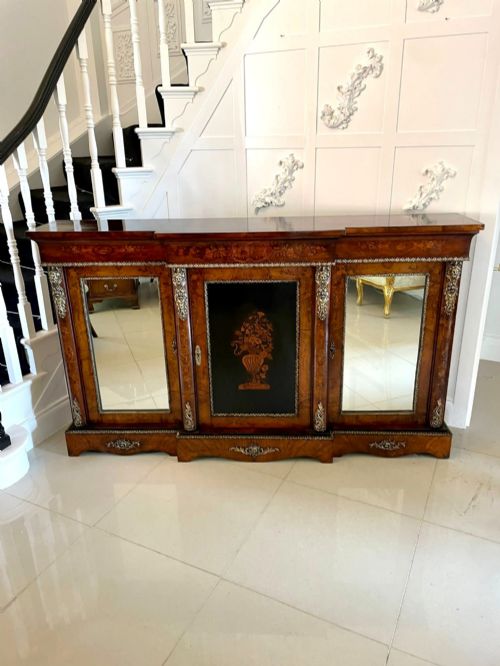
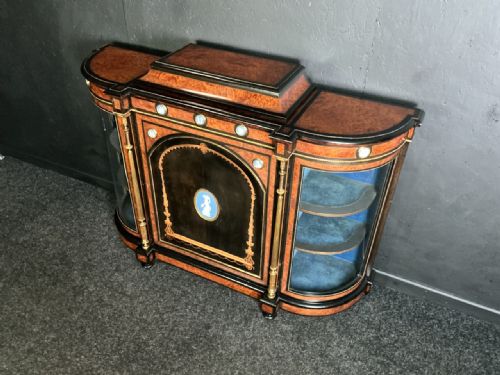


Victorian Ebonised Sideboard
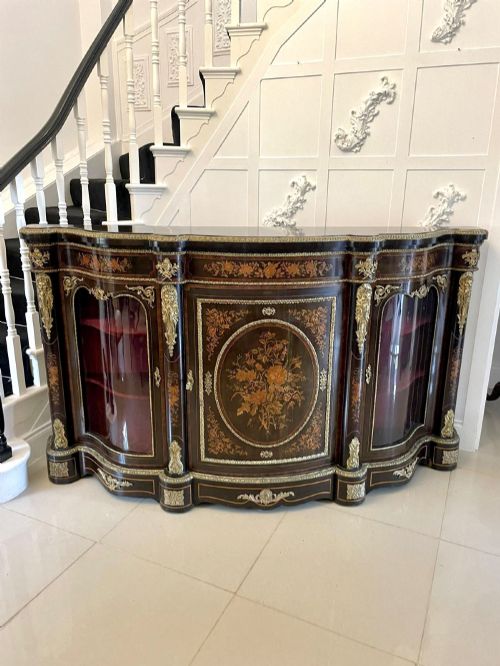
A victorian ebonised sideboard brings dark, polished drama to a room through contrasting marquetry, gilt mounts, and figured timber panels.
Victorian Ebonised Sideboard
When searching for a victorian ebonised sideboard, a buyer encounters low-profile credenzas, side cabinets, and glazed display pieces spanning the nineteenth century. These items served as principal reception room storage and display surfaces, often combining architectural proportions with dark-finished timber.
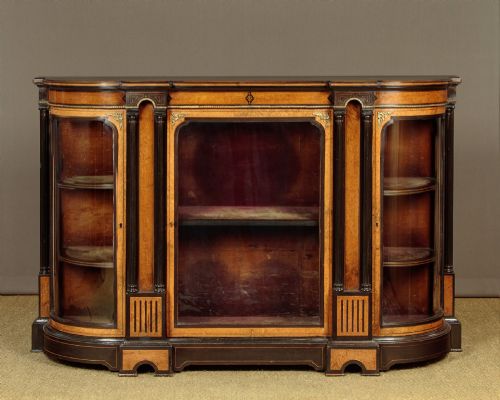
The version most commonly met on this page is the credenza, frequently shaped with serpentine fronts, glazed side doors, and central cupboards. Makers adapted French Revival and Aesthetic Movement ideals to these forms, resulting in pieces that range from severe architectural cabinets to highly decorative panelled furniture.
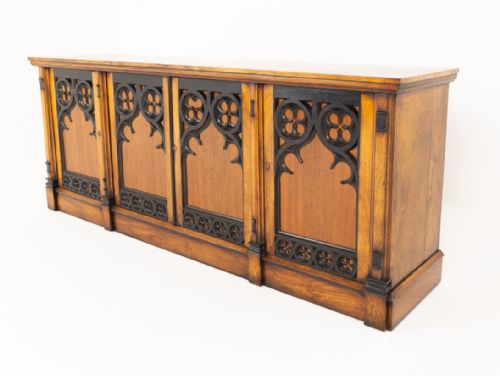
Evidence shows a heavy reliance on nineteenth-century manufacturing traditions, drawing from periods labelled as Victorian, Napoleon III, and the Aesthetic Movement. These categories overlap in construction methods while differing in surface ornament and structural silhouette.
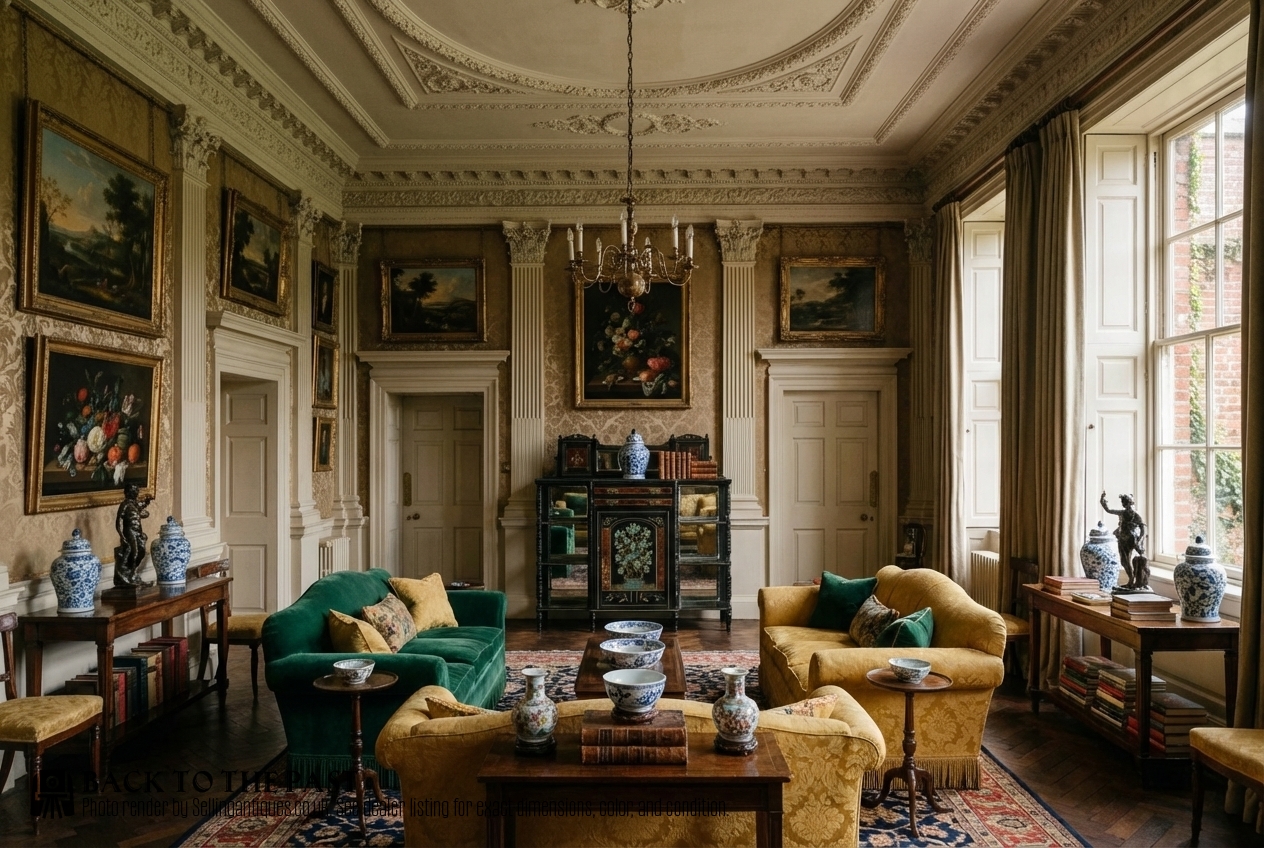
Materials and Construction Techniques
The dark finish defining a victorian ebonised sideboard relies on staining and polishing timber to imitate ebony, applied over foundational woods like walnut, oak, or pitch pine. Artisans combined this blackened ground with contrasting veneers such as amboyna, burr walnut, and coromandel.
Surface enrichment required specialised disciplines, including brass and tortoiseshell boulle work, floral marquetry, and inlaid pietra dura panels. Metal decoration took the form of cast ormolu and gilt bronze mounts secured to corners, panels, and framing members.
Glazing and mirror-backing appear frequently in the construction, incorporating curved glass doors and mirrored panels within breakfront and serpentine carcases. Structural joins relied on traditional nineteenth-century cabinet-making techniques, accommodating heavy stone or marble tops where specified.
Victorian Ebonised Sideboard Retail Price Guide 2026
Typical asking prices for victorian ebonised sideboard among the pieces listed under this phrase on Sellingantiques today, from the lower quarter to the upper quarter. They describe what is for sale here now, not the wider market.
Listings feature pieces incorporating pietra dura, tortoiseshell, and hand-cut brass boulle alongside standard timber marquetry.
Distinctions in Quality and Execution
The distinction between standard commercial output and superior craftsmanship rests on the precision of the marquetry and the depth of the ebonising. Finer examples display meticulous hand-cut veneers and dense, multi-layered polishing rather than uniform painted surfaces.
Quality reveals itself in the integration of mounts and secondary timbers, where heavy cast ormolu or hand-chased brass fixtures fit flush against curved timber profiles. The presence of specialised decorative panels, such as pietra dura or detailed floral inlay, signals workshops operating at the higher end of the trade.
Garnett And Sons·Gillow·Lamb Of Manchester
The Victorian Ebonised Sideboard Glossary
- Ebonised Wood
- Timber treated with stain and polish to resemble solid ebony. This dark finish became popular during the nineteenth century for contrasting against gilt mounts and light-coloured marquetry.
- Marquetry
- The art of applying decorative veneer pieces to a structural carcase to form pictorial or geometric patterns. Makers utilised various dyed and natural timbers to create floral motifs.
- Ormolu
- Gilt bronze mounts used as decorative trim on nineteenth-century furniture. These cast metal elements highlight architectural breaks and door surrounds.
- Boulle
- A technique of inlaying brass and tortoiseshell into a dark ground, named after the French cabinet-maker. It appears on revival pieces influenced by French design.
Victorian Ebonised Sideboard: Frequently Asked Questions
What is the difference between a credenza and a sideboard?
Credenzas generally sit lower and lack the raised backboards or upper tiers found on traditional sideboards, functioning primarily for display.
Many nineteenth-century examples blur these definitions in listings, but they share similar capacities for storing dining or drawing room items.
How do I identify an Aesthetic Movement piece?
Aesthetic Movement items emphasise simplicity of line, often incorporating painted panels, ebonised finishes, and Japanese-inspired decorative motifs.
These pieces contrast with heavily mounted French Revival furniture through more restrained use of ormolu and an emphasis on flat, dark surfaces.
Are marble tops original to these cabinets?
Many nineteenth-century cabinets incorporated fitted marble or stone tops to provide durable, water-resistant surfaces for serving or display.
Surviving examples show both timber and stone tops depending on the specific model and its intended domestic placement.
What timber lies beneath the black finish?
Makers typically used secondary woods such as walnut, oak, or pine as the structural carcase before applying the ebonising treatment.
Internal drawer linings and carcase backs reveal these underlying timbers even when the exterior presents a uniform black surface.