


Victorian Ebonised Console
A victorian ebonised console brings deep, dark elegance to a hallway or drawing room, prized for its dramatic contrast.
Victorian Ebonised Console
A victorian ebonised console is a striking piece of nineteenth-century furniture designed to stand against a wall, frequently doubling as a card table, writing desk or side table.
The pieces appearing under this search span the Victorian era, alongside related nineteenth-century examples influenced by the Aesthetic Movement and French revival styles.
Makers and workshops of the period utilised these dark surfaces to create formal impact, whether in a grand hall or a smaller drawing room.
Materials and construction
Cabinetmakers constructed these tables using solid woods or secondary timbers coated in a deep black ebonised finish to mimic costly ebony.
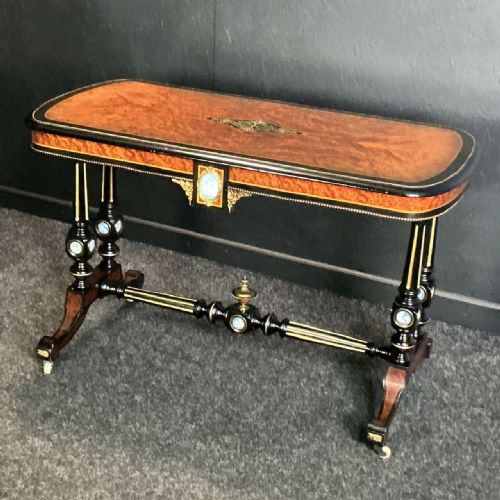
Many examples incorporate contrasting details such as brass inlay, ormolu mounts, parcel gilding, and veneers of burr walnut or amboyna.
French influence appears in pieces featuring marquetry, mother-of-pearl, and porcelain plaques set into the timber.
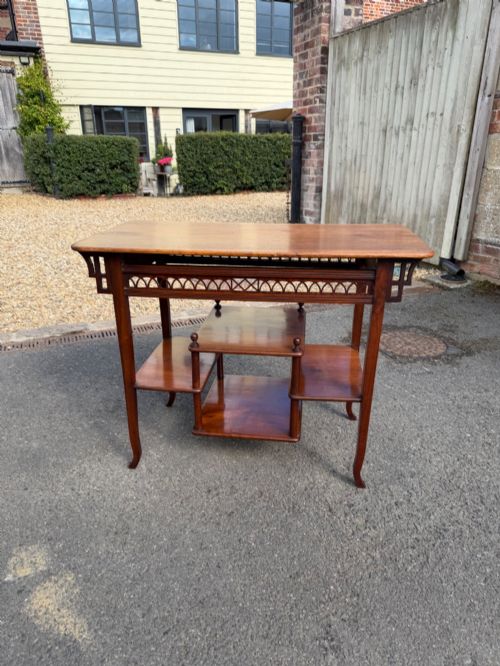
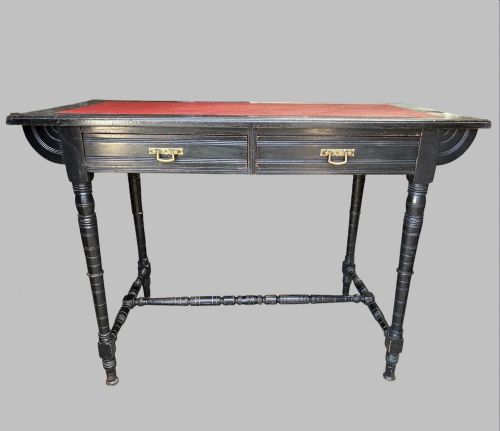
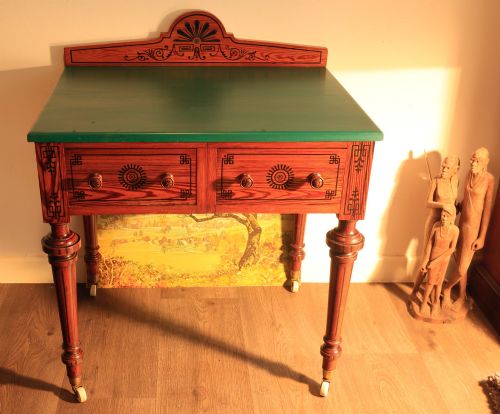
Listings for a victorian ebonised console frequently encompass versatile forms, spanning card tables, writing desks, and two-tier étagères from the nineteenth century.
Distinguishing quality in ebonised consoles
Quality rests in the crispness of the carving, the precision of the brass or marquetry inlay, and the depth of the ebonised finish.
Pieces bearing the stamps of established cabinetmakers or originating from prominent retail workshops display superior joinery and thoughtful proportions.
The choice of secondary timbers and the complexity of the design - such as multi-tiered étagères or folding card mechanisms - determine the tier of the piece.
Edwards And Roberts·Jenks & Woods·S&H Jewell
The Victorian Ebonised Console Glossary
- Ebonised
- Wood treated with stain, dye or paint to achieve the dense black appearance of ebony. This finish gained immense popularity during the Victorian period.
- Console
- A table designed to stand flat against a wall, traditionally secured with brackets or resting on front legs. These tables often served decorative or serving functions.
- Aesthetic Movement
- A late nineteenth-century design style emphasising visual beauty over narrative meaning. It drew inspiration from Japanese art and featured clean ebonised surfaces.
- Ormolu
- Gilded bronze mounts applied to furniture for decorative effect. French revival pieces frequently employ this technique.
- Marquetry
- Inlaid wood veneers arranged to form decorative patterns or pictures. Master craftsmen used contrasting timbers to achieve pictorial depth.
Victorian Ebonised Console: Frequently Asked Questions
What is an ebonised console?
An ebonised console is a nineteenth-century wall table finished in a deep black stain to resemble ebony. These tables served various functions including display, card games, and writing.
They appear frequently in Victorian interiors where dark, dramatic furniture created strong visual contrast against lighter walls.
How do I style a console table?
Position your console against a prominent wall in a hallway, reception room, or drawing room. Pairing it with a matching wall mirror creates a balanced focal point.
Keep the surface uncluttered to allow the dark ebonised wood and any inlay work to remain the primary feature.
Are these tables sturdy enough for daily use?
Nineteenth-century console tables were constructed to handle functional demands such as holding lamps, writing, or supporting card players. Their solid timber frames provide lasting stability.
Care should be taken with folding card table mechanisms and delicate veneer surfaces during movement.