

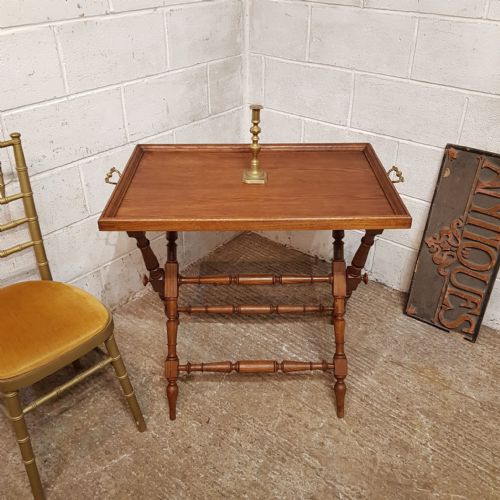


Victorian Drinks Table
A victorian drinks table brings nineteenth-century hospitality into modern rooms through versatile serving furniture designed for entertaining.
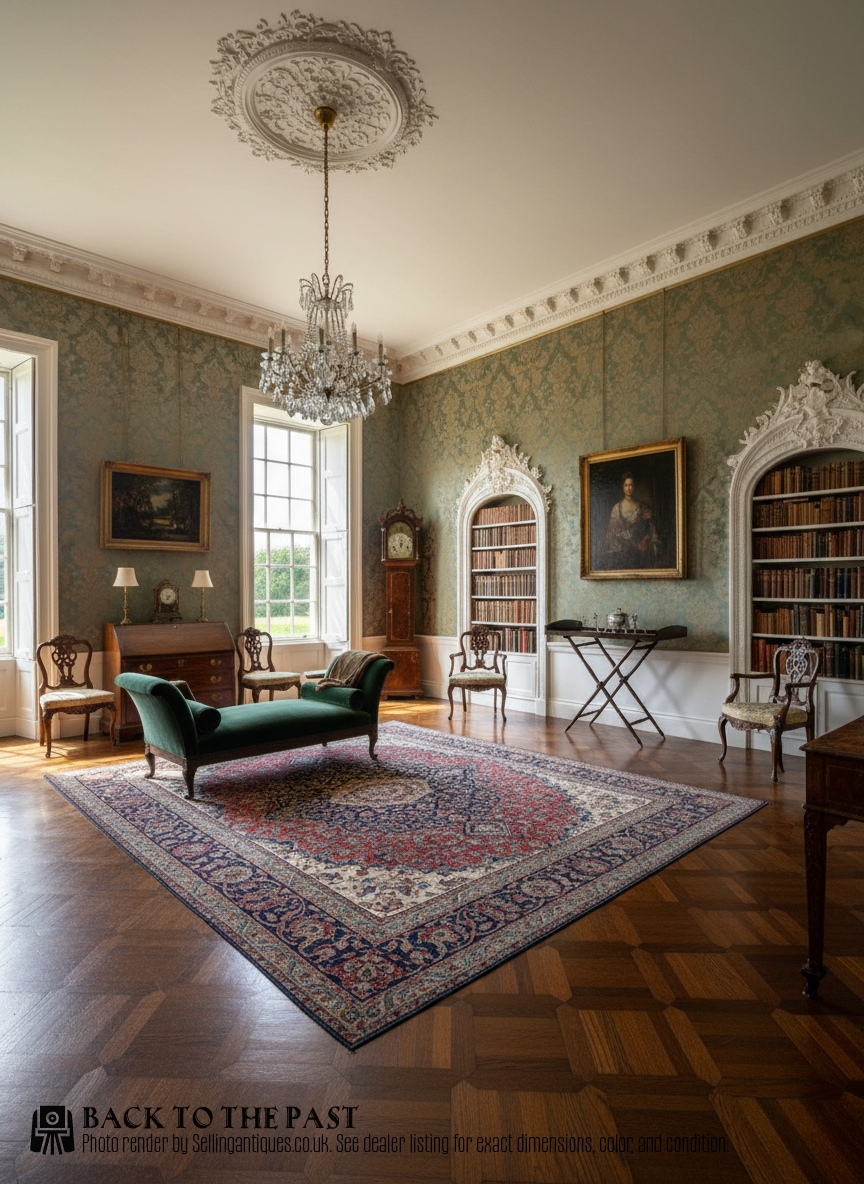
Victorian Drinks Table
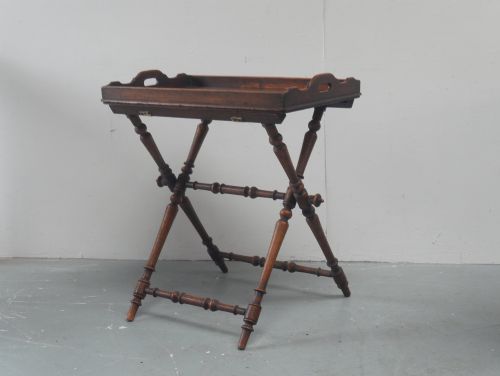
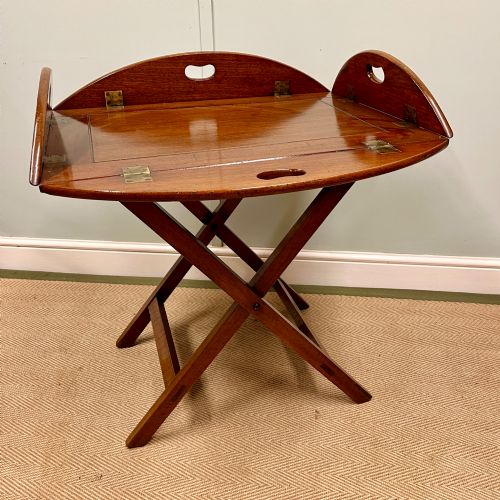
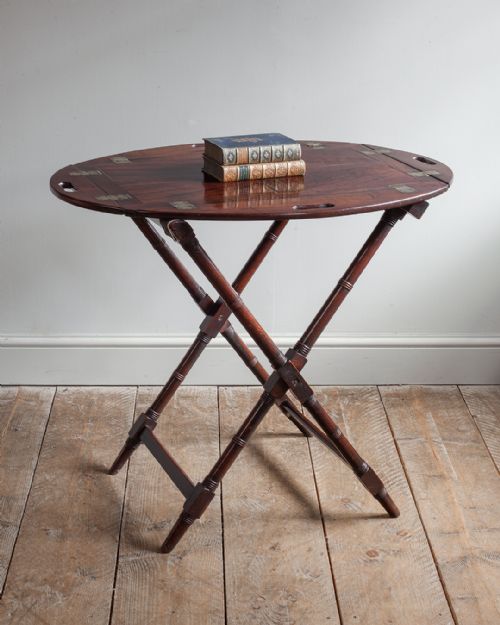
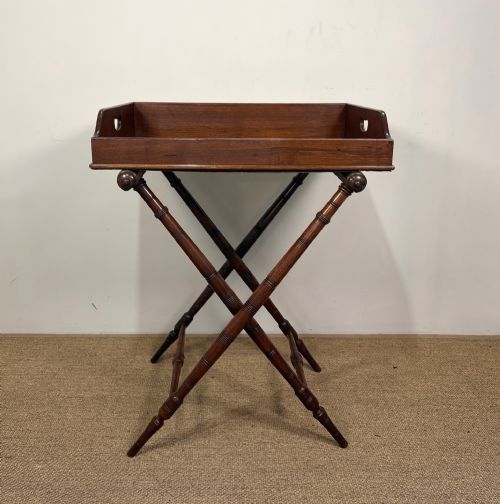
A victorian drinks table encompasses diverse forms utilised for serving beverages, most frequently encountered as a butler tray on a folding or fixed wooden stand. These pieces date across the nineteenth century, utilising utilitarian designs originally intended for domestic service in country houses and town residences.
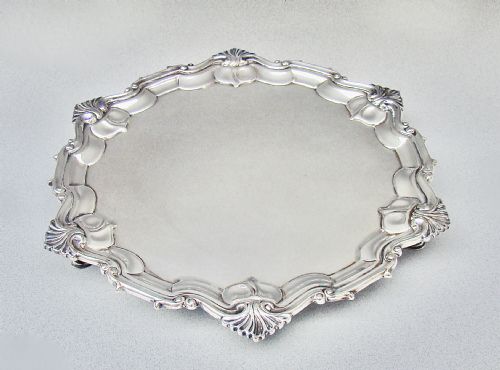
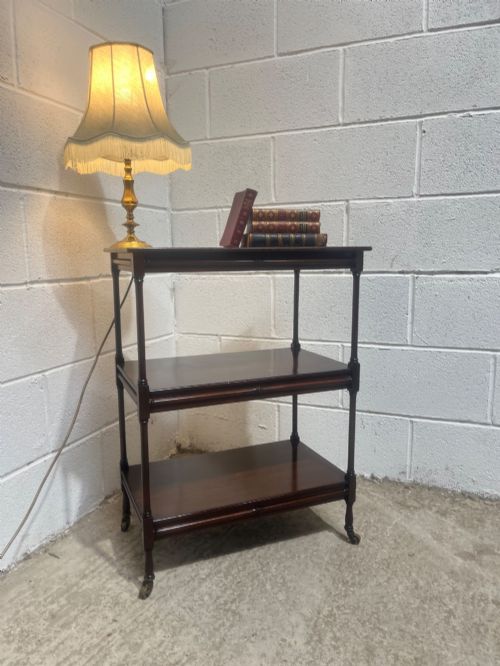
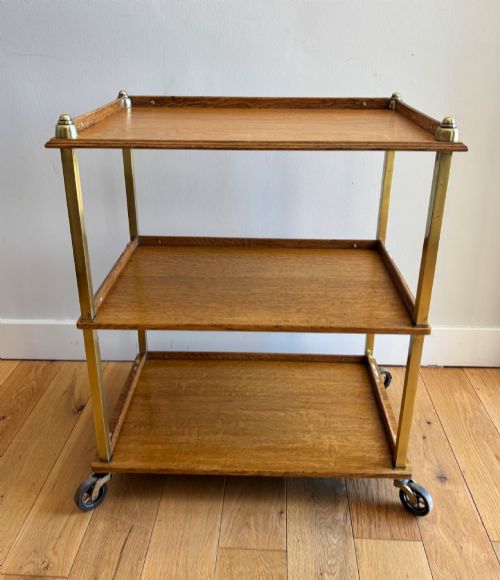
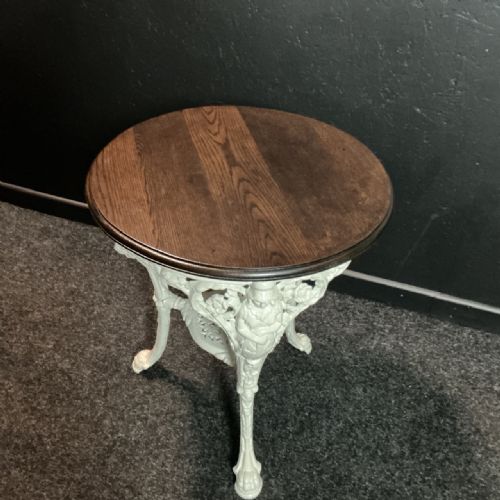
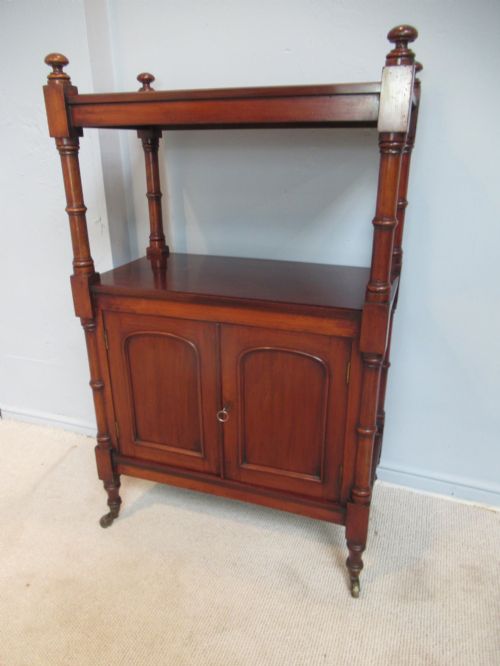
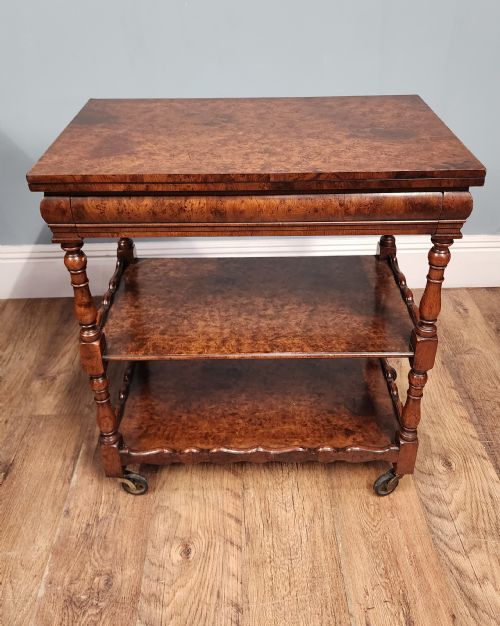
The selection ranges from simple oak or mahogany trays on low frames to three-tier mahogany trolleys, etageres, and cast iron pub tables designed for heavier daily use. Specialised pieces such as decanter tables, cellarettes, and silver-plated tray tables also appear alongside folding garden party serving tables.
Regional and stylistic variations emerge through Gothic Revival, Anglo-Indian colonial, and Victorian Chinoiserie interpretations, employing papier-mâché, ebonised finishes, and carved details. This variety reflects the changing social rituals of afternoon tea, parlour drinking, and formal dining across the decades.
Materials and Technique
Makers utilised dense timbers including mahogany, walnut, and oak to construct durable trays and supporting stands capable of bearing heavy glassware and decanters. Joinery methods relied on solid plank construction, dovetailing, and brass bound edges to reinforce corners against constant movement and lifting.
Metal components added structural strength and decorative contrast, featuring cast iron frames on pub tables alongside brass carrying handles, hinges, and gallery rails. Silver plating and papier-mâché surfaces introduced reflective textures suited to formal drawing room presentation.
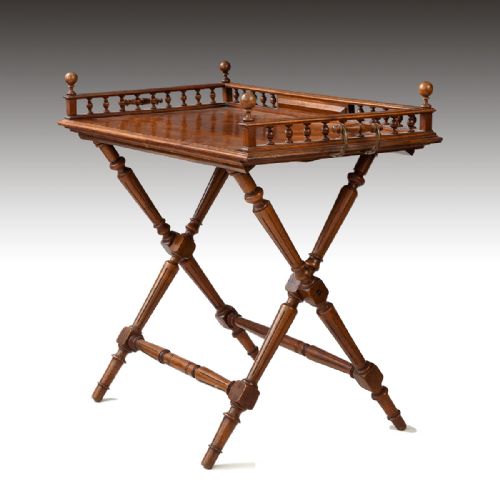
Turned wooden supports, bobbin stems, and carved oak panels demonstrate period woodworking techniques, while folding mechanisms allowed tray stands to be stored compactly when not in use.
Listings feature nineteenth-century materials including mahogany, oak, walnut, cast iron, and silver plate.
Distinctions in Standard
Quality separates utilitarian kitchen or tavern furniture from pieces commissioned for the primary reception rooms of a residence. Superior examples exhibit finely figured mahogany or walnut veneers, hand-carved details, and substantial brass mounts rather than plain pine or utilitarian cast iron.
William Hutton & Sons·Bernard Muller·Halls Patent
The Victorian Drinks Table Glossary
- Butlers Tray
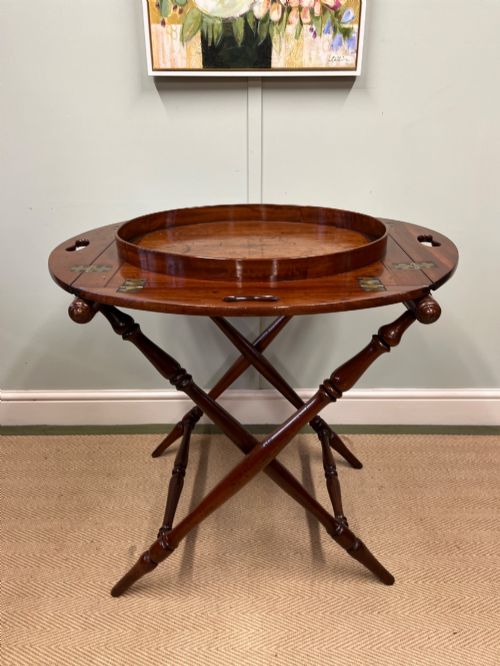
- A removable wooden tray with raised sides, often featuring hinged flaps, designed to fit securely onto a folding wooden stand. These items allowed servants to transport beverages between rooms before placing the tray on its base for service.
- Cellarette
- A lockable container or cabinet designed to hold wine bottles and decanters safely. Often lined and fitted with internal partitions, these objects stood beneath sideboards or functioned as independent floor-standing units.
- Etagere
- A set of open shelves supported by columns or uprights, utilised for displaying or serving items. These tiered pieces allowed convenient access to glassware and bottles during parlour gatherings.
- Galleried Tray
- A serving tray featuring an elevated border or pierced brass rail around the perimeter. This rim prevented glasses and decanters from sliding off the surface during transit.
Victorian Drinks Table: Frequently Asked Questions
What is a victorian drinks table?
A victorian drinks table is a nineteenth-century furnishing designed for serving beverages, combining portable wooden trays with dedicated stands, trolleys, or tilt-top frames.
These objects include butler trays, decanter tables, and serving trolleys utilised in dining rooms, parlours, and country house verandas.
How were these tables used?
Servants used butler trays to transport glassware, decanters, and bottles from storage areas into reception rooms before resting them upon folding stands for guests.
In domestic settings, smaller tables and trolleys remained in parlours to hold afternoon tea, wine services, and reading materials.
Are the tray and stand original together?
Many trays and stands became separated during their service history, leading to marriage pieces where a period tray meets a later compatible stand.
Examining wood species, wear patterns, and dimensions helps determine whether the base and upper tray share the same workshop origin.
How do I care for wood and brass?
Maintaining these surfaces requires regular dusting with a soft cloth and occasional application of appropriate beeswax to nourish nineteenth-century timber finishes.
Brass handles and galleries benefit from careful cleaning to preserve their metal lustre without disturbing the surrounding wood.