


Victorian Double Back Sofa
A victorian double back sofa brings architectural symmetry and deep-buttoned comfort to a reception room, uniting two distinct seating zones in a single timber frame.
Victorian Double Back Sofa
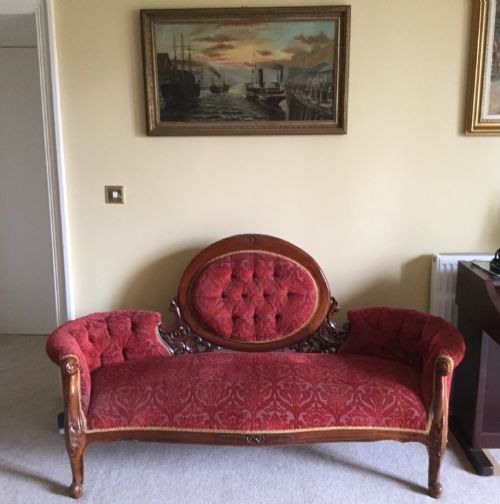
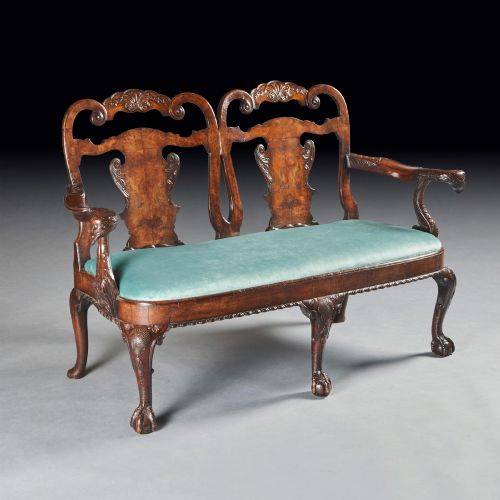
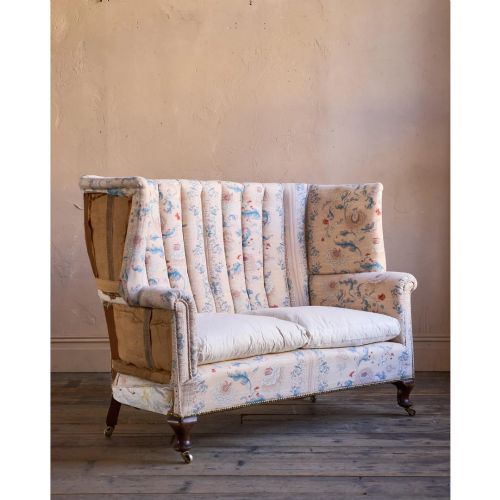
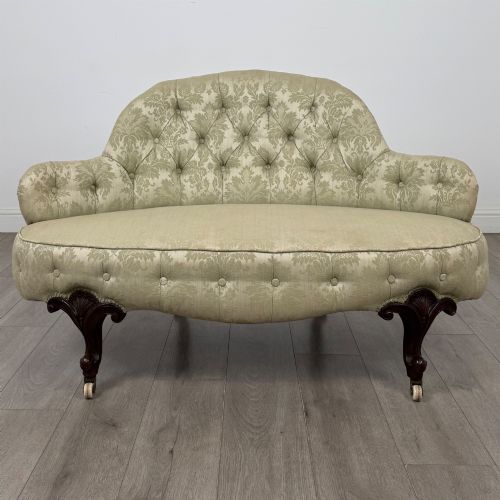
A victorian double back sofa presents a twin-lobed or double-arched upper frame, frequently taking the form of a spoon-back, twin chair back, or double spoonback design spanning two or three seats. These pieces emerge predominantly from the nineteenth century, with examples spanning from the early Victorian era through to the turn of the twentieth century, alongside revival iterations.
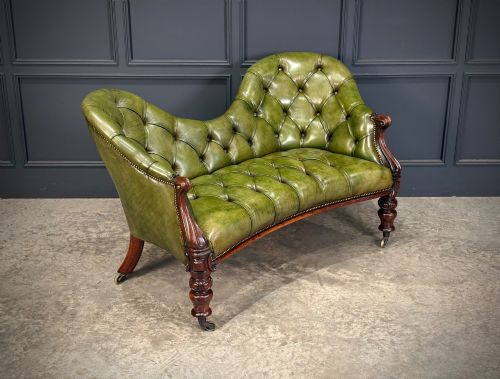
The materials supporting these frames rely heavily on solid timbers, with mahogany and walnut forming the backbone of the construction, sometimes enriched by rosewood or lighter hardwood. Upholstery ranges from traditional horsehair and modern webbing beneath deep pile brocade, velvet, and buttoned leather, to utilitarian ticking fabric.
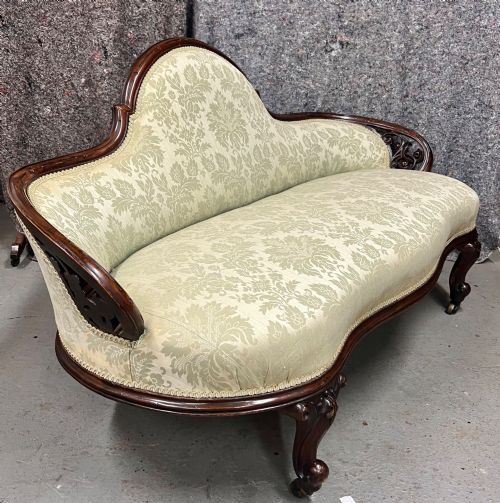
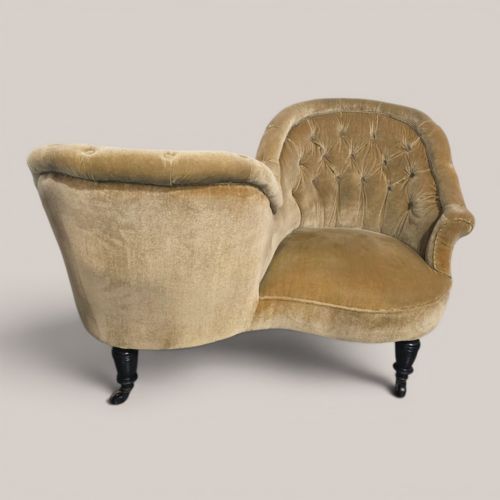
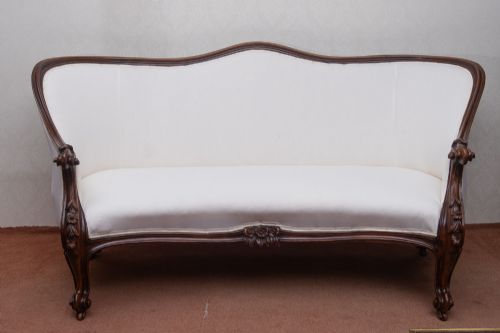
Buyers meet variations that include conversation seats, double end settees, and serpentine showwood frames, reflecting the diverse domestic functions demanded by nineteenth-century households from formal parlours to private boudoirs.
How they were made
Cabinetmakers constructed the structural skeletons of these settees from dense hardwoods like mahogany and walnut, utilising carved showwood frames to expose the rich grain around the crest rails and arm terminals. Turned or fluted legs occasionally incorporate brass castors to ease movement across heavy carpets.
The upholstery technique relied on sprung settee bases paired with layered stuffing, secured by deep buttoning that pulled the textile tightly against the internal padding to create distinct tufted compartments. Frames were shaped by hand, sometimes referencing earlier George II designs or adopting the fluid curves of the Victorian Rococo Revival.
Listings demonstrate frameworks spanning from the early Victorian era through to the Edwardian period, utilising mahogany, walnut, and rosewood.
What varies in quality
The distinction between tiers rests upon the crispness of the timber carving and the architectural proportion of the twin backrests, where master carvers achieved fluid symmetry without stiffness. Showwood frames exhibiting deeply figured mahogany or walnut command higher regard than plain secondary hardwoods.
Integrity of the underlying frame construction and the sympathetic execution of re-upholstering dictate the longevity of the piece, particularly where original buttoning and sprung bases have been carefully maintained or restored using traditional methods.
Howard & Sons
The Victorian Double Back Sofa Glossary
- Spoon-back
- A padded chair or sofa back recessed in the centre and moulded at the rim to resemble the bowl of a spoon. This ergonomic shape gained immense popularity during the Victorian period for supporting the spine.
- Showwood
- Timber framing left exposed around the upholstered elements of a seat. It allows the grain and carving of mahogany, walnut, or rosewood to contribute directly to the visual design.
- Double end
- A settee configuration featuring scrolled or raised armrests at both extremities, allowing a person to recline comfortably from either direction. These forms often complement symmetrical parlour layouts.
- Serpentine
- A sweeping, undulating line that curves outward in the centre and inward at the sides. This contour appears frequently on the front rails of finer Victorian settees.
- Buttoning
- Upholstery technique where twine pulls through the padding to secure deep indentations in a geometric pattern. It anchors the stuffing firmly while creating a textured surface.
Victorian Double Back Sofa: Frequently Asked Questions
Where should a double back sofa go?
These settees suit spacious drawing rooms, grand hallways, or wide bay windows where their symmetrical twin backrests can be viewed from multiple angles. Their architectural presence makes them natural centrepieces for traditional interiors.
Positioning them away from direct sunlight protects sensitive textile coverings like velvet and antique leather from fading. Pairing them with low occasional tables creates a functional and balanced conversational grouping.
How do I identify a Victorian frame?
Examine the timber species and the joinery methods visible beneath the frame or inside the seat cavity. Nineteenth-century pieces predominantly employ solid mahogany, walnut, or rosewood with hand-carved details rather than moulded resin.
Check for characteristic stylistic markers such as spoon-backed contours, serpentine rails, or barley twist turnings. The presence of traditional hand-tied springs and horsehair stuffing further confirms period authenticity.
Were these sofas used for conversation?
Certain specialised variants, such as conversation seats and double end settees, were engineered specifically to facilitate social interaction. Their multi-directional seating arrangements allowed occupants to converse easily without craning their necks.
Standard twin chair back sofas served more formal seating functions in parlours and reception rooms. They provided structured, upright support suited to receiving guests during morning calls.
Can I reupholster an antique settee?
Reupholstering is a common practice that preserves the structural life of the timber frame while adapting the textile to modern interiors. Traditional methods utilising webbing, springs, and horsehair should be respected to maintain historical integrity.
Selecting appropriate fabrics like deep pile brocade, leather, or ticking honours the original aesthetic vernacular. Skilled artisans can replicate historic buttoning patterns to ensure the finished piece retains its proportional balance.