
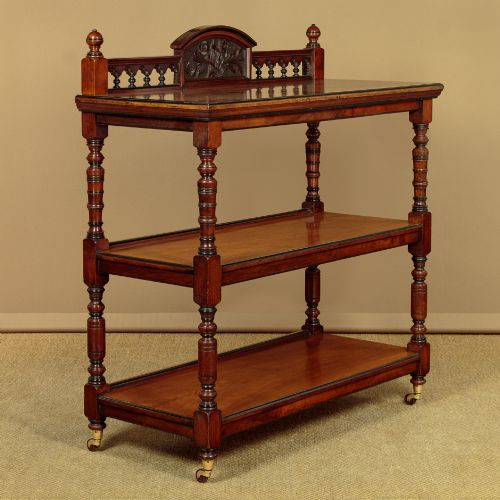


Victorian Dinner Server
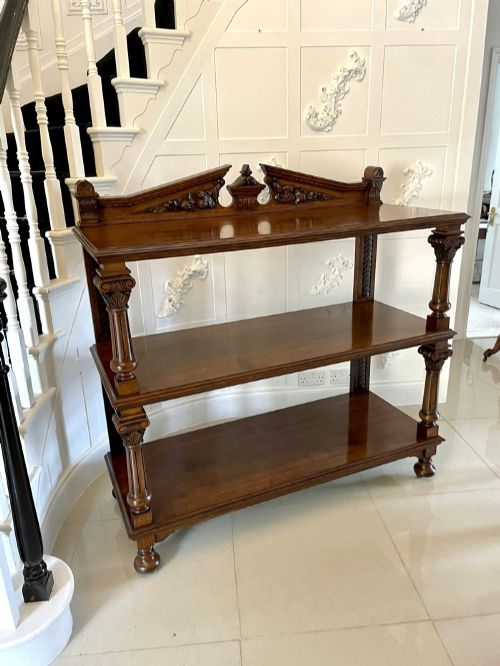
A victorian dinner server provides the surface and storage needed for a formal dining room, combining utility with rich timber character.
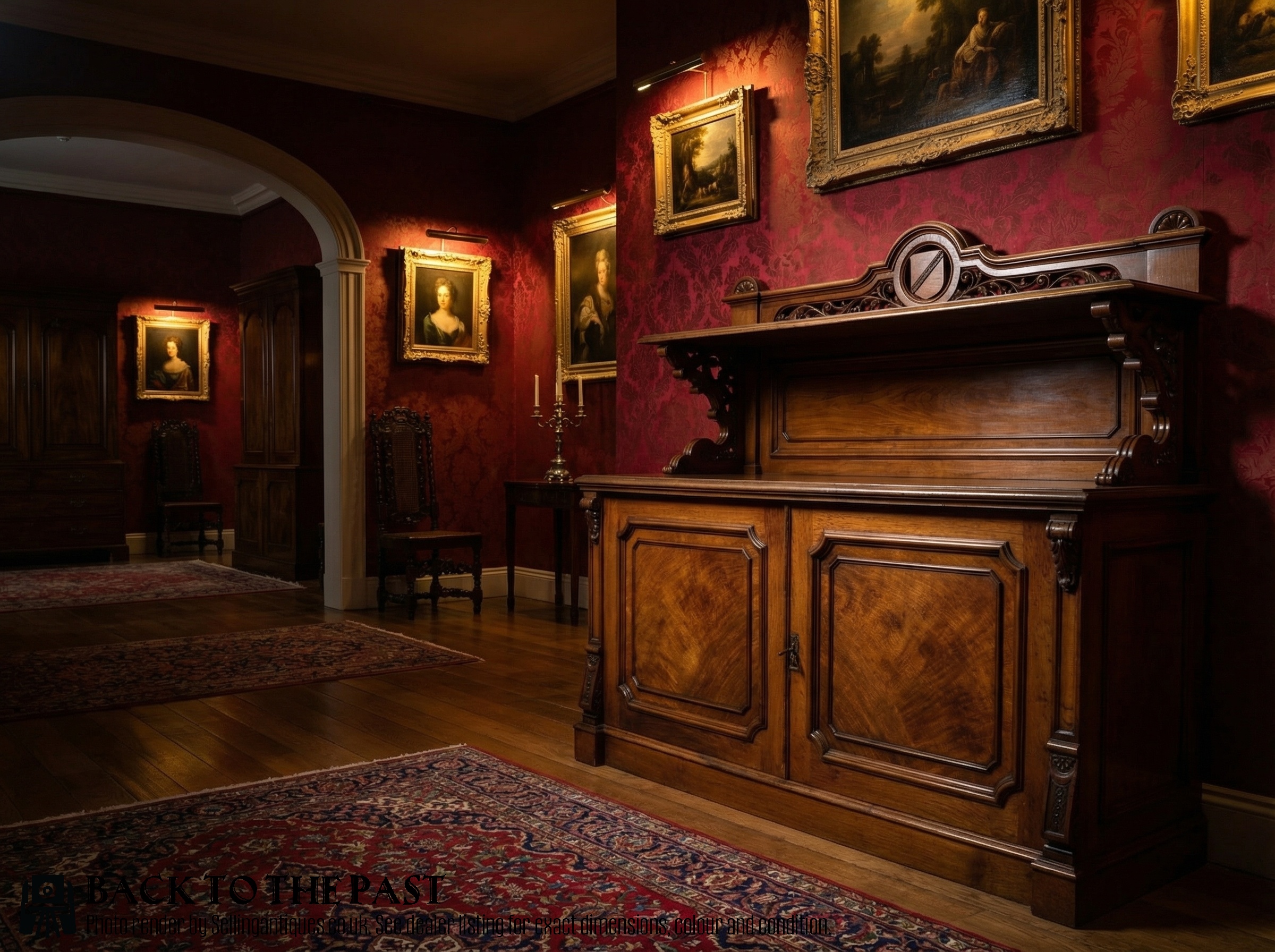
Victorian Dinner Server
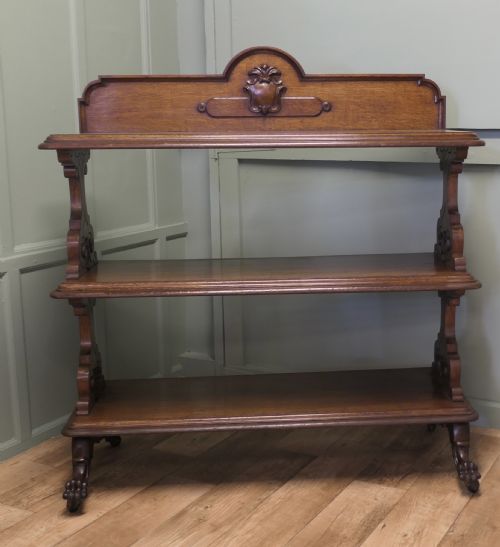
A victorian dinner server encompasses multi-tiered buffets, serving tables, sideboards, and dumb waiters designed for the dining room. These pieces originate primarily from the nineteenth century, including the Victorian era and the William IV period.
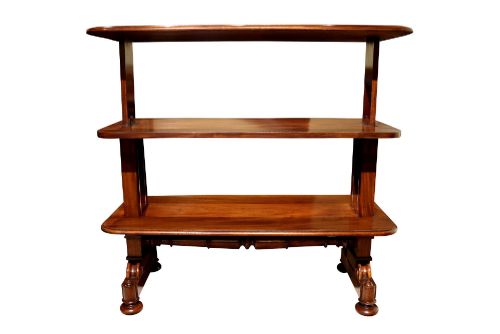
The most common form met on this page is the three-tier mahogany buffet or dumb waiter, often fitted with adjustable or rise-and-fall shelves. Oak, walnut, ebonised wood, and pollard oak also appear frequently across these serving tables and side cabinets.
What Varies in Quality
The refinement of the timber selection dictates much of the distinction, where figured mahogany, rich pollard oak, or figured walnut elevate a piece. Subtlety and depth in hand-carving separate standard utility furniture from finer workshop output.
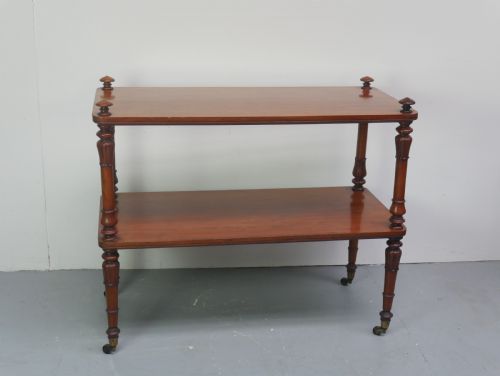
Mechanical complexity and original fittings influence the standing of a server, particularly on rise-and-fall dumb waiters and pieces retaining original castors. The integration of cabinetry doors or display components adds architectural ambition to the design.
Design influences span from the William IV period through the Victorian era and into the Edwardian years, incorporating Aesthetic Movement styles.
Gillows of Lancaster and London·Maple & Co
The Victorian Dinner Server Glossary
- Dumb waiter
- A multi-tiered serving stand used to hold dishes and silverware near the dining table without requiring extra servants. These tiered structures often feature three shelves and sometimes incorporate adjustable mechanisms.
- Buffet
- A side table or cabinet specifically designated for serving food and displaying dining silver. Nineteenth-century examples frequently include tiers or lower cupboards.
- Pollard oak
- Oak timber taken from pollarded trees, yielding a distinctive knotty and highly figured grain pattern. Cabinet makers valued this wood for decorative veneering on prominent surfaces.
- Rise and fall
- A mechanical function allowing tiers on a stand to be adjusted vertically via a central screw or ratchet. This enables the height of the shelves to adapt to different serving requirements.
- Aesthetic movement
- A late nineteenth-century design style emphasising visual beauty and artistic reform over heavy historicism. Walnut and ebonised pieces from this movement often display simpler, cleaner architectural lines.
Victorian Dinner Server: Frequently Asked Questions
What is the difference between a buffet and a dumb waiter?
A buffet generally provides a solid serving surface, sometimes paired with lower cabinetry or drawers to hold dining accessories. A dumb waiter typically consists of multiple open tiers arranged vertically to hold plates and dishes.
Both forms belong to the wider category of nineteenth-century dining room serving furniture. Their precise configuration depends on whether the intended function is display, storage, or immediate table service.
How do adjustable tiers work on these stands?
Adjustable tiers often utilise a central brass screw or telescopic mechanism operated by turning the shelves or a dedicated key. This engineering allows the height between levels to change according to the items placed upon them.
Such functional adaptability is particularly common on nineteenth-century mahogany stands. It shows the mechanical ingenuity applied to dining room furniture of the period.
Where were these pieces used in the home?
These serving pieces stood primarily in the dining room against a wall, ready to receive dishes during large family meals. They acted as an intermediary station between the kitchen and the main dining table.
In contemporary interiors, they serve similar practical roles in dining spaces or living areas. Their shelves and surfaces accommodate modern display items, glassware, or serving accessories.
How can I identify an Aesthetic Movement serving table?
Aesthetic Movement pieces from the late nineteenth century often feature walnut or ebonised wood with restrained, geometric ornamentation. They lean away from heavy Victorian carving in favour of refined form and artistic simplicity.
These tables frequently appear alongside walnut or dark-finished frames that reflect the late nineteenth-century shift in interior taste. Their construction prioritises visual balance and flat decorative planes.