

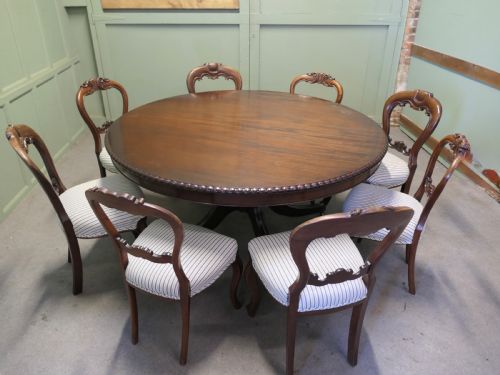


Victorian Dining Room Seating
These pieces of victorian dining room seating bring solid nineteenth-century construction and rich timbers directly to the family table.
Victorian Dining Room Seating
Victorian dining room seating encompasses robust wooden chairs and tables designed for nineteenth-century dining rooms, most frequently encountered here as matched sets of mahogany or oak dining chairs alongside large extending tables.
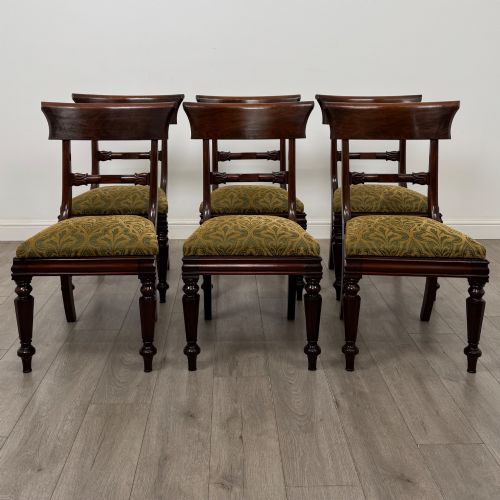
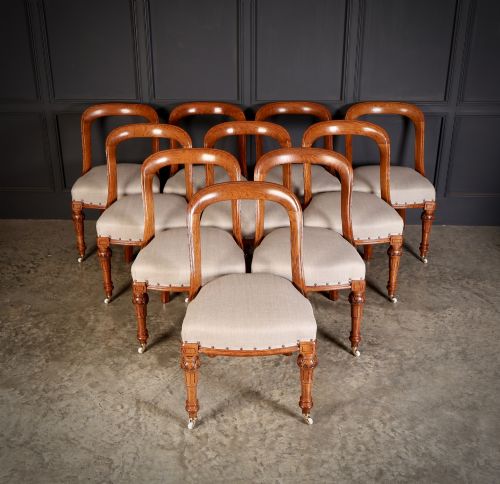
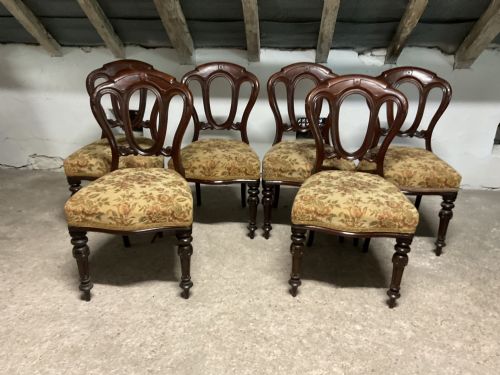
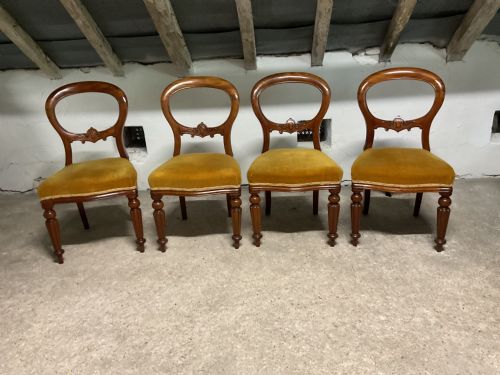
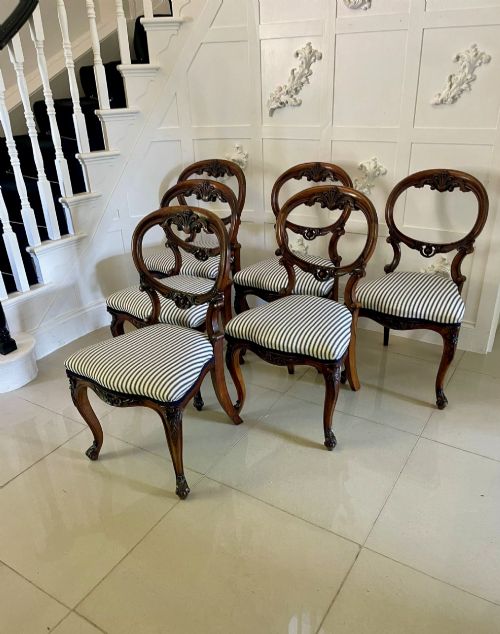
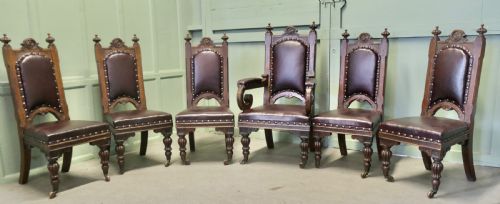
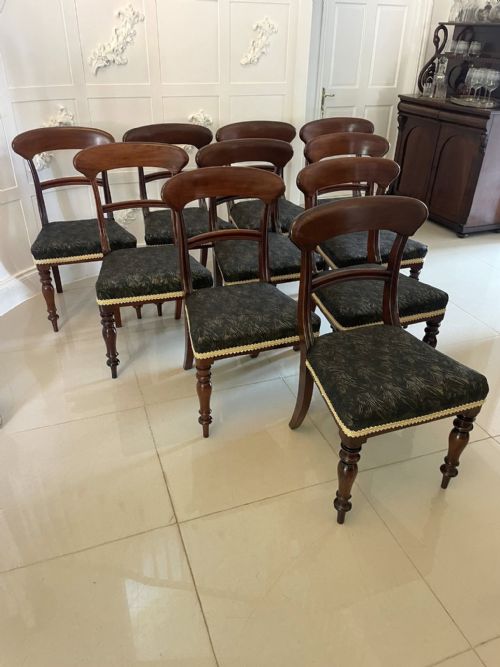
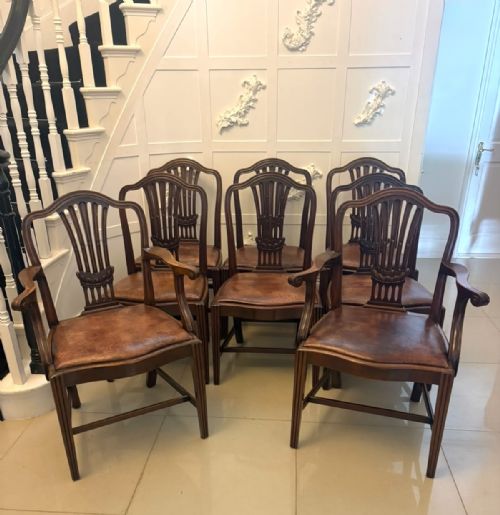
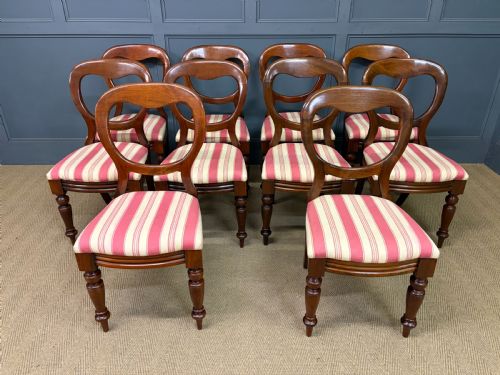
Buyers will find single chairs and elbow chairs alongside large sets ranging from four to twelve pieces, often featuring balloon backs or carved walnut frames from the middle decades of the nineteenth century.
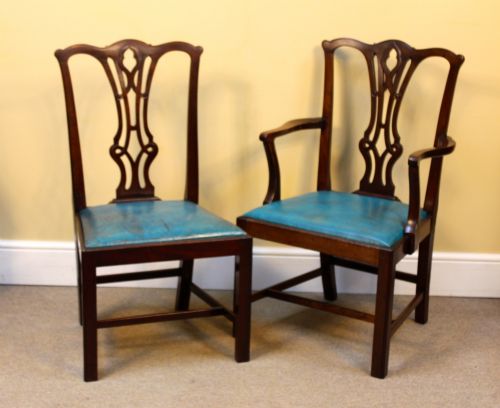
The selection includes revival styles such as Chippendale and Gothic alongside distinctive regional variations like spindleback rush seat chairs and Aesthetic Movement designs.
Materials and Construction
Cabinet makers utilised dense hardwoods including mahogany, walnut, rosewood, oak, beech, and elm, building frames to withstand regular daily use around large dining tables.
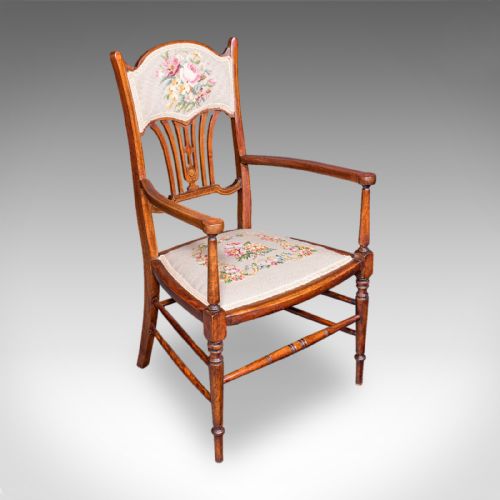
Upholstered seats feature traditional coverings such as leather, fabric, velvet, and needlepoint, secured over firm padding supported by brass details where appropriate.
Mahogany and oak form the vast majority of timber frames across the current selection of Victorian dining chairs and tables.
Judging Quality
The finest examples display deeply carved woodwork, finely figured timber grains, and well-matched sets that have retained their structural integrity and original timber colour over the decades.
Holland And Sons·William Walker And Sons
The Victorian Dining Room Seating Glossary
- Balloon back
- A rounded, oval-shaped chair back popular on Victorian seating that resembles the silhouette of a hot air balloon.
- Carver
- An armchair designed with armrests, traditionally placed at the head of the dining table for the host.
- Needlepoint
- Hand-stitched canvas embroidery utilised for decorative and durable chair seat covers.
- Rush seat
- A woven seating surface made from dried marsh grasses, commonly found on traditional spindleback chairs.
- Shield back
- A chair back shaped like a heraldic shield, seen on revival dining chairs inspired by eighteenth-century designs.
Victorian Dining Room Seating: Frequently Asked Questions
How many chairs come in a typical set?
Sets commonly range from four to twelve chairs, frequently accompanied by carver armchairs for the heads of the table.
Larger dining sets seating ten or twelve people are less common than smaller sets of four or six.
What wood types should I look for?
Mahogany and walnut dominate the finest dining furniture from this period, offering deep colour and strong grain patterns.
Oak, rosewood, beech, and elm also appear regularly across different regional styles and revival designs.
Are armchairs included with the dining chairs?
Many larger sets include a combination of single chairs and elbow chairs intended for the ends of the table.
Individual carvers also appear independently alongside sets of standard single chairs.
How do I identify different Victorian chair styles?
Balloon back designs feature rounded wooden frames, while Gothic and revival pieces display pointed arches and heavy carving.
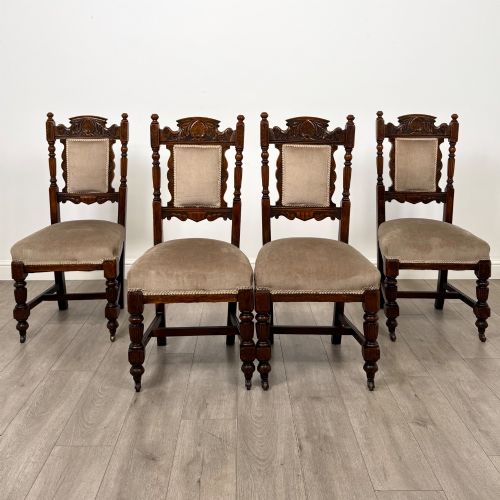
Later Victorian pieces include Aesthetic Movement designs and spindleback chairs with rush seats.