




Victorian Dessert Service
A victorian dessert service brings coordinated elegance to the table, combining porcelain plates and specialised silver or silver-plated cutlery for fruit and sweet courses.
Victorian Dessert Service
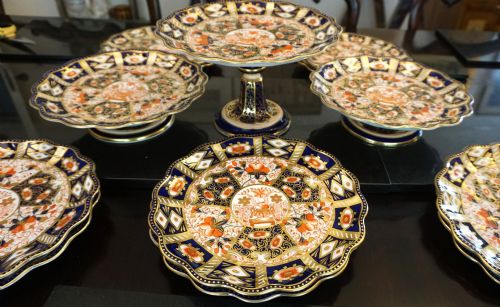
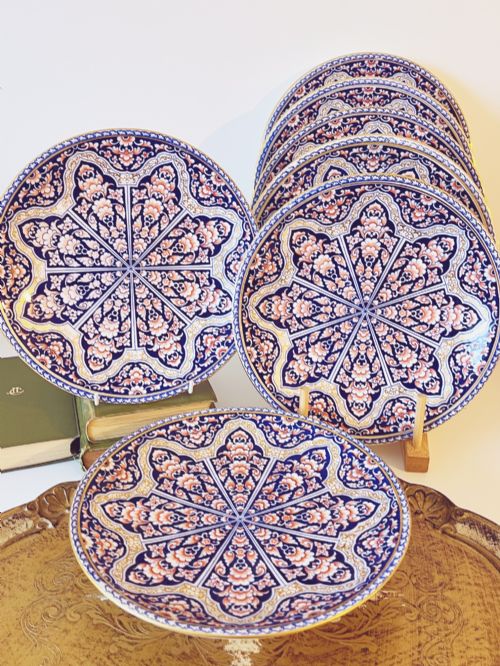
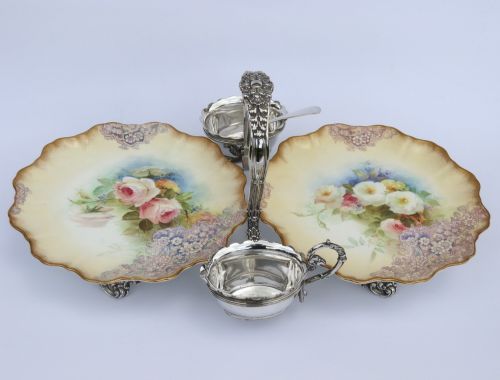
When you search for a victorian dessert service, you encounter coordinated table settings designed specifically for the final course of a formal meal. These groupings typically comprise painted porcelain plates alongside matching comports for fruit and sweet treats.
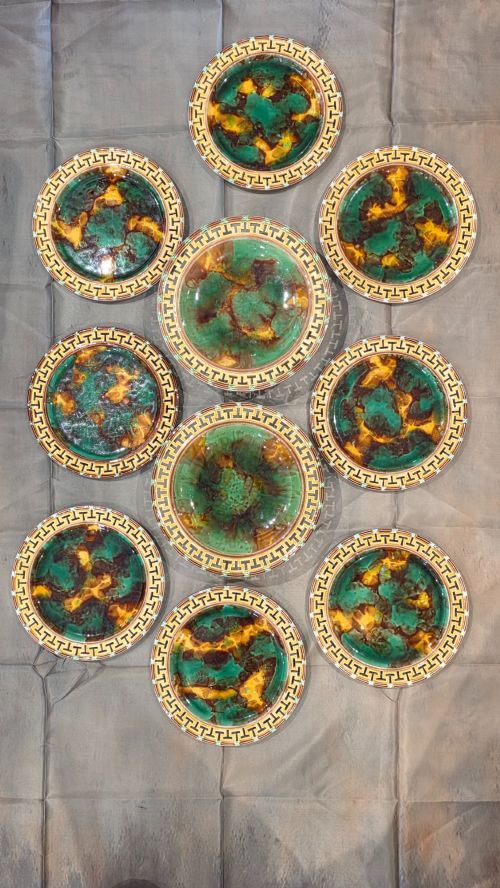
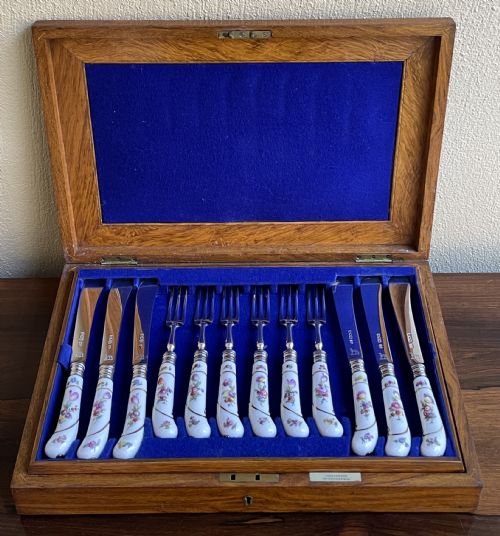
The services appearing here range from expansive nineteenth-century earthenware and bone china settings to compact silver-plated fruit sets housed in original fitted wooden boxes. Many examples integrate matching dessert cutlery featuring mother-of-pearl, agate, or bone handles.
You meet both complete multi-piece canteens and smaller part-services, often originating from prominent English potteries and silversmiths operating during the nineteenth and early twentieth centuries.
How they were made
Porcelain and bone china components rely on skilled hand-painting and intricate glazing techniques, frequently accented with gilding or enamel decoration. Makers shaped earthenware through traditional moulding before applying detailed botanical or landscape scenes.
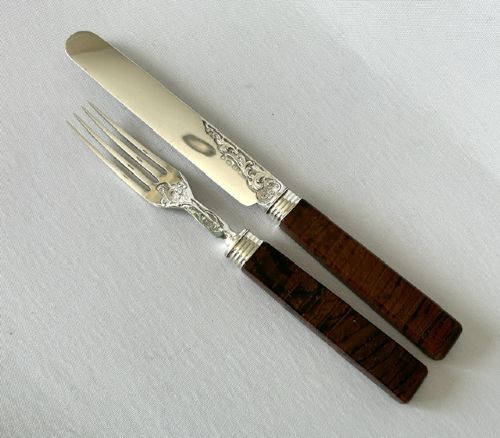
Cutlery items combine steel or silver plating with organic handle materials such as mother-of-pearl, ivory, or carved bone, secured with metal ferrules. Silversmiths engraved blades and handles with floral motifs, matching the decorative themes of the accompanying ceramic plates.
What varies in quality
The standard of ceramic painting distinguishes standard production wares from superior artistic outputs, with finely detailed hand-painted landscapes and raised enamel work commanding greater attention. The consistency of the glaze and the precision of the gilding further mark out the level of craftsmanship.
Material selection for the cutlery and serving pieces creates a clear hierarchy, where solid sterling silver and rich mother-of-pearl handles sit above silver-plated variants. The survival of an original fitted wooden case or box significantly elevates the integrity of the set.
Royal Crown Derby·Walker and Hall·Doulton Burslem·John Ridgway·Hukin and Heath·John Round and Sons
The Victorian Dessert Service Glossary
- Comport
- A raised dish or bowl used for presenting fruit or sweetmeats as the centrepiece of a dessert service. These elevated vessels stand on a central foot or stem.
- Canteen
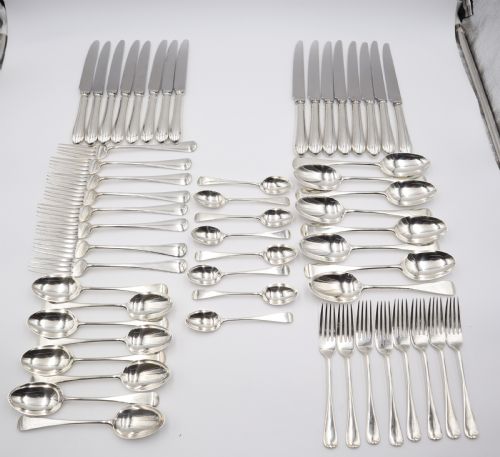
- A fitted box, chest, or case designed specifically to store a complete set of cutlery or tableware securely. They often feature multiple velvet-lined tiers to organise knives, forks, and spoons.
- Majolica
- A type of earthenware coated with an opaque tin glaze and painted with brightly coloured metallic oxides. This technique produces vibrant, glossy surfaces often modelled with naturalistic plant and animal forms.
- Imari
- A decorative style inspired by Japanese porcelain featuring a distinct palette of cobalt blue, iron red, and gold. Victorian potteries frequently adapted these bold geometric and floral patterns for European tastes.
- Ferrule
- The small metal band or ring that secures the handle of a knife or fork to the tang of the blade. In quality pieces, this is typically fashioned from silver or plated metal.
Victorian Dessert Service: Frequently Asked Questions
What items belong in a dessert service?
A standard service includes a central comport accompanied by a series of matching dessert plates, sometimes supplemented by specialised fruit knives and forks.
Larger configurations incorporate berry spoons, nutcrackers, and grape scissors, all designed to handle the various fruits and sweets served at the conclusion of a meal.
How were these services used originally?
Victorian hosts brought out these dedicated sets only after clearing the main dinner table, shifting focus to fresh fruit, nuts, cheeses, and sweet dishes.
The specialised cutlery prevented guests from using heavy dinner implements on delicate soft fruits, protecting both the food and the fine ceramic plates.
Can I use these sets for dining today?
Many silver-plated and porcelain sets remain robust enough for occasional modern use, provided you hand-wash the components carefully.
Silver-plated cutlery with mother-of-pearl handles requires gentle cleaning without abrasive detergents to preserve the organic material and delicate metal plating.
How do I identify the period of a service?
Makers' marks stamped or painted on the reverse of ceramic plates often provide specific registration or date codes corresponding to nineteenth-century production.
Stylistic cues such as Rococo Revival curves or late Victorian aesthetic movement motifs help narrow down the manufacturing decade alongside the presence of original wooden cases.