


English Porcelain Dessert Set
An english porcelain dessert set brings the formal elegance of the nineteenth-century dining table directly into your home.
English Porcelain Dessert Set
An english porcelain dessert set comprises matched collections of serving dishes, comports and plates designed for the final course of a formal meal. Surviving examples span the Regency and Victorian eras, reflecting the changing tastes of nineteenth-century hosts.
The service typically includes a centrepiece comport alongside a series of plates and smaller dishes for fruit and sweetmeats. Makers such as Grainger Lee and Chamberlains Worcester produced elaborate arrangements for wealthy households.
Pieces range from Regency Chinoiserie designs to Rococo Revival and Victorian Imari patterns. Collectors encounter both large assembled services and smaller surviving groupings of plates.
How they were made
Potters shaped fine porcelain, bone china, earthenware and stone china into delicate plates and serving dishes before applying detailed enamel decoration. Kiln firing fixed the body and the underglaze colours.
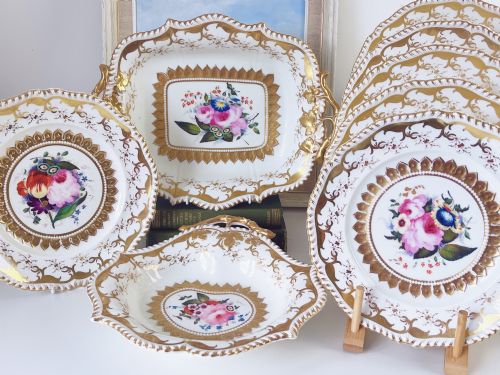
Craftsmen applied gold leaf and rich gilding by hand to accentuate the rims and borders of the service. Handpainted floral motifs and botanical studies frequently decorated the central wells of the plates.
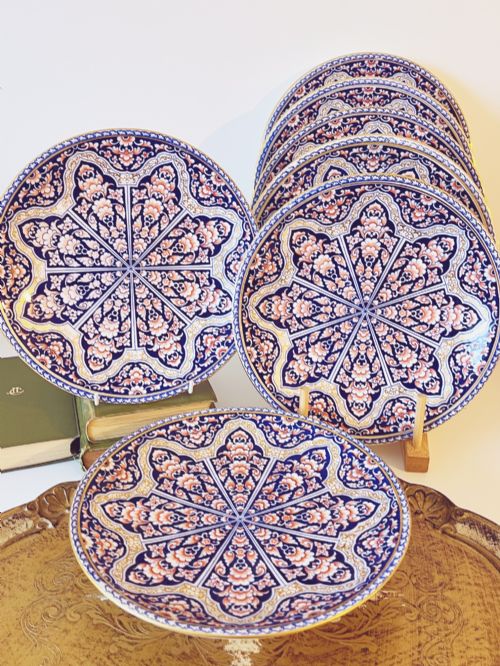
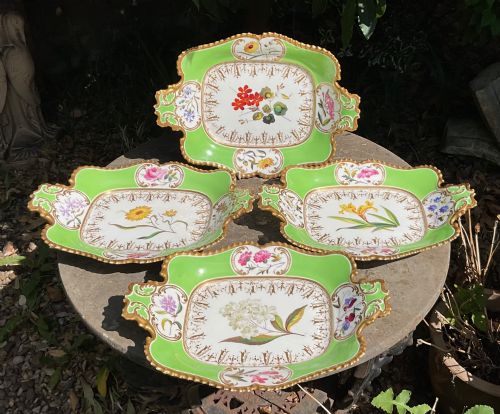
Decoration across the available pieces ranges from handpainted botanical flowers to rich gilding and Imari patterns.
What varies in quality
The precision and detail of the handpainted enamel work separates standard production from superior artistry. Delicately rendered botanical subjects require greater skill than repetitive factory transfer printing.
The weight and translucency of the porcelain body indicate the quality of the raw materials used by factories such as Spode or Royal Crown Derby. Preservation of the applied gold leaf across frequent use also influences overall desirability.
Grainger Lee And Co·Royal Crown Derby·Chamberlains Worcester·John Ridgway·Spode·Kerr And Binns·Davenport
The English Porcelain Dessert Set Glossary
- Comport
- A raised serving dish or pedestal bowl designed to hold fruit as the centrepiece of a dessert service. These elevated vessels added architectural height to the nineteenth-century dining table.
- Bone china
- A type of porcelain containing bone ash that creates a durable, bright white ceramic body. English potteries utilised this material extensively throughout the nineteenth century.
- Stone china
- A dense, heavy earthenware developed to imitate oriental porcelain while offering greater resilience. Makers like Davenport and Tonquin China produced robust tableware in this fabric.
- Imari
- A decorative style featuring rich cobalt blue and iron red highlights, often augmented with gold leaf. Victorian interpretations borrowed these traditional Japanese aesthetics for European dining wares.
- Gilt
- A thin layer of gold applied to the ceramic surface to enrich the borders and handles. This metallic detailing was hand-painted and fired onto the glaze.
English Porcelain Dessert Set: Frequently Asked Questions
How were dessert sets used?
These services were reserved for the final course of a grand dinner, which traditionally featured fruit, nuts, cheeses and sweet confections. Servants brought out the matched plates and comports after the savory courses had been cleared away.
The arrangement allowed hosts to display their social standing through fine dining wares decorated with handpainted flowers or gold leaf. Guests selected their fruit and sweets from the shared serving dishes passed around the table.
Can I use these plates today?
While these nineteenth-century ceramics remain structurally sound, modern dishwashers and harsh detergents will damage the delicate enamels and gold leaf. Hand washing in warm, soapy water is essential to preserve the antique surfaces.
Most owners choose to display the pieces in cabinets or utilise them only for special dining occasions. Careful handling prevents scratching the soft nineteenth-century glaze.
How do I date an antique set?
Makers often stamped or painted factory marks onto the underside of the porcelain, which helps pinpoint the period of manufacture. Stylistic shifts, such as the transition from Regency elegance to Victorian Rococo Revival, also provide chronological clues.
Material choices like stone china or bone china point toward specific manufacturing eras. Comparing pattern numbers with factory archives confirms the date of production.
Why do sets have different numbers of pieces?
Original dining services contained dozens of plates and multiple comports to feed large nineteenth-century gatherings. Over generations, individual pieces suffered accidental breakage or families divided the service among heirs.
As a result, current listings frequently offer partial services or smaller assembled groupings rather than complete original suites. Collectors often appreciate these surviving remnants for their individual decorative merit.