
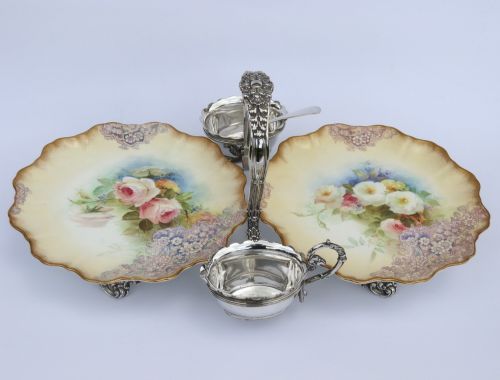


Hand Painted Floral Tableware
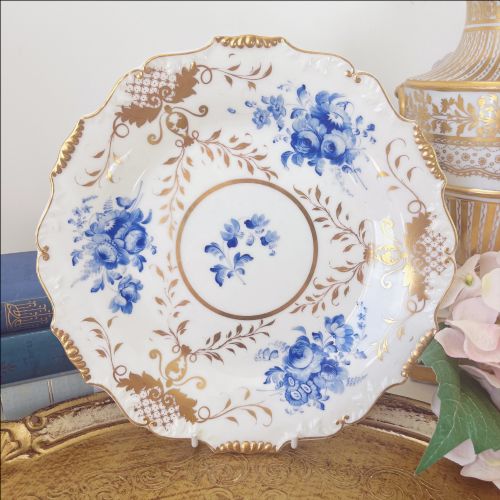
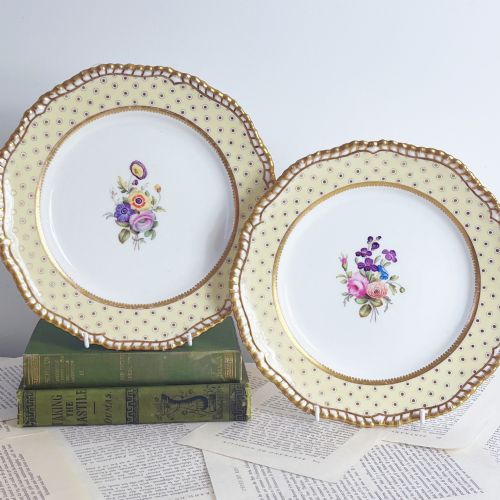
Hand painted floral tableware brings lively botanical colour to the table through hand-decorated porcelain, earthenware and bone china.
Hand Painted Floral Tableware
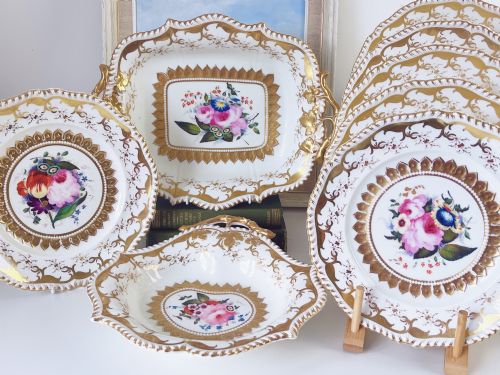
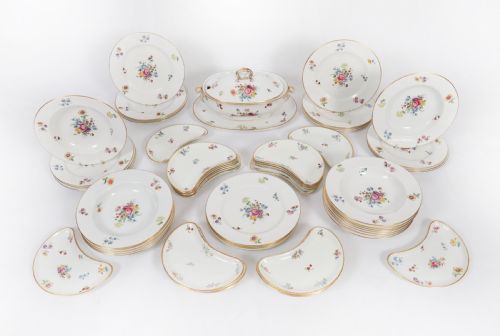
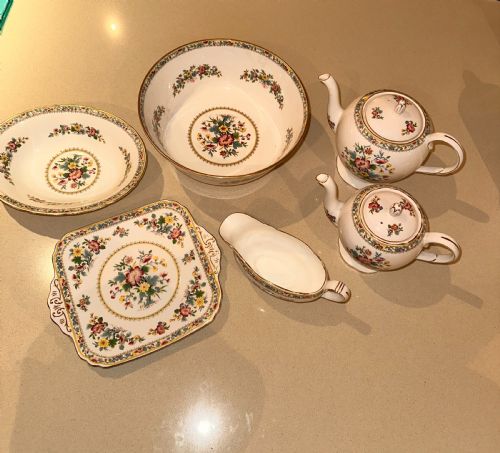
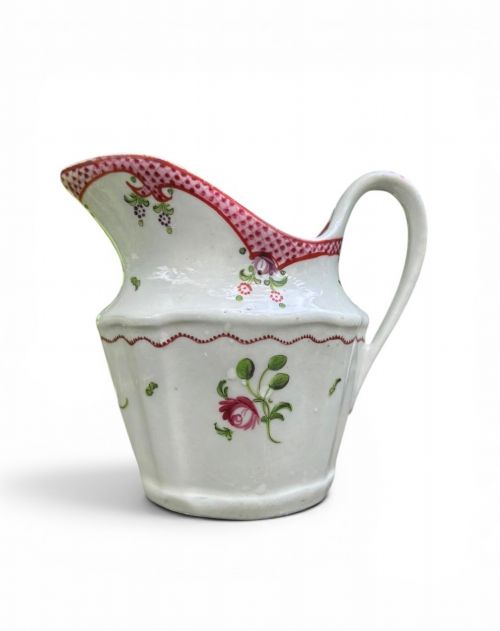
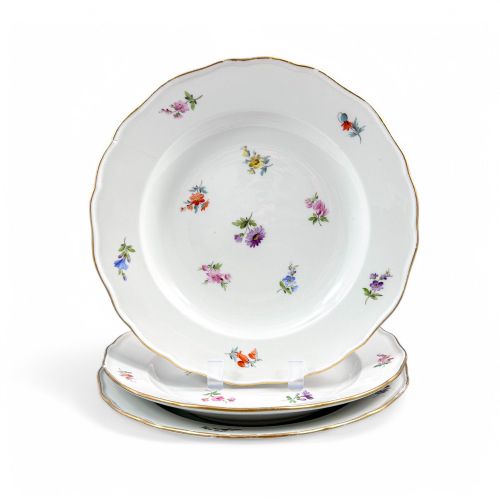
Hand painted floral tableware covers everything from individual dessert plates and cream jugs to large dinner services and dessert sets. These pieces appear across nineteenth century, Georgian and twentieth century periods, reflecting varied domestic dining traditions.
You are most likely to encounter dessert services, decorative plates and dinner services featuring floral decoration. Many items emerge from English porcelain and pottery traditions alongside continental factories.
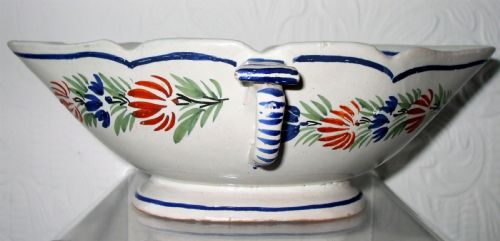
Forms range from single serving dishes and sauceboats to extensive sixty piece sets. Each group demonstrates the enduring appeal of botanical motifs on ceramic surfaces.
Materials and construction
Potters utilised porcelain, bone china, earthenware and ironstone as the primary bases for these services. Skilled hands applied enamel colours and gold leaf over or under the glaze to create botanical scenes.
Firing techniques fixed the hand-painted pigments and gilt highlights onto the ceramic body. Many items combine moulded shapes with delicate brushwork.
Listings feature porcelain, bone china, earthenware and ironstone spanning the Georgian and Victorian periods.
Quality variations
Quality rests upon the fineness of the ceramic body and the precision of the hand painting. Superior pieces display intricate botanical detail and careful application of gold leaf and enamel.
The reputation of the maker and the complexity of the service shape the standing of individual items. Well-preserved matching sets demonstrate higher craftsmanship than mixed or heavily worn parts.
Grainger Lee and Company·Spode·New Hall·Meissen·John Ridgway·Rockingham Pottery·Coalport·Müller Volkstedt·Royal Worcester·Jacob Petit·KPM·Walker and Hall·Doulton Burslem·Wedgwood·Mason·Royal Crown Derby
The Hand Painted Floral Tableware Glossary
- Bone china
- A type of soft-paste porcelain containing bone ash, known for its strength and translucent quality. It formed a popular base for nineteenth-century English tableware.
- Earthenware
- A porous ceramic body fired at lower temperatures than porcelain. It requires a vitreous glaze to hold liquids and forms the base for many traditional services.
- Ironstone
- A heavy, durable type of earthenware patented in the nineteenth century. It resists chipping and provided a robust surface for large dinner services.
- Enamel
- Opaque glass-like colour applied to fired ceramics for decoration. It allows bright botanical hues to sit permanently on the glaze.
- Gilt
- A thin layer of gold applied to ceramic surfaces for highlights and borders. It adds reflective contrast to floral painting.
Hand Painted Floral Tableware: Frequently Asked Questions
How do I care for hand painted floral tableware?
Wash these ceramic pieces gently by hand using mild soap and warm water. Avoid abrasive sponges and dishwashers to protect the delicate enamels and gold leaf.
Store items with padded dividers between plates to prevent surface scratching. Proper care preserves the painted botanical details for daily enjoyment or display.
Can I use antique dinner services for daily dining?
Many nineteenth-century and Georgian services remain robust enough for occasional use. Consider the presence of gold leaf and delicate glazes before serving acidic foods.
Hand-washing is essential for older ironstone and porcelain pieces. Gentle handling ensures these historic services survive for future meals.
How do I identify a dessert service from a dinner service?
Dessert services typically comprise specialised plates, shaped dishes, cream jugs and compotes meant for the final course. They often feature lighter, more decorative botanical painting.
Dinner services include large meat dishes, soup dishes and numerous dinner plates designed for savoury courses. Their forms reflect the practical demands of substantial dining.