
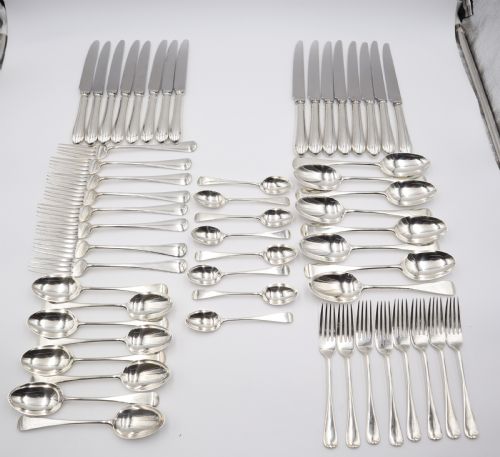
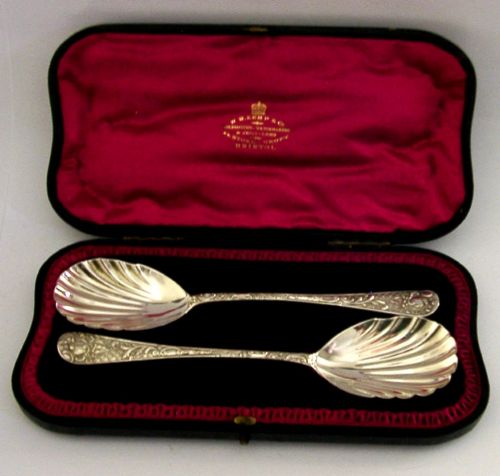
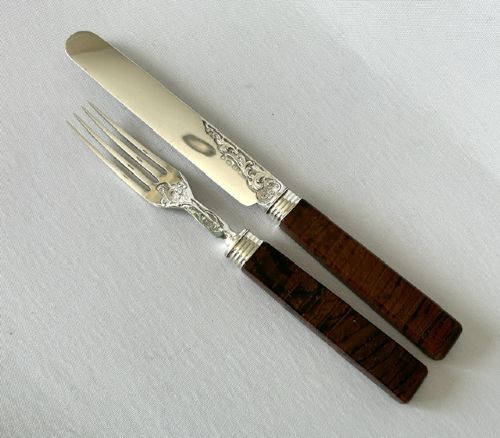
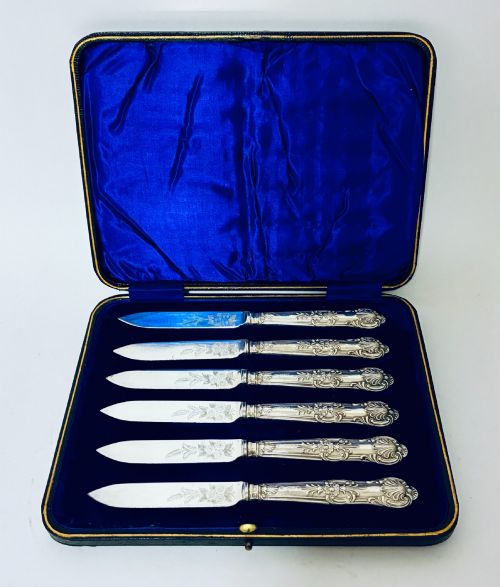





Victorian Dessert Cutlery Set
These Victorian dessert cutlery sets bring fruit, cheese and sweet courses to the table with mother-of-pearl, silver and steel.
Victorian Dessert Cutlery Set
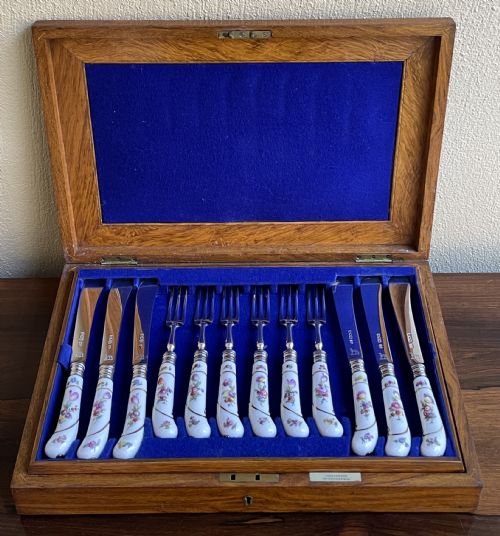
A Victorian dessert cutlery set comprises matched knives and forks intended for fruit, cheese or sweet courses, frequently housed in fitted presentation boxes. You are most likely to meet cased sets from the latter half of the nineteenth century featuring mother-of-pearl handles and sterling silver or silver plate blades.
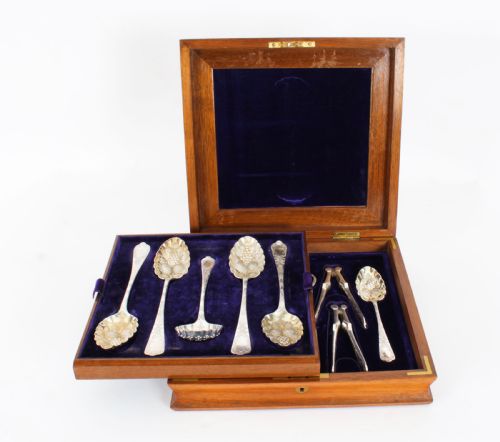
The forms span from modest fruit knife and fork pairs to comprehensive sets including serving spoons, nutcrackers and grape scissors. These pieces reflect the formal dining habits of the Victorian and Edwardian periods, where specialist cutlery accompanied the dessert course.
Materials and construction
The handles are fashioned from mother-of-pearl, carved agate or polished oak, shaped to fit the hand and pinned securely to the tangs. Blades and tines are wrought from sterling silver, silver plate or steel, often finished with crisp engraved decoration or parcel-gilt surfaces.
Casing involved fitted wooden boxes lined with velvet or satin to protect the metalwork and handles during storage. These presentation chests demonstrate the cabinetmaker's skill in matching the interior layout to the exact contours of each implement.
Recorded periods span from the early nineteenth century through to Edwardian production, with 1890 appearing frequently.
Distinctions in quality
The standard of a set rests upon the integrity of the materials and the depth of the hand engraving upon the metal. Sterling silver blades matched with unblemished mother-of-pearl handles represent a higher tier than silver plate combined with simpler wooden grips.
The preservation of the original fitted case and the completeness of the service affect the character of the piece. Matching hallmarks across every individual fork and knife indicate a cohesive set retained together since production.
Carrington·Hukin & Heath·Walker & Hall
The Victorian Dessert Cutlery Set Glossary
- Sterling silver
- A silver alloy containing 92.5 percent pure silver by mass, frequently hallmarked on cutlery blades and ferrules.
- Silver plate
- A base metal coated with a thin layer of silver, common in nineteenth-century dining sets.
- Mother-of-pearl
- The iridescent internal layer of pearl oyster shells, shaped into smooth handle scales for cutlery.
- Tang
- The extension of the knife blade or fork prong that extends into the handle.
- Ferrule
- The metal ring uniting the handle to the blade or tine.
Victorian Dessert Cutlery Set: Frequently Asked Questions
How were dessert sets used?
These implements were brought out for the final course of a formal meal, specifically for peeling and slicing fresh fruit or partaking in cheese and sweets.
Guests used the smaller-scaled knives and forks to manage delicate foods without disturbing the main dinner service.
Are these sets safe to use?
While the metal and mother-of-pearl materials remain durable, antique cutlery benefits from careful hand washing rather than modern dishwasher cycles.
Gentle cleaning preserves the engraved decoration and protects the organic handle materials from moisture damage.
How do I date a set?
Hallmarks stamped on silver components provide official assay office symbols and date letters corresponding to specific years of manufacture.
Stylistic cues such as ornate floral engraving or the presence of an oak presentation box also point toward late Victorian or Edwardian production.
What is the purpose of the extra tools?
Larger boxes often incorporate grape scissors, nutcrackers or berry spoons designed for specific items served during dessert.
These specialised implements allowed hosts to portion fruit cleanly at the table.