



Antique Fruit Spoon Set
An antique fruit spoon set brings silver or silver plate serving pieces to the table, often housed in fitted boxes lined with silk or velvet.
Antique Fruit Spoon Set
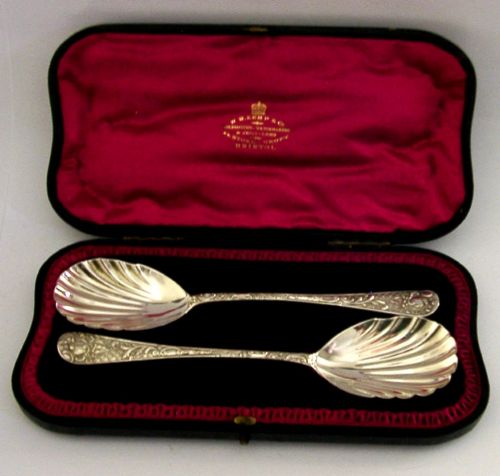
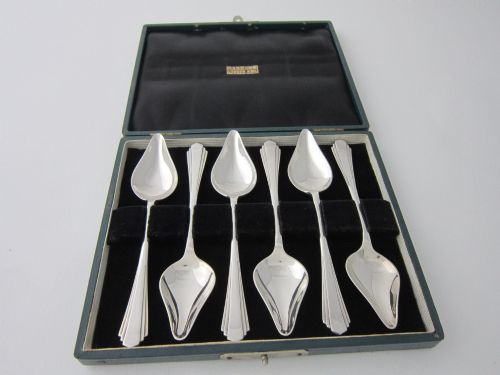
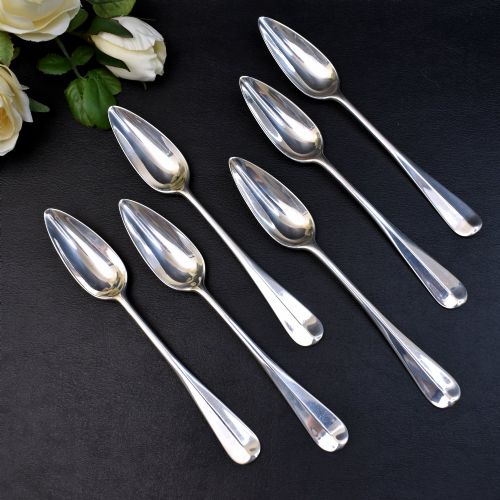
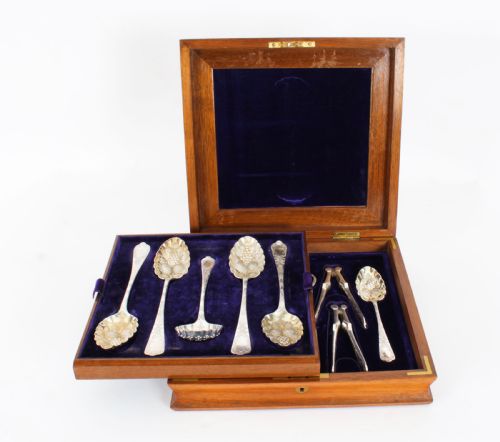
An antique fruit spoon set comprises matched pieces of flatware and cutlery designed specifically for serving fruit, grapefruit, berries, or nuts. These sets appear in various forms, including pairs, sets of six, or larger service combinations complete with nutcrackers and grape scissors.
Buyers browsing this selection will most frequently encounter Victorian, Georgian, and Art Deco examples fashioned from sterling silver or silver plate. Many of these sets survive inside their original fitted cases finished in leatherette, velvet, satin, or fabric.
The objects range from George III berry spoons dating back to the eighteenth century through to twentieth century grapefruit spoons. Serving spoons and dessert or fruit serving sets dominate the available styles.
Materials and methods of construction
Silversmiths utilised sterling silver and silver plate as the primary metals for the spoons, employing traditional manufacturing techniques such as casting and hammering. Many pieces feature intricate hand engraving upon the bowls and handles, alongside selective gilding.
Fitted presentation boxes utilise protective outer coverings of leatherette enclosing delicate interiors lined with silk, velvet, or satin. These textiles cushion the cutlery and preserve the finish of the metal during storage.
Victorian diners required specialist silver for every conceivable fruit, turning the simple act of eating a grapefruit into an engineered triumph.
Factors that influence quality
Quality rests upon the crispness of the engraved decoration and the integrity of the silver or silver plate over the underlying base metal. Pieces retaining their original fitted case in sound condition command greater interest among collectors.
The presence of hallmarks identifying specific makers and assay offices adds distinct weight to a set. The complexity of the design, from simple shell shapes to heavily ornamented berry spoons with sifter bowls, dictates the standard of execution.
Hamilton & Inches·Hukin & Heath
The Antique Fruit Spoon Set Glossary
- Berry spoon
- A large serving spoon, often gilded and heavily engraved with fruit and foliage designs long after its original manufacture. These pieces were adapted during the Victorian era for serving soft fruits.
- Grapefruit spoon
- A specialised piece of flatware featuring a serrated or pointed tip designed to segment citrus fruit easily. They gained popularity during the twentieth century.
- Sterling silver
- An alloy containing a high proportion of pure silver combined with other metals to ensure durability. British items usually bear hallmark stamps confirming this standard.
- Silver plate
- A base metal coated with a thin layer of pure silver through electroplating or older techniques. This method offered a more accessible alternative to solid silver.
- Sifter
- A spoon featuring a pierced bowl designed to strain liquid away from fruit when serving. These often appear within Georgian and Victorian presentation cases.
Antique Fruit Spoon Set: Frequently Asked Questions
What is an antique fruit spoon set used for?
These sets serve fruit courses, berries, grapefruit, and nuts at the dining table. They provide specialised utensils tailored for foods that require more than a standard dinner spoon.
Many sets include matching accessories like grape scissors and nutcrackers to handle specific items. They were traditionally kept in presentation boxes for formal dining occasions.
How do I care for silver fruit spoons?
Store silver and silver plate spoons within their lined presentation cases to protect the metal from tarnishing elements in the air. Regular gentle cleaning with a soft cloth helps maintain the finish without wearing down engraved details.
Avoid using harsh abrasive dips that can strip gilding or damage delicate patinas on older sterling silver items.
How do I identify a Georgian fruit spoon?
Georgian spoons typically date between the mid eighteenth century and the early nineteenth century, displaying characteristic hand wrought construction and distinct maker marks. Many of these early pieces are berry spoons that were later over-engraved.
Examining the shape of the bowl and the style of the handle engraving helps distinguish these older pieces from later Victorian reproductions.
Are cased sets original?
Many sets survive in their fitted presentation boxes lined with silk, satin, velvet, or fabric. These cases were designed specifically to house the matching cutlery and protect the polished metal.
Leatherette or fabric covered wooden boxes often feature fitted interior slots that correspond precisely to the shape of the spoons and serving utensils.