




Boxed Fruit Cutlery Set
A boxed fruit cutlery set gathers specialised implements for the dining table, housed in fitted presentation cases.
Boxed Fruit Cutlery Set
When you search for a boxed fruit cutlery set, you encounter dining implements designed for the consumption of fruit, dessert, and cheese. These services date from the Georgian, Victorian, Edwardian, and George V periods, extending into the mid twentieth century.
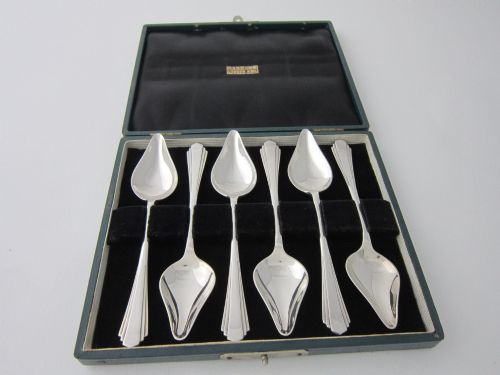
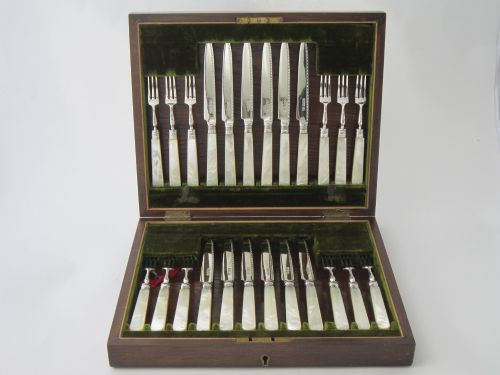
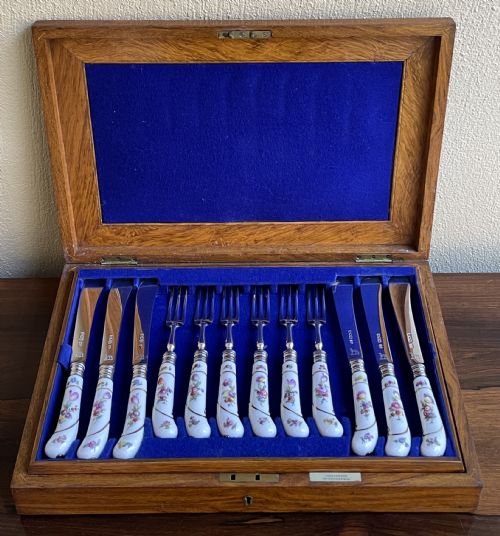
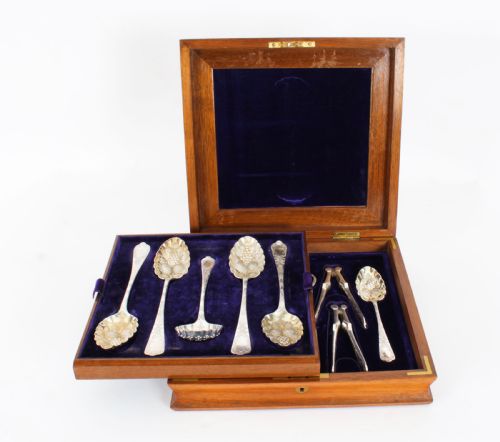
The sets typically comprise matched knives, forks, spoons, and occasionally serving pieces such as grape scissors, nutcrackers, and butter knives. They reside in fitted cases lined with velvet or silk, often cased in wood such as oak.
On this page, you are most likely to meet Victorian and Edwardian examples featuring mother of pearl handles paired with silver or silver plate. These domestic dining sets reflect the formal tables of the nineteenth and early twentieth centuries.
How they were made
Makers utilised natural mother of pearl for handles, shaping the iridescent shell to fit tangs securely. This material required careful hand-carving to match the contours demanded by fruit knives and forks.
Blades and tines were formed from sterling silver, silver plate, or steel. Silversmiths worked these metals alongside porcelain in selected dessert sets, while presentation boxes utilised fitted wood lined with textiles like velvet and silk.
Grape scissors appear alongside nutcrackers, proving past diners required specialist engineering just to tackle an after-dinner fruit bowl.
What varies in quality
The standard of a set rests upon the integrity of the fitted presentation box and the uniformity of the matched components. Complete sets containing auxiliary tools like nutcrackers or grape scissors display a higher degree of original conception than basic knife and fork groupings.
Material selection dictates the upper tiers of production, particularly where heavy gauge sterling silver meets finely figured mother of pearl handles. The precision of the interior lining and the preservation of the maker marks further separate standard utilitarian sets from presentation pieces.
Hukin & Heath·Jules Albrecht Geneve·Carrington
The Boxed Fruit Cutlery Set Glossary
- Mother of Pearl
- The internal pearlescent layer of shell used extensively for cutlery handles. It provides a smooth, tactile grip that contrasts with metal blades.
- Silver Plate
- A base metal coated with a thin layer of silver. This technique offered a bright finish at a lower cost than solid sterling silver.
- Sterling Silver
- An alloy of silver containing ninety-two point five percent pure silver by mass. It is the standard for high quality British table service.
- Dessert Set
- A collection of cutlery intended for the second course of a meal. These sets often include specialised forks and knives for fruit and pastry.
- Cased Canteen
- A fitted box or chest designed to hold a complete service of cutlery. The interior is partitioned to secure each individual piece safely.
Boxed Fruit Cutlery Set: Frequently Asked Questions
What are boxed fruit cutlery sets?
They are matched dining implements designed specifically for eating fruit, dessert, or cheese at the table. Housed in dedicated wooden presentation cases, they include knives, forks, spoons, and serving pieces.
These sets were produced across the Victorian and Edwardian eras, as well as the Georgian and George V periods. They reflect the formal dining practices of those times.
How were these sets used?
Families utilised them during formal dinners for the dessert course, where specialised cutlery prevented acidic fruit juices from tarnishing standard steel dining knives. The inclusion of tools like grape scissors and nutcrackers served specific table customs.
The fitted presentation boxes kept the implements protected and organised between uses. They remained stored in dining rooms until required for guests or special occasions.
How do I live with one?
You can display the presentation box on a sideboard or store the set safely within a cabinet until needed. The fitted interior keeps the pieces secure and orderly.
Care involves gentle cleaning suited to silver, plate, and mother of pearl. Avoiding harsh abrasives preserves the lining of the velvet or silk case.
How do I tell periods apart?
Georgian and early nineteenth-century sets often feature hand-carved mother of pearl and distinct blade shapes associated with Sheffield makers. Victorian and Edwardian examples frequently display registration marks or specific hallmarks reflecting the expansion of mass production.
Later George V and George VI pieces show updated assay office stamps and styles influenced by twentieth-century manufacturing. The materials of the case and the style of the script inside the lid offer further chronological clues.