
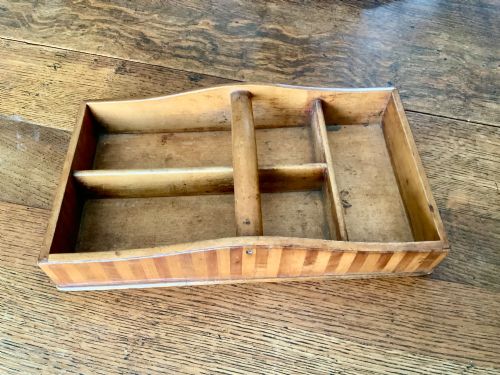
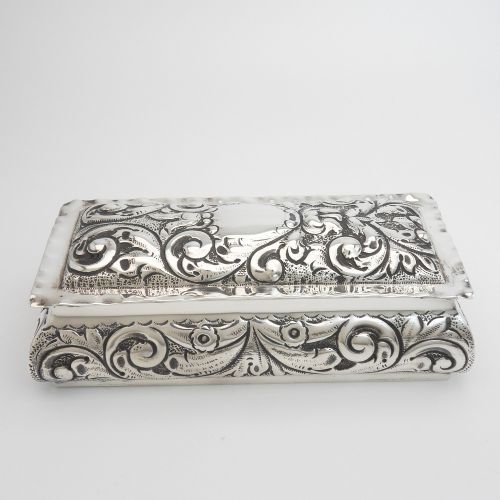


Victorian Desk Caddy
A victorian desk caddy brings orderly charm to a study, housing letters and papers in handsome woods or polished metals.
Victorian Desk Caddy
When you search for a victorian desk caddy, you are looking at nineteenth-century stationery boxes, correspondence boxes, and writing boxes designed to keep correspondence tidy. The pieces on this page span the Victorian period alongside related items like tea caddies and cigar boxes.
Most examples you will encounter take the form of wooden slope-front or dome-top stationery boxes. These containers feature fitted compartments inside for envelopes, stamps, and paper.
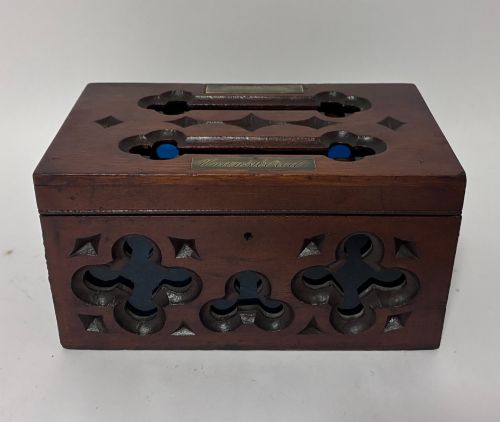
Makers utilised various decorative forms, including Gothic Revival brass mounts, boullework, and hand-painted porcelain panels set into burr walnut or rosewood.
Materials and construction
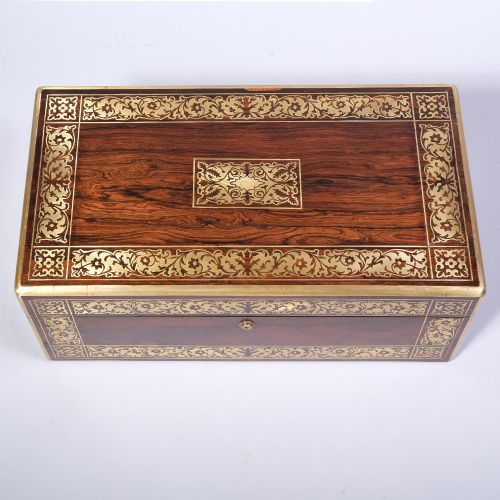
Cabinetmakers constructed the wooden bodies of these pieces from dense hardwoods like rosewood, burr walnut, and mahogany, often applying brass inlay or mounts for structural reinforcement and decoration.
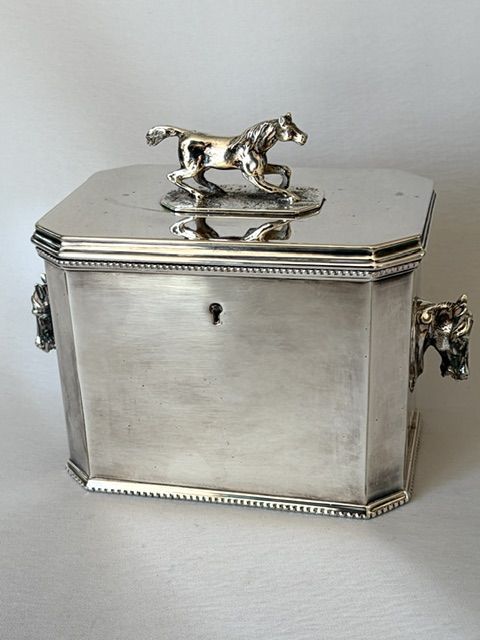
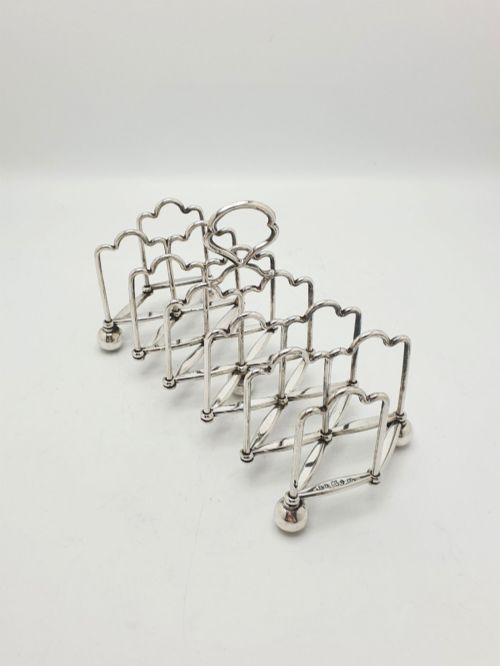
Metalwork pieces rely on cast brass, silver plate, or sterling silver, sometimes finished with gilt linings or intricate pierced detailing as seen on associated toast racks and inkstands.
Some nineteenth-century desk boxes secretly doubled as pocket watch stands, keeping time close at hand while sorting the morning post.
Judging quality in desk accessories
Quality rests in the choice of timber veneer and the precision of the brass or boulle inlay. Finely figured burr walnut and rich rosewood sit at the upper end of the scale.
Internal complexity also separates standard boxes from superior examples. Fitted velvet linings, porcelain plaques, and original locking mechanisms distinguish the finer pieces.
A & J Zimmerman Ltd·Elkington
The Victorian Desk Caddy Glossary
- Stationery box
- A desk accessory designed to hold writing paper and envelopes upright in tiered slots. These boxes often feature sloping lids or double doors.
- Correspondence box
- A container specifically built for sorting and storing incoming and outgoing letters. They frequently match the style of larger writing slopes.
- Boullework
- An elaborate form of marquetry using brass and tortoiseshell inlaid into a dark wood ground. It appears on decorative nineteenth-century boxes.
- Gothic Revival
- An architectural and decorative style popular during the Victorian period. It is characterised by pointed arches, heavy brass strapwork, and medieval motifs.
- Sterling silver
- A silver alloy containing ninety-two point five percent silver by mass. Hallmarks on these components reveal the assay office and date of manufacture.
Victorian Desk Caddy: Frequently Asked Questions
What is a victorian desk caddy used for?
These pieces were originally built to organise letters, envelopes, and writing implements on a library or study desk. They kept loose correspondence private and protected from dust.
Today, they serve a similar practical function for holding modern mail, stationery, or desk clutter while adding period character to a room.
How do I date a stationery box?
Dating relies on timber choices, construction methods, and stylistic cues like Gothic Revival brass mounts or boullework. Stamped maker marks and silver hallmarks provide exact years.
Earlier nineteenth-century pieces often use solid mahogany or rosewood, whilst mid-period examples favour burr walnut veneers and fitted porcelain plaques.
Where should I place a desk box?
They sit naturally on top of a writing desk, bureau, or console table where their fitted compartments remain accessible. Keeping them out of direct sunlight protects delicate wood veneers.
Positioning them away from heat sources prevents the timber from warping and keeps internal velvet linings intact.
Are keys usually included with these boxes?
Many nineteenth-century boxes lost their small working keys over generations of use. Lock mechanisms often remain inside even if the key is absent.
A specialist locksmith can sometimes supply a replacement key if the original lock mechanism is intact.