

Victorian Deep Buttoned Chair
A victorian deep buttoned chair provides deep sprung comfort paired with traditional upholstery skills that anchor period interiors.
Victorian Deep Buttoned Chair
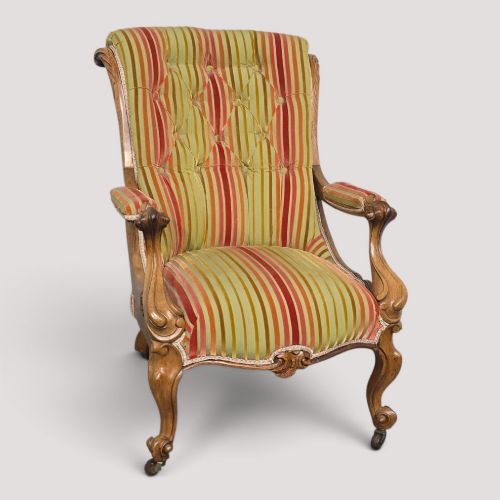
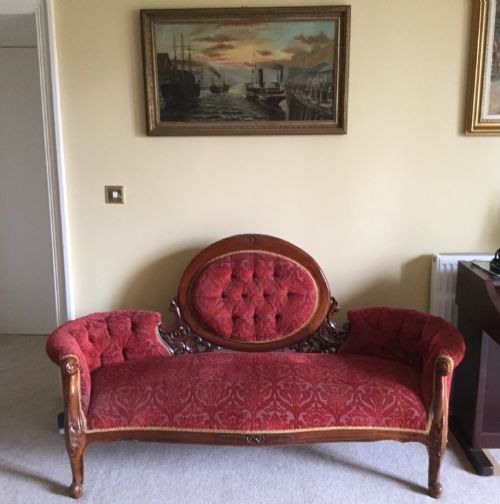
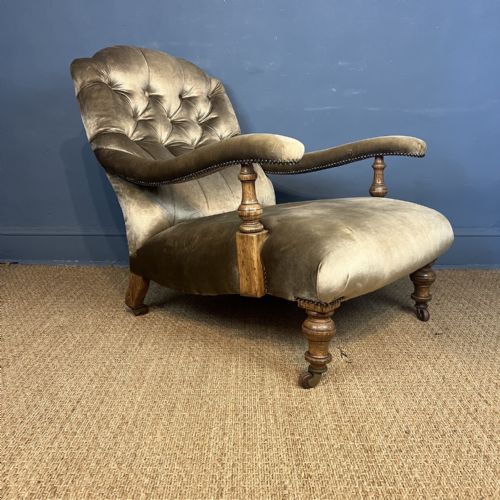
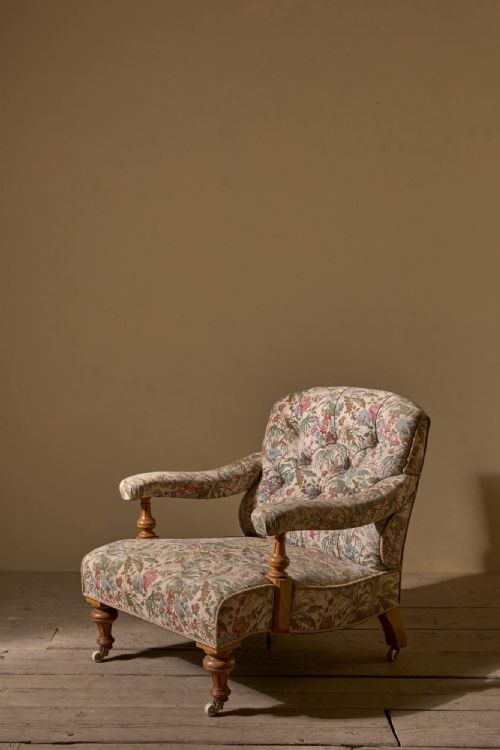
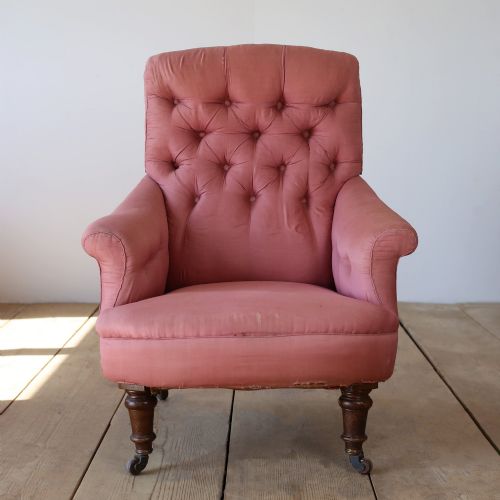
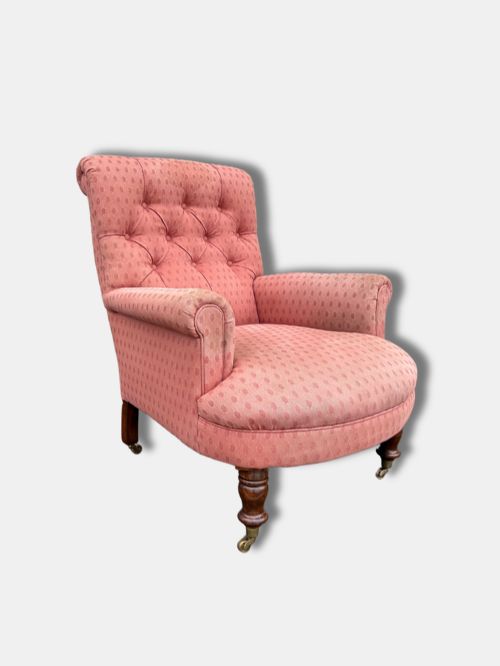
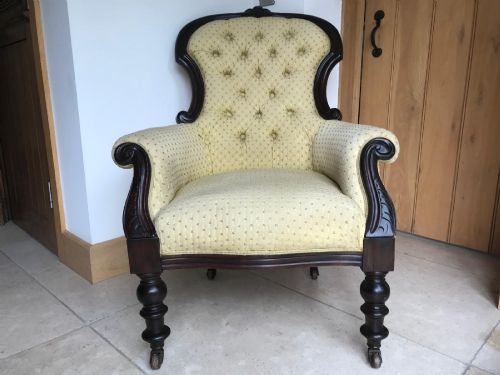
A victorian deep buttoned chair brings together nineteenth-century seating forms including library armchairs, nursing chairs, club chairs, and chaise longues. The most common examples on this page are upright library and reading chairs built with sturdy mahogany, oak, or walnut frames.
Makers and makers' styles range from plain country house models to grander buttoned club chairs and parlour suites. These pieces combine heavy timber construction with padded backs designed for upright support or relaxed reading.
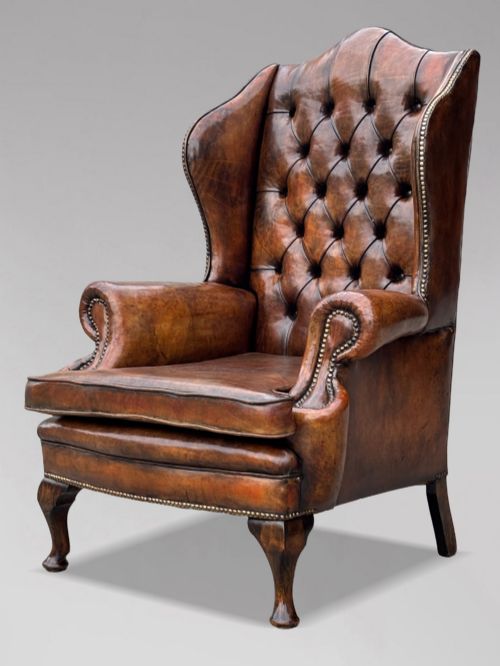
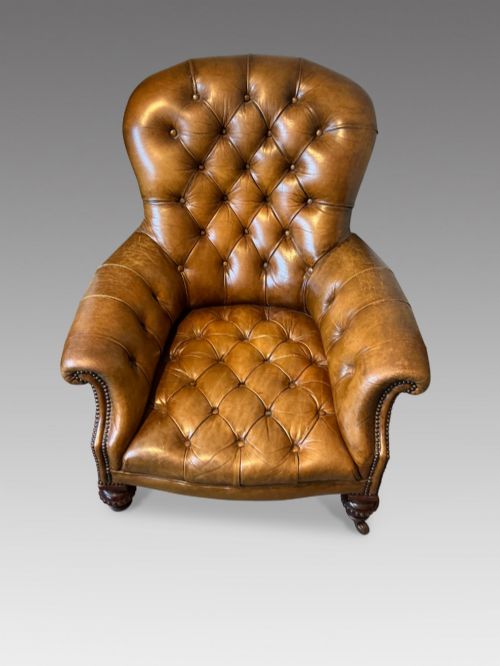
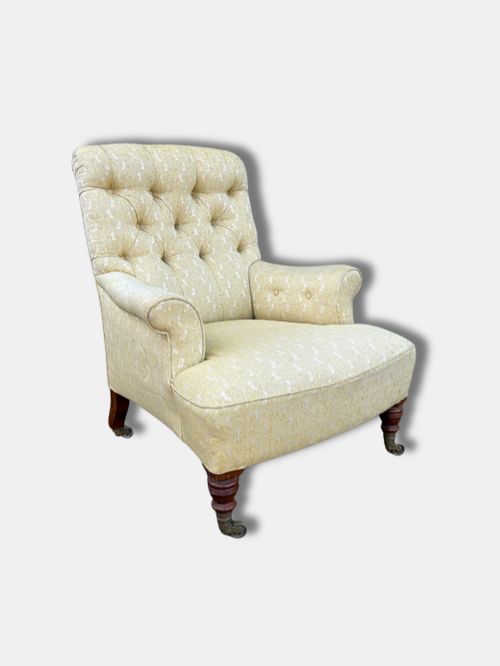
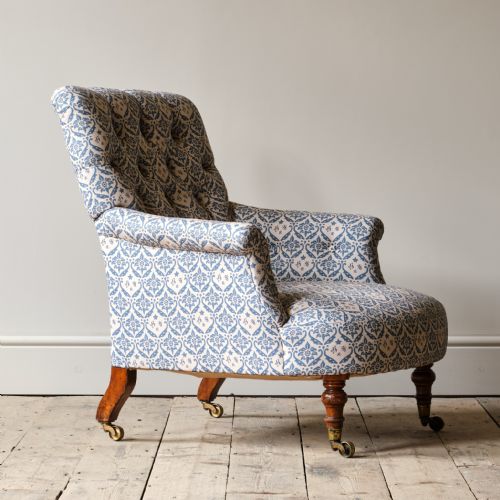
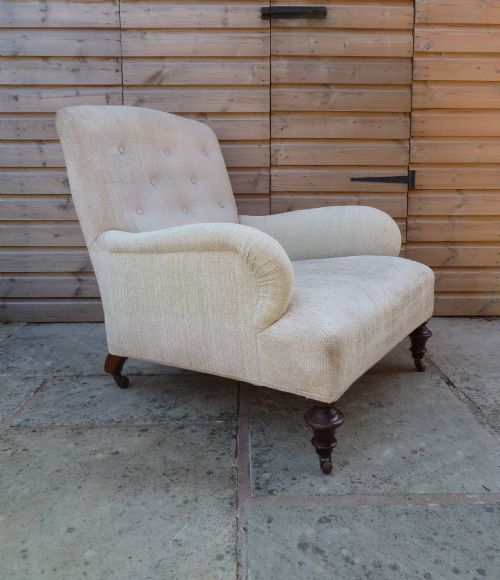
The defining feature across these diverse formats is the diamond-shaped tufting secured by upholstery tacks or twine. This technique gathers the fabric tightly against the internal stuffing to create rigid geometric comfort.
Materials and construction
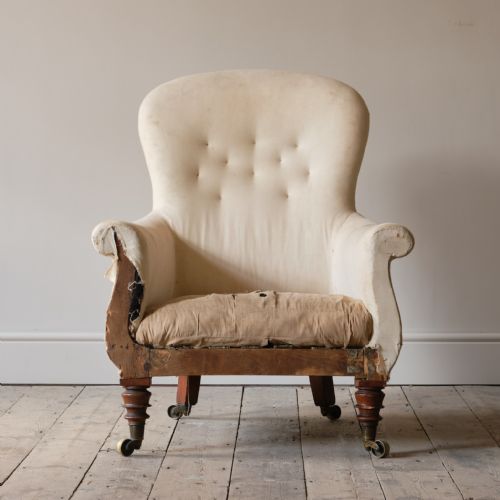
Frames rely on dense hardwoods such as mahogany, oak, rosewood, and walnut, joined with traditional tenon or dowel construction to bear the weight of heavy springing. Underneath the final layer, makers used hessian, calico, and brass tacks to anchor the internal stuffing securely.
Deep buttoning involves pulling twine through multiple layers of horsehair or stuffing and securing it to the wooden webbing framework. The outer cover then takes form in leather, velvet, brocade, or fabric, finished with tightly pleated folds between each button.
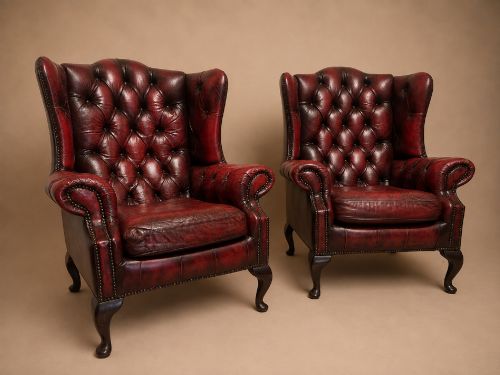
Upholstery choices span traditional brown leather, green leather, burgundy brocade, velvet, and calico.
Judging the execution
Quality rests on the precision of the tufting and the rigidity of the underlying frame. Superior examples maintain symmetrical diamond patterns across the backrest with even tension on every button.
The choice of primary timber and secondary woods dictates the foundational strength of the seating. Finer frames feature carved mahogany or walnut, while simpler vernacular versions utilise oak or beech.
Howard & Sons·Holland & Sons·Gillows Of Lancaster·Mellier & Co
The Victorian Deep Buttoned Chair Glossary
- Button back
- An upholstery method where buttons are pulled deep into the padding to form a geometric diamond pattern. This technique secures the internal stuffing while creating a firm supportive surface.
- Library armchair
- A sturdy reading chair with padded arms and a high back built for long hours of study. These pieces typically feature dark leather or heavy wool upholstery.
- Chesterfield
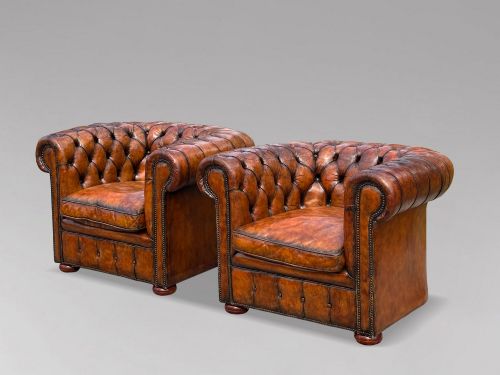
- A heavily padded seating form characterised by rolled arms and uniform deep buttoning across the back and sides. This style became prominent in elite nineteenth-century gentlemen's clubs.
- Spoon back
- A curved, oval chair back shaped like the bowl of a spoon to fit the human spine. This delicate nineteenth-century form usually appears on walnut or mahogany parlour chairs.
- Tub chair
- A curved seating form where the back and arms merge into a single rounded enclosure. These chairs offer enclosed comfort and compact proportions.
Victorian Deep Buttoned Chair: Frequently Asked Questions
How do I care for nineteenth-century leather upholstery?
Apply a neutral leather balm sparingly to nourish the hide and prevent cracking along the button folds. Keep these chairs away from direct heat sources to preserve the original surface.
Dust regularly with a dry cloth and avoid modern chemical cleaners that strip historical finishes.
Where were these chairs used in a Victorian home?
Library armchairs and reading chairs sat beside fireplaces and bookshelves in private studies and withdrawing rooms. Lighter nursing chairs and spoon-back models belonged in bedrooms and formal parlours.
Larger club chairs and chesterfields furnished smoking rooms and gentlemen's clubs where heavy usage demanded durable construction.
What is the difference between a club chair and a library chair?
Club chairs feature low, deep proportions covered in thick dark leather designed for relaxed lounging. Library chairs offer a more upright posture suited for reading at a desk or table.
Library versions often incorporate open wooden arms or carved mahogany frames, whereas club chairs hide their structural woodwork beneath heavy upholstery.
How do I identify a nineteenth-century frame?
Inspect the underside and interior webbing for hand-forged tacks, hessian backing, and traditional joinery methods. Woods like solid mahogany, rosewood, and oak indicate standard nineteenth-century production standards.
Look for subtle hand-carved details on the legs and arm terminals that distinguish antique workshop pieces from later reproductions.