





Victorian Damask Nursing Chair
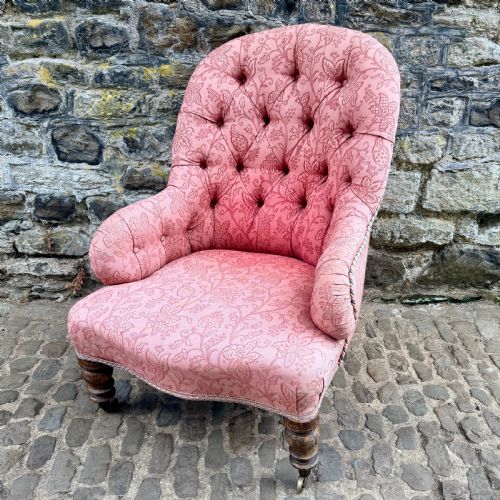
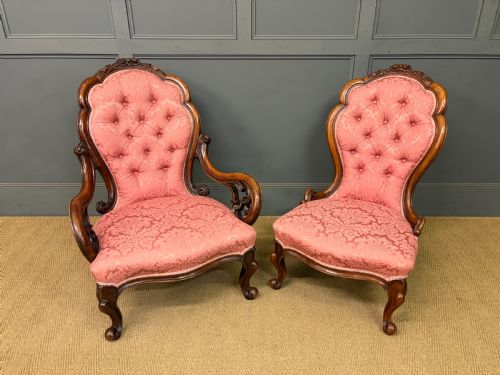
These Victorian damask nursing chairs offer low-slung seating and button-tufted upholstery designed for nineteenth-century parlours and bedrooms.
Victorian Damask Nursing Chair
A victorian damask nursing chair combines low seating with supportive high backs tailored for nineteenth-century domestic interiors.
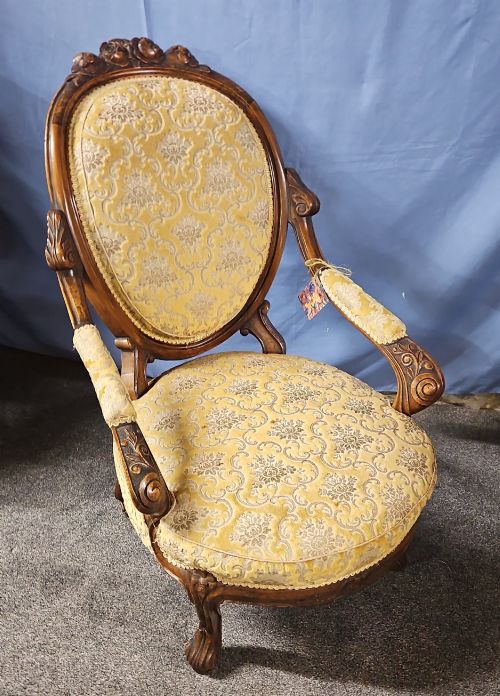
Common forms include spoon-back salon seats, slipper chairs, and ladies fireside chairs upholstered in damask and fabric.
Construction and materials
Timbers such as walnut, rosewood, and mahogany provide rigid structural frames often shaped with carved details and cabriole legs.
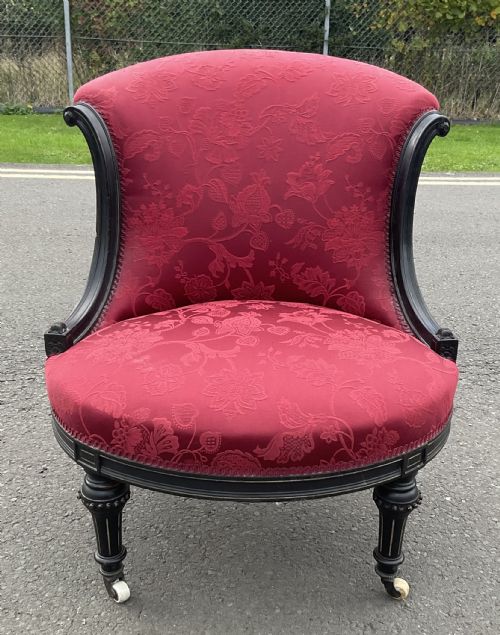
Upholstery relies on button-tufting and damask fabric, occasionally supported by brass castors and ceramic components.
Victorian Damask Nursing Chair Retail Price Guide 2026
Typical asking prices for victorian damask nursing chair among the pieces listed under this phrase on Sellingantiques today, from the lower quarter to the upper quarter. They describe what is for sale here now, not the wider market.
Even chairs intended for quiet corners manage to sport elaborate cabriole legs.
Judging the work
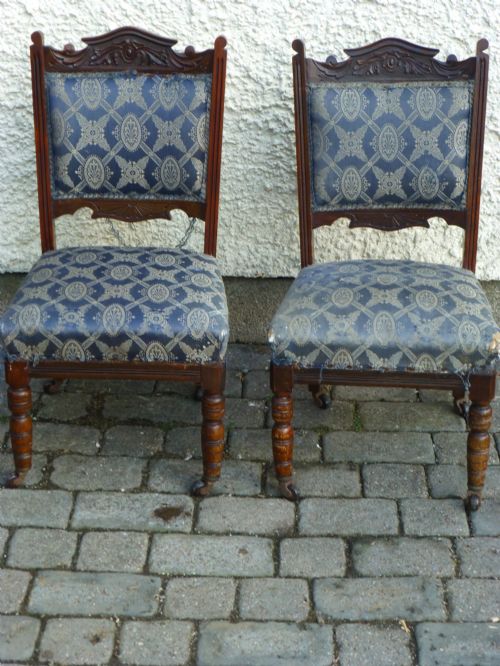
Superior examples exhibit refined timber carving on spoon-backs and frames, whereas simpler pieces show plain mouldings.
The integration of denser hardwood frames and specific stylistic details like ebonised finishes distinguishes finer workshop output.
The Victorian Damask Nursing Chair Glossary
- Damask
- A reversible figured fabric traditionally woven with patterns visible on both sides. It provides the patterned textile covering seen on many period seats.
- Spoon-back
- A padded chair back shaped like the bowl of a spoon to fit the human spine. This ergonomic curve defines mid-nineteenth-century seating.
- Prie-Dieu
- A devotional prayer chair featuring an extra-tall back designed for kneeling. These pieces often share the low proportions of nursing seats.
- Cabriole
- A furniture leg that curves out and then narrows inward resembling animal limbs. It is a defining feature on many nineteenth-century frames.
Victorian Damask Nursing Chair: Frequently Asked Questions
Where were nursing chairs placed?
These low seats sat primarily in nineteenth-century bedrooms and private drawing rooms for dressing and resting.
Their compact scale allowed them to fit easily beside fireplaces and dressing tables.
How do I spot a true Victorian piece?
Examine the timber frame for traditional construction methods like hand-carved walnut or rosewood components.
Look for period-specific styles such as rococo revival, spoon-backs, or aesthetic movement ebonising.
Can I use these chairs every day?
Most pieces function well for occasional seating in modern living spaces and bedrooms.
Check the internal webbing and padding to ensure structural stability before daily use.
Why are some listed for reupholstery?
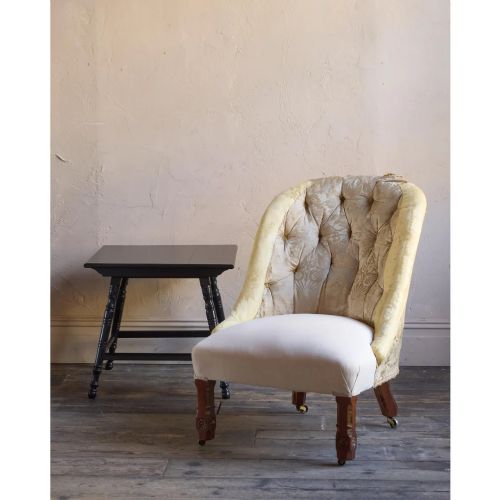
Older textile coverings wear out over generations and require replacement to preserve the underlying frame.
Buying an un-upholstered piece allows you to choose your own damask fabric.