
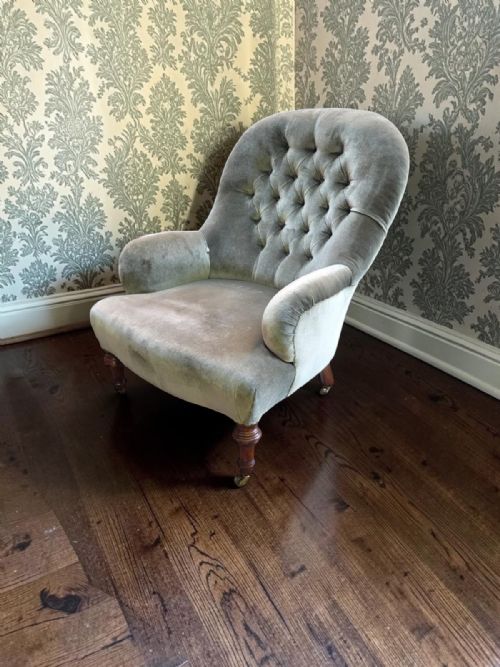



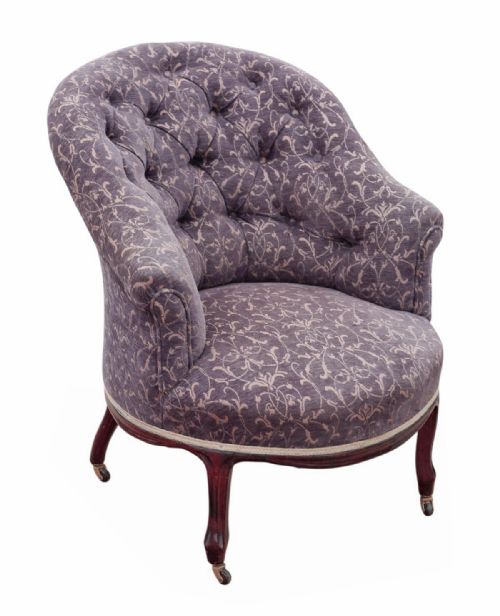


Tufted Slipper Chair
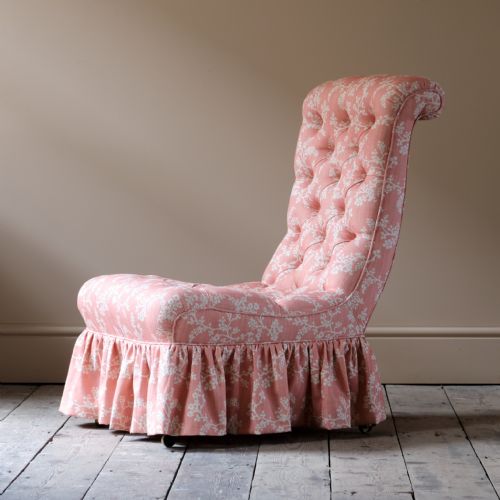
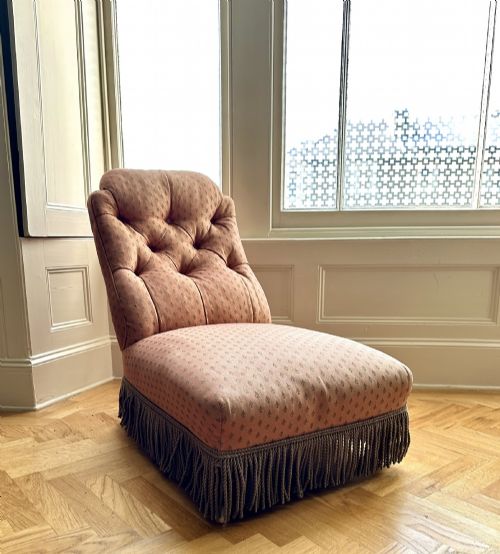
Tufted slipper chairs are low, comfortable seats designed for bedrooms and parlours, offering a compact footprint paired with deep buttoning.
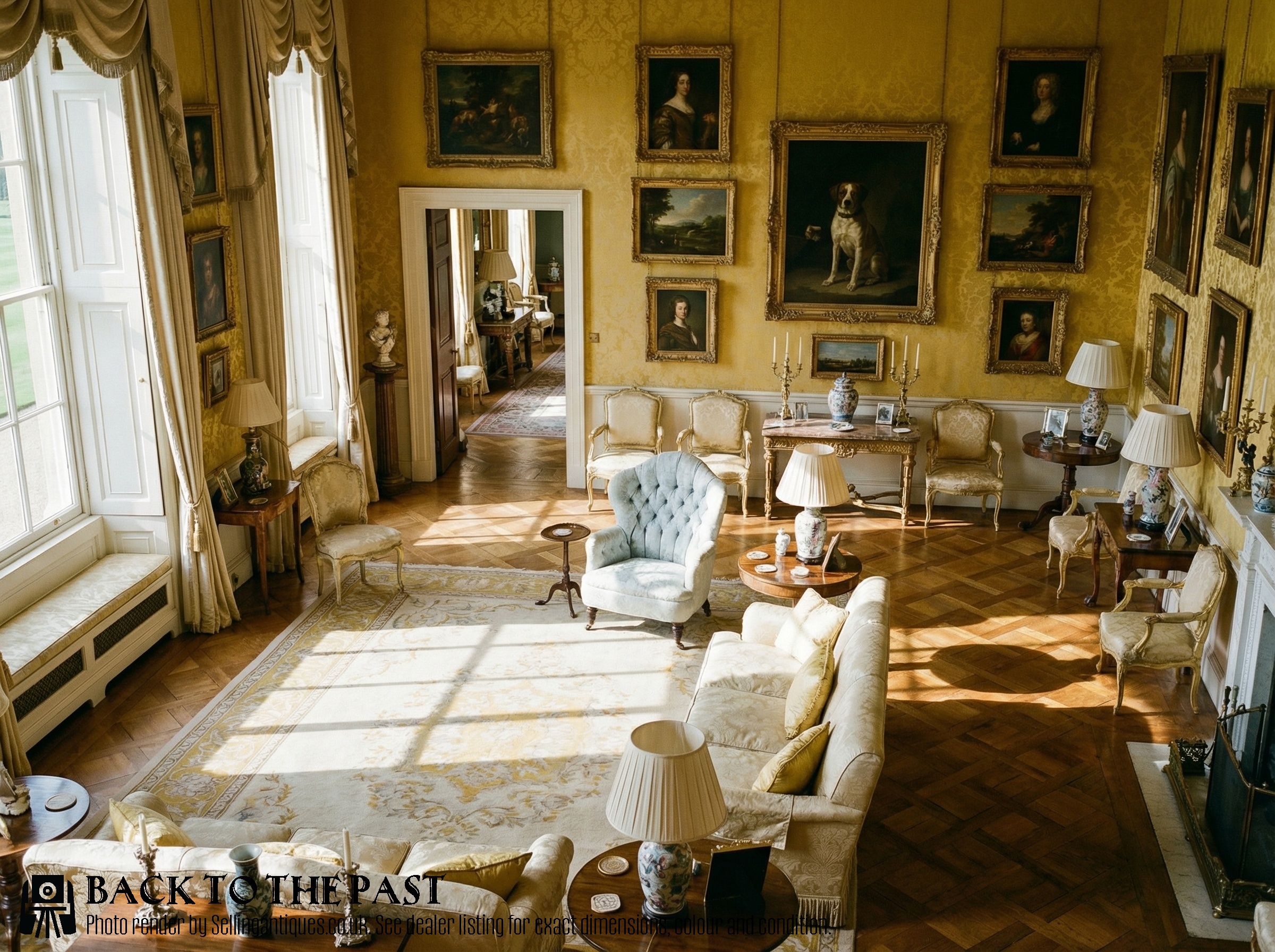
Tufted Slipper Chair
When you search for a tufted slipper chair, you encounter low-slung seating historically designed for the bedroom or dressing room, where ladies could sit comfortably to put on footwear. The pieces found here span the Victorian and Edwardian periods, stretching from mid-nineteenth century examples up to nineteen hundred.
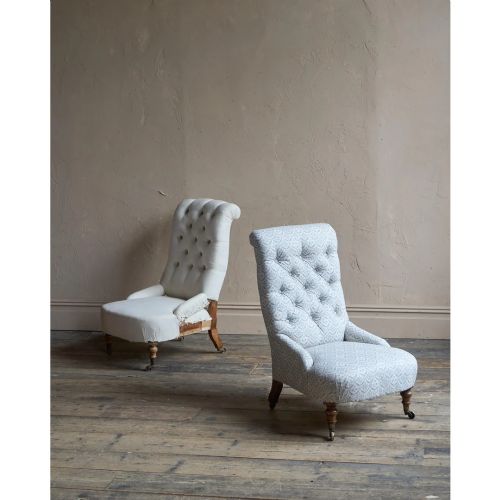
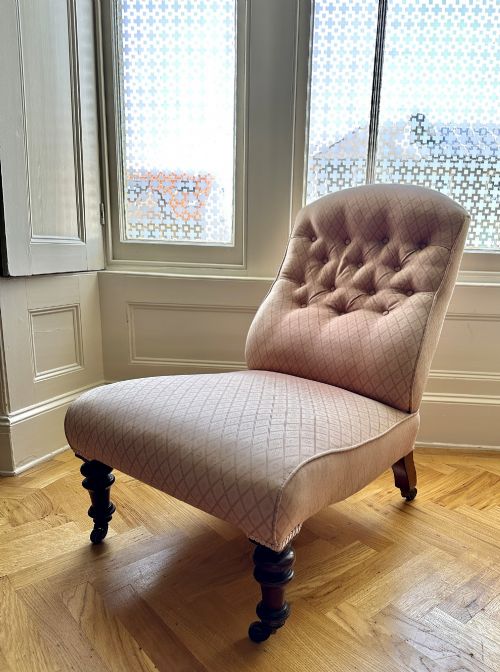
You meet various forms within this selection, including nursing chairs, tub chairs, and spoon-back designs alongside dedicated slipper chairs. Frames typically sit low to the floor, often supported on wooden or ceramic castors.
Makers and workshops of the nineteenth century produced these chairs in mahogany, walnut, and rosewood, whilst French examples show ebonised or gilt finishes. Upholstery ranges from vintage linen and cotton to velvet and leather.
How they were made
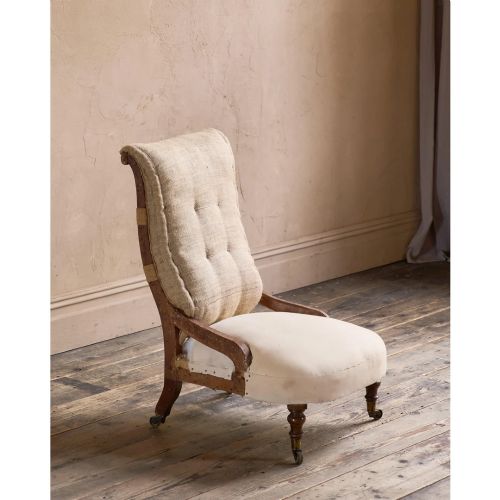
Frames rely on sturdy timbers such as mahogany, walnut, rosewood, and timber frames fitted with brass castors or ceramic wheels. Cabinet makers shaped the wood into curved, spoon-backed, or scroll-sided silhouettes.
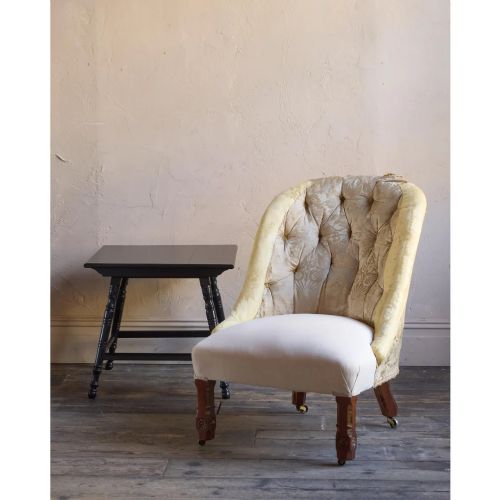
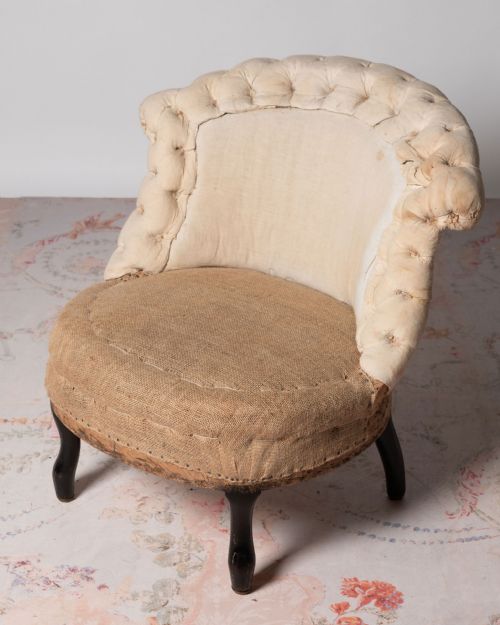
Upholstery defines the type, utilising deep buttoning across fabric, velvet, leather, and linen. Interior stuffing often includes traditional materials secured with iron backs or webbing.
What varies in quality
The distinction between ordinary and exceptional chairs rests in the integrity of the timber frame and the precision of the upholstery work. Maker attribution, such as pieces originating from workshops like Howard and Sons or Gillows, elevates the standing of a chair.
Proportion and carving detail also separate pieces, with finer examples displaying carefully carved walnut or rosewood frames, balanced proportions, and retained original castors rather than replacement elements.
Howard and Sons·Gillows·Holland and Sons
The Tufted Slipper Chair Glossary
- Slipper chair
- A low-seated upholstered chair designed originally for a bedroom or dressing room without arms to allow easy dressing.
- Button back
- An upholstery technique where buttons are pulled deep into the padding in a diamond pattern to secure the filling and create texture.
- Spoon back
- A padded chair back shaped like the bowl of a spoon, conforming naturally to the curve of the human spine.
- Castor
- A small wheel attached to the base of furniture legs to allow smooth movement across carpets and floorboards.
Tufted Slipper Chair: Frequently Asked Questions
What is a tufted slipper chair?
A tufted slipper chair is a low, armless bedroom or parlour seat featuring deep button upholstery. These nineteenth-century chairs sit close to the floor for comfort during dressing.
They often feature turned wooden legs, occasionally mounted on castors, and curved backs designed to support the sitter in a relaxed posture.
Where were slipper chairs used?
Slipper chairs historically belonged in bedrooms, dressing rooms, and boudoirs. Their low height made them practical for putting on shoes or stockings.
Later Victorian and Edwardian examples also found places in small drawing rooms and parlours as accent seating due to their compact scale.
How do I date a Victorian chair?
Dating relies on timber choices, frame shapes, and upholstery styles. Mid-nineteenth-century pieces often utilise rosewood or walnut with spoon-backs.
Later Edwardian examples tend to show lighter wood frames and distinct fabric choices such as vintage linen or patterned cotton.
What woods were used for frames?
Framing timbers include mahogany, walnut, rosewood, and general hardwood timber. Some French nineteenth-century pieces feature ebonised and gilt finishes.
Visible woodwork is typically polished to highlight the grain of the timber, whilst internal framing uses sturdy structural woods.