


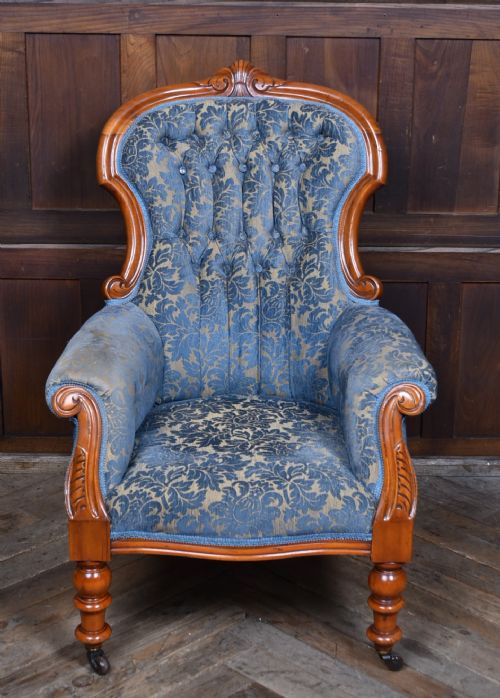


Tufted Blue Armchair
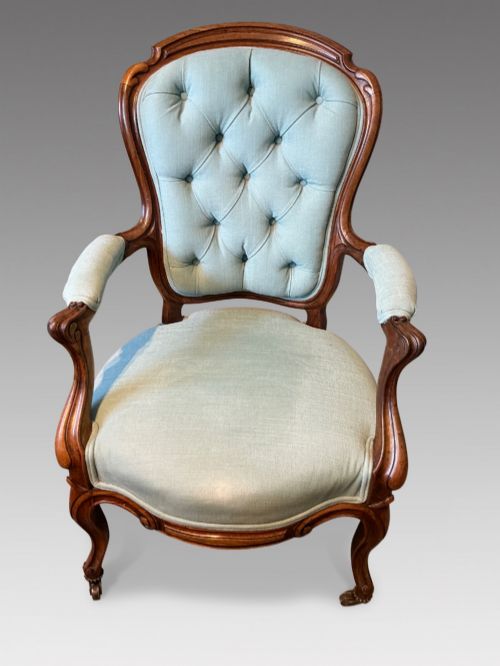
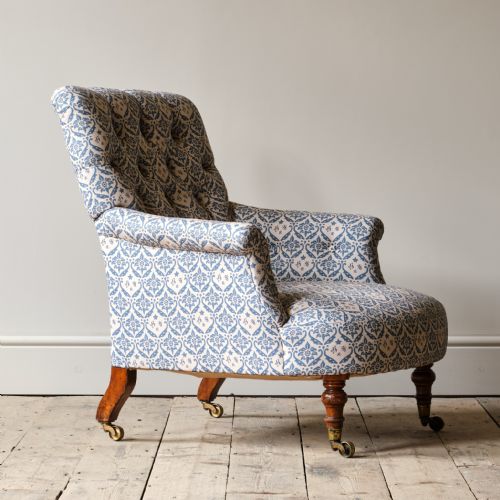
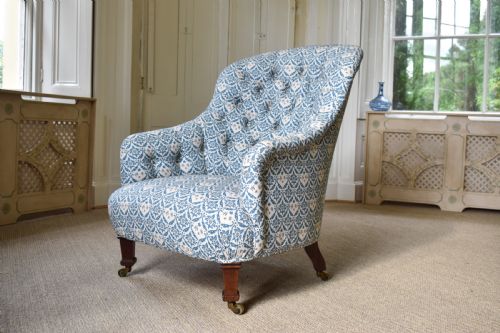
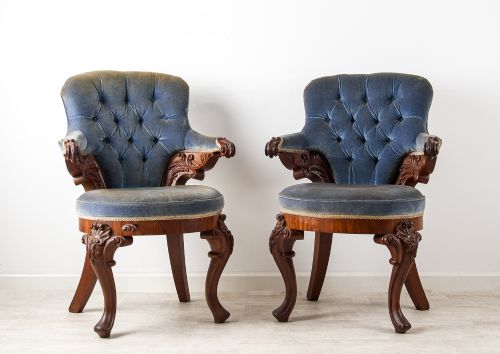
A tufted blue armchair brings deep colour and buttoned comfort into a room, drawing the eye with its tactile upholstery and sturdy timber frame.
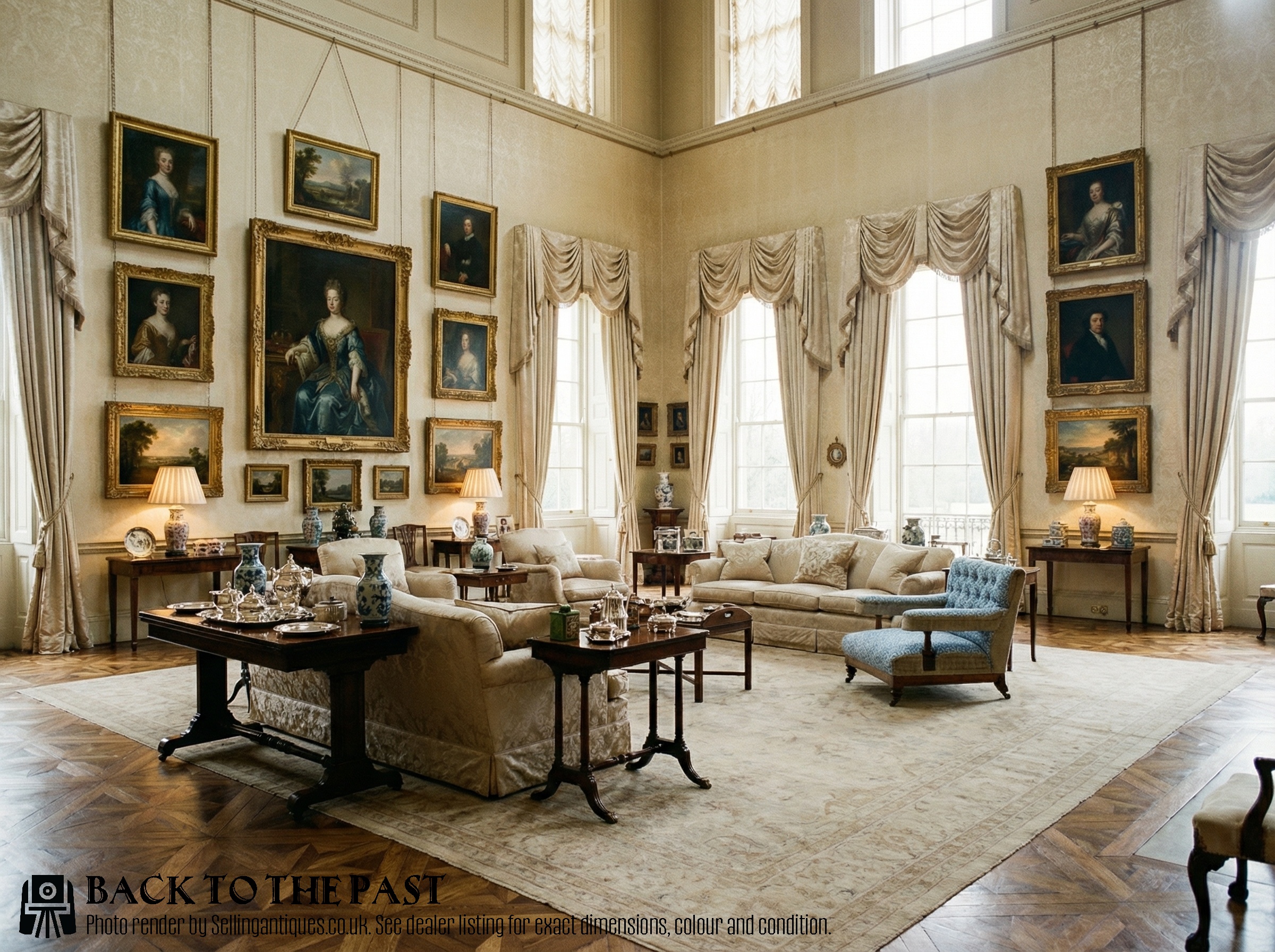
Tufted Blue Armchair
A tufted blue armchair sits firmly in the Victorian tradition, spanning the nineteenth century with buttoned upholstery and robust frames of mahogany, walnut, and rosewood. These chairs combine deep seats with upholstered backs designed for comfort by the hearth or in the library.
The evidence shows forms ranging from standard armchairs and rocking chairs to slipper chairs and barrel backs. Makers such as Howard and Sons appear alongside country house pieces, offering varied interpretations of nineteenth-century seating.
Victorian examples dominate the selection, utilising fabric, velvet, and cotton over wooden or iron frameworks. Pieces date from the early nineteenth century through to the nineteen-twenties, showing shifts in revival styles.
How they were made
Makers constructed the foundational frames using hardwoods like mahogany, walnut, and rosewood, occasionally incorporating iron for extra support in country house models. Skilled artisans carved decorative elements into the timber before applying upholstery.
Upholsters layered stuffing within covers of cotton, fabric, and velvet, securing the padding with deep button tufting. This technique created the characteristic textured surface and held the internal materials firmly in place.
Listings demonstrate that nineteenth-century seating predominantly utilises mahogany, walnut, and rosewood alongside velvet, cotton, and fabric upholstery.
What varies in quality
The refinement of the timber carving and the integrity of the underlying wooden frame distinguish finer examples from simpler country house pieces. Superior chairs display balanced proportions and precise joinery that withstands daily use.
The execution of the button tufting and the choice of textile, whether rich velvet or durable cotton, reflect the original tier of production. Maker attribution, particularly to firms like Howard and Sons, adds notable distinction.
Howard and Sons
The Tufted Blue Armchair Glossary
- Button back
- A style of upholstery where buttons are pulled deep into the padding to create a quilted, geometric pattern of tufts. This method keeps internal stuffing evenly distributed across the backrest.
- Slipper chair
- A low-set bedroom chair traditionally made without arms to allow women space to put on shoes and garments. These pieces feature compact proportions and deep seats.
- Barrel back
- An armchair featuring a semicircular rounded backrest that curves continuously into the arms. This enclosed shape offers sheltered seating.
- Rococo Revival
- A nineteenth-century design movement inspired by eighteenth-century French styles, characterised by asymmetrical curves, naturalistic carving, and ornamental flourishes.
- Bentwood
- Wood that has been heated with steam and bent into curved structural components. This technique allows for lightweight yet resilient chair frames.
Tufted Blue Armchair: Frequently Asked Questions
How do I identify a Victorian armchair?
Look for dense timber frames in mahogany or walnut combined with buttoned upholstery and revival styling. Proportions tend to be deep and solid, reflecting nineteenth-century domestic comfort.
Examine the turning of the legs and the heft of the woodwork, which generally display the substantial construction methods typical of the period.
Where should I place a slipper chair?
Slipper chairs suit bedrooms, dressing rooms, and smaller corners where standard armchairs might overwhelm the space. Their low seat height makes them accessible and visually light.
Pair one with a low dressing table or use it as an occasional seat where depth is required without a high frame.
How were buttoned chairs constructed?
Artisans packed internal stuffing between the wooden frame and the outer textile, then threaded twine through to deep-set buttons. This technique secured the padding against shifting.
The tension creates the signature tufted surface seen on nineteenth-century velvet and cotton upholstery.