



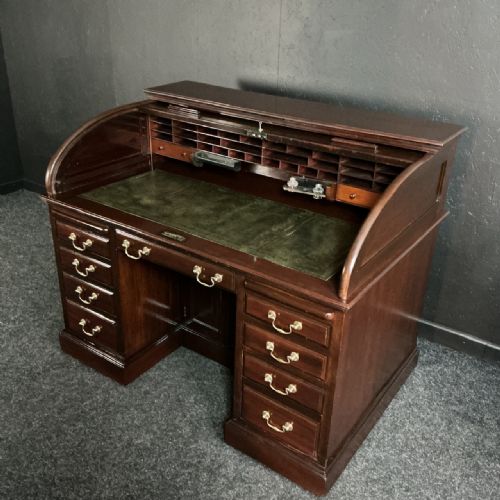


Victorian Cylinder Top Bureau
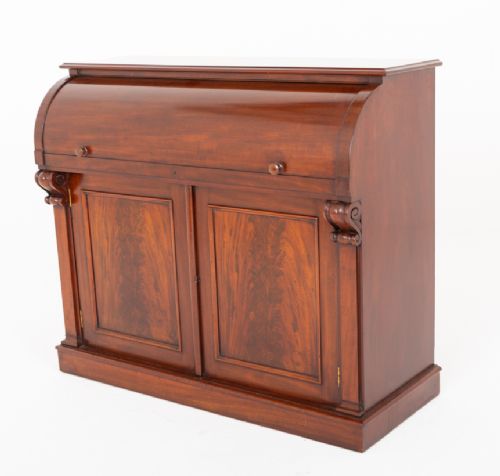
A victorian cylinder top bureau conceals your working papers beneath a curved wooden lid that glides shut.

Victorian Cylinder Top Bureau
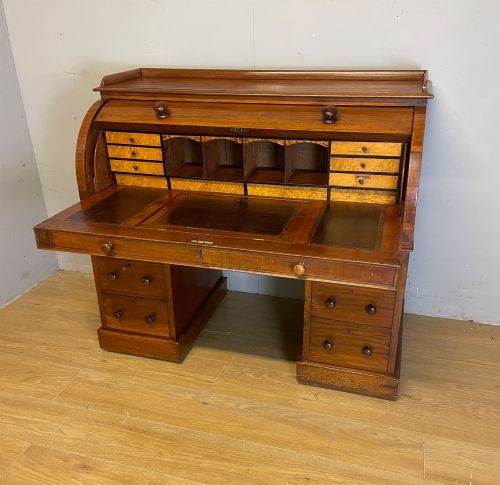
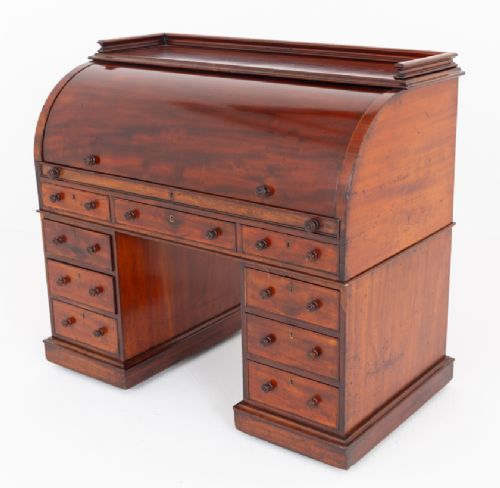
A victorian cylinder top bureau is a writing desk featuring a rounded wooden shutter that rolls back to reveal a fitted interior of pigeonholes and small drawers. Most examples found here date from the nineteenth century, spanning Victorian, Edwardian, and William IV periods.
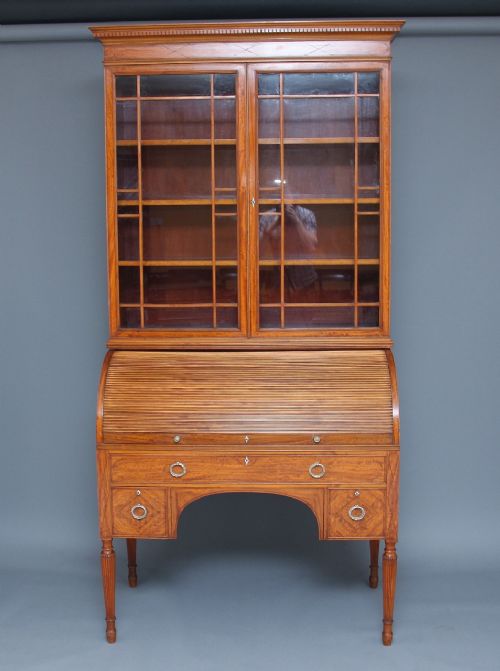
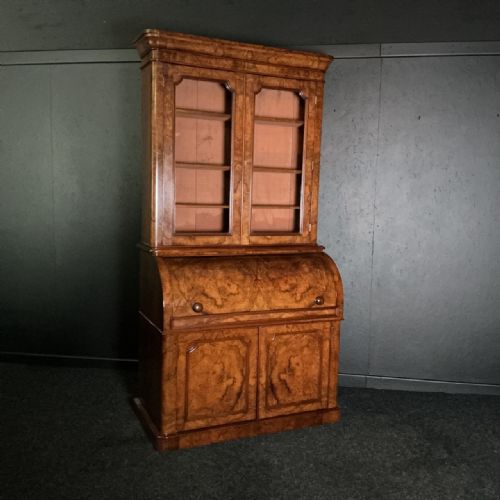
The form typically combines a writing table with a cylindrical cover, though some variations include upper glazed bookcases. Mahogany and walnut dominate the selection, often enriched with satinwood or oak depending on the regional style.
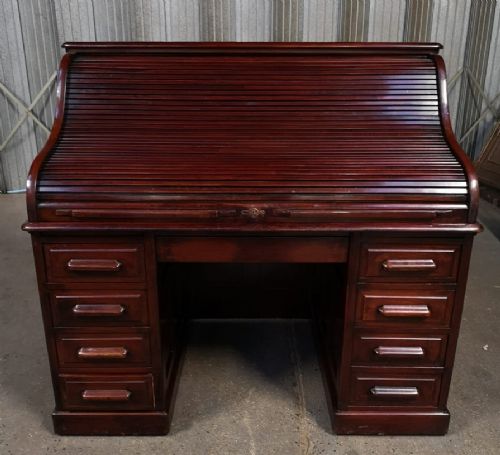
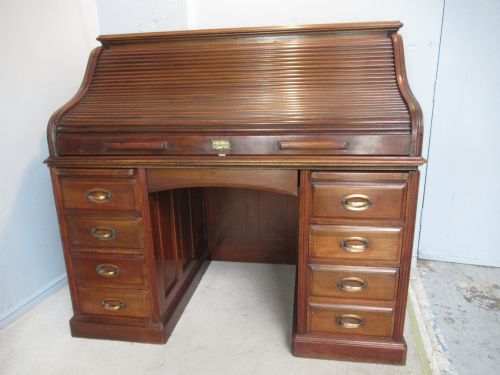
Buyers encounter pedestal formats alongside more compact writing tables suited for domestic studies. These pieces bridge the gap between formal cabinetry and practical home writing furniture.
Materials and construction methods
Cabinetmakers utilised solid timbers and fine veneers, selecting mahogany, walnut, and oak for their structural strength and rich grain. Satinwood provided striking contrast through banded inlay work and decorative borders.
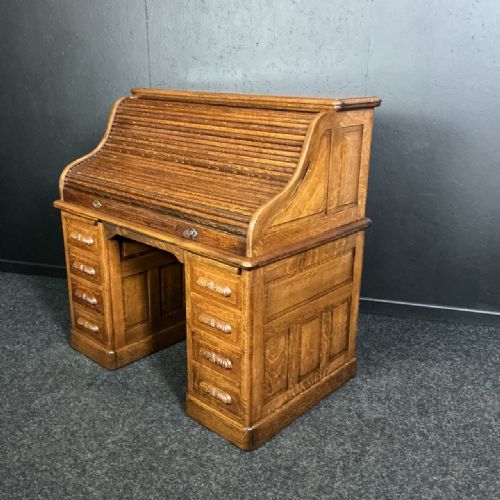
The curving cylinder lid relies on tambour strips or a solid bent panel running smoothly within precision-cut side grooves. Brass handles, leather writing surfaces, and glass panel doors completed the construction of these complex writing cabinets.
Desk formats range from compact Edwardian writing tables to massive oak pedestal workstations.
Distinctions in craftsmanship
Quality rests in the smooth action of the rolling cylinder and the tightness of its fit within the side channels. Superior pieces maintain seamless movement without sticking or sagging across the span.
Finer desks display careful timber selection, matching grain patterns across the fall front and drawer faces. The interior arrangement of concealed compartments and secondary woods also separates standard production from exceptional cabinetwork.
Edwards & Roberts·Wells Fargo Wooton·Boston Chair Company·Wiggers
The Victorian Cylinder Top Bureau Glossary
- Cylinder top
- A curved wooden shutter that rolls back into the body of the desk to expose the writing surface. This mechanism protects the desk interior when closed.
- Pedestal desk
- A heavy writing table built upon two separate banks of drawers that rest directly on the floor. These provide substantial storage beneath the main writing surface.
- Tambour
- A flexible shutter made from narrow strips of wood glued to canvas or leather backing. It allows the wooden lid to follow a curved track.
- Pigeonhole
- A small vertical compartment fitted inside the desk interior for sorting letters and documents. They sit above the pull-out writing slide.
- Banded inlay
- A narrow strip of contrasting wood veneer set around the edges of drawers or top panels. This decorative technique frames the primary timber.
Victorian Cylinder Top Bureau: Frequently Asked Questions
How does the cylinder mechanism work?
The curved wooden lid runs along recessed tracks cut into the interior sides of the desk frame. Pulling the handle guides the cylinder smoothly upward into the desk body.
This action simultaneously reveals or conceals the writing surface and interior drawers without requiring a traditional hinged fall-front flap.
Where should I place a cylinder bureau?
These desks require adequate floor space, particularly pedestal versions that extend outward into the room. Position them away from direct sunlight to protect polished mahogany and walnut surfaces.
Ensure there is sufficient clearance behind and above the desk for the rolling mechanism to operate freely.
How do I care for the leather insert?
Clean the leather writing surface gently with a slightly damp cloth, avoiding harsh chemical cleaners that strip the original dye. Periodic application of neutral leather balm preserves the suppleness of the material.
Keep sharp objects and excessive moisture away from the skiver to prevent permanent staining and surface tears.
How can I date my bureau?
Examine the secondary woods inside the drawers, the style of the brass hardware, and the overall proportions of the piece. Victorian and Edwardian examples often display distinct inlay patterns and construction marks.
Makers' stamps or labels found within the small interior drawers provide definitive clues to the date and origin.